Bottom Line: Asymmetric FED risk is lower
Risk that inflation readings would lead to tighter financial conditions declined post CPI/PPI. They are not gone. The CPI/PPI data implies Core PCE will come in at 0.2% MoM in July. The Fed hiking in July would have been a base case IF implied Core PCE was 0.25% MoM or above. Fed Governor Waller made clear before the CPI/PPI hit that a hot inflation print could lead to a July hike. Looking forward, strong economic growth means ongoing risk of too high inflation, defined as MoM Core PCE running 0.25% or above for the rest of 2026. But the clear and present Fed tightening danger is much lower. The Strait of Hormuz and related Energy price shock risk will impact the rest of the world more than the US but is clear and present near term macro danger.
Relevant News: Capex Numbers
If larger than expected 2027 AI Capex numbers are driven by inflation, that would be considered a negative for the hyperscalers. In which case, the S&P 500 would have some downside risk. We are not saying that will happen, but that is a fear amongst investors we talk to. 22V options Strategist Jeff Jacobson has some ideas on hedging S&P 500 risk now. He notes S&P 500 puts are “CHEAP” to QQQ puts on a historical basis, making SPY puts a better risk/reward hedge in his view.
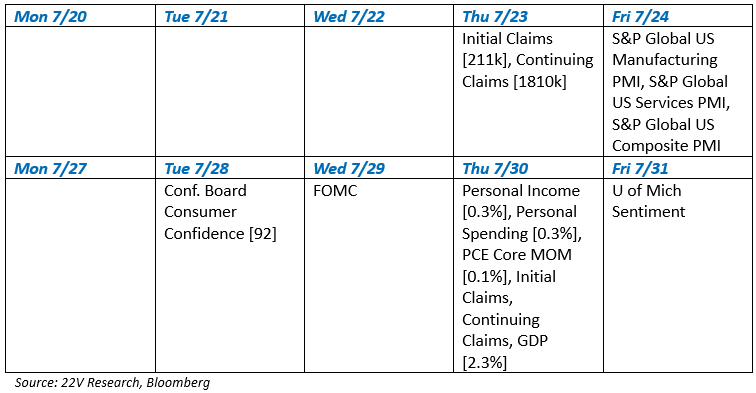
Things to Watch [Consensus, Results]:
Strategy:
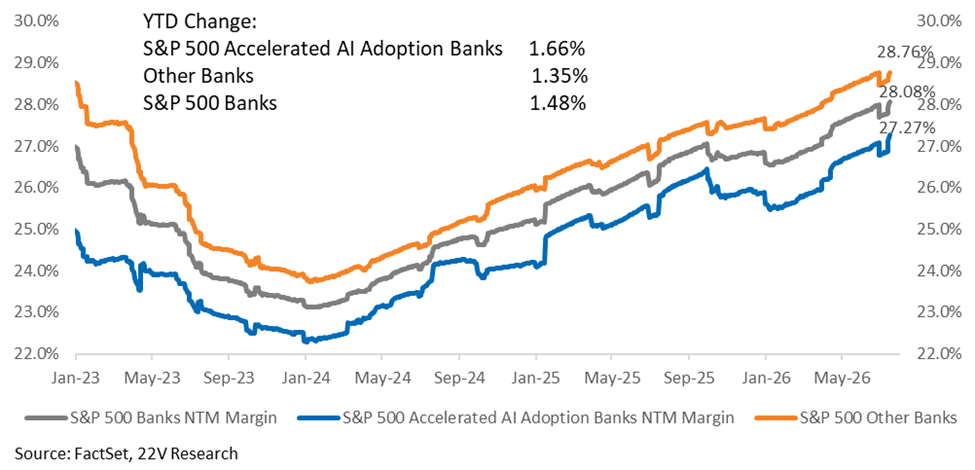
Bank Earnings & the Longer Term AI Buildout + Plays Into This Week’s EPS Reports – (HERE)
Margins are trending higher across Bank, but names with higher AI adoption have seen margins improve more rapidly than those of other Banks this year. The strong margin trend is another sign that AI is moving from strategic narrative to operational reality. Margin Results Sentiment (how Banks sounded about this quarter) ticked up, reaching its highest level since 2023. Forward looking Margin Commentary Sentiment ticked down from its recent high, it remains above any level seen prior to 2025.
Economics:
Quick comment on recent Fed study of AI buildout – (HERE)
A new Fed research paper argues that while the AI capital spending boom remains firmly intact, there is still little evidence that it has translated into broad productivity gains or meaningful labor market improvements. 22V Chief Economist, Gerard MacDonnell, noted this may simply reflect the long adoption lags typical of transformative technologies, while also concluding that AI-related capex has contributed meaningfully (but far from exclusively) to recent demand growth, reinforcing the view that broader economic growth continues to be driven by more than just AI investment.
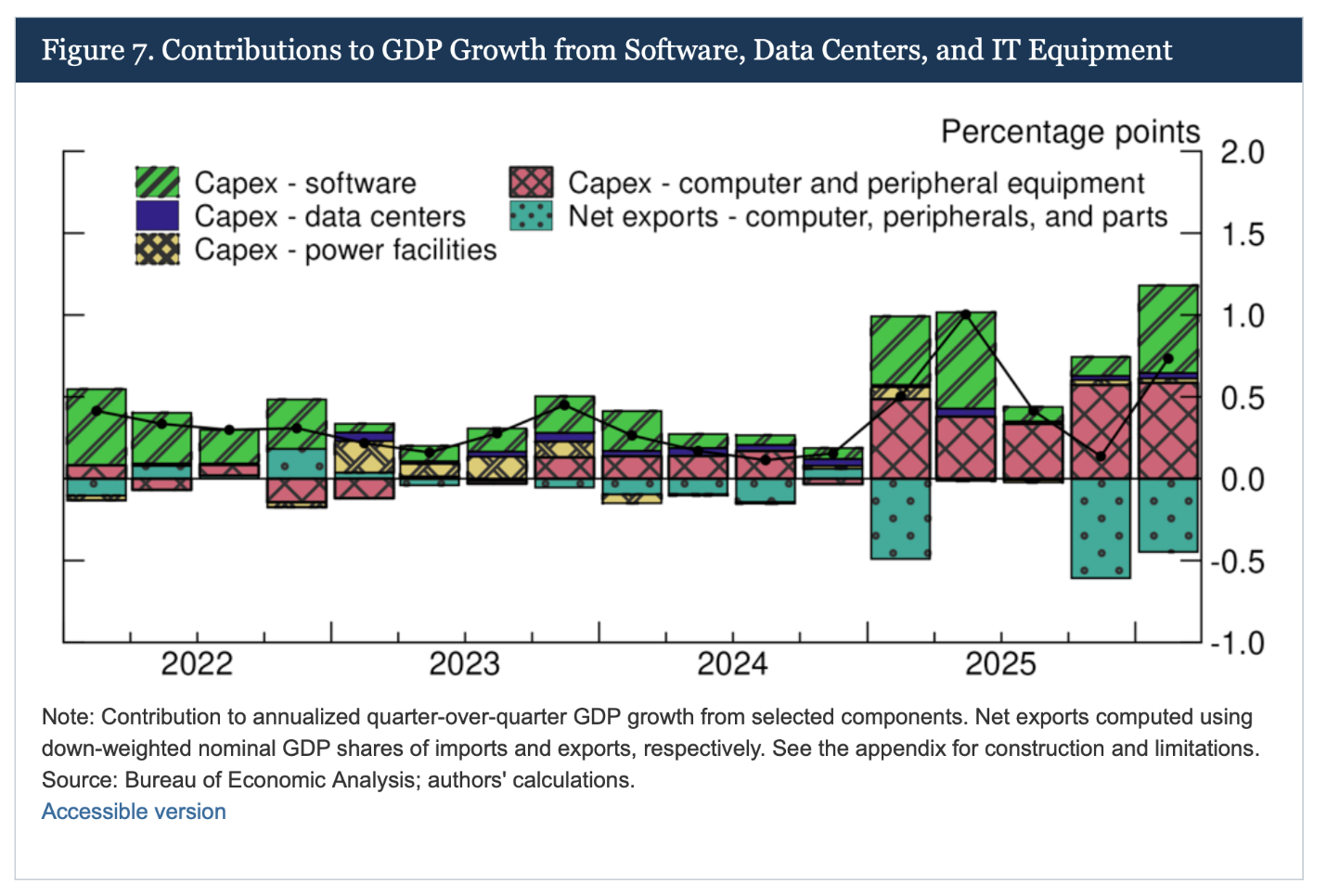 Source: Federal Reserve
Financials:
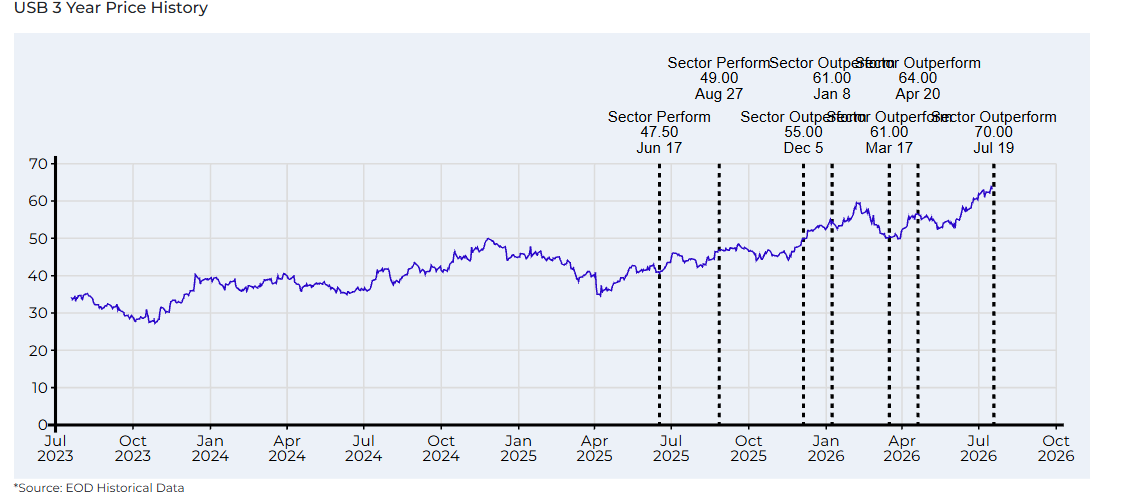
US Bancorp: The re-rate continues – Raising Target to $70 and reiterate Sector Outperform– (HERE)
U.S. Bancorp delivered another strong quarter that reinforces its re-rating story, with record revenue and earnings driven by broad-based loan growth, accelerating fee income, and continued positive operating leverage. The addition of BTIG is already exceeding expectations and, together with the upcoming Amazon small business card portfolio, provides meaningful tailwinds for capital markets revenue and future earnings growth. Management raised full-year revenue guidance, reiterated its path toward a 3% NIM in 2027, and continued to demonstrate improving credit quality and a strong capital position, supporting higher shareholder returns. 22V’s Bill Hebel believes USB remains well positioned as fixed asset repricing, stronger fee growth, and accelerating buybacks drive earnings higher, leading him to raise his estimate and price target while maintaining his Sector Outperform rating.