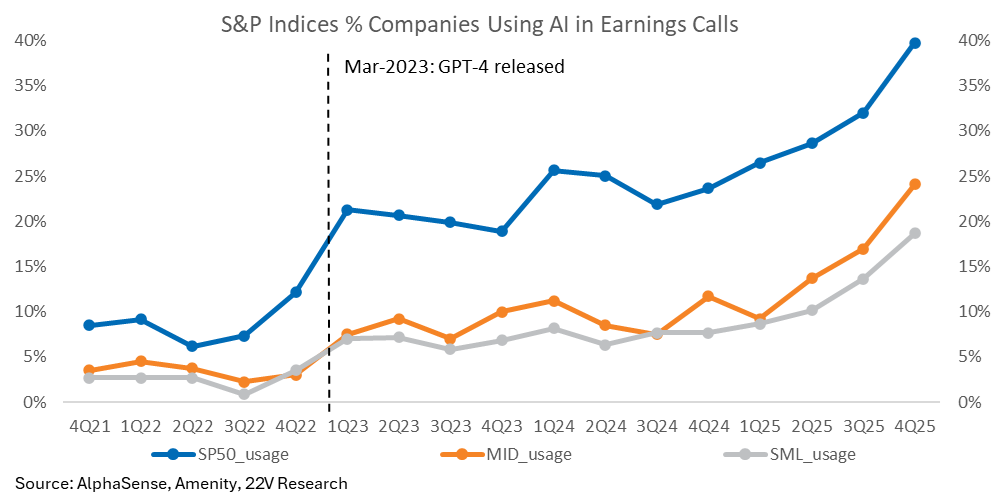
DAILY STRATEGY: Main Point – Focus on AI Value Creation Through EPS Season. We were asked about the outlook for AI capex in almost every meeting in London last week. What we have a strong view on, from a top down point of view, is monitoring what the BREADTH of companies are saying on AI value creation or productivity gains. It is important that all companies show some benefit from AI, not just super star high performing companies like GS, JPM, LLY etc., It’s the breadth of US business using AI that supports current capex plans. We believe AI is a once in several generation productivity tool that WILL create value across companies. The path will be bumpy though.
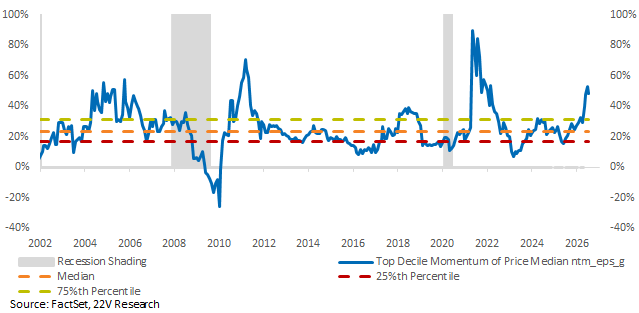
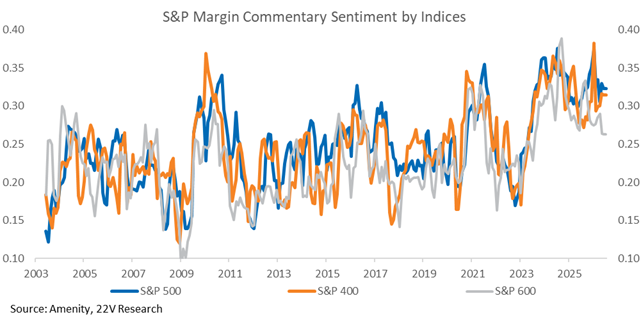
Marking to Market our AI view as we head into 2Q EPS season, the current level of margin sentiment suggests an upward bias to margins in 2Q26 (investors will likely associate this with AI value creation). It will be difficult to short Price Momentum and AI demand beneficiaries longer-term if these margin trends continue. Additionally, the fundamentals for the Price Momentum baskets are unusually strong (see chart on NTM EPS immediately below). IF the CPI/PPI data is roughly in line with consensus this week, financial conditions should be stable and idio will matter more during earnings season. i.e. There could be a fundamentally driven rebound in Price Momentum factors relative performance.
Higher 10yr yields and tighter financial conditions have been more of a headwind for AI demand beneficiaries. It’s not just Idio driven group. It is important that 2yr and 10yr yields don’t increase more on inflation concerns. 10yr yields above 4.5% is not bad for risk assets if it’s driven by demand (HERE).
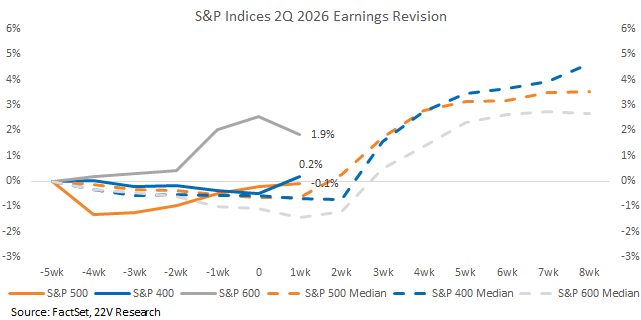
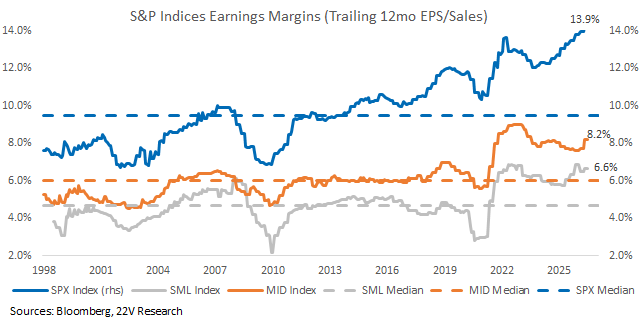
FYI – Quarterly earnings revision for Small caps are higher than for mid and large cap names, which is unusual. If revisions remain strong, that will be a support for small cap names. Large cap margins remain well above SMID caps. Hyperscalers margins are particularly high. That noted, small and mid caps profitability have improved as well.
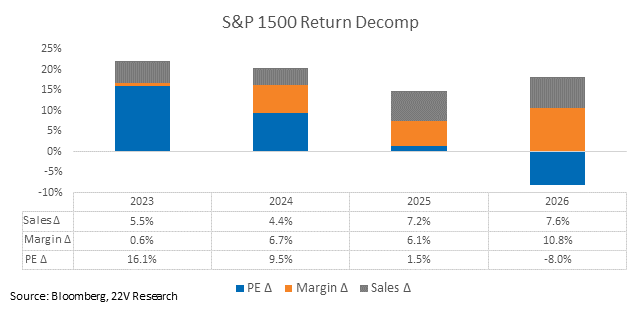
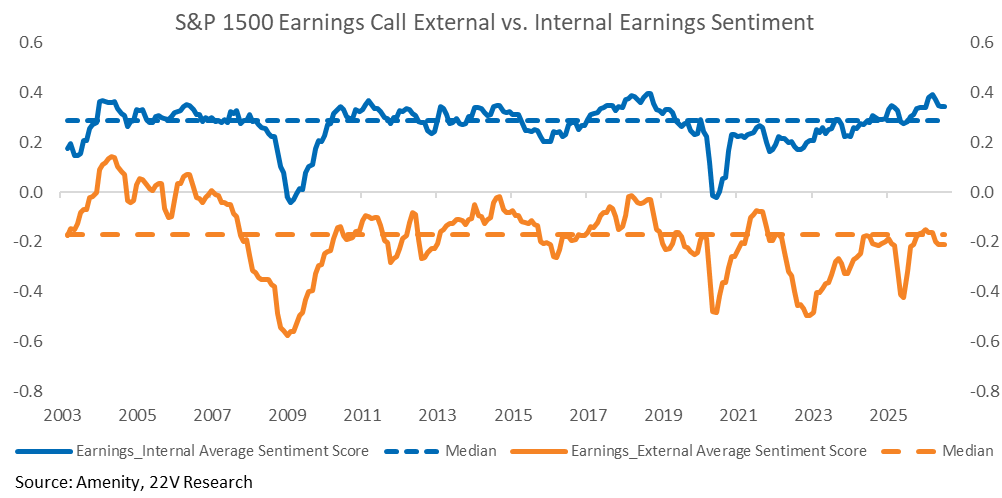
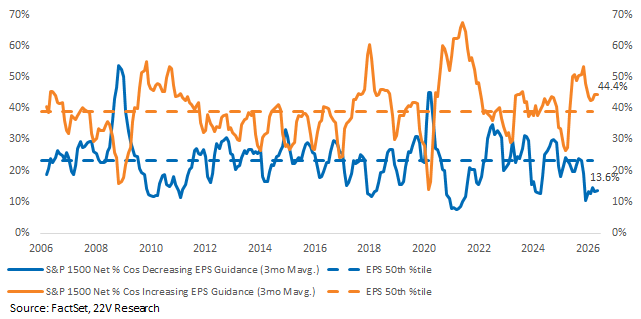
Fundamentals have been remarkably strong this year (accounting for 18.4pp of the S&P 1500’s 10.4% YTD return). An objective scoring of how management teams sounded about their own business performance (vs the macro backdrop) showed companies were very confident in 1Q. Typically, that’s associated with strong fundamentals going forward, a positive backdrop for 2Q. An historically high 44.4% of S&P 1500 companies have raised guidance and only 13.6% are guiding lower.
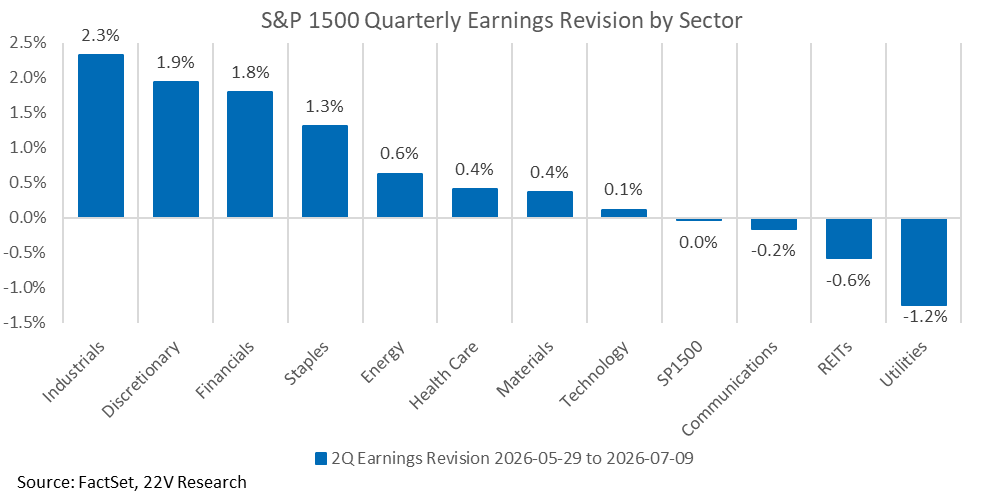
SECTOR SPECIFICS: Revisions by sector are strongest for Industrials, Discretionary, Financials, and Staples. Industrials are most levered to the AI buildout, so strength there is not particularly surprising. Discretionary, Financials, and Staples are all levered to the consumer. Last week, we highlighted how high frequency consumer activity indicators (Johnson Redbook, OpenTable, TSA, and even Delta earnings) have inflected higher. The Quant team highlighted how Retailers have improved margins and operating leverage, so that better revenue is translating to better earnings beats again (HERE).
Charts below…
Margin sentiment remains elevated, relative to history, for small, mid and large cap stocks.
Quarterly earnings revision for Small caps are higher than for mid and large cap names, which is unusual. If revisions remain strong, that will be a support for small cap names.
Large cap margins remain well above SMIDA caps. Hyperscalers margins are particularly high. That noted, small and mid caps profitability have improved as well.
Internal sentiment, how companies sound about their own business is firm.
S&P 1500 EPS guidance ahead of 2Q has continued to rebound after a sharp drop in 1Q. 44.4% of S&P 1500 companies are raising the guidance and only 13.6% are guiding lower.
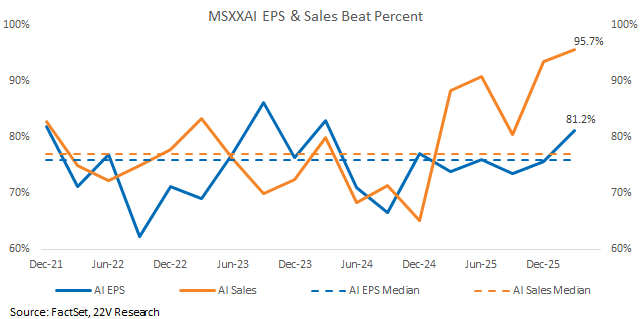
One major focus in 2Q has been the fundamental trends within the AI theme. Within the MSXXAI universe, which includes broad AI related names, fundamentals have beat expectations over the past two quarters. Both EPS and sales beats rates were stronger than the rest of the S&P 1500. The sales beat rate in 1Q was >95%.