Bottom Line: Marking to Market our AI view as we head into 2Q EPS season
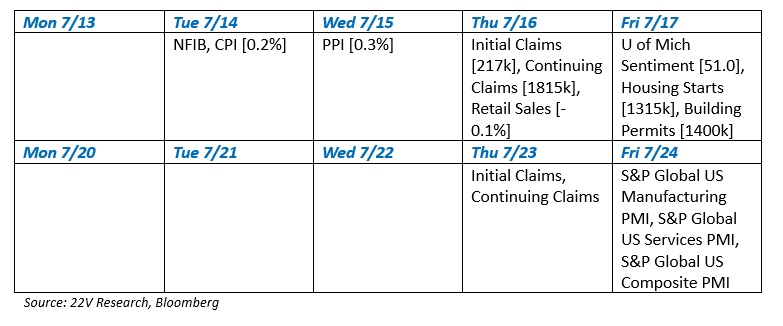
The current level of margin sentiment suggests an upward bias to margins in 2Q26 (investors will likely associate this with AI value creation). It will be difficult to short Price Momentum and AI demand beneficiaries longer-term if these margin trends continue. Additionally, the fundamentals for the Price Momentum baskets are unusually strong. IF the CPI/PPI data is roughly in line with consensus this week, financial conditions should be stable and idio will matter more during earnings season. i.e. There could be a fundamentally driven rebound in Price Momentum factors relative performance.
Relevant News: Headwinds for AI Demand
Higher 10yr yields and tighter financial conditions have been more of a headwind for AI demand beneficiaries. It’s not just Idio driven group. It is important that 2yr and 10yr yields don’t increase more on inflation concerns. 10yr yields above 4.5% is not bad for risk assets if it’s driven by demand.
Things to Watch [Consensus, Results]:
Strategy:
Focus on AI Value Creation Through EPS Season – (HERE)
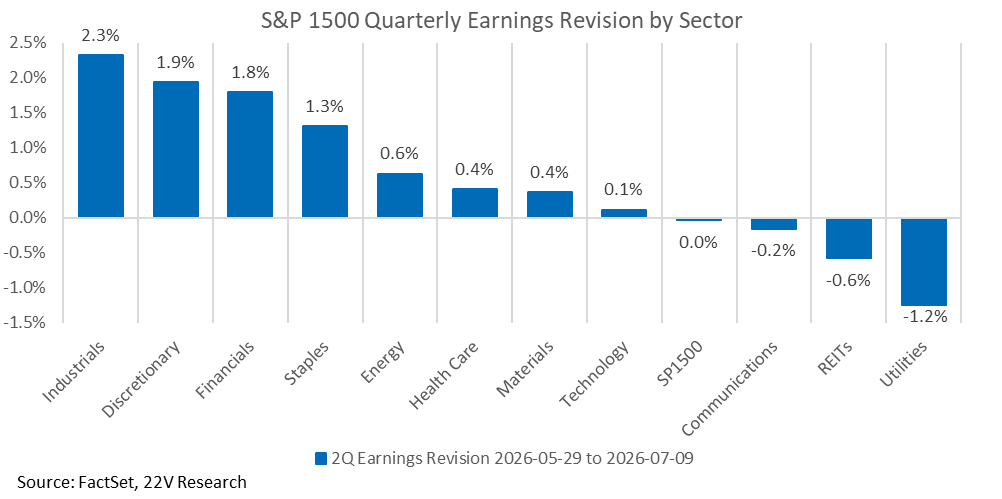
Revisions by sector are strongest for Industrials, Discretionary, Financials, and Staples. Industrials are most levered to the AI buildout, so strength there is not particularly surprising. Discretionary, Financials, and Staples are all levered to the consumer. Last week, we highlighted how high frequency consumer activity indicators (Johnson Redbook, OpenTable, TSA, and even Delta earnings) have inflected higher.
Quant:
2Q Earnings Outlook – (HERE)
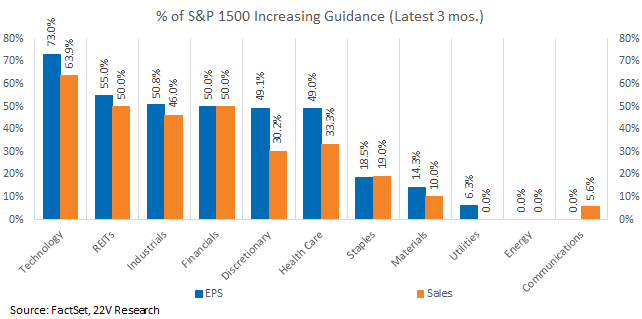
AI trends remains the key thematic focus. Tech continues to lead positive guidance, reflecting sustained strength in AI-related demand. The broader AI universe has delivered improving EPS and sales beat rates over the past two quarters, and investors also rewarded AI companies more aggressively during the last earnings season. Although recent weakness in high-Momentum AI stocks has raised questions about positioning, another quarter of strong fundamentals could help stabilize sentiment and support the recent pullback.
Derivatives:
With Single Name Volatility at the Widest Ever Premium to Index Volatility, VIX Hedges are Squarely Back in Play – (HERE)
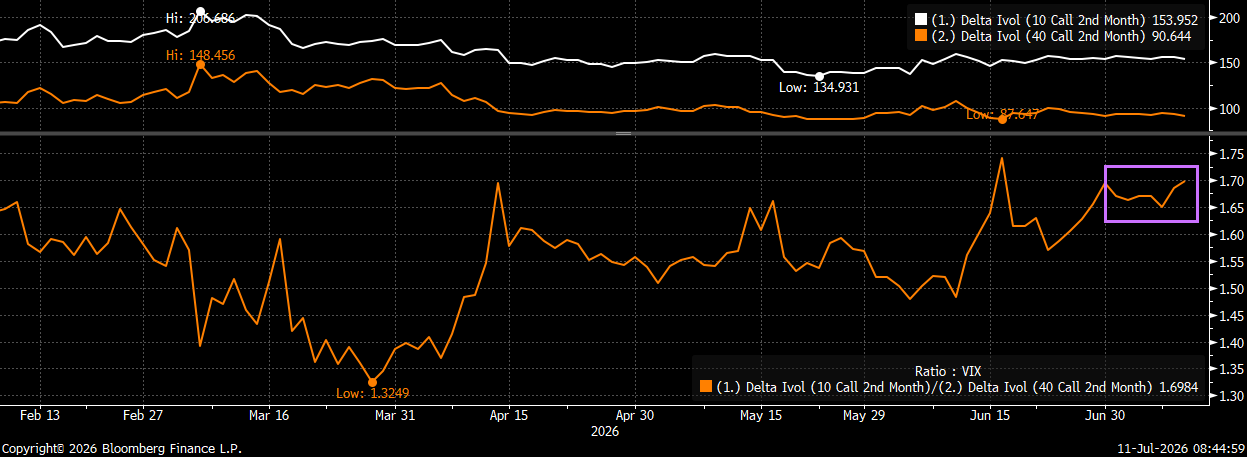
The S&P 500 finished last week up 1.2% and was within 1% of its all-time high, largely because continued rotation across sectors and factors has offset sharp drawdowns in individual parts of the market. That rotation has driven the gap between single-stock volatility (VIXEQ) and index volatility (VIX) to a record high, suggesting the unusually low level of index volatility may be unsustainable. With both VIX and VVIX back near recent floors, volatility appears inexpensive just as several potential catalysts loom, including CPI and PPI data, rising Treasury yields, renewed geopolitical tensions in the Middle East, and a possible Bank of Japan surprise if USD/JPY continues to weaken. Given this backdrop, 22V’s Jeff Jacobson argues that buying low-cost VIX tail hedges—such as August call spreads or outright calls—offers an attractive way to position for a potential volatility spike while downside remains limited if markets continue grinding higher.