DAILY STRATEGY: An end to the Iran ceasefire would put upward pressure on Treasuries and downward pressure on risk factors (Price Momentum, high Earnings Vol, high Debt Risk). Nothing new there. The difference this time is that there is already upward pressure on Treasury yields from accelerating high frequency demand data and FOMC commentary shifting more hawkish (latest HERE). IF the ceasefire ends (a big IF in a volatile situation), the reaction in rate sensitive equities may be exacerbated given existing upward pressure on rates. Today, we focus on the practical implication of ex-Iran upward pressure on yields, which is likely a more durable theme.
MAIN POINT: The 10yr yield is back above 4.5%, the level at which factors become more sensitive to movements in yields. We suspect the 4.5% level may shift higher over time as the market discounts a higher neutral rate (the rate that is neither stimulative nor restrictive to economic growth), but it’s holding for now. Hedging remains in focus.
Peter Williams estimates 10yr fair value is moving toward 4.5% (from 4.5% being the high end of the range). This estimate is based on the rebound of demand indicators, not Iran. How internals react to the 10yr depends on the reasons for the move. Peter raised his estimated based on a higher neutral rate + a mild degree of restrictiveness.
Over the medium term, the case for fundamental factor leadership remains intact because a higher neutral rate + a mild degree of restrictiveness doesn’t change the economic backdrop. If yields were only increasing because of more restrictive policy, it would be a scene changer, and risk-off factors and Defensive sectors would be more attractive.
The practical implication is that the 4.5% line in the sand may move up over time as the market digests a higher neutral rate. Right now, the line appears to be holding, so hedging stays in focus.
Jeff Jacobson, 22V Derivates specialist, highlighted the below targeting MTUM as a good vehicle to hedge via options (Jeff’s video update HERE)…
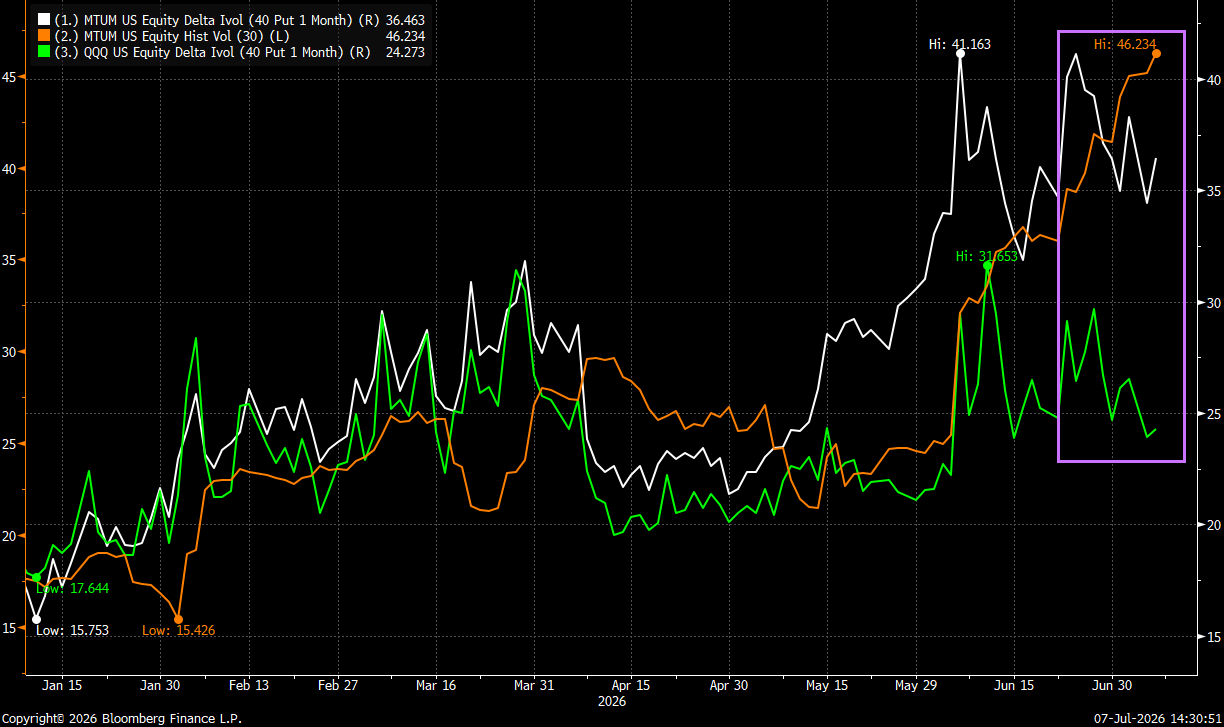
“As the price momentum trade continues to come under pressure, I think yesterday is a great example of why we continue to favor MTUM hedges over QQQ (or SPY). MTUM was down 3.1% vs a 1.5% decline in QQQ, so getting a better than 2x to 1 realized move in MTUM vs QQQ. Looking at current 1-month 40-delta vols for both MTUM (36.5) and QQQ (24.3), current vol skew only implies a 1.5x beta for MTUM.
In addition, while the MTUM implied looks rich, it now trades at a 10-point discount to where 30-day realized vol trades (see below)”
For the next entry point, Jeff emphasizes waiting for a day Momentum rallies. When that happens, we will follow up with a trade structure.
Charts…
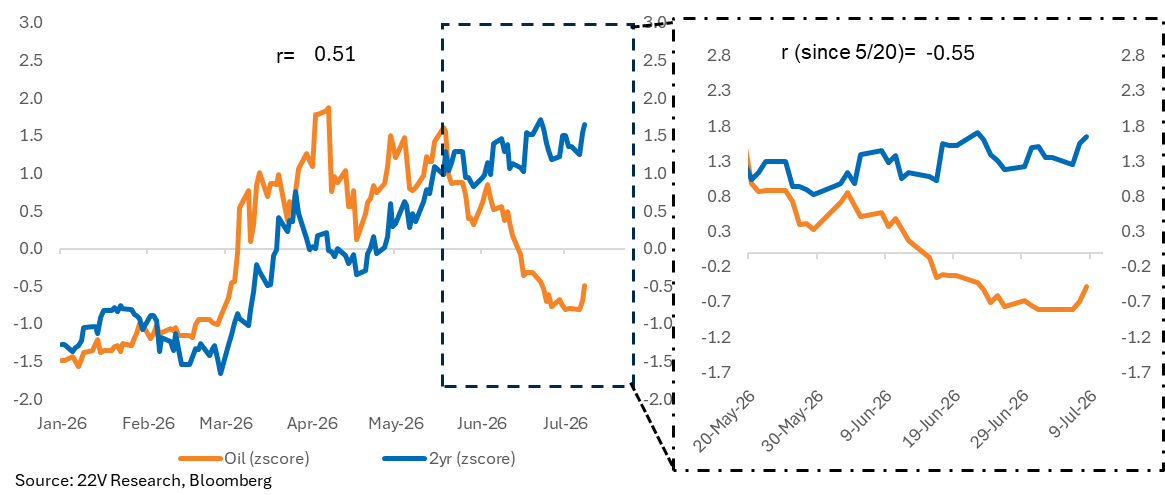
Yields had diverged from oil as nominal demand seems to have bounced. There is more upward pressure on yields now than the last round of increased Iran tensions. 10yr fair value is higher.
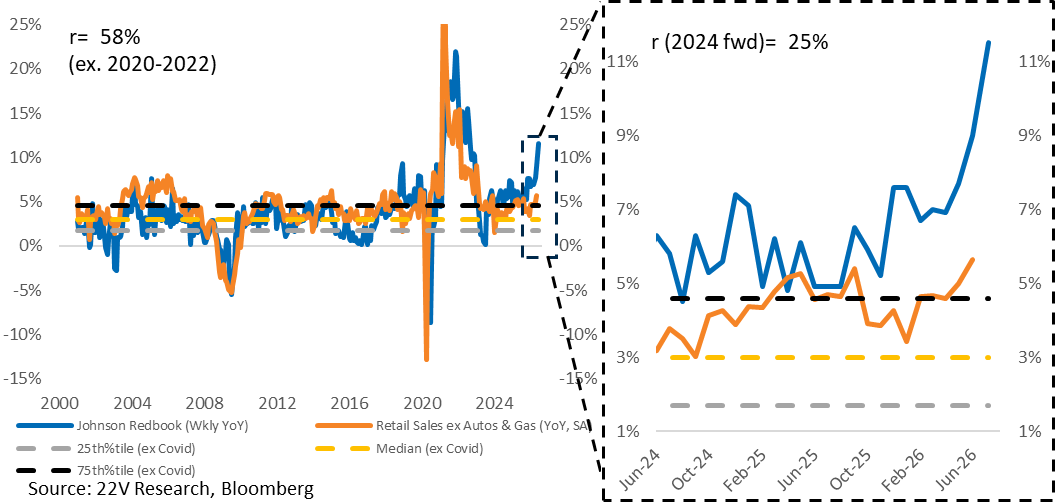
Redbook Same Store Sales is now tracking an incredibly high (technical term) 11.5% YoY.
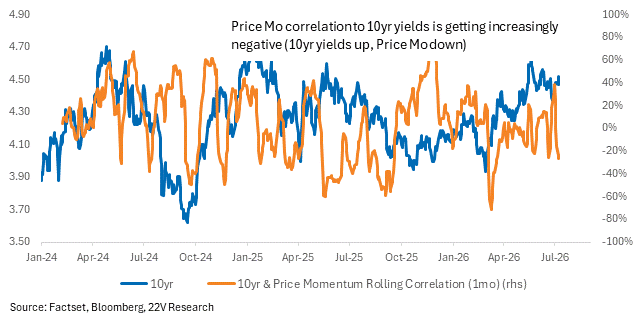
Price Momentum correlation to 10yr yields is increasingly negative (10yr yields up, Price Mo down). As such, hedging remains in focus.
Looking at current 1-month 40-delta vols for both MTUM (36.5) and QQQ (24.3), current vol skew only implies a 1.5x beta for MTUM. In addition, while the MTUM implied looks rich, it now trades at a 10-point discount to where 30-day realized vol trades.