Bottom Line: Labor Data
Labor data on Friday did not change the median term growth outlook – economic growth is slowing toward ~2% real, the speed limit imposed by the Fed to keep core inflation in check. As Gerard put it, “The labor market looks a bit easier now than it did several months ago and that the labor market is nevertheless strong enough to confirm that the central case for the expansion is that it is sustainable and that demand side worries are not most prominent here.”
Relevant News: Fundamental Factors
Fundamental factors (Growth, Earnings Momentum, Value, GARP) perform best in a benign economic slowdown. The risk that financial conditions will tighten increases the volatility (and lowers the risk-adjusted return) of risk factors and Price Momentum, at least until there is more clarity around inflation and how growth slows. Idiosyncratic risk (AI) remains a major influence on returns.
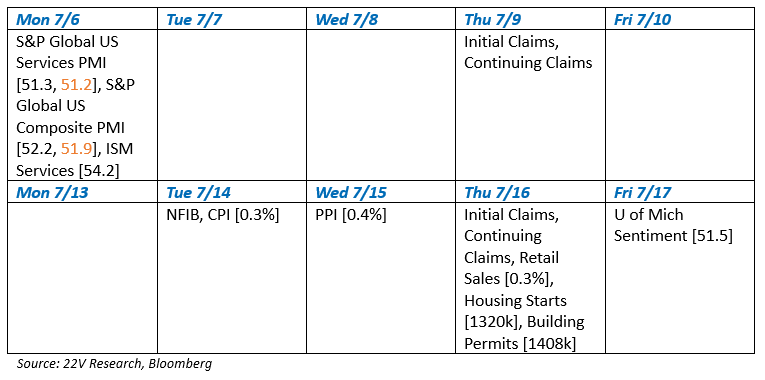
Things to Watch [Consensus, Results]:
Strategy:
Friday’s Labor Data Reduced but Did Not Remove the Risk of Financial Conditions Tightening – (HERE)
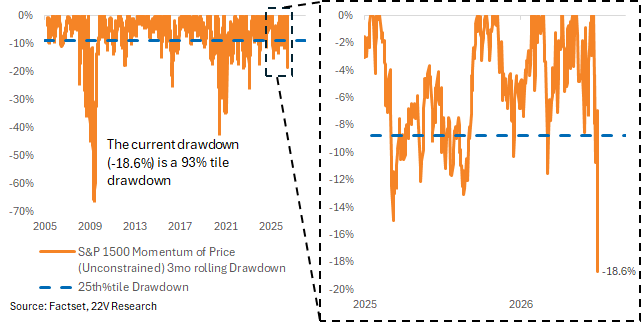
We have been focusing on hedging Price Momentum over short-term horizons, given the vol in Price Mo because of the risk financial conditions need to tighten. Price Momentum’s drawdown, at -19% (S&P 1500, unconstrained), is a 93rd percentile drawdown. The forward returns of Momentum after similar drawdowns are still lower than normal, even after removing recessions from the sample. Hedging is still a point of emphasis.
Derivatives:
Signs the Price Momentum Trade May be Cracking, and a Few Ways to Hedge Further Declines – (HERE)
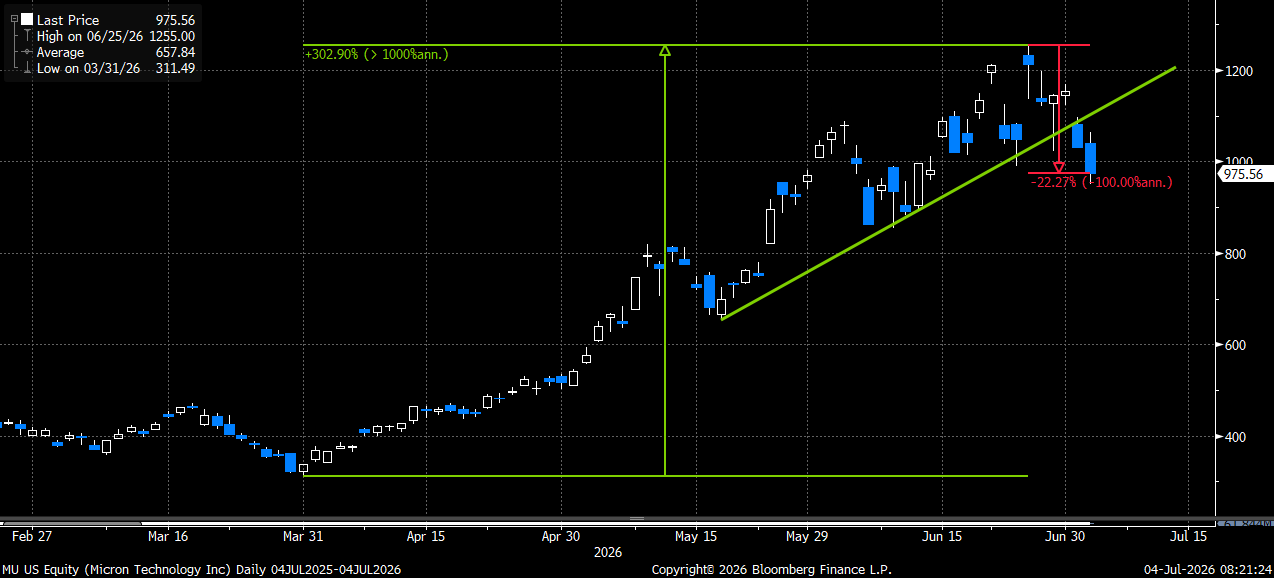
The sharp selloff in AI memory and semiconductor leaders suggests the price momentum trade may have peaked, with Micron (MU) serving as the clearest example after falling more than 22% below its pre-earnings level despite reporting strong results. Recent concerns around hyperscaler capex, alternative chip sourcing, and crowded momentum positioning have accelerated a rotation out of AI chip and memory names and back into the Mag 7, leaving QQQ relatively resilient despite steep declines in DRAM-related stocks. Given this divergence, broad tech hedges may be less effective, and more targeted hedges such as DRAM, South Korea ETF (EWY), or MSCI USA Momentum ETF (MTUM) may offer better downside protection, particularly as implied volatility remains below realized volatility in EWY and MTUM. Please contact 22V’s Jeff Jacobson for specific trades.
China:
China’s Role in the Global AI Buildout – The Listed Company Ecosystem – (HERE)
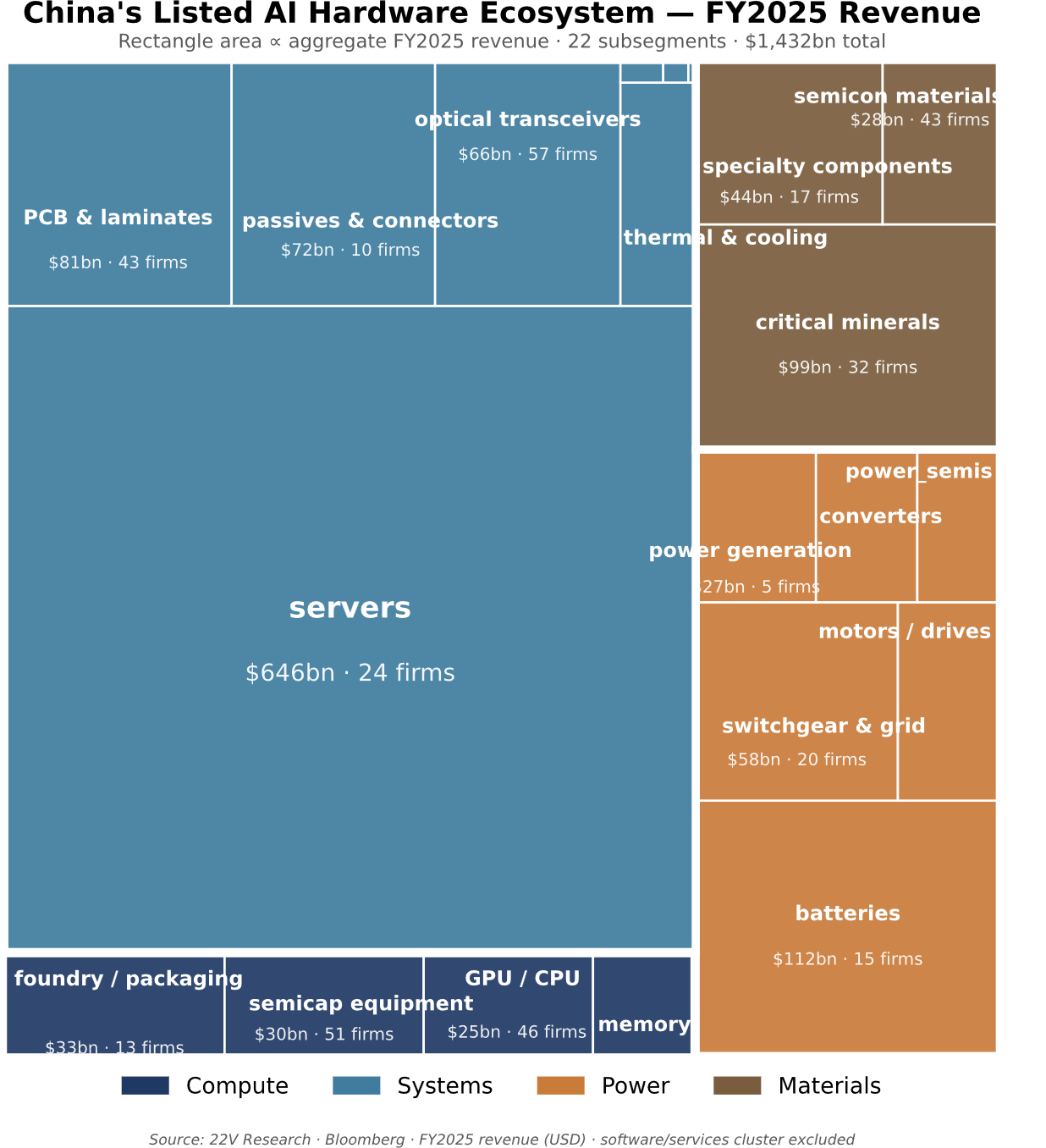
China’s AI hardware ecosystem is dominated by data center infrastructure and power equipment that are benefiting from the global AI buildout, while its semiconductor sector remains smaller but is attracting growing investor interest as domestic firms work to reduce reliance on foreign chips. Although AI-driven capex continues to accelerate, investment is now outpacing revenue growth, raising risks of overcapacity and margin pressure, particularly in networking and compute. At the same time, deep US-China supply chain interdependence is increasingly being challenged by geopolitical tensions, making 2027 a key watchpoint for policy-driven disruptions across the AI ecosystem.