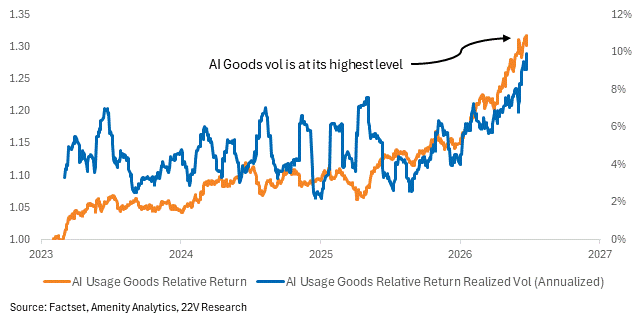
WEEKLY AI Update: The realized volatility in AI Goods/AI buildout beneficiaries is at a high. Today, we briefly address the themes injecting vol and watchpoints, and what the historical data suggests for forward returns.
There is idiosyncratic vol from the risk of lower token prices and cheaper Chinese models eating into AI infrastructure ROI (HERE), and macro vol through the live risk financial conditions need to tighten (HERE). The Price Momentum factor leads to the downside in a VAR shock/broad derisking if there is a significant tightening of financial conditions. A typical Price Mo drawdown would be in the ~-10-15% range. Investors are concerned that the historically high level of volatility within the Price Momentum factor baskets would exacerbate a selloff, leading to a drawdown much greater than -10%.
Dauvin Peterson, head of 22V Data Infrastructure/Commodities Research, expects the idiosyncratic risk to fade longer-term. Capex spend estimates have continued to trend positively in the past 30 days, reinforcing the overall theme.
Regulatory relief is the short-term watchpoint (HERE). The rise of Chinese LLM model use should push a regulatory response on Mythos, and to a lesser extent, now OpenAI. IF Mythos can return to market and OpenAI isn’t pressured to slow down model releases, it’ll reinforce the path forward for frontier models, removing some of the overhang on AI related names.
The modal macro outcome is not a significant tightening of financial conditions. Inflation doesn’t appear to be coming from the labor market (wage growth is in a downtrend) and inflation expectations are anchored, so the standard model suggests core inflation will return to target. The problem is that core inflation has been hot despite this, and Warsh surprisingly emphasized price stability last week. The modal outcome is growth cooling, especially as tax refund receipts fade, with a Fed that is on hold, not tightening. That is a fine backdrop for AI Goods.
The watchpoints are inflation readings. The Fed’s forecast for core PCE in 2026 (3.3%) and 2027 (2.5%). To reach those targets, core PCE (CPCE) needs to print roughly 0.21% per month from June forward. If inflation comes in above 0.21%, starting with the June data released in July, expect higher equity risk premiums as a tightening campaign is likely to happen. If core inflation comes in below 0.21 equity risk premiums will be biased lower as hike risk comes off the table.
Longer-term, stay long AI buildout beneficiaries.
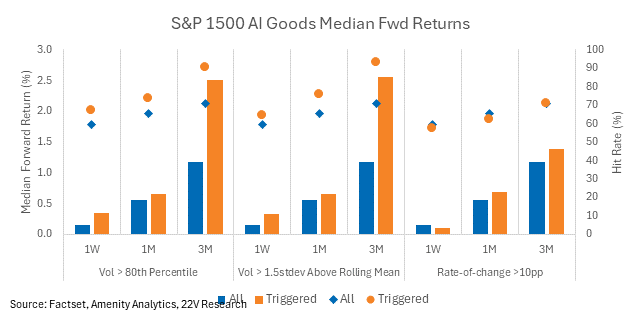
Putting aside our views, the limited data on realized vol does not show vol is an indicator of poor forward returns within AI Goods. Spikes in vol have been followed by better-than-normal 1 week, 1-month, and 3-month relative returns in AI Goods.
Right now, realized vol is increasing in an up-trend. Adjusting for trend context (stripping out the instance of high vol in drawdowns) does not change the takeaway – forward returns are still better-than-normal.