DAILY STRATEGY: Expect a violently flat market until we have some clarity on how Core PCE will break.
The Fed is on hold still and as long as the Fed is on hold, the economic expansion will continue. EPS expectations should not change much. That is the good news. A tightening campaign is no longer a tail risk though, it’s a live one. And a tightening campaign would come along with higher recession probabilities and significant downside risk to equities. Hence violently flat for now.
Lower oil and lower 10yr yields, a product of slower growth, are structurally positive for Early Cyclicals (tech, discretionary, communications). Yes, the kneejerk reaction in those names is negative to the hawkish surprise. But the setup matters: growth decelerating from ~3% to ~2% (our benign slowdown in growth call), paired with falling oil, lower yields, and eventually softer inflation, is a constructive backdrop for duration-sensitive Cyclicals (HERE).
Tracking A Benign Slowdown – The collapse in 1yr inflation swaps and a flatter yield curve both point toward slowing economic growth ahead. But credit spread stability and surplus conditions in the household and corporate sectors suggest a slowdown would be benign. Recession risk remains low. If we are wrong on a benign slowdown, we are wrong on Early Cyclicals and fundamental factors (Earnings Momentum, Growth Momentum, GARP) outperforming longer term.
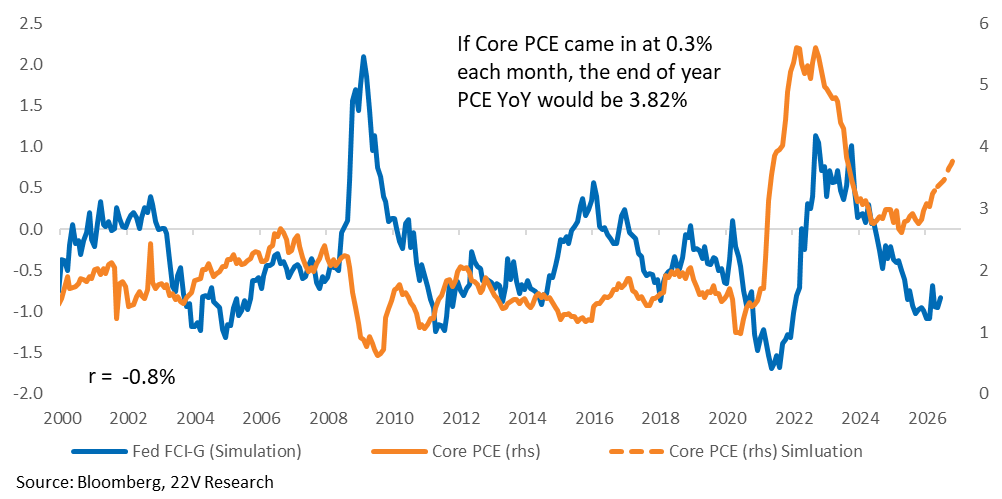
The Number That Matters for Core PCE: 0.21%. The Fed revised its Core PCE forecast sharply higher – 3.3% in 2026 (from 2.7%), 2.5% in 2027 (from 2.2%), not back to target until late 2028. To reach that 3.3% projection, Core PCE needs to print roughly 0.21% per month from June forward.
Above 0.21% MoM and the Fed hikes. Warsh made price stability the centerpiece of yesterday’s press conference. Repeatedly. This isn’t ambiguous. Core PCE Printing above 0.21% monthly is not a high bar to clear. CPCE has been tracking monthly readings of ~0.36% this year. If Core PCE tracks closer to 0.3% going forward, there is meaningful risk of financial conditions tightening.
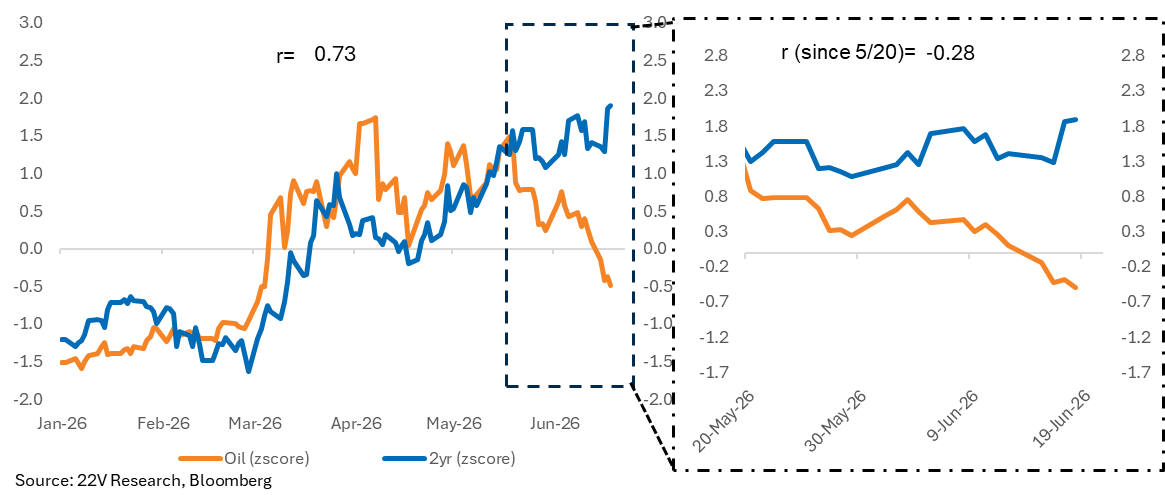
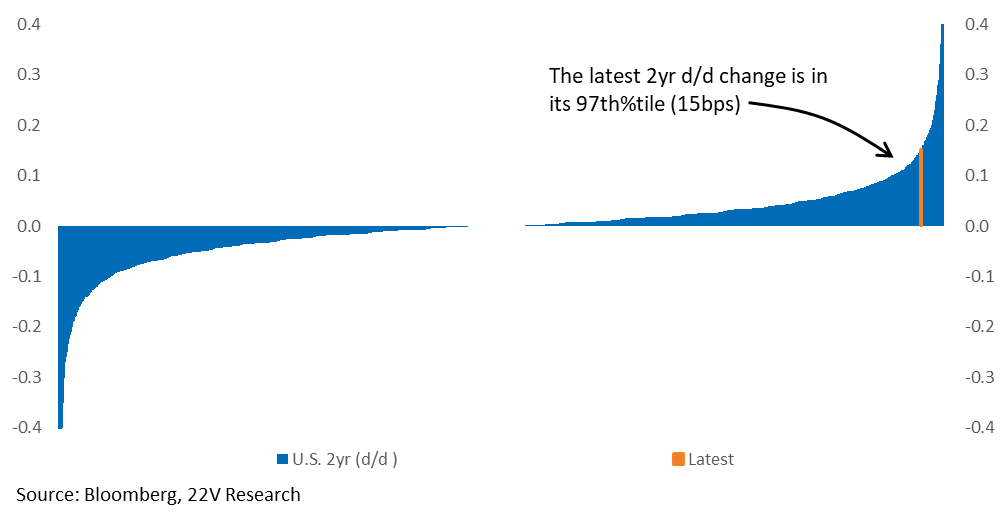
The Number That Matters for Economic Growth: ~2% or Below: During Warsh’s press conference yesterday, the 2yr yield had a 97th percentile move higher. Investors are internalizing the risk that Core PCE tracks above the Fed’s new forecast. US 2yr yields have decoupled from oil prices. The bond market is signaling that lower oil does not rescue the core inflation outlook on its own. Equity investors need to internalize this. We fielded several questions yesterday asking whether lower oil prices = peak hawkishness. The answer is no, not unless economic growth decelerates toward 2%. A slowdown toward 2% growth is what meaningfully reduces core inflation risk, and with it, the threat of further tightening. 2% economic growth, or below, is the variable to focus on.
Some less hawkish, but data dependent thoughts…
- As Peter pointed out, the committee has clearly shifted towards a more hawkish baseline while allowing for the possibility that with a reset higher in their inflationary path there is a chance that the data allows them not to have to hike this year.
- As Employ America pointed out, despite half of the Committee penciling a hike, voting power from the Board is still likely concentrated among the Board where members are at zero hikes or cuts. Which goes back to my earlier point, above 3.3% on Core PCE (or above 0.21 MoM from June Forward), will come with hikes.
Details at the end and charts immediately below…
The 2yr yield has decoupled from oil prices. Oil price declines help the inflation outlook at the margin, but it is about CORE INFLATION. And Core SERVICE inflation is ~70bps too high (HERE).
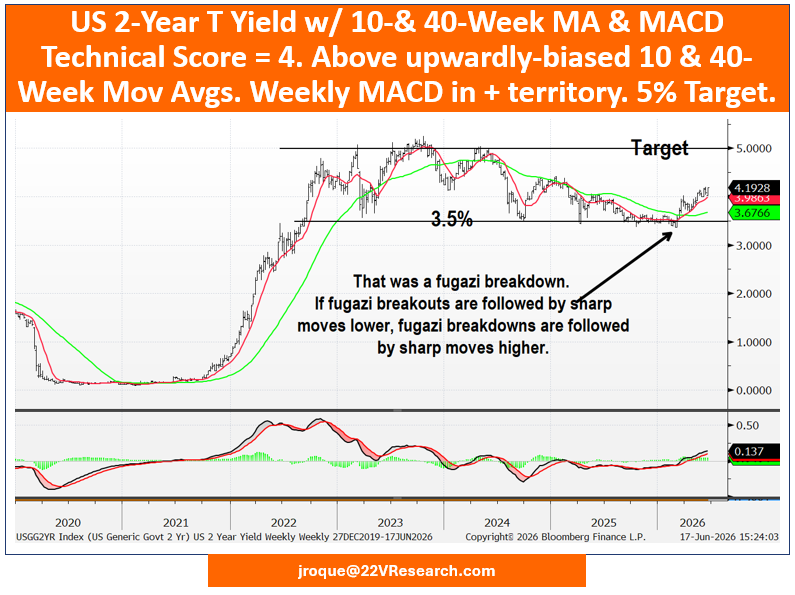
John Roque’s target for 2yr yields is 5%. Scary from markets if it happens.
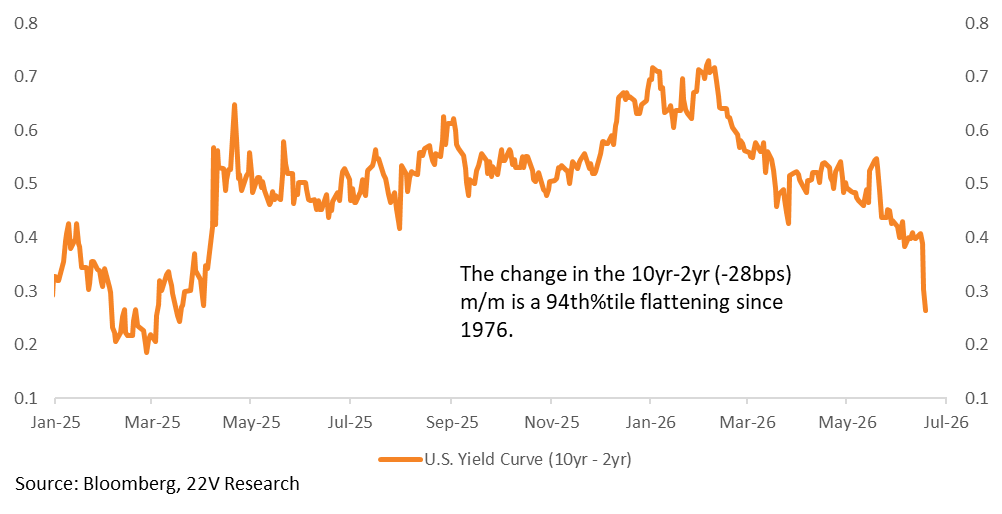
Financial conditions have a significant amount of tightening to do if Core inflation readings don’t move lower.