Bottom Line: Real Rates
From a macro point of view, gold moving lower suggests higher implied real rates are being priced. That fits with oil prices moving lower, future oil prices expected to decline, inflation expectations moving lower, but Fed fund futures pricing a policy on hold, with a bias to HIKE, over the next 12 months. If economic growth slows in the back half of 2026 as we expect, the Fed is unlikely to respond with easier policy. 2% economic growth or below is likely required to drive core inflation toward the Fed’s 2% target. Our call is not a headwind for risk assets longer term but suggests some consolidation in the highest beta stocks near term, which is happening. Investors are adjusting to the Fed’s easing bias being removed.
Relevant News: Core CPI
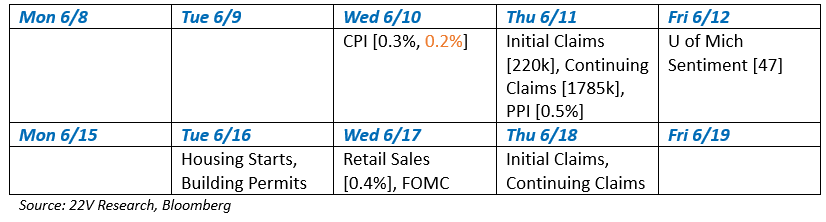
May core CPI at 0.21% came it a little below our read of the informed consensus. This was driven by the softest core goods print in years, but shelter and core services ex housing inflation both remain fairly firm. The acceleration in inflation is not just about tariffs or oil prices, as core services ex housing have accelerated to 3.7% in CPI and ~3.5% or a bit above in PCE. The Fed’s core PCE forecast for 2026 is likely to move from 2.5% in Dec and 2.7% in March to 3.1% in June, perhaps higher. For most at the Fed, this release is unlikely to do too much to shift their policy views on the margin. The doves will point to some plausible sign of deceleration in core goods and its attendant upward pressures elsewhere, while the hawks will see a one-off bit of relief as the median and stickier parts of inflation remain too hot.
Things to Watch [Consensus, Results]:
Strategy:
Higher Implied Real Rates are Being Priced as the Fed’s Easing Bias is Removed– (HERE)
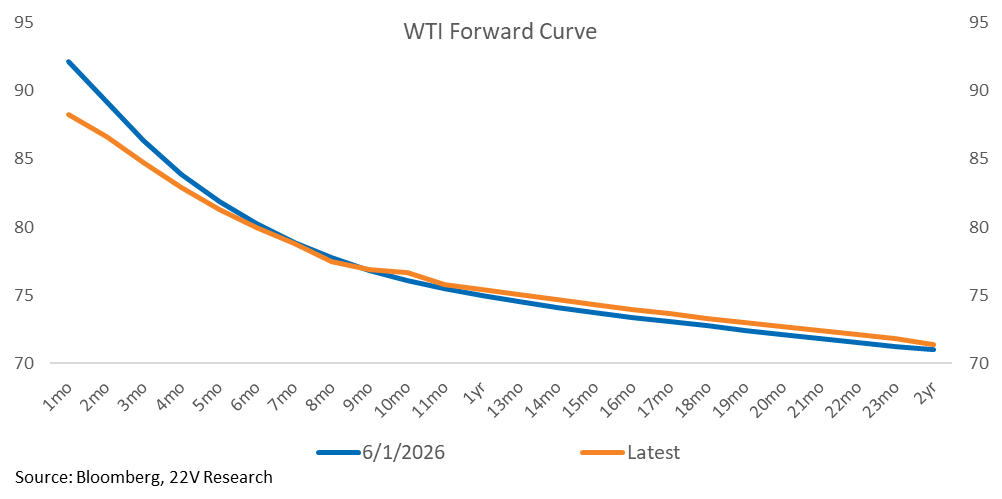
Inflation expectations have moved lower on a 1yr basis (3.5% to 3% for the 1yr inflation swap since April 2nd) and the 5yr5yr breakeven inflation rate, at ~2.2% is near the 25th %tile historically. Oil prices have declined from ~$110 in mid-May to $88 this morning. The oil futures curve suggests WTI Oil will be ~$79 in December 26. At the same time, futures markets are pricing a Fed that remains on hold with a BIAS to hike vs cut. The market is pricing a fed that will remain on hold as oil prices move lower. That makes sense given the high level of core inflation.
Economics
Surprisingly, Green Shoots Not Gas Price Stress– (HERE)
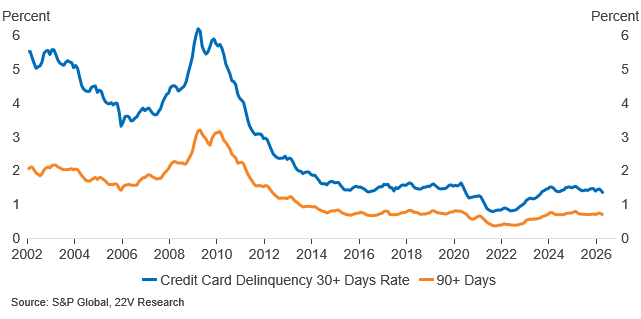
From the conferences yesterday, consumer trends remain notably stronger than expected, with banks and card issuers reporting robust spending growth, improving discretionary purchases, and little evidence that higher gas prices are causing consumers to pull back elsewhere. Credit performance and delinquencies continue to track at or better than expectations, suggesting household balance sheets remain healthy despite some pressure from inflation. Importantly, management teams consistently pointed to a strong labor market as a key support, with employment conditions remaining favorable and wage growth generally sustaining spending activity. Current data indicate a resilient consumer backed by solid employment and improving credit trends.
Data Infrastructure/ Commodities:
Emerging Price Discovery for Tokens and Compute– (HERE)
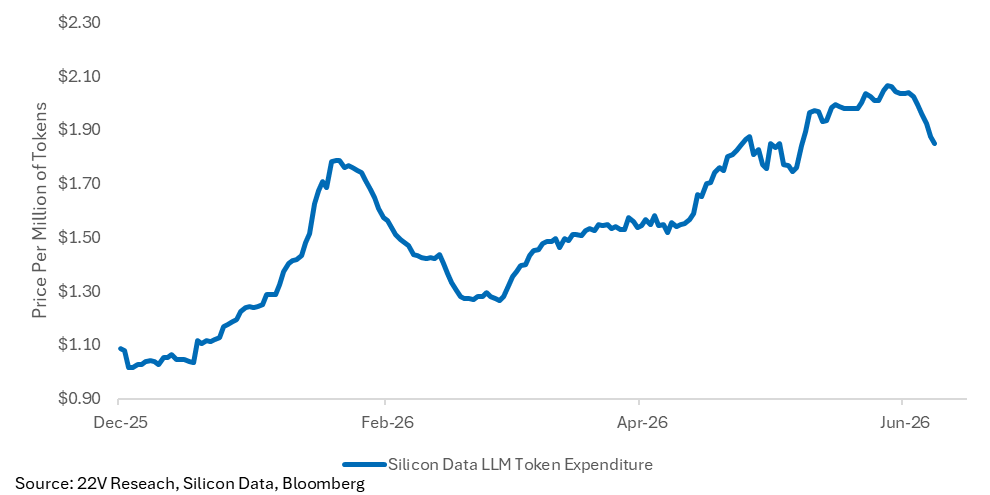
AI price discovery is increasingly driven by token pricing and emerging GPU compute futures. As competition intensifies, compute supply expands, and enterprises like Uber shift production workloads to cheaper models, AI token prices are likely to face downward pressure. While this may challenge frontier model providers, lower costs are ultimately bullish for AI adoption, benefiting infrastructure providers and integrated hyperscalers more than standalone model companies.