May Employment Report: Strong Hiring is Back
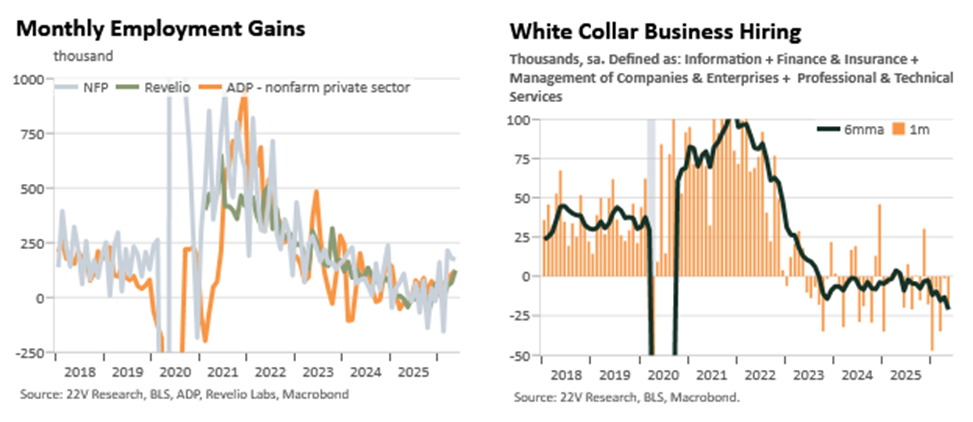
- Nonfarm payrolls came in well above consensus at +172k with large positive revisions to the prior two months as well. After averaging only 11k in 2025, NFP growth has clearly reaccelerated in 2026 (the 3mma of +188k is eyepopping).
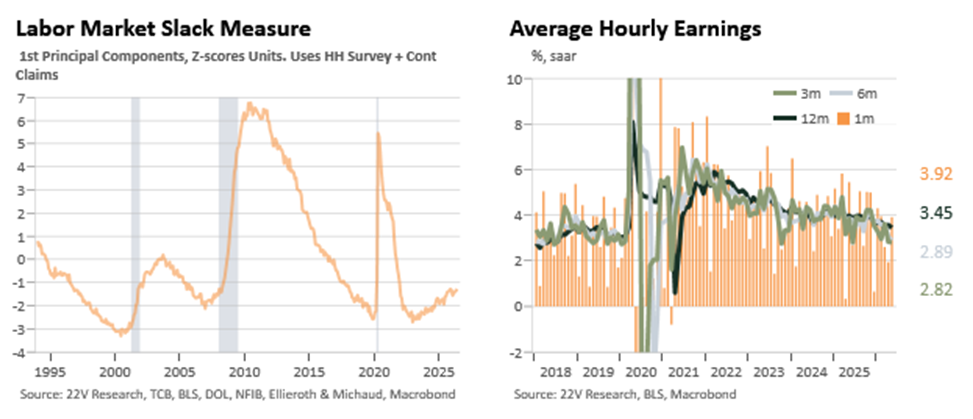
- Measures of slack and wage growth do not point to strong retightening concerns yet. This is a bit of a puzzle given how much NFP growth has reaccelerated but it may simply be a matter of time.
- Compared to expectations coming into the year, or the Fed’s March SEP, the labor market continues to do better than expected and much much better than feared.
- The data is moving against views that labor market softening would swamp other inflationary impulses and allow or force cuts. The question is if inflationary backdrop might require that. As the war and tariff inflationary impulses add upside risks and deanchoring concerns. Even without them, the labor market seems steady to improving, growth solid, and inflation appreciably above target. That sounds like an economy at neutral, or maybe a bit below it.
NFP growth has quite clearly entered a new trajectory as we moved into 2026 after the anemic, although not that much far off from labor supply, +11k average in 2025. Hiring breadth remains narrow but we shouldn’t take any real concern from this given the secular trends towards increasing health care and leisure and hospitality spending (one of the clearest takeaways from recent corporate commentary). This month saw strong positive revisions to the prior 2 months and recent source data suggests we likely saw a bit of an undercount in NFP growth in the second half of 2025; these are positive signs given the recent history of appreciable negative revisions and procyclical nature of labor market and activity revisions.
Broader cyclical has been positive in 4/5 months so far this year although white collar hiring has been quite soft. Given retirements, this may be consistent with cyclical stability and allow for weak overall hiring with some AI labor substitution but that all remains very uncertain. At least far, the shift in white collar has not had any signal for the broader labor market. The acceleration in temp hiring, in both the NFP and American Staffing Association, data supports the idea that there is an underlying positive cyclical impulse across the economy after years of sluggish quasi-recessionary behavior.
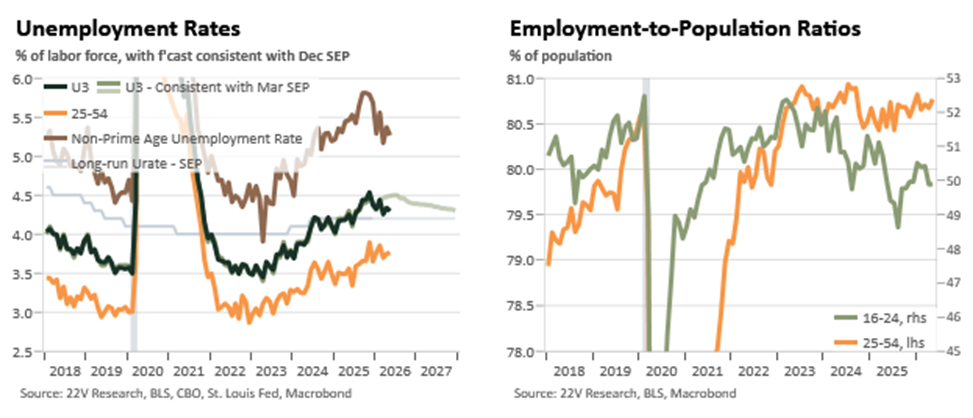
The unemployment rate ticked down a few bps to 4.30% and the prime-age employment-to-population ratio (best single measure of slack) ticked up to 80.8%, just 1/10th below its cycle high. The prime-age LFPR is also now just a 1/10th below its cycle high too. For workers in the core of the labor market, times remain quite good. For reentrants and those who have been laid off, the gradual drift higher in durations of unemployment is the most pessimistic part of the recent labor market data.
Average hourly earnings growth remains fairly steady in the mid-3s, a pace that would eventually be consistent with inflation returning closer to target if it and recent productivity growth trends are sustained. Wage growth data is always noisy in real time and other suggest the read in AHE is a floor on plausible estimates, which would be more consistent with continued NGDP strength. Given the pairing of falling delinquency trends and very strong consumption, it seems clear that short-term spending power, whatever the contributions between balance sheet and income growth, remains strong.
There seems to be a bit of a puzzle between the acceleration in NFP growth and the only very mild retightening in slack measures so far this year. Narrowness may be playing a role for some workers (those laid off in sectors with much weaker dynamics having a somewhat harder time finding work, consistent with slowing increasing durations of unemployment) but the overall story is a bit odd right when most, us included, had anchored to much lower breakeven estimates of NFP growth given domestic demographics and the immigration whipsaw. In the short run, we may simply be asking too much of the data to expect obvious agreement but after 6m of labor market stability with accelerating hiring this seems a bit more puzzling.