April PCE: the First Bit of ‘Less Hawkish’ News in a While
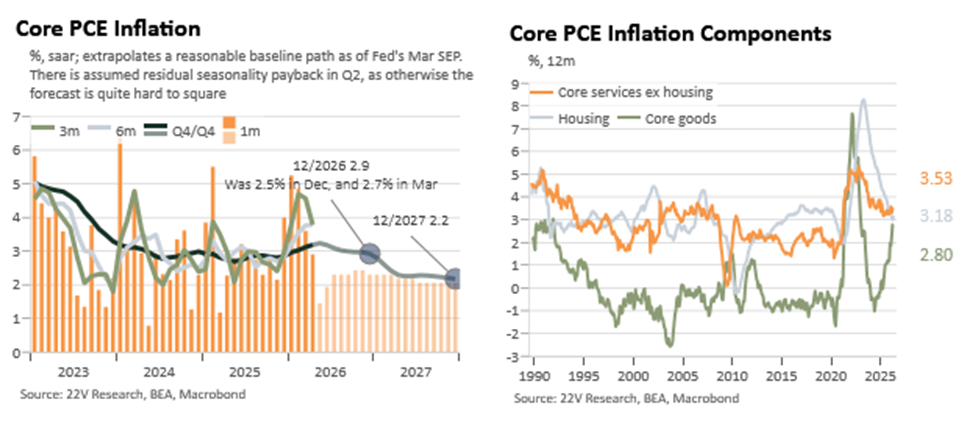
- Core PCE was 0.24% in April, roughly 4bps below consensus. Overall, the release followed this tone and does not add to the still building hawkish pressures.
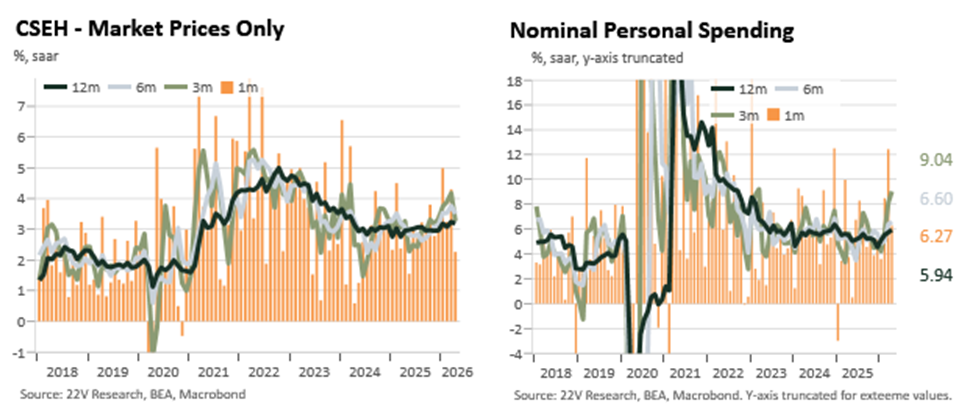
- This CPCE miss was driven by the softest core services ex housing print since last April. Some of the CSEH softness was due to stock market volatility but even the market prices only version of CSEH was the softest it’s been since last May, admittedly at its pre-covid pace which is not the greatest source of comfort as a floor in the inflation data.
- Consumers are responding to the war shock by initially dissaving with nominal expenditures accelerating following oil prices and real spending fairly steady around 2%.
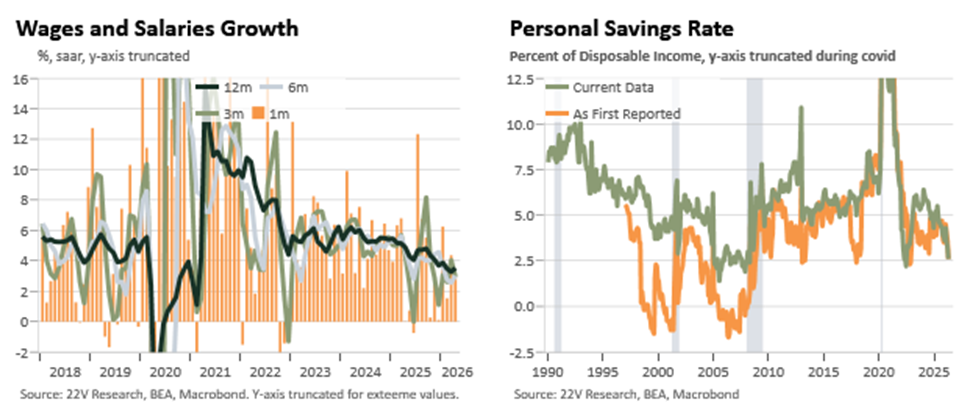
- The most single dovish data point out there is that BEA estimated aggregate wages and salaries are growing at only 3.5% y/y. Other income growth measures point in a moderately higher direction.
Core inflation got a little bit of a breather in April. Core came in slightly below consensus (0.24%, roughly 4bps below the detailed consensus we had seen). Some mild positive revisions meant the y/y number is inline with consensus.
This beat was driven by a softer than expected core services ex housing print. Overall CSEH saw its softest pace since last April. Market prices only CSEH, which excludes volatile imputed prices, was less soft but still had its lowest print since last May. Of course, this lowest print is still roughly in line with its 2018-19 pace so its hardly the kind of floor one can use to make a strong disinflationary case. Even with the war and tariffs there may also be some degree of residual seasonality still present in the data, in which case the continued increases in y/y paces are an important caution to any m/m or even q/q data driven narratives.
Consumer spending came in line with consensus at a strong at 0.5% nominal after a 1.0% month in March. The surge and volatility in gas prices has driven much of the recent volatility in topline nominal spending growth. Real spending trends have been steadier, bouncing around 2% or so in recent months with April a bit softer. Real discretionary spending (which strips out healthcare, housing, utilities, food at home, and gasoline) shows a similar pattern.
The most dovish part of the release, and probably of any of the major data releases period, is that aggregate wages and salaries growth (wage and hiring growth combined) is growing at only 3.5% y/y. April’s saw aggregate income growth drop to a slightly negative pace due to the expiring farm subsidies. This y/y seems somewhat implausibly low given some mildly positive hiring and most other wage growth or tax withholding measures looking at least a bit stronger. Nevertheless, it is something more dovish voices can reasonably point to as signaling underlying medium-term disinflation, if recent productivity trends hold (a point worth having some caution on). Nominal personal disposable income is growing a bit faster at roughly 4% on a trend basis.
These joint spending and wage growth trends show that the consumer is, on net, engaging in dissaving as their initial response to the oil price shock brought on by the war. This is a natural point of caution for the medium-term if oil prices sustain their current levels or move higher, but it is exactly in line with what studies suggest happens. Given the strength of household balance sheets and consumer credit, this channel won’t run out of room immediately, and we should push back on consumer-related doomerism given what corporates are saying and the totality of the data, but we should expect some real activity drag from the war to build over time as will the core inflation impact (both effects will take place given cumulative global supply shortages regardless of the opening of the Strait, which will provide truncation to inventory-driven tail risks and eventually allow some normalization).