DAILY STRATEGY: Main Point – Fundamentals Are Supportive, But Hedging Against Downside (using VIX) Makes Sense Again- YTD, the R2k is up 15.5%, the equally weighted S&P 1500 is up 10.4%, and the cap weighted S&P is up 8%. Five and a half months into 2026, the story of equity gains is one of the average stock outpacing large/mega caps. Fundamentals and thematics are driving gains. Focusing on fundamentals, with ~90% of the S&P reported, 1Q EPS growth is running +27% y/y. That is more than 2x the growth expected at the start of reporting. The pace of revisions is not quite off the charts, but it is far out on the historical distribution.
Bottom Line – The once in several generations productivity tool (AI) driving the strong fundamental backdrop makes it VERY difficult to short markets. The stocks that benefit the most from the AI buildout are still longs. Namely, AI Capex beneficiaries, AI Power, Liquid Cooling names (HERE), etc., Even though returns to those baskets have been extraordinary YTD.
BUT, the VIX has settled back into a mid-teens level ahead of a major inflation release (CPI tomorrow), the outcome of the Iran war far from certain, and with reporting winding down. The vol suppression from strong earnings results is starting to fade.
Additionally, beta-adjusted returns to risk-off factors improved last week. It is not that risk-off factors led the market, it is just that they kept pace in a backdrop that seemed to favor riskier stocks. 22V options strategist, Jeff Jacobson highlights a clever way to hedge portfolios with VIX call spreads. See hedge details immediately below the charts section.
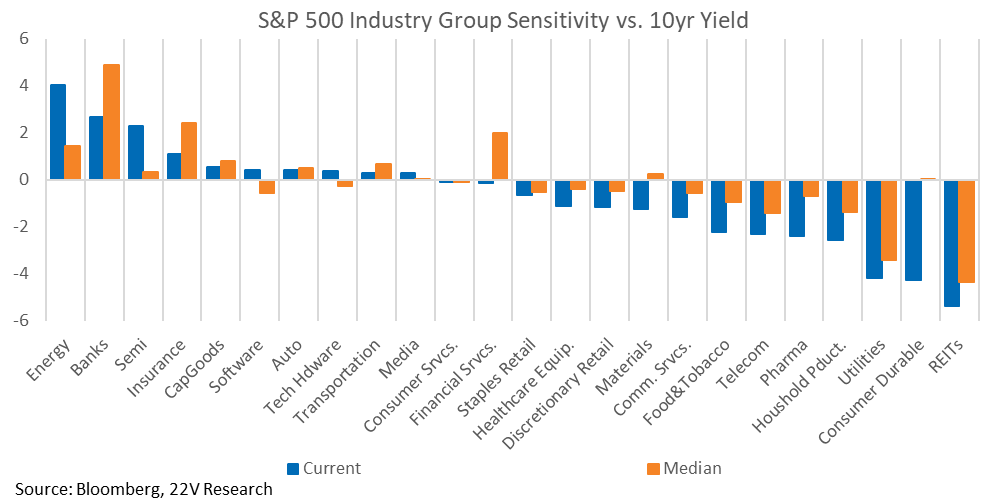
The shift in market internals MIGHT be related to the continued grind higher in 10yr yields. As the Quant team pointed out yesterday (HERE), more than half of the S&P has negative sensitivity to the 10yr yield, and essentially all show more negative sensitivity than normal. Higher realized sensitivity confirms that a “higher yields are bad for risk assets”. Historically, above 4.5% has led to more pronounced outperformance of low vol stocks.
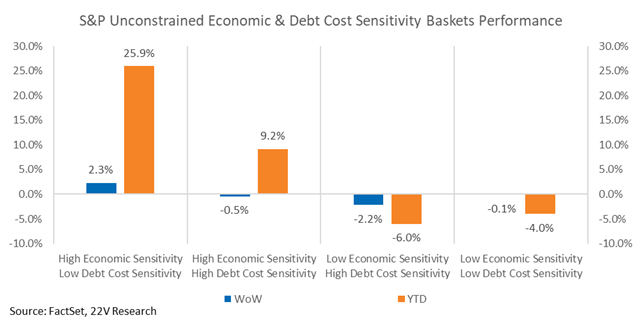
This Basket is Interesting NOW – High Economic Sensitivity and Low Debt Cost Sensitivity YTD return materially exceeds that of our other Eco/Debt Sensitivity groupings. Within the two High Economic Sensitivity baskets, the Low Debt Cost Sensitivity basket outperformed WoW and YTD. Basket details (HERE).
Charts and commentary below…
From JJ, the head of 22V Options Strategy – “It seems that we are getting near a “floor” to vol again (as evidenced by the fact that May VIX futures are barely lower even as the markets continue to race higher). In fact, we saw spot vol HIGHER on Friday, even as QQQ gained over 2% and SPY was up nearly 1%. Have we reached the point where dealers are more concerned about making upside calls too cheap again?”
Buy VIX June 17th 25 calls
Sell VIX June 17th 45 calls
Costs ~ $1.05 (June VIX futures ref of 20.60)
Trade Details:
• Buying the 20-point wide June upside VIX call spread as a “cheap” macro tail hedge
• VIX hedges continue to perform much better than index hedges given “floor” to vol
• Signs of complacency include; very “overbought” levels on RSI, huge amount of upside call buying/chasing and VIX future positioning once again turning negative
• Spread offers an 18x to 1 max payoff and has more than five weeks of duration before the June 17th expiration
• Selling the 45 call covers nearly 30% of the cost of buying the 25 call (speaks to the attractive call skew I referenced)
• Attractive “overlay” trade to an existing long/bullish portfolio after a “historic” rally off the March lows
The only industry groups showing more positive sensitivity to the US 10yr than normal are Energy, Semis, Software, and Tech Hardware. Those groups also have low macro influence, so the direction of the 10yr is less relevant.
As we highlighted (HERE), our economic and debt sensitivity screening captures names that enjoy the tailwind of rising PMIs while avoiding the potential volatility tied to yield uncertainty. Within the two High Economic Sensitivity baskets, the Low Debt Cost Sensitivity basket outperformed WoW and YTD; and within the two Low Economic Sensitivity baskets, the Low Debt Cost Sensitivity variant also outperformed.
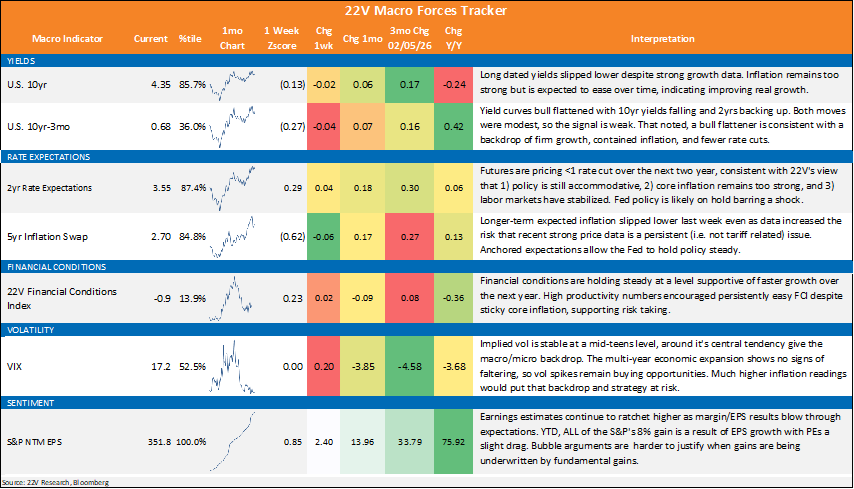
Macro Tracker: YTD, the R2k is up 15.5%, the equally weighted S&P 1500 is up 10.4%, and the cap weighted S&P is up 8%. Five and a half months into 2026, the story of equity gains is one of the average stock outpacing the large/mega caps. Fundamentals and thematics are driving gains. Focusing on fundamentals, with ~90% of the S&P reported, 1Q EPS growth is running +27% y/y. That is more than 2x the growth expected at the start of reporting. The pace of revisions is not quite off the charts, but it is far out on the historical distribution. The surge in actual earnings is starting to show up in longer term expectations, and ALL the market gains YTD can be attributed to better margins and earnings. Arguments about a bubble or comparisons to the late-90s are harder to justify when EPS rather than PE expansion is the driver of gains. If the economic backdrop was slowing, bubble arguments would also be more compelling. What we see instead is easy financial conditions, a bull flattener in the 10s2s and 10s3mos with easing longer-term inflation expectations, and zero rate cuts being priced for the next ~2 years. That backdrop suggests an ongoing economic expansion and helps explain the strong YTD gains across equities. The near-term threat to that constructive backdrop is too high inflation. The VIX has settled back into a mid-teens level ahead of a major inflation release and with the outcome of the Iran war far from certain. Also, with reporting winding down, the vol suppression from strong earnings results is starting to fade. Putting on some hedges against a potential upside inflation shock makes sense today. Keep in mind, any vol spike will remain a buying opportunity unless inflation data is strong enough to change the expected policy backdrop.