Why 10yr Yield Moves Matter – Historically, the driver of the 10yr yield – monetary policy, economic demand, risk sentiment, or economic supply – is important for factor and industry group betas to yields. Ie, if tighter monetary policy (generally driven by inflation risk) is driving yields higher instead of better economic growth or risk sentiment, internals will react differently.
We use Bloomberg’s return 10yr decomp model as a check on our reads of cross-asset price movements related to 10yr yields*. Below you can see that monetary policy drove yields higher after Powell’s surprisingly hawkish press conference, but economic demand and risk sentiment added +3bps to yields as well. Admittedly, the narrowness of equity gains since the FOMC meeting suggests skepticism on the demand boost, but the subsequent rebound in banks, fundamental factors and the fading of Low Vol factors seem consistent with that across the 3d window. Bottom line – the FOMC meeting was surprising, but assuming inflation stays tame going forward, economic demand should be the largest driver of 10yr yields.

*We’ve vetted the Bloomberg 10yr BECO model and it is a good one (white paper HERE).
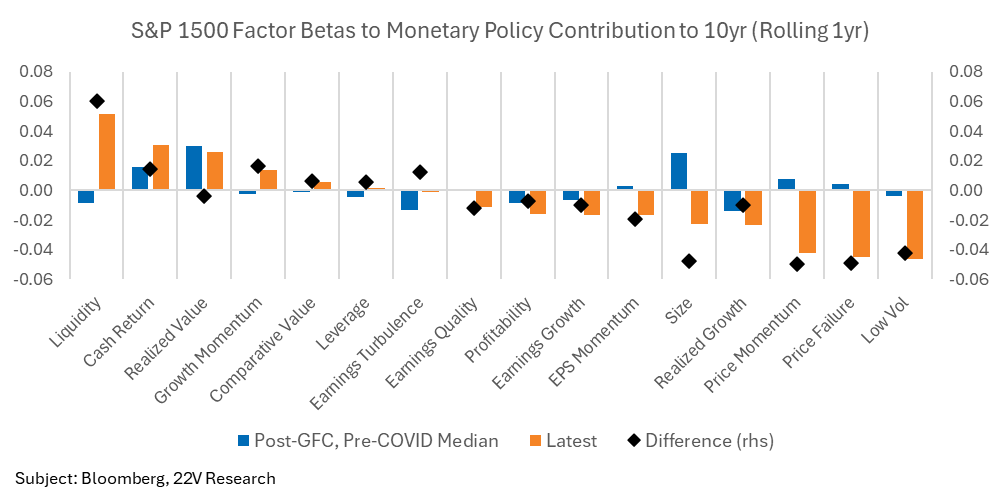
Interestingly, factor and industry group betas have diverged from their typical levels. For example, Low Vol’s beta is typically flat to monetary policy, negative to economic demand and risk sentiment. But right now, Low Vol’s beta to monetary policy is negative too. That is likely because the monetary policy influence on 10yr yields is highly correlated to the economic demand influence on 10yr yields. When monetary policy is the main driver, and economic demand influence fades, it’s a headwind to the market and risk-on factors and a tailwind to Low Vol.


Assuming the worst of the tariff’s impact on inflation is behind us and core service inflation stays around the current, non-problematic level (HERE), economic demand will likely be the main driver of 10yr yields. Typically, that favors fundamental factors (Growth, Momentum, GARP) at the expense of Low Vol. The AI beneficiaries should continue to outperform since fundamentals and idiosyncratic risk continue to dictate returns.
FYI rate sensitives (Housing, Durables, Debt Risk, Real Estate) are the relative shorts if yields keep increasing for any reason (more on housing headwinds HERE).
Charts for all factor and industry group betas are below…
Factor betas to monetary policy have diverged from their typical levels. For example, risk-on factors are more positively correlated and risk-off more negatively correlated. Fundamental factors are demonstrating slightly more rate sensitivity than normal, but the magnitude is still small. Their performance is a product of other variables.
Factor betas to economic demand are more consistent with history. The main difference is more factors benefit from better economic demand. Risk and fundamental factors (EPS Mo, Value, Growth, GARP) all benefit while Quality and Low Vol are the relative losers.
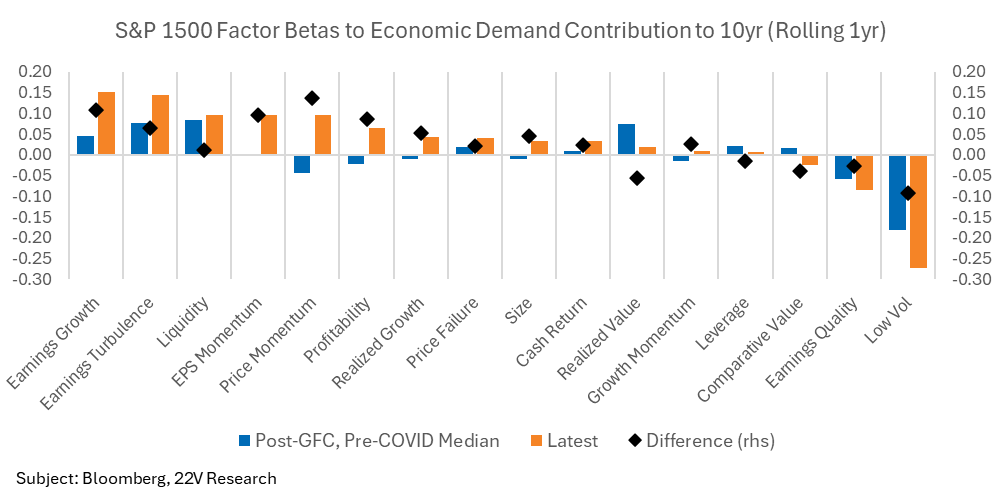
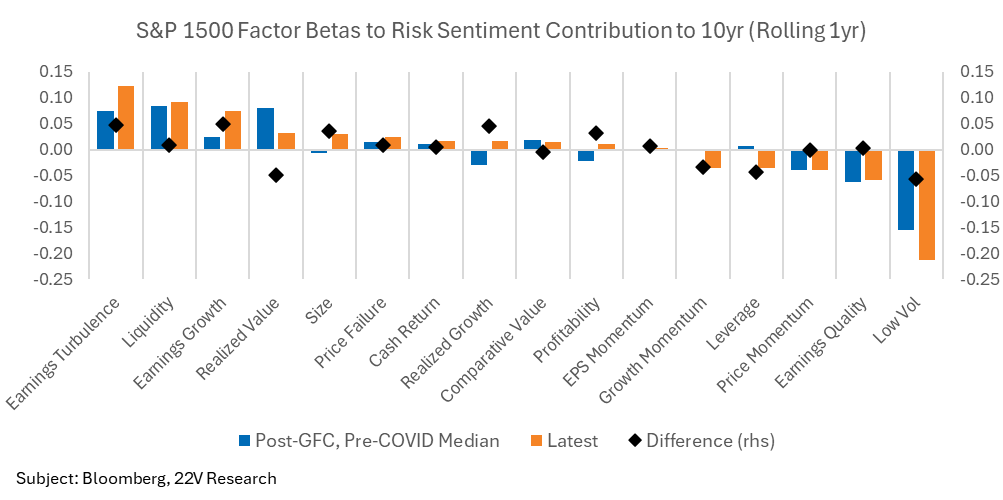
Similar story for factor betas to risk sentiment as for economic demand.
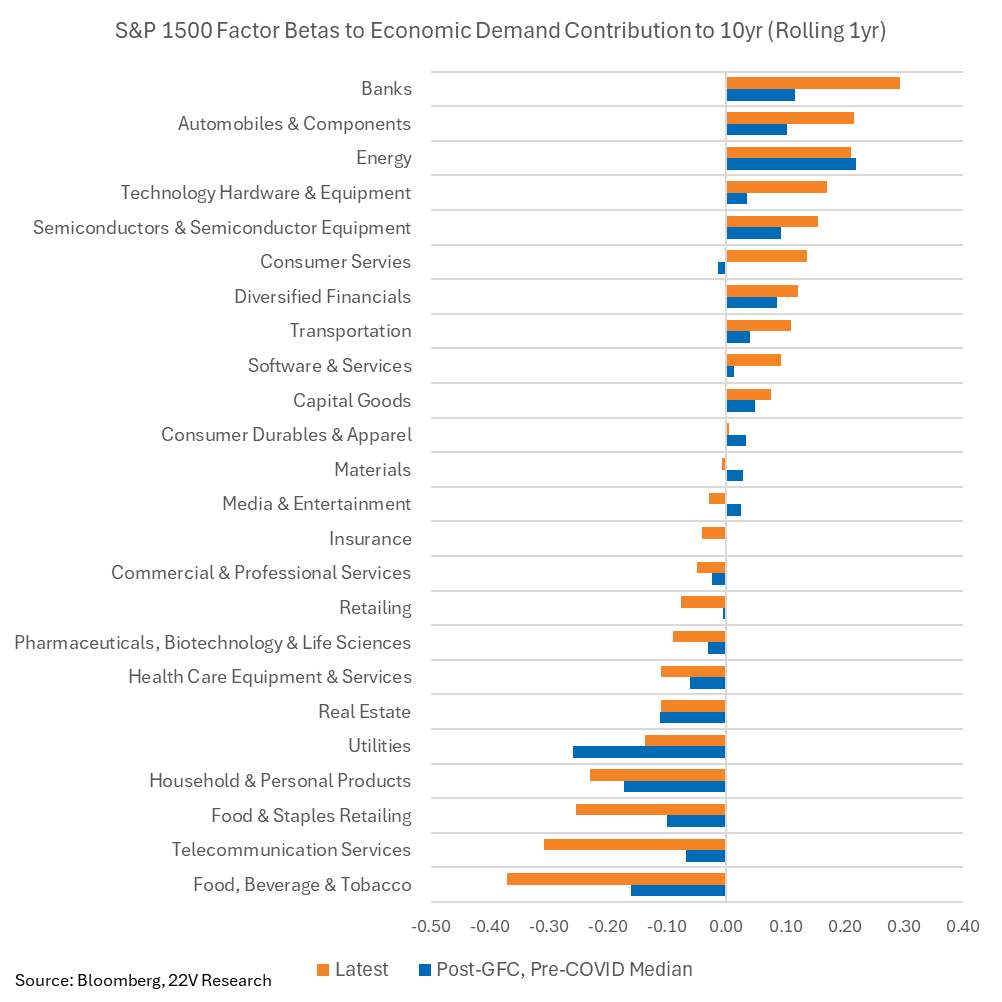
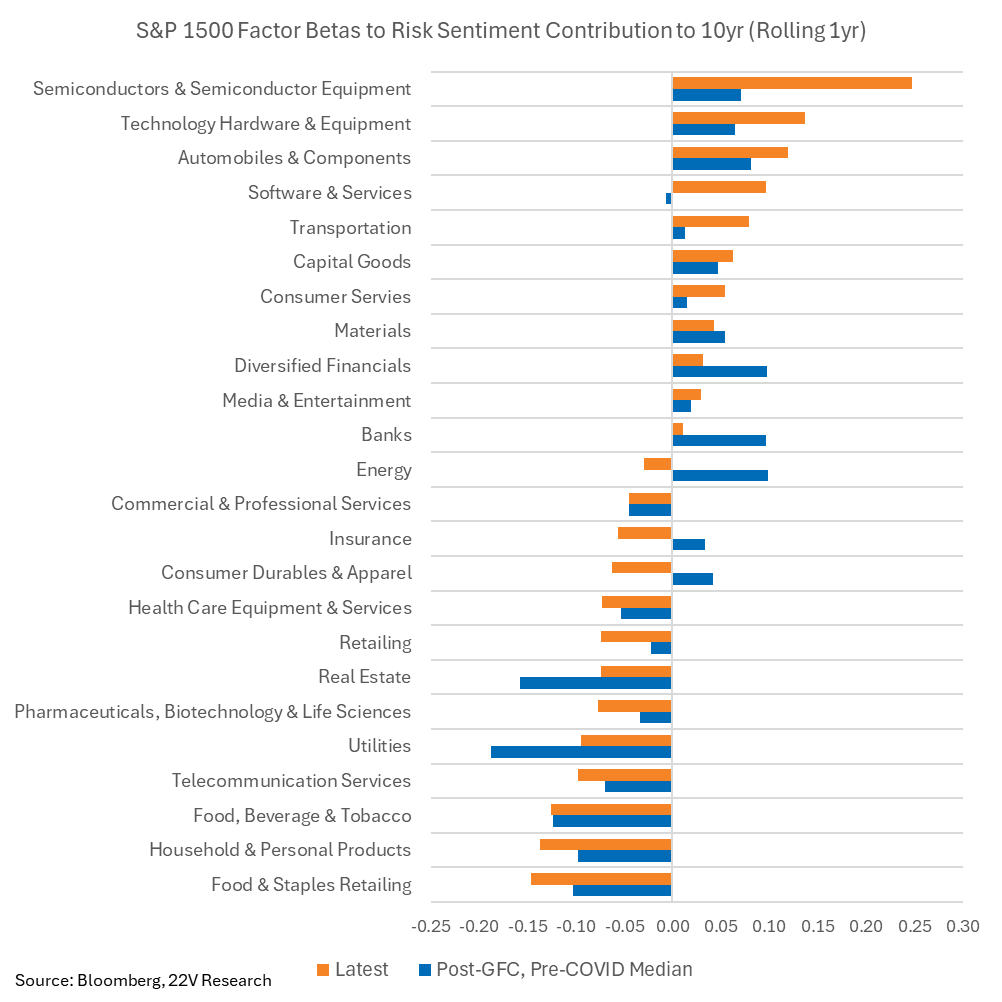
We repeat the exercise for industry groups below. Energy, Retailing, Biotech, Transports, and Semis are all unusually positively correlated with higher yields from monetary policy. Those are traditionally more risk-on groups. Real Estate, a rate sensitive, is one of the few that is consistent in its negative exposure. Early Cyclicals (tech, comm svcs) face headwinds from higher yields, relative.
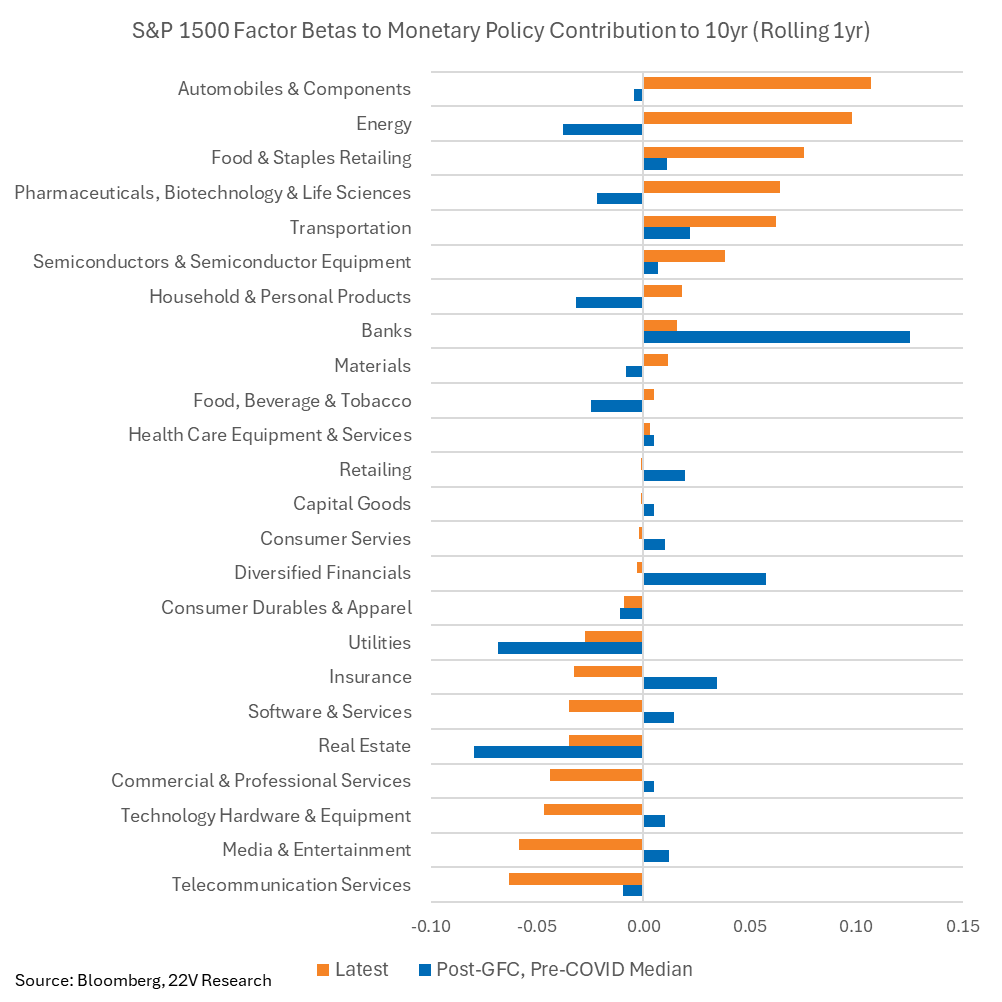
Like with factors, industry groups are more aligned with their ‘normal’ correlations to economic demand and risk sentiment. Net net, when demand and risk are also pushing yields higher, stay long Cyclicals (Banks, Energy, Tech Hardware, Semis, Consumer Services, Diversified Financials, Transport. Software, Cap Goods) and short Defensives and Rate Sensitives (Insurance, Biotech, Health Care Equipment & Services, Reaal Estate, Utilities, and Staples). Banks stand out as one of 22V’s favorite longs – more on the fundamental case for them, from Bill Hebel, 22V Financials analyst, HERE.