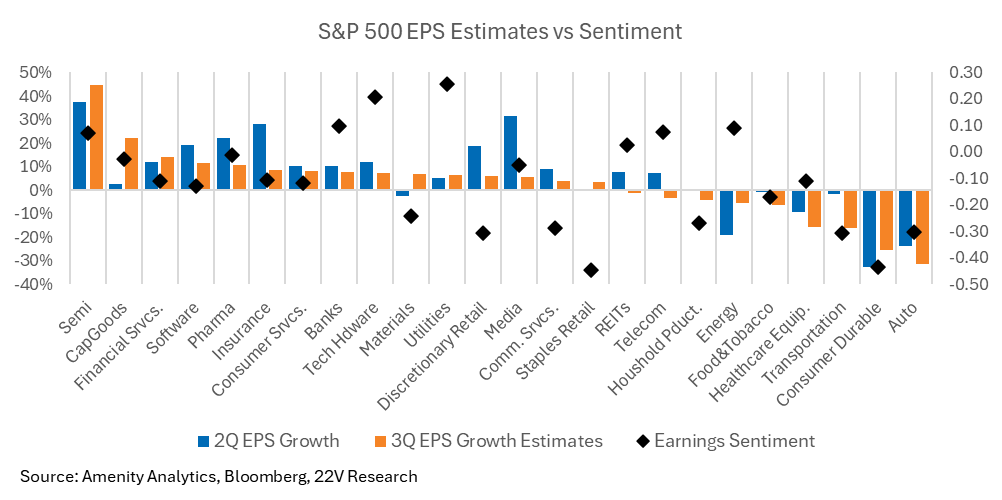
Last week the 22V Strategy team compared analyst expectations to corporate sentiment at the industry group level (HERE). Today I wanted to follow up with two option trades to position for the Strategy team’s findings as we head into earnings season.
Banks have particularly strong sentiment and modest earnings expectations, a good setup for positive surprises. Staples have the worst sentiment, but don’t have particularly weak earnings expectations. Staples Retail is an area to look for negative surprises especially (KR, SYY, WMT, COST, DLTR, GG, TGT).
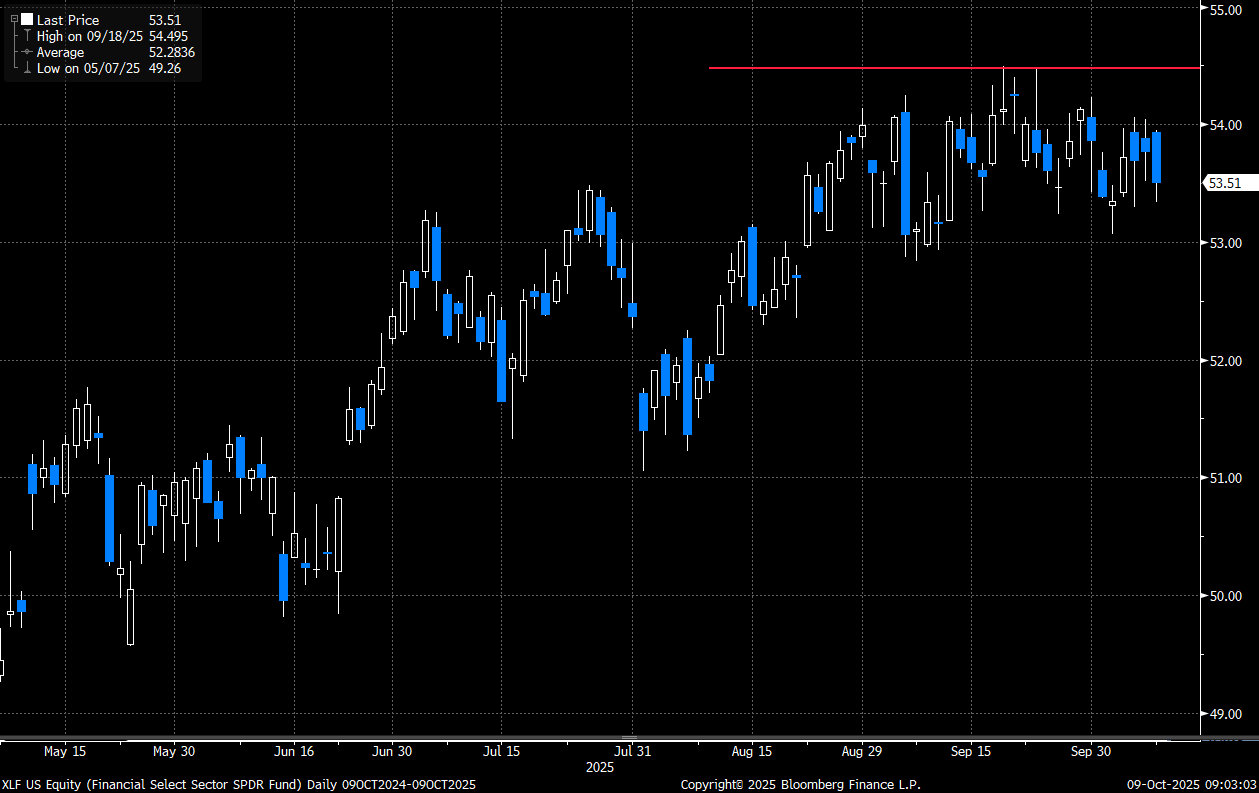
Banks have been unable to rally over the past month, even with the market (SPY) making new highs on what seems like a daily basis. This dynamic has resulted in the XLF/SPY relative spread declining by nearly 5% since the start of Sept (down 11% since April), and the spread is now just above the 1-year lows. Perhaps the upcoming earnings season will be the positive catalyst needed for the sector to breakout above the recent highs? I suggest targeting a breakout above the 54.50 highs as the call/strike to own, and prefer extending the duration out to 10/24 even though most of the largest names will be reporting the week of 10/17.
Trade:
Buy XLF Oct 24th 54.5 calls for .38 (XLF 53.50 ref)
Trade Details:
- Buying the calls with a strike set at the recent highs
- Banks in general have been huge laggards to the overall market
- By Oct 24th we will get earnings from JPM, BAC, C, WFC, GS, MS and AXP (all top 10 weighted names in XLF)
- Limited-risk way to add upside exposure in the sector thru earnings season
- XLF vol trades at a large discount to the names that will be reporting
XLF – targeting a breakout above the recent highs with short-term “cheap” calls
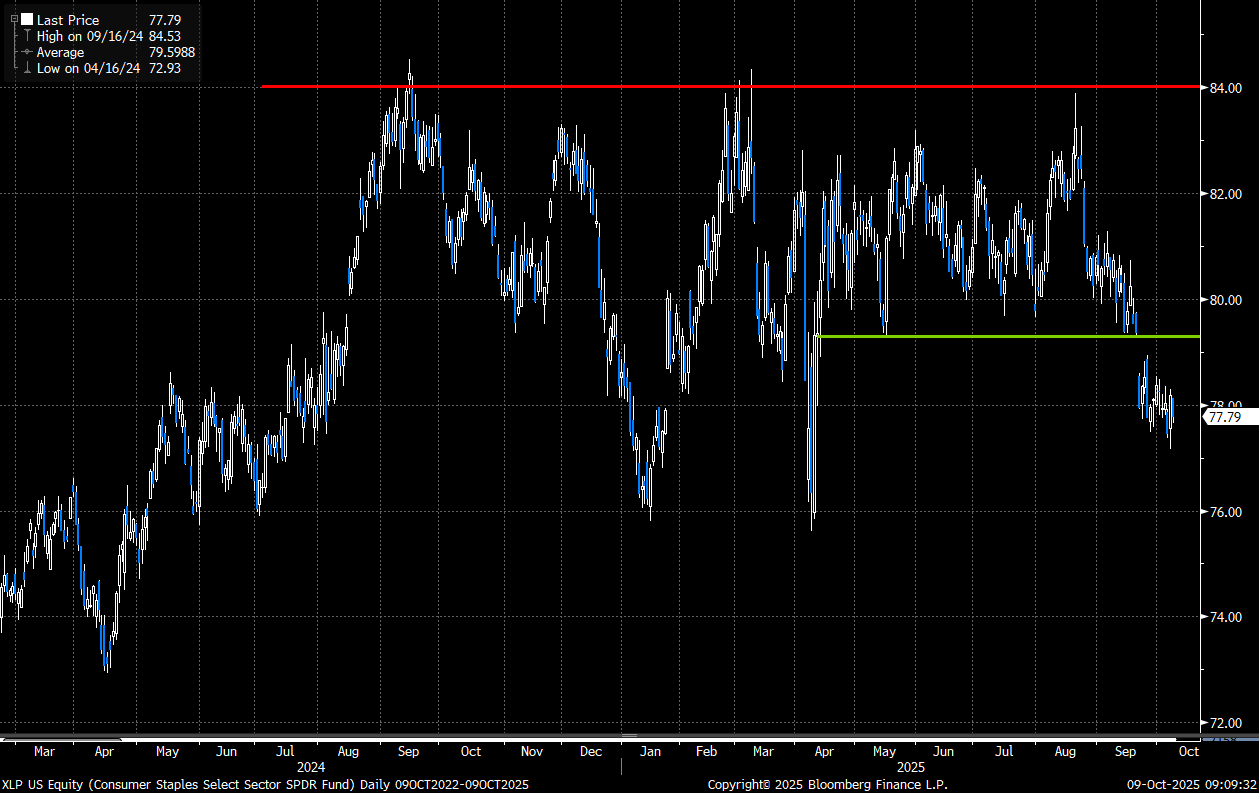
The main Staples ETF (XLP) broke below the recent support level ~ 79.5 appears to be in danger of at least testing the Jan-April lows ~ 76. I believe that XLP performance would be way worse had it not been for large retailers holding it up. Walmart (WMT) is the largest weighting in XLP at 10.6% and that too appears to be acting “toppy” as it rallied back from the post-earnings lows from August but remains below the Feb-Aug all-time highs. With the likes of COST, TGT, BJ and KR all moving lower, it seems unlikely that WMT (at 40x) is going to “save” the group/sector. Again, these are the names with the most negative earnings sentiment.
Trade:
Buy XLP Nov 21st 77 puts 1x
Sell XLP Nov 21st 73 puts 2x
Costs ~ $0.42 (XLP 77.79 stock ref)
Trade Details:
- Buying the November 1×2 put spread in XLP following break below recent support
- Put spread starts just over 1% below spot, and is targeting a potential move back to the April 2024 lows ~ 73
- Trade offers a nearly 9x to 1 max payoff, while capturing favorable put skew (why I like the 1×2 ratio trade)
- Nov expiry not only captures bulk of earnings for the sector, but WMT reports on 11/20 (day before the Nov options expire)
- Trade can be used to hedge long exposure to the staples, or as a limited-risk bearish bet
XLP with a break below support after failing several times at the $84 level
HOMEBUILIDERS: Homebuilders remain under pressure following a sector downgrade on Tuesday, with the broader backdrop offering little relief. Despite the recent pullback in mortgage rates, housing affordability remains historically low, and there has been no meaningful improvement in demand. With the next move in long-end yields more likely to be higher—or at best, flat—there is limited scope for further affordability gains. On September 24th, we recommended ITB Oct 31st 105/95 put spreads for $2.40 based on our strategy team’s negative view. Those are worth ~$3 here, in a tape where the S&P is up +1.8% over that time (ITB has declined by over 3%) . Details on the original trade can be found HERE. I still like hedging Homebuilders here thru earnings season given lingering concerns, but would now focus on November structures.
Trade:
Buy ITB Nov 21st 100/90 put spread for $2.10 (ITB 103.75 ref)
Trade Details:
- Buying the November downside put spread with sector continuing to move lower on both an absolute and relative basis
- Nov expiry will capture earnings from most of the largest names (DHI, NVR, PHM)
- Put spread starts a bit over 3% lower and has a nearly 4x to 1 max payout
- Structure can be used to hedge long exposure to the sector, or as a limited-risk bearish bet given the strategy team’s concerns
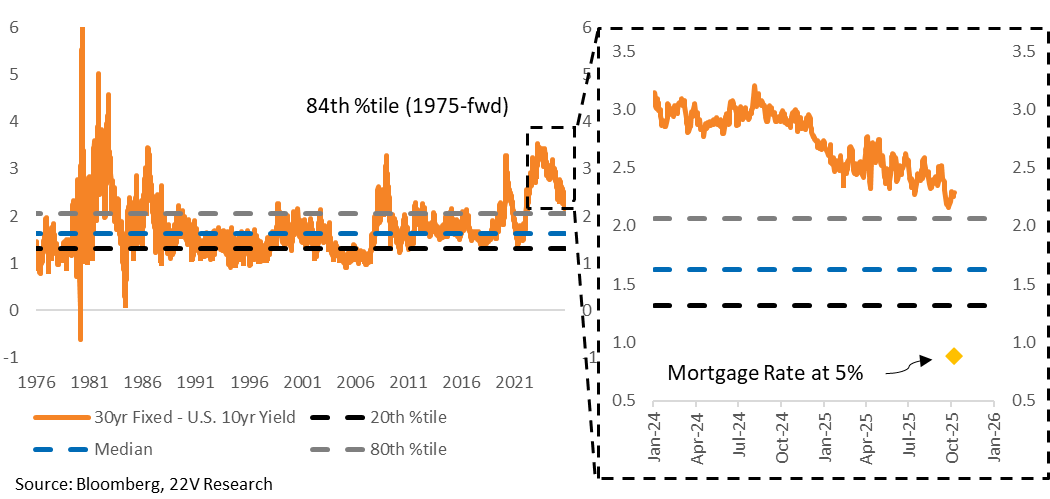
Affordability remains low with mortgage rates at 6%. Meaningful changes to affordability require larger changes to mortgage rates or outright housing deflation. With underlying demand still strong, that outcome depends on a recession.
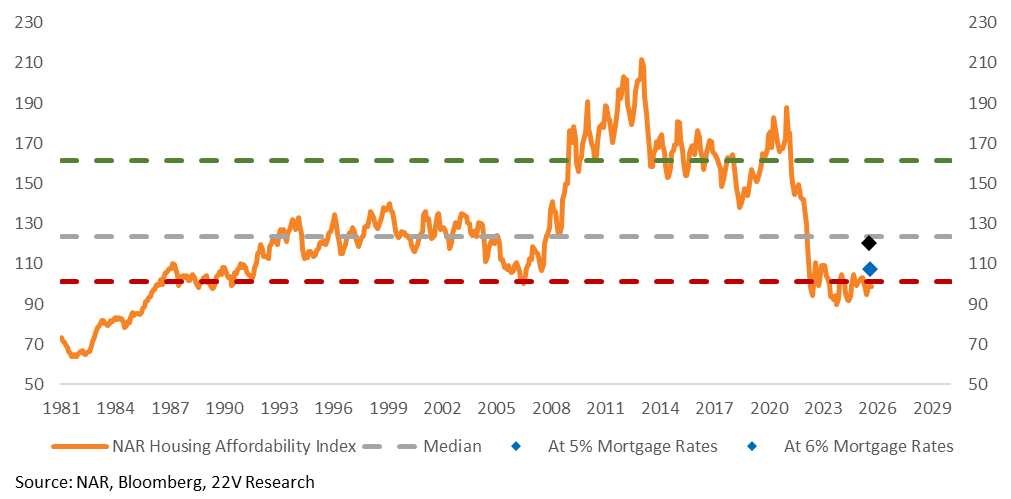
Further compression of mortgage rates would be an out from this framework, but to get mortgage rates low enough to significantly impact affordability, mortgage spreads would have to compress significantly from here.