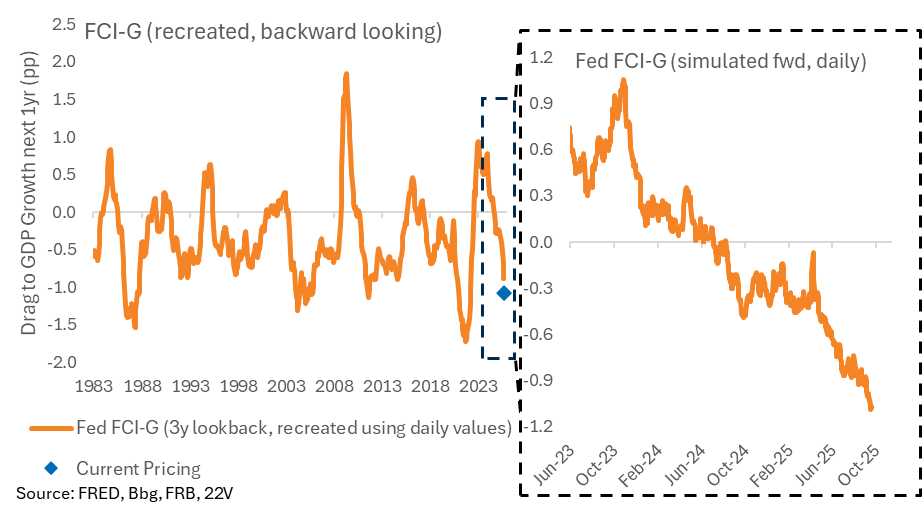
SUMMARY: With real consumer spending tracking +2% in 3Q, unusually strong AI capex, and productivity growth looking solid and likely subject to upward revisions, the case for a “landslide” in labor is less compelling. At the same time, outside of the COVID shock, the Fed FCI-G financial conditions indicator has never really been easier.
Easier financial conditions were likely necessary to offset the tariff shock, but the peak impact from tariff uncertainty has arguably passed (HERE). Additionally, it is hard to forecast a recession given the size of the AI-led capex boom. Recession probabilities are coming down as a result. Today’s backdrop suggests some upside risk to rates and a stabilization of the USD.
Upside risk to rates is not “bad” if it is associated with lower recession risk. Also, as the Quant team pointed out yesterday (HERE), since 1990, during non-recessionary cuts, the S&P continues to rise for several months. If history repeats itself, that implies a further easing of financial conditions through higher stock prices. Further easing of financial conditions is unlikely as labor market-related recession risk declines. Higher yields would help offset any easing related to higher stocks or credit spreads narrowing. The USD could rally too, tightening FCI somewhat.
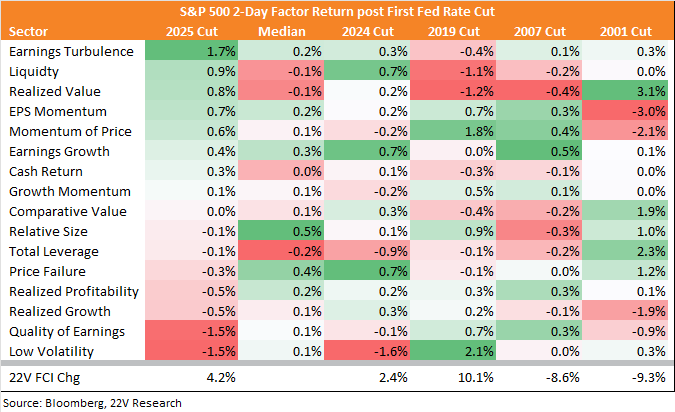
During non-recessionary rate cuts, factor leadership tends to be more risk-on tilted. Earnings Turbulence and Liquidity usually lead at the expense of Low Volatility. Most fundamental factors have outperformed, too, including Value, Momentum, and Growth, all of which are in line with our regime-based expectations. We are focused more on Growth, Momentum, Banks, and Consumer Service stocks now (Earnings Risk within banks and Consumer services in particular). We are long high AI usage names. The nuance is that low-interest rate beneficiaries (Homebuilders and unprofitable small caps in particular), should lag.
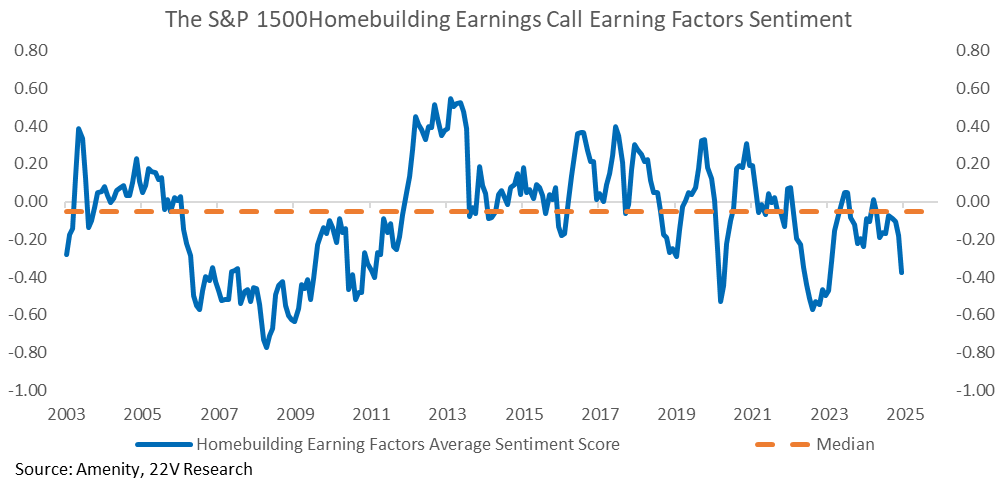
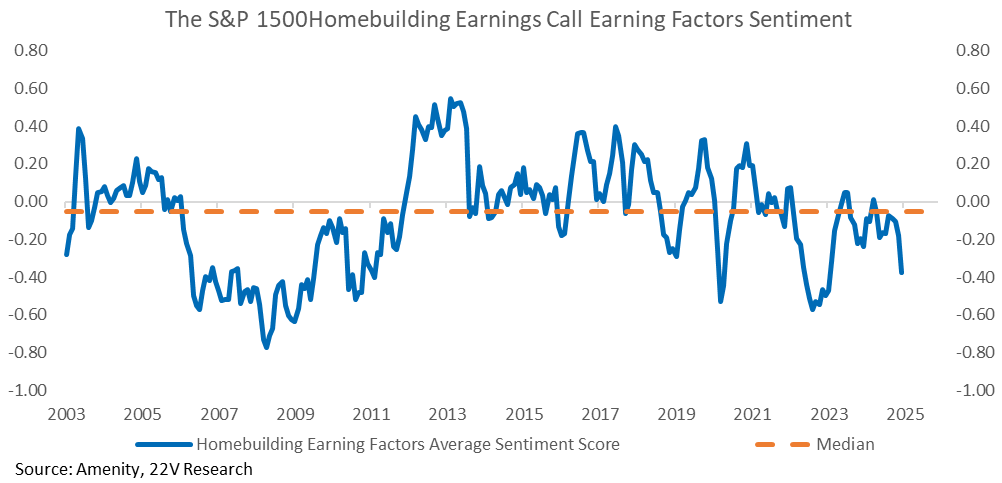
Homebuilders Near-Term Headwinds – Data last week showed housing activity remains in the doldrums even as mortgage rates decline. Our view is 10yr yields are biased higher from here, so lower mortgage rates that support housing demand are unlikely. Earnings sentiment expressed by Homebuilders, measured using Amenity’s natural language processing tool, rolled over this quarter. It’s the worst reading since the Fed last raised interest rates.
Full report below…
MARKET VIEWS: As Gerard pointed out yesterday (HERE), with demand growth holding up (2% real consumer spending tracking in 3Q + unusually strong AI capex), and productivity growth looking solid and subject to upward revision, the case for a “landslide” in labor does not look compelling. At the same time, outside of COVID shock, the Fed FCI-G financial conditions indicator has never really been easier. Easing financial conditions was likely necessary to offset the tariff shock, but the peak impacts from tariff uncertainty are arguably passing (HERE). Additionally, it is hard to forecast a recession given the size of the AI-led capex boom. Recession probabilities are coming down as a result.
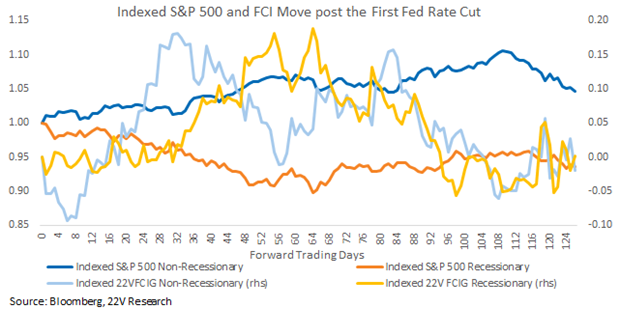
As the Quant team pointed out last night (HERE), since 1990, non-recessionary cut cycles saw the S&P continue to rise for several months following the first cut. If history repeated itself, that implies a further easing of financial conditions through higher stock prices. From here, we think interest rates, across the curve, are biased higher. Given our macro outlook, yields should increase, offsetting FCI easing from higher stocks or narrower credit spreads. The USD could rally some as well, offsetting stock gains.
FYI – During non-recessionary rate cuts, factor leadership tends to be more risk-on tilted. Earnings Turbulence and Liquidity usually lead to the expense of Low Volatility. The window is very narrow, but internals have largely followed that pattern so far. Most fundamental factors have outperformed, too, including Value, Momentum, and Growth, all of which are in line with our regime-based expectations.
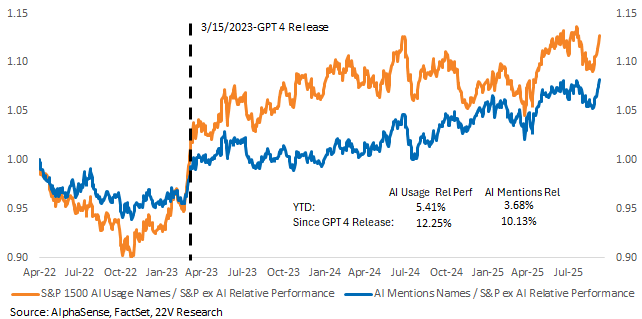
The S&P 1500 AI usage and mentions names bounced back over the past few weeks, and we expect that to continue. If our call is correct that bond yields grind higher, housing and durable sectors should lag.
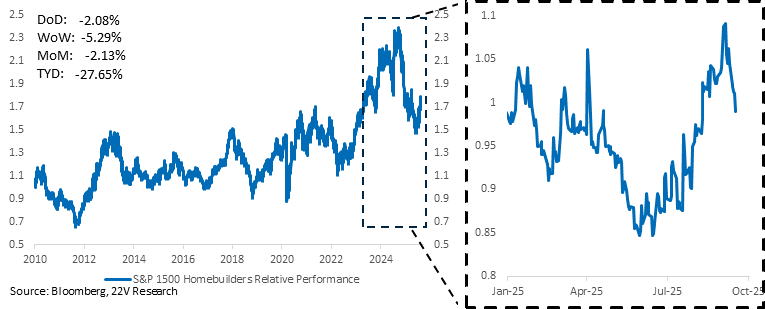
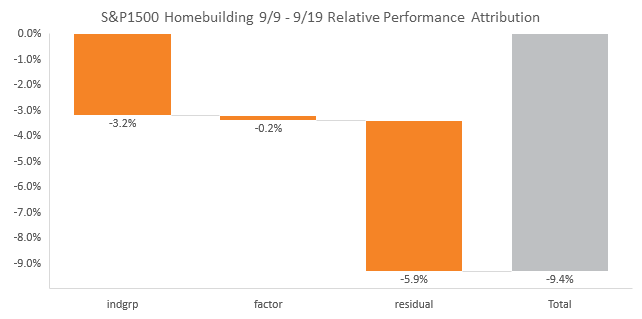
Homebuilders Face Near-Term Headwinds – Data last week showed housing activity remains in the doldrums. Despite the recent decline in mortgage rates. Our view is 10yr yields are biased higher from here, which means even lower mortgage rates to support housing demand are unlikely. Homebuilders, a group that performed very well in the summer, also experienced some significant earnings misses, leading the group to underperform the S&P 1500 by -5.3% last week.
Earnings sentiment expressed by the Homebuilders, measured using Amenity’s natural language processing tool, rolled this quarter. It’s the worst reading since the Fed’s rate rising campaign. Financial conditions have eased, but rate sensitivity is a headwind.
During the +29% relative rally in the Homebuilders in the summer, the Industry Group was the largest positive contributor, but the idiosyncratic risk was the largest contributor.
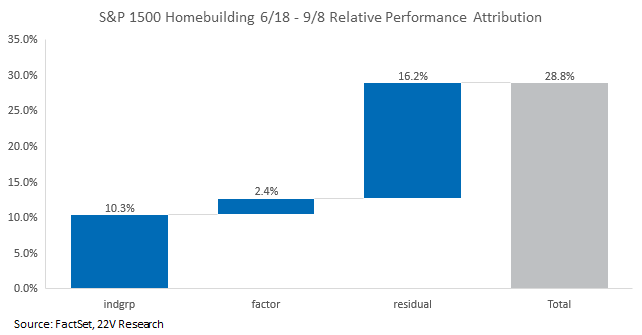
Now, the Industry Group and idio are dragging returns. When the idio contribution is high, the risk is for a reversion, brought to light this time by earnings misses.
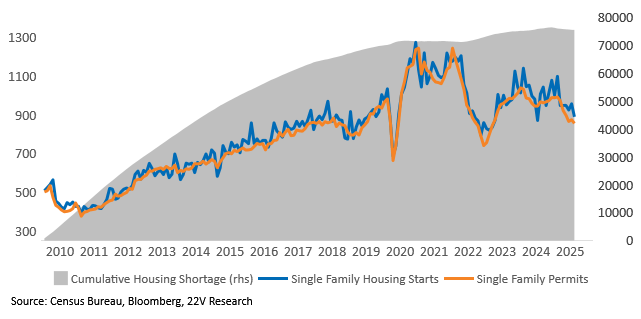
Background On How We Think About Housing Demand – The cumulative net shortage in housing in the US – demonstrated below from demand calculated by the Joint Center for Housing Studies of Harvard – is a well-documented tailwind for homebuilding activity. But the shortages are largely a local problem (HERE), and one that’s not quick to solve. In this cycle, yields are acting as an automatic governor on growth. Personal consumption and AI capex spend are too strong for housing to contribute to growth without an inflation problem. Housing activity is likely to stay in the doldrums, at least short-term, with yields biased higher. The good news, housing is unlikely to drive the economy into a recession, given 1) housing’s weak contribution to GDP for the past 3 years and 2) the housing shortage we already mentioned. Housing activity should continue to lag.