SUMMARY: Core inflation was strong in Sep/Oct and led to the Fed revising up their Core PCE forecast for 2024. What was surprising to the macro community was the willingness of the Fed to extrapolate the current core PCE trend (2024 Core PCE 2.4% and 2025 forecast 2.5%). They were surprised because rents are coming down and noisy items (financial services and autos) have been large drivers of the recent upside surprises to inflation. Plus, labor market slack has increased. Potential tariffs (and maybe immigration policy) are the generally accepted reasons in the macro community for extrapolating PCE trends. We agree with that reasoning.
The Problem: If we don’t know what tariffs will look like or even happen in a way that leads to a price level shock but Fed officials are willing to signal fewer cuts because tariffs MIGHT have a large price impact, the Fed’s reaction function becomes much harder to judge. Financial conditions biased to tighten is likely to keep equity vol elevated until we have more tariff impact clarity. That will favor the Low Vol factor now. Risk-on factors, debt risk names, and Small caps suffer. That is happening.
Bottom Line – Assuming our base case that tariffs will have little impact on broad inflation measures, the upside tail risk to Core PCE the Fed is worried about will decline. Along with the VIX. It might take several months to figure out what tariffs policy will be though, so we don’t have a reason for a sharp VIX reversal today.
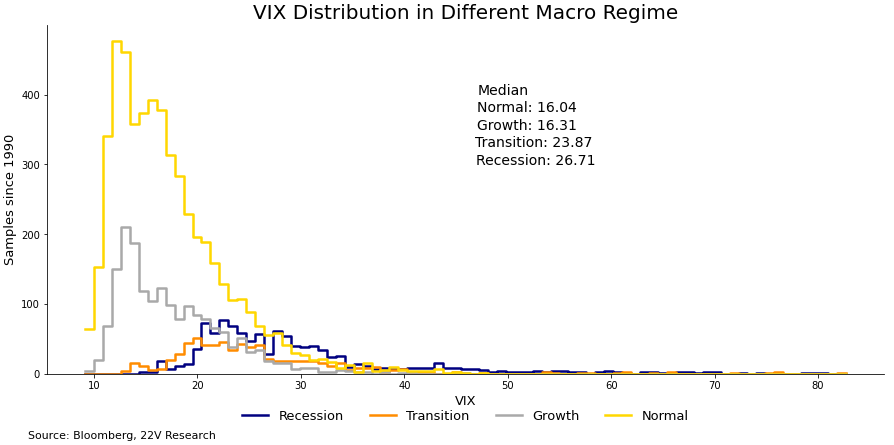
It is plausible that some influential Fed governor suggests the FOMC is NOT considering tariffs today, which would likely help somewhat. But it seems hard to put this genie back in the bottle. Anyway, our call remains for a continuation of the normal economic expansion. Buying the market on VIX spikes, in normal economic expansions, has led to higher-than-normal returns on a 1,3, and 6 month basis in the past. We are not saying buy the market today. Just that remaining in a normal expansion OR NOT, will be the main driver of sectors and factors longer term.
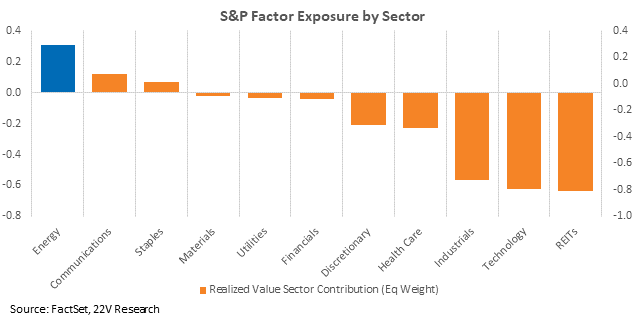
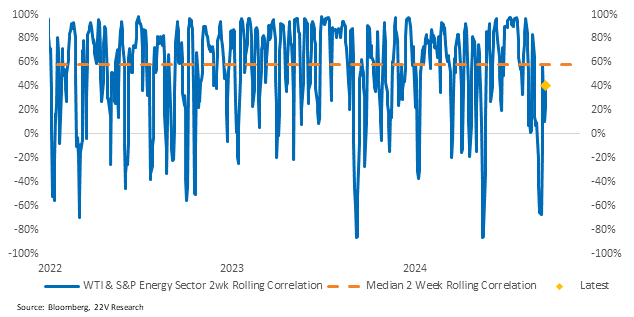
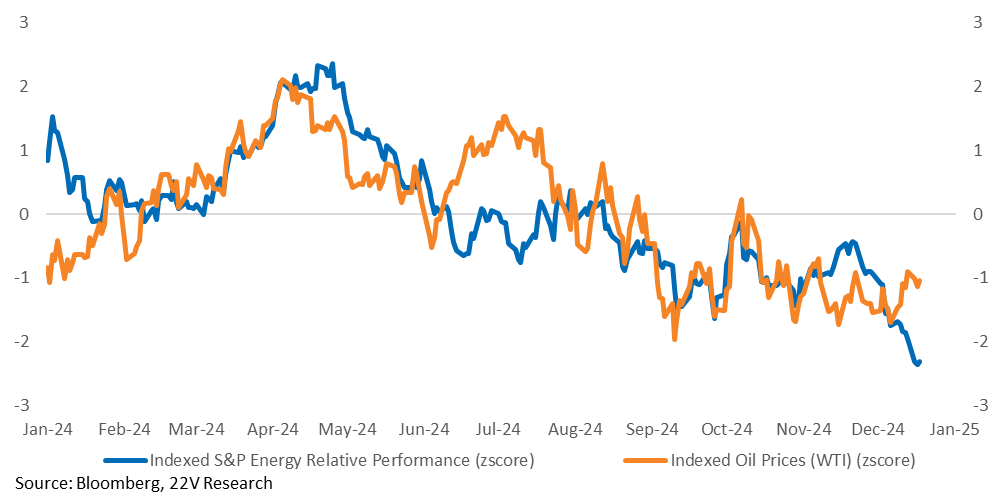
Looking At Energy: Yesterday, we highlighted that if financial conditions continue to tighten and equity indices have more downside risk, it will be good to own Value, which has negative beta to the market right now. Energy has the highest exposure to Value right now. Also, the relative price performance beta of Energy to oil prices has dropped recently as oil prices have stabilized, but Energy has rolled. The spread between Energy relative performance and oil prices has widened.
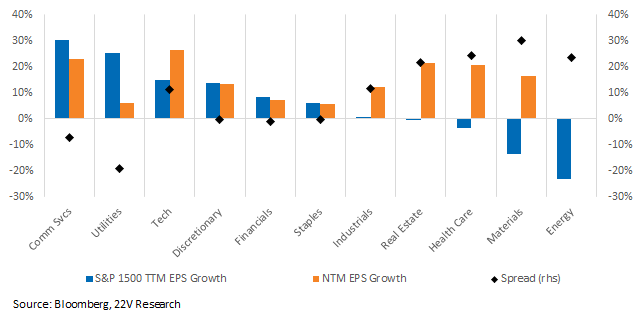
Energy earnings are expected to inflect next year relative to their terrible 2024. The absolute level of NTM EPS growth is not great, but the YoY change is significant. That’s a longer-term tailwind. Changes in fundamental trends is going to be a key theme in 2025 (HERE).

Full report below…
MARKET VIEWS: The consensus seems to agree that the upward revision to the Fed’s 2024 inflation forecast and willingness to extrapolate that revision through 2025 is related to potential tariff impacts. To be clear, core inflation data was strong in Sep/Oct. It is the willingness of the Fed to extrapolate the current trend. When rents are coming down, and noisy items (financial services and autos) have been a large driver of the surprising strength in inflation. Anyway, if we don’t know what tariffs will look like or even happen, but Fed officials are willing to signal fewer cuts in the event tariffs MIGHT have a large price impact, the Fed’s reaction function becomes much harder to judge. That increases Vol and is likely to keep equity vol elevated/financial conditions biased to tighten, until we have more tariff impact clarity.
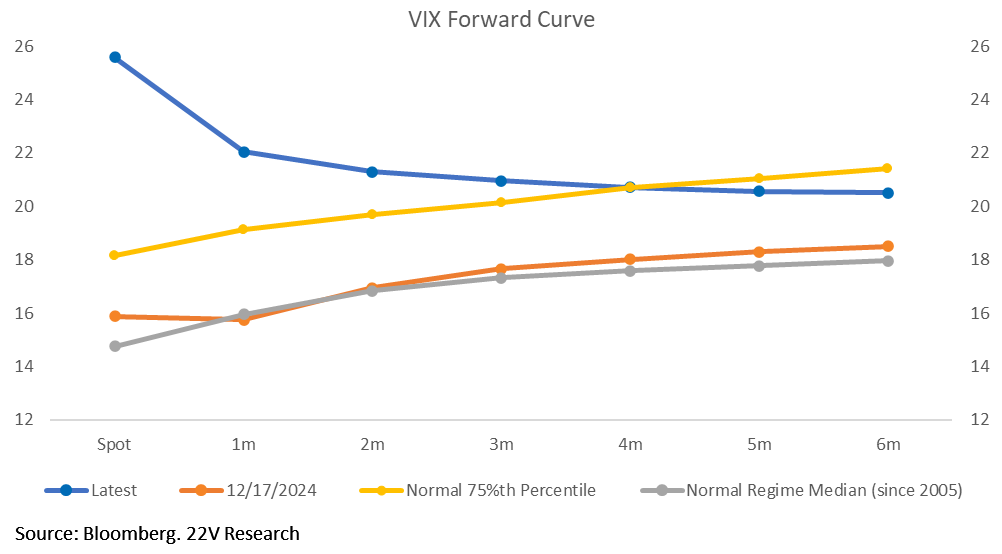
The 22V call is that tariffs will not be a large macro event. I.e., 10% across the board tariffs that lead to a one-time price level shock. Tariffs on China will happen. Assuming our base case comes to fruition, the upside tail risk to core PCE the Fed is worried about, from tariffs, will collapse. Along with the VIX. It will likely take several months to figure out what tariffs policy will be though, so we don’t have a reason for a sharp VIX reversal today. FYI – if some influential Fed governor suggests they are not really taking into account tariffs today, that would likely help. Our call remains that the normal economic expansion will continue and historically, the VIX tends to be elevated for only a short period of time in a normal economic expansion.
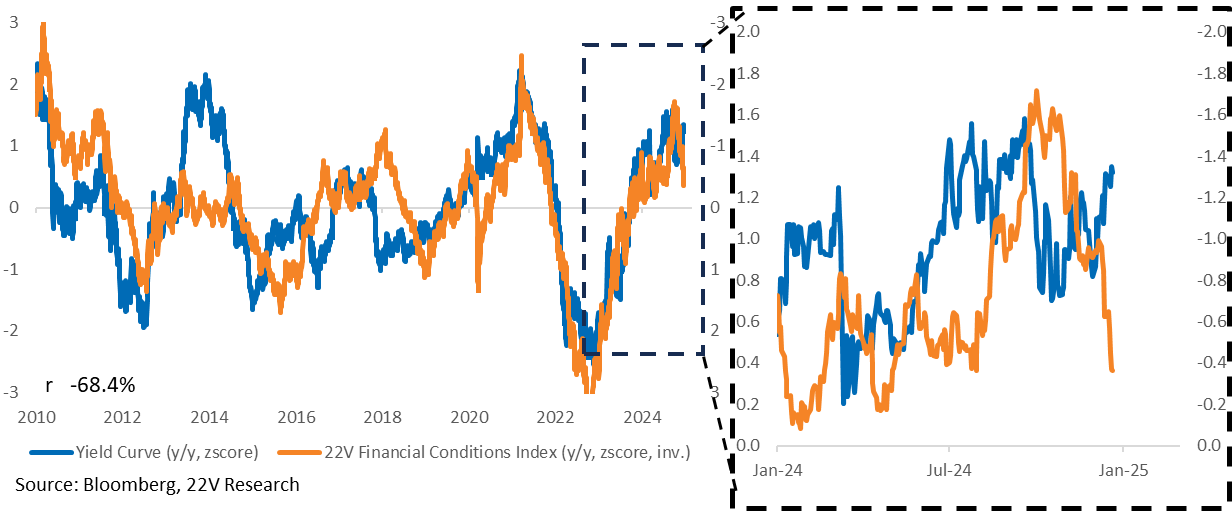
FYI On the Yield Curve – The yield curve steepened yesterday, and some people pointed out that being a positive. We wouldn’t look at it that way FOR NOW. Financial conditions tightened as the yield curve steepened. The fed is still signaling cuts, anchoring the short end, but significantly revised their Core PCE forecasts higher and noted all the risk is to the upside on inflation. The 10yr yield move is likely more about term premium increasing and the 10yr yield doing the heavy lifting in helping tighten FCI.
Looking At Energy As a Relative Long: Yesterday, we highlighted that if financial conditions continue to tighten and equity indices have more downside risk, own Value, which has negative beta to the market right now. Growth and Mo, the ‘expensive’ leaders, will catch down to the rest of the index. Energy is long Value from an unconstrained factor standpoint….
…and its relative price performance beta to oil prices has dropped recently as oil prices have stabilized, but Energy has rolled.
Colin Fenton, 22V’s head of commodities research, has a central case for a $72 cash oil price at both midyear 2025 and end-of-year 2025 marks. That’s another +3% from here. Check out his note HERE for more details. The spread between Energy relative performance and oil prices, should close some, with Energy relative performance improving, assuming a much worse global economic downturn is avoided.
Also, Energy earnings are expected to inflect next year. Relative to the terrible year they have had this year. That’s a longer-term tailwind. Changes in fundamental trends are going to be a key theme in 2025 (HERE).