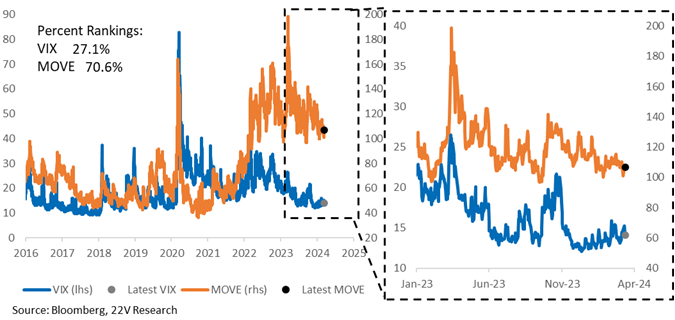
Bottom Line: With inflation still above target, there is a risk the Fed doesn’t cut at all, which is why bond vol is still unusually elevated relative to stock vol. Higher bond vol implies higher economic uncertainty longer term, which is bad for riskier factors, small caps etc., Those stocks are more dependent on an extension of the economic cycle. When bond volatility falls, expect significant and sustained outperformance of Small caps, Earnings risk factors etc., Bond vol has been trending lower, but has been stuck at an historically high level for a while. Less extreme vs. last year, but still high.
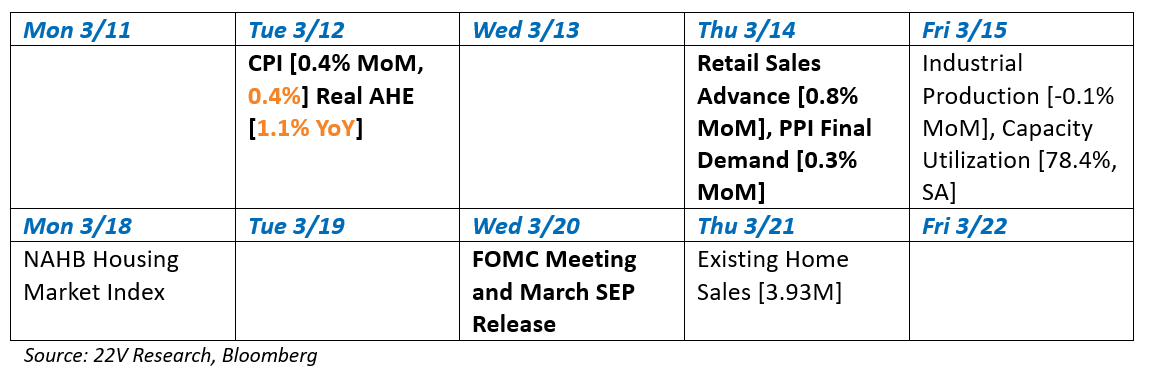
Relevant News: Yesterdays CPI report was a bit of a mixed bag. On net, 22V’s economist read it as a bit hawkish but not enough to change his view on a gradual cutting cycle beginning in May/June.
Things to Watch [Consensus, Result]:
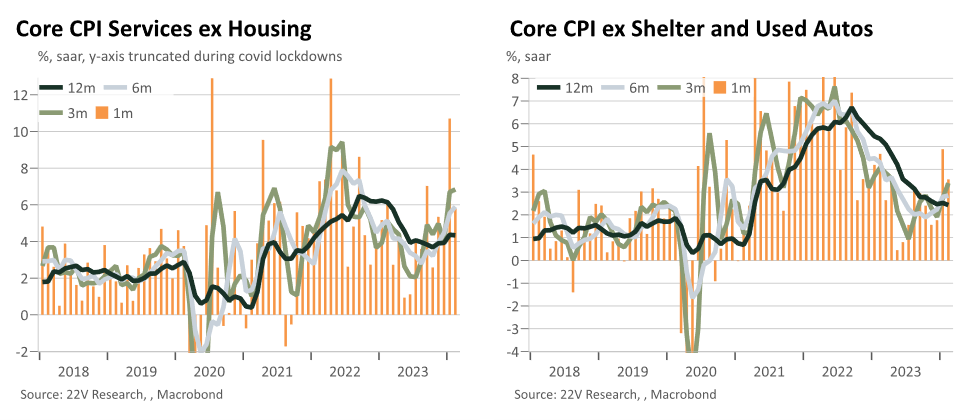
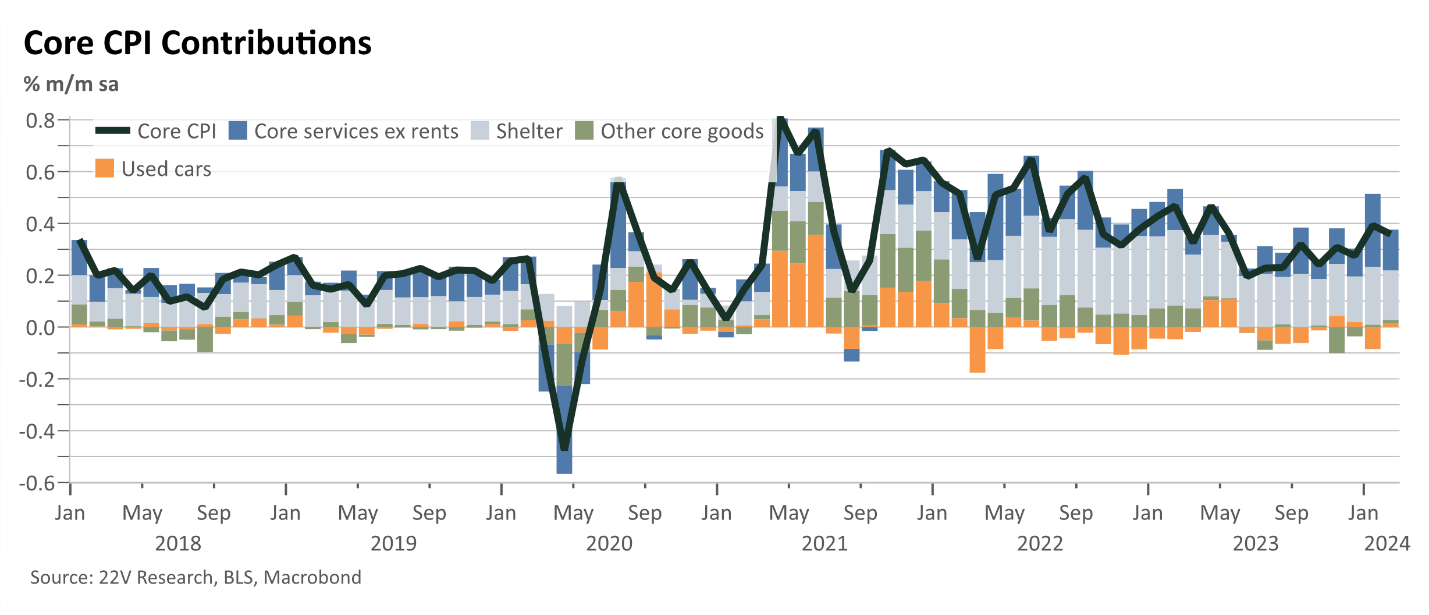
Economics: Feb CPI Comes in ‘Less Hot’ But Hard to Make it Dovish
Over the past few months, a more hawkish read seems to be harder to dismiss. A few notable points in that direction are: 1) the lack of decline in core goods ex used autos the last two months, this category likely sees some further decline, but this shows that persistent deflation can’t be counted on there. 2) sticky, relatively high, shelter inflation. 3) core services ex housing and core CPI ex shelter and used autos prints which both look to be going in the wrong direction on a multi-month basis.
Portfolio Strategy: Investors Waiting for Confirmation a Cut is Coming
Risk-on factors have a much more negative correlation with yields than the S&P. Yesterday’s internals were consistent with the move in 2yr yields and investors being concerned that “higher for longer” will keep 1yr forward recession risk elevated. If recession risk is higher than normal on a 1yr+ basis, it’s hard for stocks that are dependent on the economic cycle (Deep Cyclicals, Value, Small caps, Earnings Risk factors) to outperform.
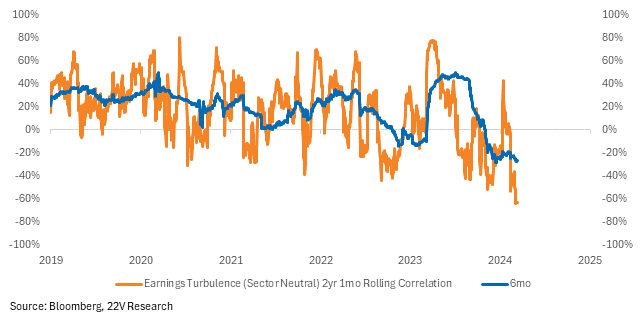
The aggressive shift into riskier parts of the market will happen when the Fed cutting cycle gets going. There is still risk that the Fed doesn’t cut at all, which is why bond vol is still unusually elevated relative to stock vol. As bond volatility falls, that is when you should expect significant and sustained outperformance of Small caps, Earnings risk factors etc., We seem to be trending in the direction of lower bond vol, but we still have a few important data points to get through to firm up the start of the Fed cutting cycle. Expect the market internals to remain choppy in the meantime.
Quant: Deep Cyclicals Catching up with Commodities
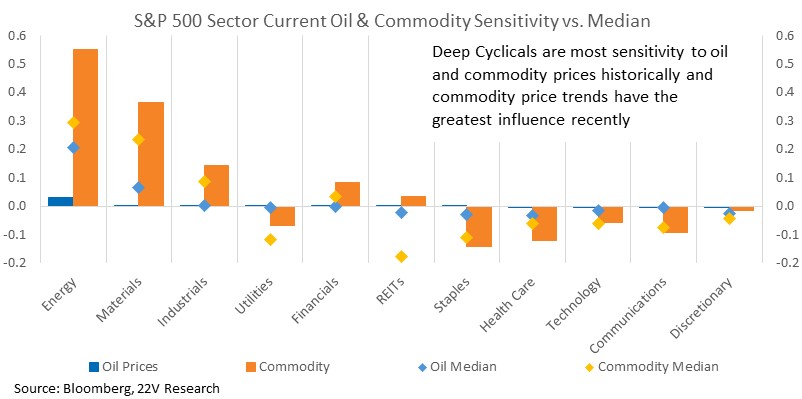
Deep Cyclicals outperformed over the past month, especially Energy and Materials. Those sectors are rebounding after underperforming earlier this year and are part of a broader, though volatile, rotation into industries and factors that benefit from the combination of faster growth and stable financial conditions. Sector leaders from earlier in the year, including Tech, Industrials, and Health Care have given back some of gains.
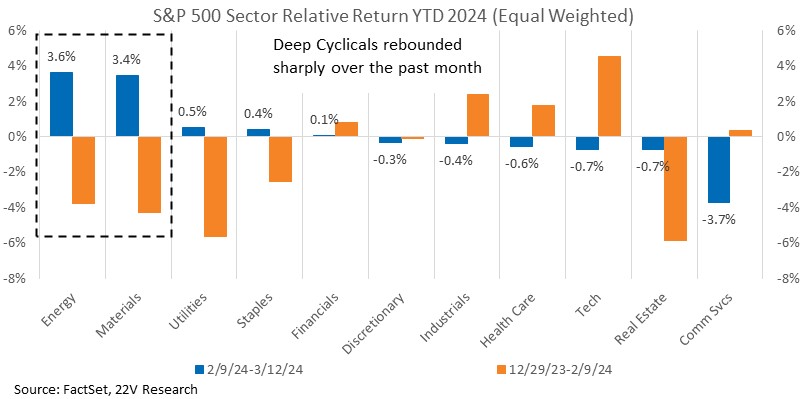
Deep Cyclical trends are usually more tied to the economic cycle and their recent recovery is aligned to the rebound in oil/other commodity prices. Earnings fundamentals for Energy and Materials remained weak in 4Q earnings (HERE), but it is not uncommon that Deep Cyclical return trends diverge from their earnings growth. There are still room for catch up in commodity cyclicals given their depressed return since last year and recovery in the oil prices tailwind (HERE).

We ran S&P sector sensitivity to oil (CL1) and industrial commodity prices (CRB RIND). Energy and Materials have the highest sensitivity to both macro series. Interestingly, oil prices have had a much smaller than normal impact on Deep Cyclicals recently while commodity price sensitivity is higher than normal. Oil prices have been volatile and macro trends over the past few years have encouraged rotations between Early Cyclicals (Tech, Discretionary, Comm Svcs) and Defensives (Staples, Utilities, Healthcare). That macro backdrop started shifting later in 2023, increasing the odds of a rebound in Deep Cyclicals.