SUMMARY: US 10yr yields have moved back above 4%, and short rates are stable, which means the most predictive yield curve has steepened (10yr-3mo). 10yr yields have increased on higher soft-landing odds, which is consistent with easing financial conditions. If Financial conditions remain stable around current levels, they would be a tailwind for further yield curve re-steepening. All things equal.

All things are not equal though. For most periods a recovery in the yield curve comes with both rising 10yr yield and declining 3mo yields. A decline in 3mo yield will likely be needed for the yield curve to turn positive. For short rates to move lower, the Fed would need to see a path for core CPI to move below 3% (without significant economic weakness).
Given the tightness in the labor market, Gerard notes “we are a long way from the Fed declaring victory and…they will continue to target below trend growth” If his framework is correct, that will limit how much the yield curve can recover. It seems like the market believes what Gerard has laid out, which helps explain why the Fed funds futures curve has short rates above 5% through June of 2024. If true, 3mos yields are not moving lower anytime soon.
Bottom Line: There is still some upside to the yield curve near term as core CPI moves toward 4% (Rents and Auto will drive core CPI lower), nearby recession risk remains low, and financial conditions are stable. Later in the year, it will be tough for core CPI to move well below 4% if wages remain sticky. Wages appear to be bottoming now, which lowers already low near-term recession risk but also leaves the Fed biased to keep short rates higher for longer.
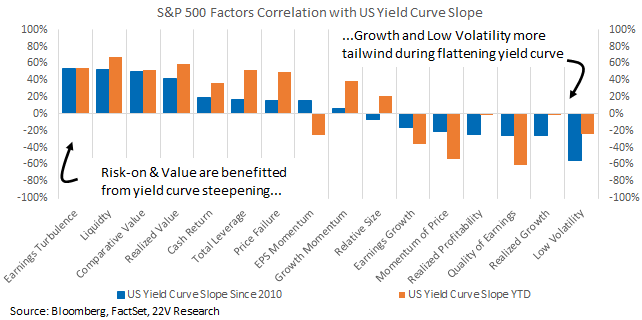
Risk-on and Value factors are most positively correlated with yield curve slope while risk-off and Growth factors are more negatively correlated. Risk-on factors should continue to benefit from a partial recovery in the yield curve over the coming months. We remain long Earnings Turbulence relative to Low vol, Cyclicals in general, and Destocking losers as that happens.
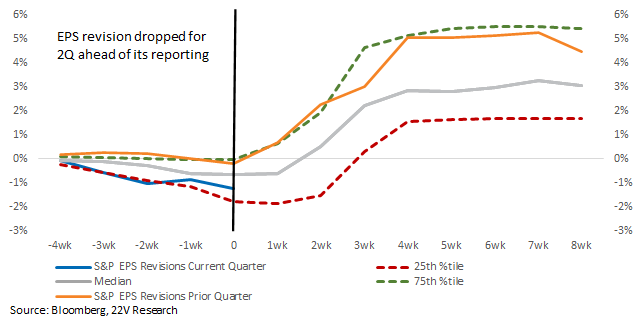
Earnings Season: Two quick points. 1) EPS revisions have declined and are hovering around their 25th %tile. From a earnings revisions point of view, the bar is low relative to history heading into this earnings season. 2) Assuming CPI is not an outlier, expect correlations to decline and idiosyncratic to be the main driver of returns in earnings season. Although market returns are limited, focusing on individual companies that have strong earnings momentum and or positive earnings sentiment is an unusually attractive approach this season.
Full report below…
MARKET VIEWS: Despite disinflation headlines from China (PPI deeply negative YoY and CPI pulling a Bluto Blutarsky at 0.0% YoY), 10yr yields are higher, the yield curve is slightly steeper, and oil and broader commodity prices are marginally lower. China is expected to announce new stimulus measures following the Politburo meeting at the end of July, so investors may wait to see what stimulus comes then before pressing negative commodity trades. In any event, US 10yr yields have moved back above 4% and short rates are stable, which means the yield curve has steepened (3mos-10yr). 10yr yields have increased on higher soft-landing odds, which is consistent with the modest easing of financial conditions. Financial conditions remain stable at current levels is a tailwind for further yield curve re-steepening. All things equal.
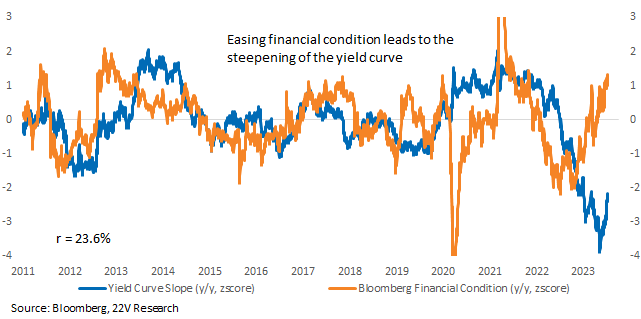
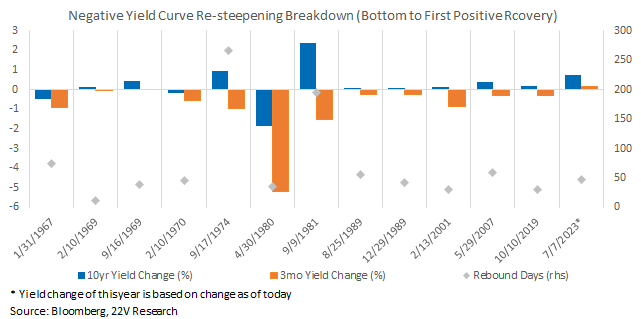
As noted in a Quant report today (HERE), most yield curve recovery periods come with both rising 10yr yields and dropping 3mo rates. The bottom line is that a decline in 3mo yield will likely be needed for the yield curve to move back into positive territory. For that to happen, the Fed would need core CPI to look like it is headed to below 3%. That is why CPI data this week is really important.
As Gerard points out today though (HERE), given the tightness in the labor market, “we are a long way from the Fed declaring victory and…they will continue to target below trend growth” If his framework is correct, that will limit how much the yield curve can recover. We still have some upside to the yield curve near term as core CPI moves toward 4% (Rents and Auto will drive core lower), but later in the year it will be tougher for core CPI to move well below 4% if wages remain sticky. Wages appear to be bottoming now, which lowers already very low near-term recession risk, but keeps the Fed biased to leave short rates higher for longer. That will limit how much the yield curve can recover.
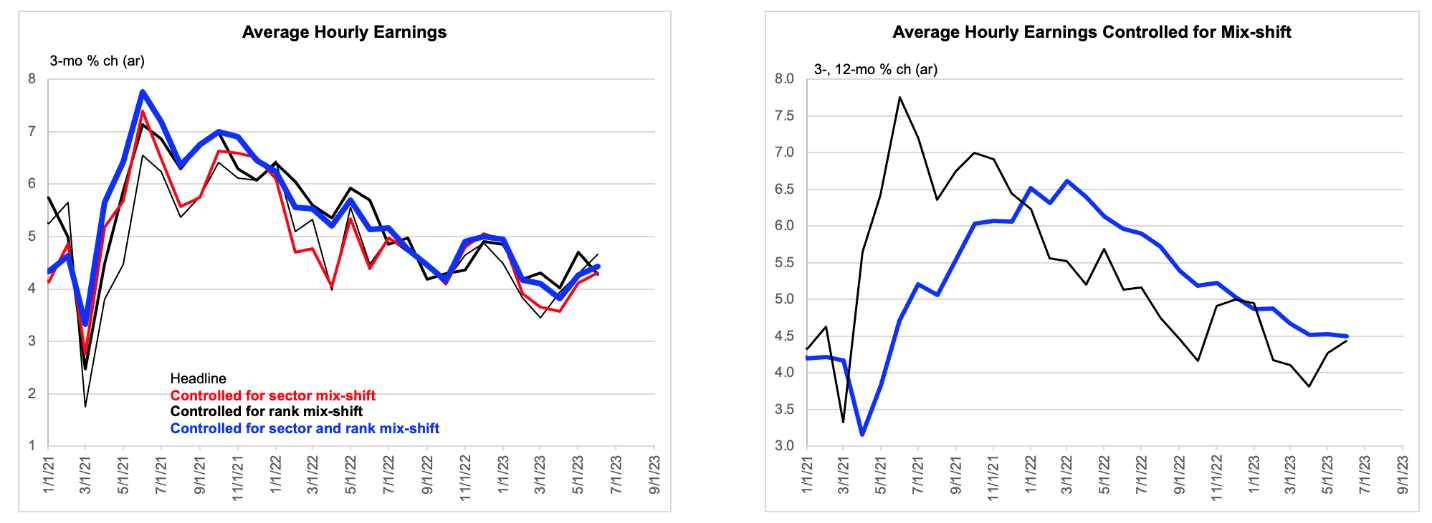
Source: BLS, 22V Research
Risk-on and Value factors are most positively correlated with yield curve slope while risk-off and Growth factors are more negatively correlated. The trend continued into this year as Value and risk-on factors rebound as the yield curve steepened, while Growth factors have showed slight divergence with their historical correlations. Risk-on factors should continue to benefit from a partial recovery in the yield curve. We remain long Earnings Turbulence relative to Low vol, Cyclicals in general, and Destocking losers.
Earnings Season: Heading into earnings season, EPS revisions have declined and are hovering around the 25th %tile. The bar is lower heading into this earnings season, which is consistent with several sell-side reports over the weekend suggesting 2Q earnings disappointment.
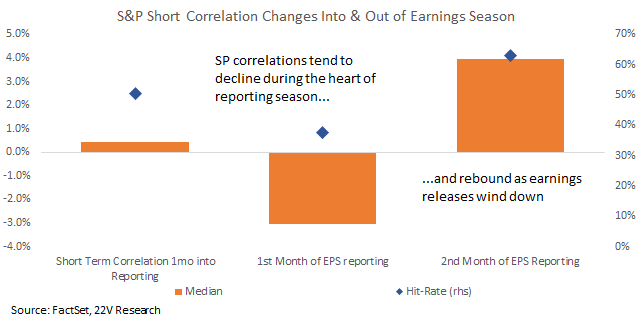
Assuming CPI is not an outlier, expect correlations to decline and idiosyncratic to be the main driver of returns in earnings season. Correlations tend to drop during earnings season and with Volatility lower and most of the big data points behind us, macro is much less likely to overwhelm earnings season. Making a market call on earnings season is much less interesting to us vs focusing on companies that have strong earnings momentum and or positive earnings sentiment.
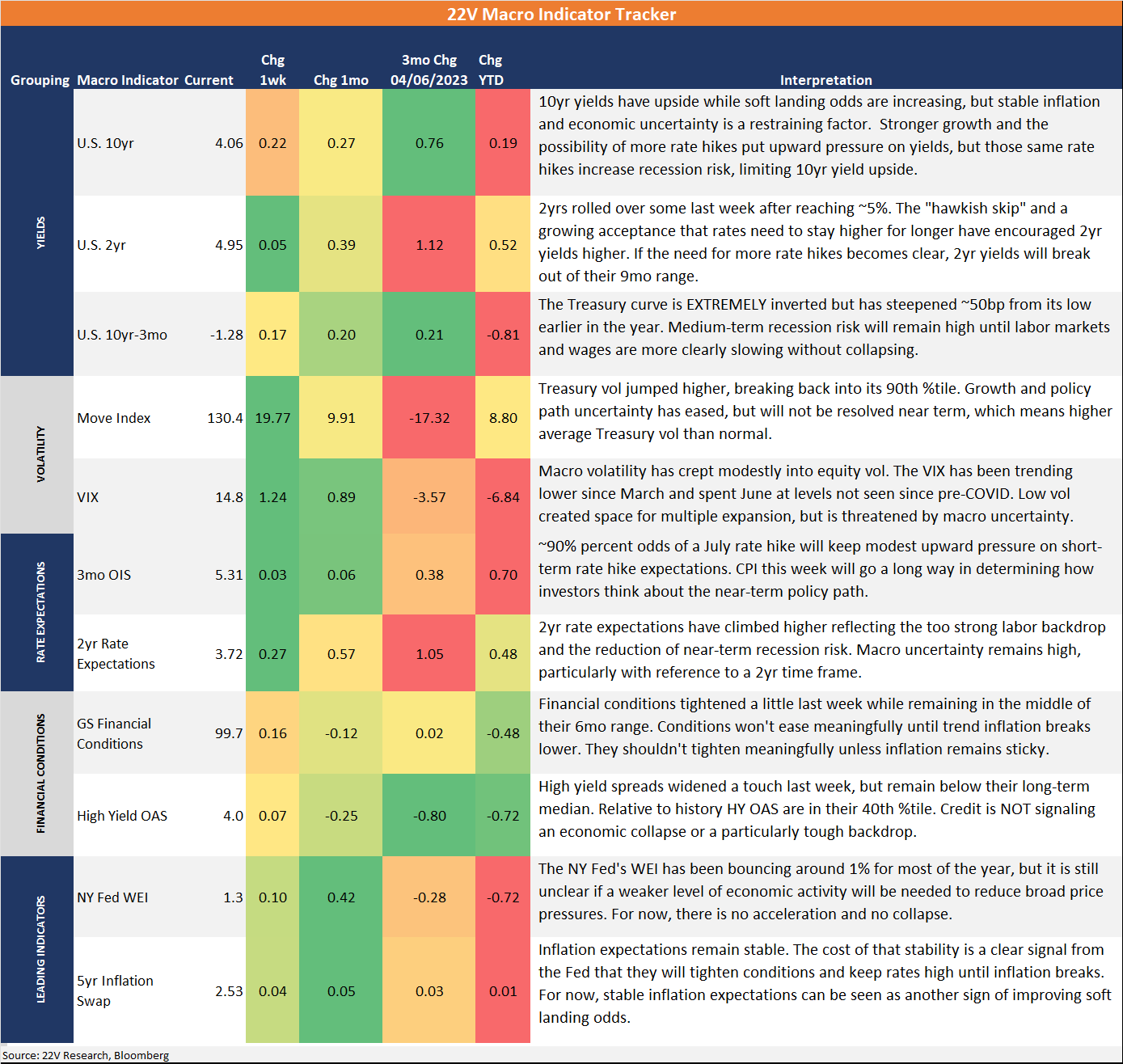
Macro Tracker: PMI and payrolls data last week reinforced the narrative of the past few months. There is no sign of an imminent economic collapse, and growth has slowed, but labor markets remain tight, indicating policy rates will need to be higher for longer. Equities moved modestly lower, but Cyclical and risk-on factors gained, and implied vol, though higher, remains at the low end of its YTD range. July rate hike odds are over 90%, so markets are pricing more rate hikes, but that is NOT translating into significantly higher recession odds. Credit spreads have widened some but remain below their median level, and financial conditions have tightened but are in the middle of their 2023 range (well below late-’22 readings). If downside tail risk had increased significantly, Cyclicals and risk-on factors would not be gaining, and FC would be tightening more. That is not to say that a market decline and risk-off rotation are not possible. Macro uncertainty is high, and a too-strong inflation print this week would increase the risk policy will need to be tightened further and faster. What we know today is that the 2022 rate hikes have slowed but not crashed the economy. The policy path needed FROM HERE will determine if risk assets can continue to edge higher or if increased recession odds need to be repriced into equities.