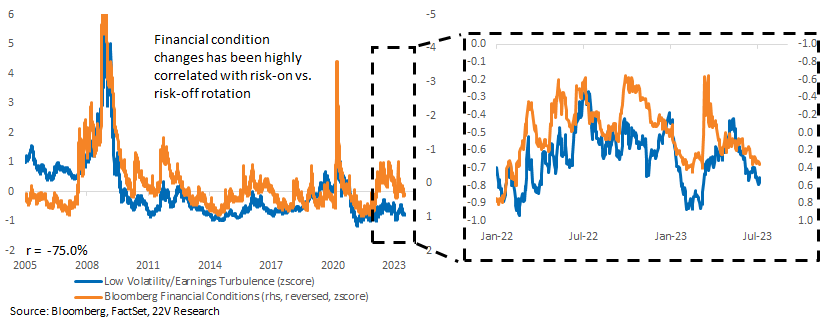
SUMMARY: If payroll data is hotter than expected, particularly wages and the urate (unemployment rate at 3.5/3.4% vs the 3.6% expected + higher than expected wage data would be a problem), a broader tightening of financial conditions should be expected. Odds the Fed needs to slow economic growth more aggressively increase. The bottom line is strong headline readings from payroll are not a bad thing if wages and core CPI keep trending lower.
That also suggests financial conditions will remain stable to easier if wage growth/Core CPI move lower. Stable to easier FC would provide ongoing support for risk-on factors into 2H. Let’s not get carried away with yesterday’s data just yet. Payroll and CPI are REALLY important pieces of the puzzle.

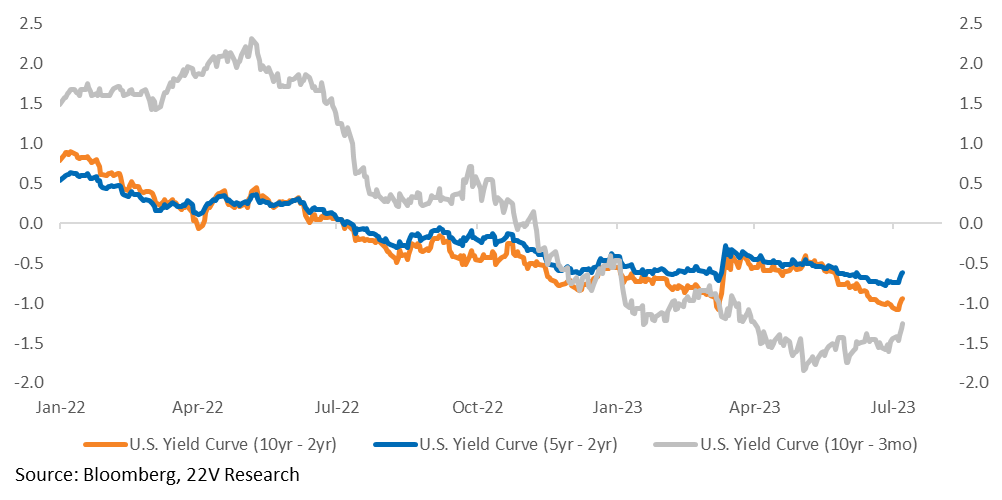
Yield curves are still deeply inverted because longer-term (8-10mo) recession RISK is unusually high. The Fed needs to keep economic growth below trend to slow inflation, which is why recession risk is high and curves are inverted. If yesterday’s stronger-than-expected labor market indicators were an obvious risk for the economy and there was conviction that the Fed will need to raise rates more and crush growth, we doubt yield curves would have steepened. That could change, but steepening of curves is something to keep an eye on. FYI: if wage/CPI data comes in too hot, yield curves would fall again as investors discount a more aggressive Fed and a concrete increase in recession risk.
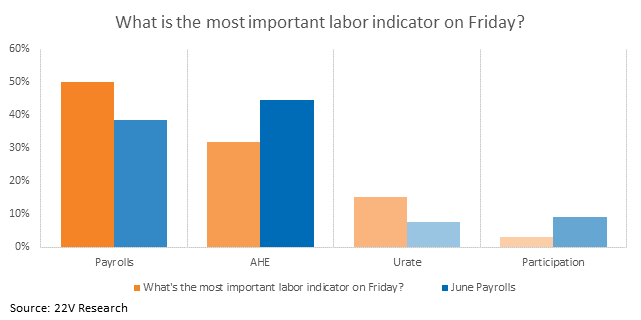
Payroll Survey Results: Institutional investors we surveyed (HERE) think employment data will be a bit softer than Bloomberg consensus.
- +230k Payrolls (Bloomberg +225k), but with wide estimate bands.
- 3.7% urate (Bloomberg 3.6%)
- 4.1% AHE (Bloomberg 4.2%)
Focus is on Payrolls first, AHE second. That’s a reversal from last month.
If the survey participants are correct, the backdrop would remain risk-on.
Full report below…
MARKET VIEWS If payroll data is hotter than expected, particularly wages and the urate (unemployment rate at 3.5/3.4% vs the 3.6% expected + higher than expected wage data would be a problem), a broader tightening of financial conditions should be expected. Odds the Fed needs to slow economic growth more aggressively increase. The bottom line is strong headline payroll readings are not bad IF wages are still trending lower. That also suggests financial conditions will remain stable to easier UNLESS wage growth moves higher. Stable to easier FC would be an ongoing support for risk-on factors into 2H.
Yield curves have been steepening, across durations, over the past few days. It’s a “bear steepening” with short rates moving higher more slowly than yields. Yield curves are still deeply inverted though because longer-term (8-12mo) recession RISK is unusually high. The Fed needs economic growth to remain below trend to slow inflation, which is why recession risk is high and curves are inverted. If yesterday’s stronger-than-expected labor market indicators were a clear risk to the economy and suggested the Fed will need to raise rates more to crush growth, we doubt yield curves would have bear steepened. That could change if wage/CPI data comes in too hot, yield curves would presumably invert more in that scenario as the Fed gets more aggressive and recession risk increases.
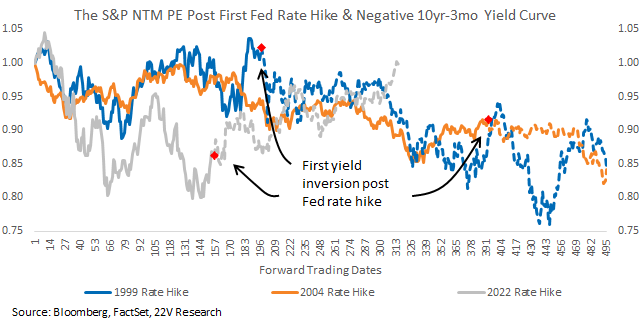
Yield curve signals are not perfect and the timing of recessions following a yield curve inversion can vary significantly. As we have pointed out before (HERE), the current post yield curve inversion period has been weird relative to history. S&P multiples usually decline following the first yield curve inversion. Recession probability is higher than normal, but the unusual increase in S&P multiples suggests some divergence relative to other periods. Maybe the post-COVID period is so odd relative to history (technical term) that rules of thumb are LESS useful. We didn’t say they were not useful, just less so. We have covered why we think the latter scenario is most likely many times in the past.
Payroll Survey/QUITS Rates: Institutional investors think employment data will be a bit softer than Bloomberg consensus.
- +230k Payrolls (Bloomberg +225k), but with wide estimate bands.
- 3.7% urate (Bloomberg 3.6%)
- 4.1% AHE (Bloomberg 4.2%)
Focus is on Payrolls first, AHE second. That’s a reversal from last month.
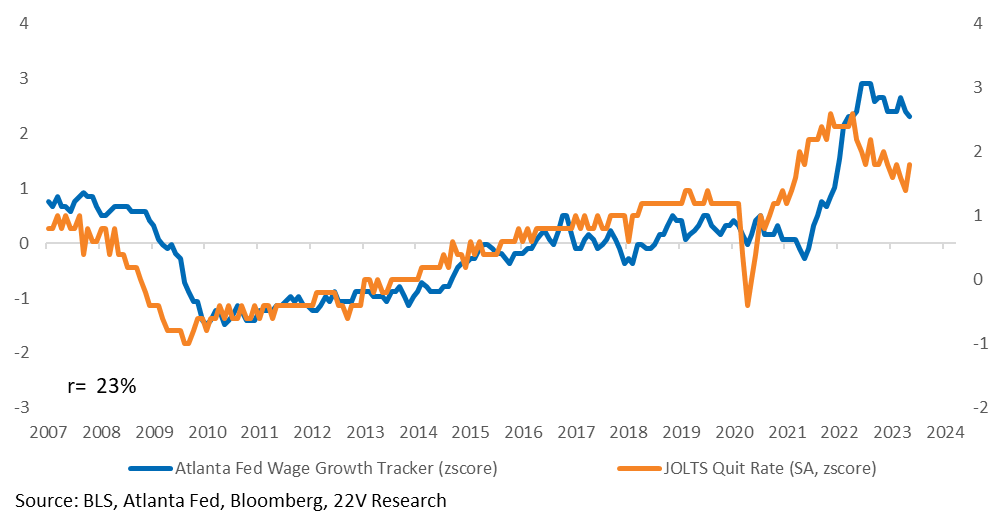
We don’t pay too much attention to JOLTs job openings, instead focusing on quits. Quitting a job is a clearer signal than leaving a job posting up. The quits rate (ratio of quits to total number of people employed) rebounded. The trend is still lower, but incrementally that is not a good sign for wage growth falling. As Gerard has been arguing, the second stage of disinflation will likely be harder (requiring a looser labor market) than the first.