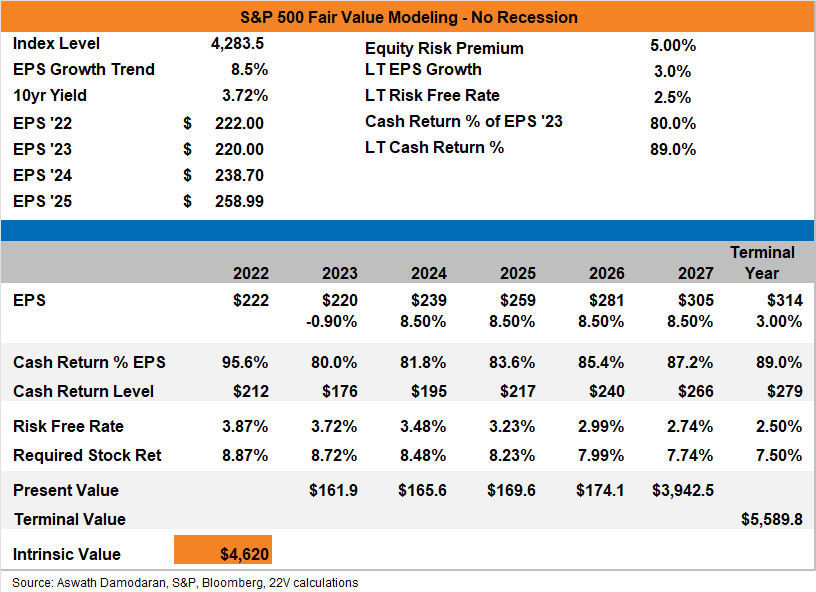
SUMMARY: We are still like Deep Cyclicals, risk-on factors, and small caps relative to large caps, but that didn’t work yesterday. Retail worked though and our call for a bounce in “destocking losers” continues. According to our latest investor survey (HERE), investors don’t seem positioned for our short-term call. There remains a strong preference for Quality through year-end. Risk and Momentum are the least liked factors. Risk-on factors should move higher over the next month or so as recession risks ease and the strong Momentum/mega cap move of the past month is reversed.

Reviewing the history of our Investor survey data shows how Tech has come into favor and Health Care, Energy, and Discretionary have fallen out. Real Estate was always out. Defensives, as a total share, have become less popular.
The big risk to our short-term risk-on, small cap, long destocking losers call is data showing a clear deceleration (claims brought up that worry, but we would fade claims data), or the Fed clearly signaling a desire to slow very quickly. Investors are more worried about the later scenario (Powell sounding hawkish even with a pause) given CPI and the Fed meeting next week.
Fair Value Update: We have been anchoring our estimate of fair value, under a soft landing, to 4,300. The S&P is right around that level today and the investors we speak to broadly agree the S&P is at the top end of its range. Now that the soft landing narrative is winning (for now), we are reassessing our assumptions to double check if that range is still reasonable.
In the soft landing scenario, we had assumed a lower-than-normal cash return ratio, EPS growth based on investor non-recession expectations, and an ERP slightly lower than its current level. A few points:
- Survey-based EPS growth for 2023 to 2024 ($220 to $230) would be an unusually bad growth rate outside of a recession, especially post-GFC forward.
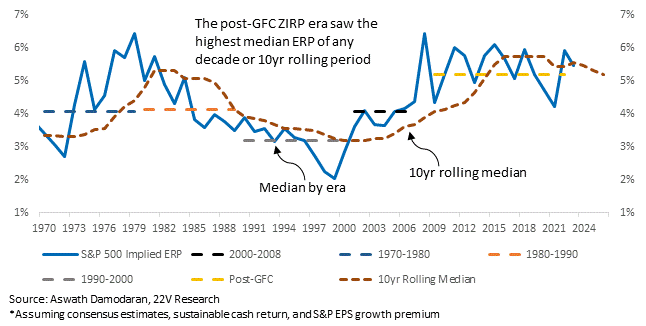
- The post-GFC, zero-lower bound era saw the highest median Implied ERP of any decade. If rates stay higher for longer this cycle (because nominal GDP and inflation are sustainably higher relative to the post-GFC backdrop), the implied ERP may shift lower. Especially if S&P profitability stays high over the medium term. Which it likely would in a soft landing.
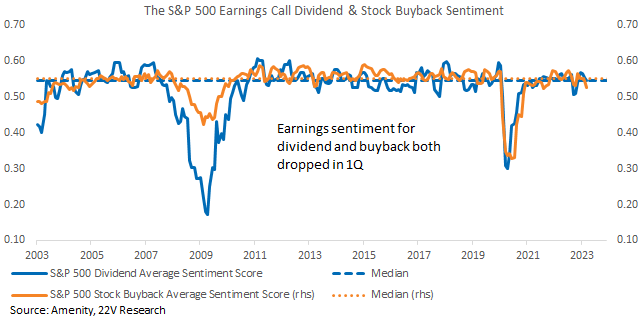
- We assumed a lower-than-normal cash return ratio because growth is below trend and dividend and buyback sentiment have rolled over. Those conditions are still in place, so we would not raise this estimate.
- Tweaking our assumptions to be more optimistic (stronger EPS than estimated and a lower implied ERP to reflect a normal inflationary regime), but still reasonable in a soft landing, brings fair value to 4,600.
- The 4600 ONLY MAKES SENSE if a recession is avoided. We are not making a 4600 call. Or view is that recession risk is still 50/50 on a 6-month basis. Our point is, there would be reasonable upside IF WE KNEW there would be a soft landing. The path of growth isn’t knowable right now, we are comfortable sticking with our range-bound market call.
MARKET VIEWS: UST yields are moving higher today. UST yields declined following the claims data yesterday, which helped support Quality and risk-off factors (low vol) at the expense of risk-on factors, Deep Cyclicals (Energy, Industrials, and Materials). Interestingly, retail outperformed and we remain long retail and trucking as part of our “destocking losers” reversal call. We still like Deep Cyclicals, risk-on factors, and small caps relative to large caps, but that didn’t work yesterday. According to our latest investor survey, investors don’t seem positioned for our short-term call. Through year-end, investors still have a preference for Quality, as they consistently have since our first survey in April 2022 (HERE, it has been the right call) and investors do not prefer risk-on factors.
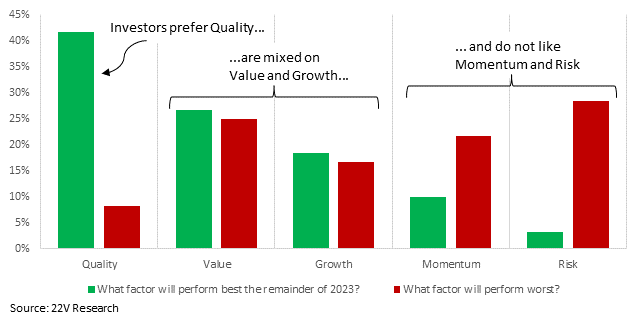
Looking over the history of our Investor survey data shows how Tech has come into favor and Health Care, Energy, and Discretionary out. Real estate was always out. Defensives as a total share have lost popularity. That being noted, Staples were the second choice by investors for what sector will perform best over the remainder of 2023. That surprised us given 1) recent performance, 2) lower near-term recession odds that should keep short rates higher for longer, making Staples dividend yields even less attractive on a relative basis, and 3) anecdotal commentary from clients on Staples being a more popular short.
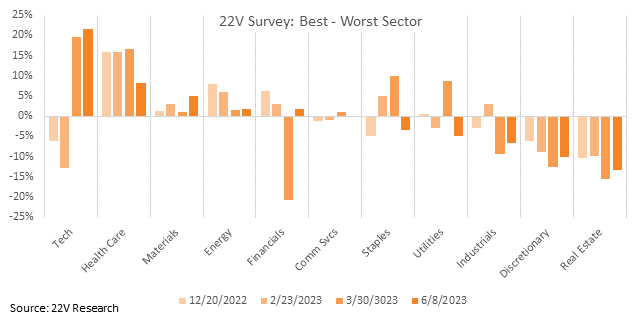
Fair Value Evolution: We have been anchoring our estimate of fair value, under a soft landing, to 4,300. The S&P is right around there and the investors we speak to pretty much all agree the S&P is at the top end of its range. Now that the soft-landing narrative is gaining ground (for now), we are re-assessing our assumptions to double check if our soft-landing fair value is reasonable. In the soft landing scenario, we had assumed a lower-than-normal cash return ratio, EPS growth from investor non-recession expectations, and an ERP slightly lower than its current level. That gave us ~4300.
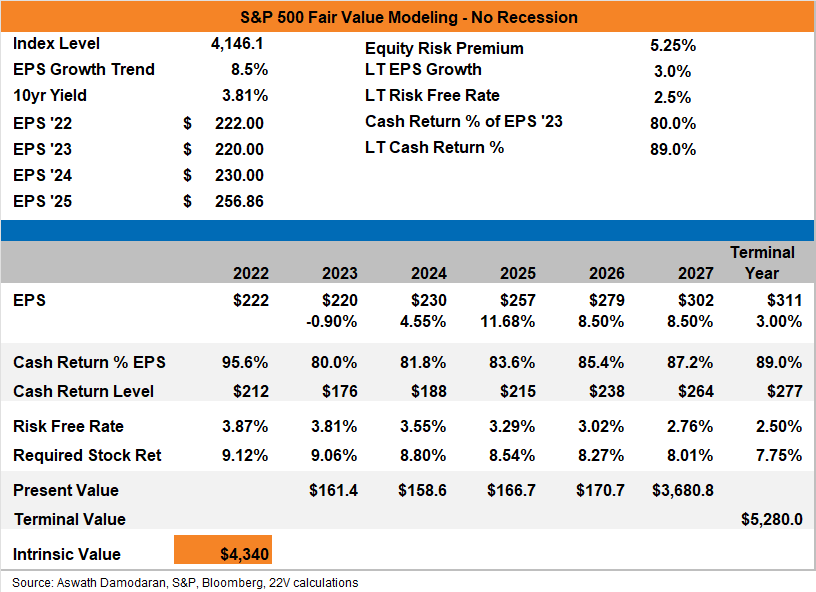
Survey based EPS growth from 2023 to 2024 ($220 to $230) would be an unusually bad growth rate outside of a recession, especially post-GFC forward.
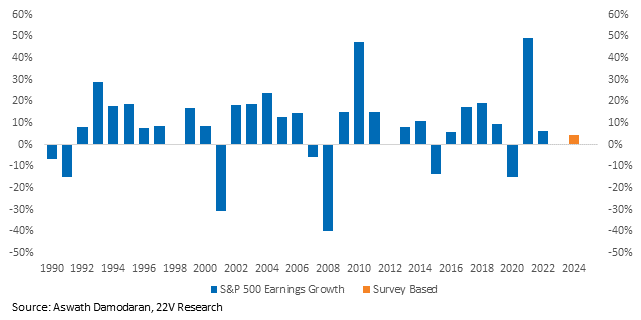
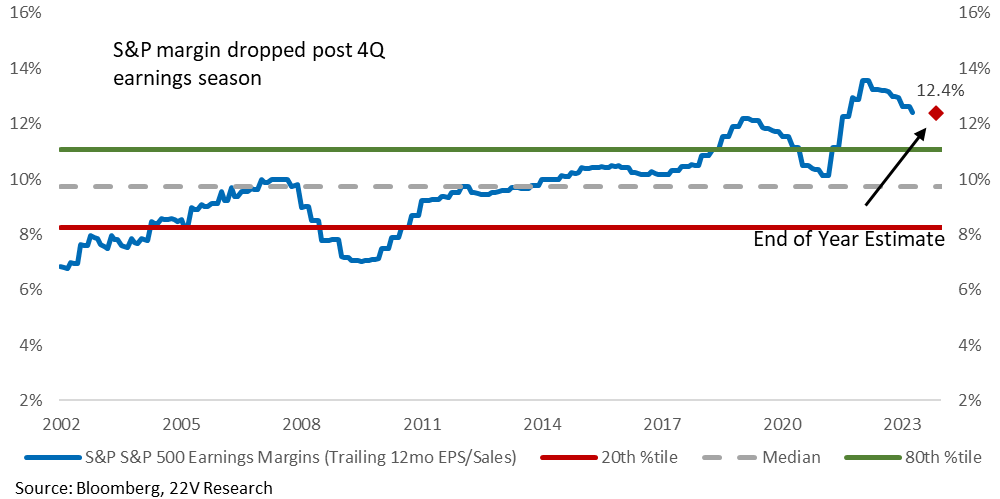
We hosted a profits webinar with Dan Greenwald on Wednesday (replay HERE). Profit and profit shares are a function of margins. Margins are under pressure because trend economic growth is clearly slowing, but, outside of a recession, a deep decline in margins is unlikely. Additionally, S&P profitability has been in an uptrend for most of the past 30 years and has NOT been mean reverting, and we see no reason for that to change in the medium term (longer term is a different discussion). Under a soft landing, the survey-based eps path may be too conservative. Longer-term trend eps growth (8.5%) would still be below the post-GFC median and average.
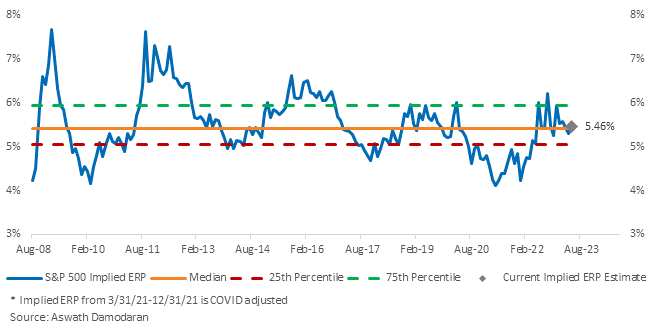
An ERP at 5.25% is slightly lower than the current level (~5.4%). The ERP has dipped below 5% a number of times in the post-GFC era. 5% is towards the low end of the range but would be reasonable under a soft landing. ESPECIALLY if you believe the Implied ERP will decline from its unusually high post-GFC levels in a more normalized inflation regime (deflation was the fear in the post-GFC period).
The post-GFC, zero-lower bound era saw the highest median ERP of any decade. If rates stay higher for longer this cycle (because nominal GDP and inflation are sustainable higher relative to the post-GFC backdrop), the ERP may shift lower. Especially with S&P profitability set to stay high over the medium-term.
We assumed a lower-than-normal cash return ratio because growth is below trend and dividend and buyback sentiment have rolled over. Those conditions are still in place, so we would not raise this estimate.
Tweaking our assumptions to be more optimistic, but still reasonable in a soft landing, brings fair value to 4,600. The S&P is not at an unreasonable level here with a soft landing more likely, but not guaranteed. A clear offset to the below analysis would be a higher 10yr yield than we are assuming. In a soft landing and higher nominal GDP backdrop going forward, 10yr yields COULD be at sustainable higher levels than we assume below. That would change fair value estimates some, but not meaningfully. The decline, or not, in the ERP is the major swing factor.