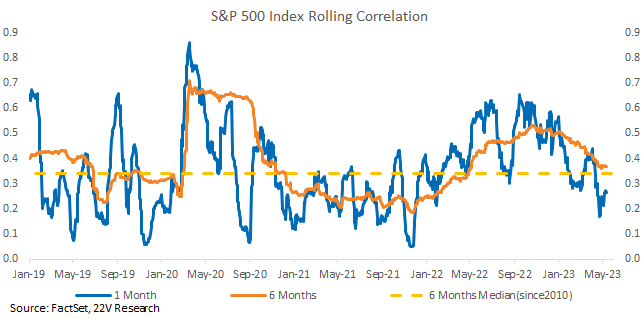
SUMMARY: We are in a macro quiet period until Payrolls on June 2. Correlations should continue to trend lower during this time. Correlations won’t fall to pre-COVID levels because macro uncertainty is still high but return dispersion will continue increasing for at least the next couple of weeks.
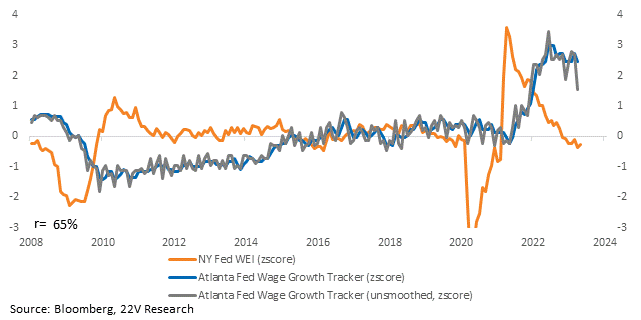
Odds of a soft landing, where the catalyst for Fed easing ISN’T a growth accident, have likely increased recently. Super core CPI came in lower than expected, and the unsmoothed Atlanta Fed wage tracker declined while economic growth weakened BUT remained non-recessionary. However, the labor market is expected to loosen further, and current levels of wage growth are not justified by demand growth. This could increase recession risk within the next 3-6 months. To maintain a soft landing glide path, high-frequency measures of demand growth, such as the NY Fed Weekly Economic Index, need to hold up as wages decrease.
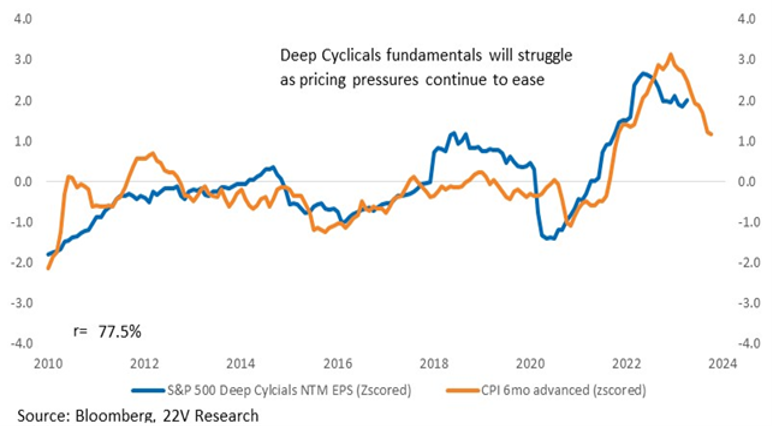
The Federal Reserve will need to deliver a sustained period of below-trend demand growth to increase the unemployment rate and reduce inflationary pressures coming from the labor market. As this occurs, actual inflation is expected to continue falling, which poses challenges for Deeper Cyclical sectors like Energy, Materials, and Industrials.

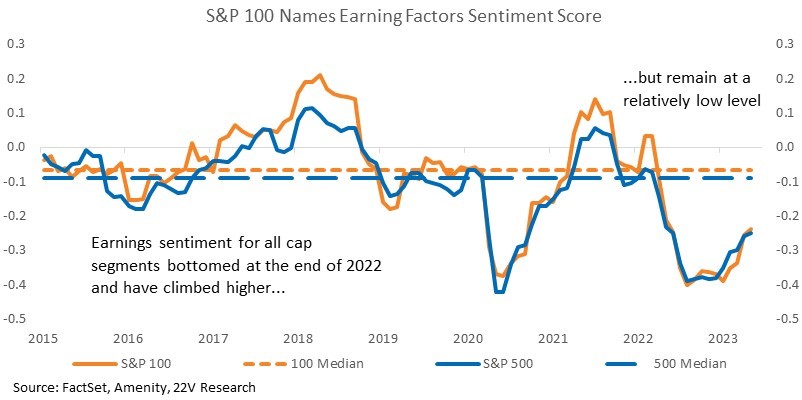
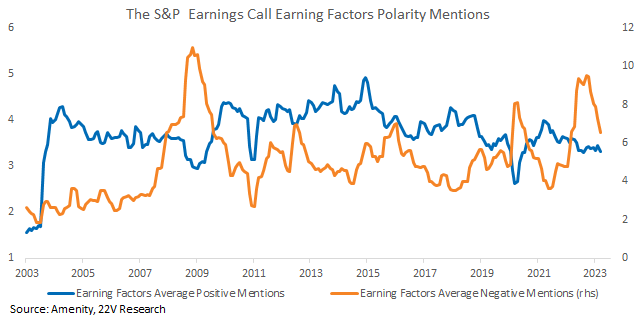
Earnings Sentiment Less Negative: Broad earnings sentiment, measured with the Amenity natural language processing tool, which “reads” earnings transcripts and conference calls, has improved over the past few months, primarily driven by a decline in negativity. Managers are not ebullient, but their concerns about downsides have eased.
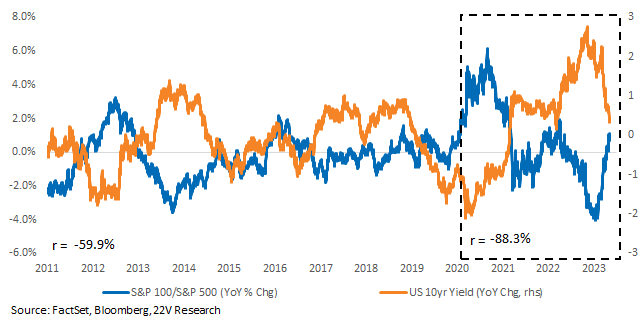
Mega caps tend to outperform the broad index when the 10-year yield is falling or stagnant, and this relationship has intensified during the COVID era. Further slowing of economic activity, which aligns with policymakers’ goals, should continue benefiting larger-cap stocks. Mega caps have better earnings sentiment compared to the broad index, although the difference is narrow. Earnings sentiment for both segments has been trending higher this year, indicating management sentiment toward earnings bottomed in the second half of 2022. However, it is important to note that the absolute level of earnings sentiment remains low, consistent with the broadly expected ongoing earnings slowdown.
MARKET VIEWS: We’re in a macro quiet period until Payrolls on June 2. Correlations should continue to trend lower during this time. Correlations won’t fall to pre-COVID levels because macro uncertainty is still high but return dispersion will likely increase for the next couple weeks.
As we mentioned yesterday (HERE), the odds of a soft landing, in which the Fed eases without a growth accident because inflation has fallen, have probably risen recently. Super core CPI was lower-than-expected, and the unsmoothed Atlanta Fed wage tracker declined while economic growth has weakened but is not recessionary. That is the good news. The bad news is the labor market is about to loosen more. Current levels of demand growth do not justify current levels of wage growth. As we go through the process of labor market loosening, recession risks, within 3-6 months, will increase. It is critical that high frequency measures of demand growth, like the NY Fed Weekly Economic Index, hold up as wages move lower.
The Fed is going to have to deliver a sustained period of below-trend demand growth to force the unemployment rate higher and reduce inflation pressures from the labor market. As that happens, actual inflation will continue to fall. That is an issue for Deeper Cyclicals (Energy, Materials and Industrials earnings), the earnings of which tend to follow broad inflation trends.
Earnings Better Than Expected – Outlooks OK: Broad earnings sentiment, measured using the Amenity natural language processing tool, has improved over the past few months (charts HERE). The reason for the improvement is a large drop in negative mentions about earnings. Management isn’t growing more positive, just less pessimistic. That suggests management teams’ see fewer/decreasing headwinds, particularly relative to late 2022, when negativity reached GFC-like levels.
Mega caps tend to outperform the broad index when the 10yr is falling or stalls. That relationship intensified in the COVID era. Further slowing of economic activity, which is the goal of policy makers, should continue to benefit larger cap stocks.
Earnings sentiment of mega caps tends to be better than that of the broad index, but the spread is VERY narrow. Earnings sentiment for both segments have turned higher since the end of 2022. Keep in mind, the absolute level of earnings sentiment is still VERY low (sub 20th %tile). Earnings are still slowing. The point of the below is management sentiment toward earnings bottomed in 2H22 and has been trending higher this year.