SUMMARY: Yesterday, Bostic and Daly both dismissed the notion of rate cuts in 2023. The degree to which the Fed can be comfortable with easier financial conditions remains data dependent. Potential easing of the instrument path is increasing and tail risk is lower, but Goldilocks data is a difficult path. As the odds of the economy is walking that path shift, volatility will remain elevated. The VIX is implying 1.8%+ daily moves 1-month to 6-months out (89th %tile readings).
Eurozone retail sales fell again, German factory orders dropped, and the Eurozone PMIs indicate manufacturing and service sector contraction. And the OPEC production cuts aren’t helping energy costs. Both the US and Europe face a similar backdrop – they both need growth to slow to cool inflation, but not so fast that deep recession tail risk increases. Data in the US is muddled; data in the EU is worse.
The Service ISM declined m/m but beat estimates and remains firm. The prices component and new orders both moderated, but employment strengthened. With the economy through full employment, we want to see more weakness overall and specifically in the employment component. Tail risk is limited because the reading wasn’t so strong as to suggest the Fed needs to ratchet up its efforts and it wasn’t so weak as to suggest higher recession odds. That leaves the same muddled, narrative-driven backdrop and heightened vol. Focus turns to Payrolls Friday.

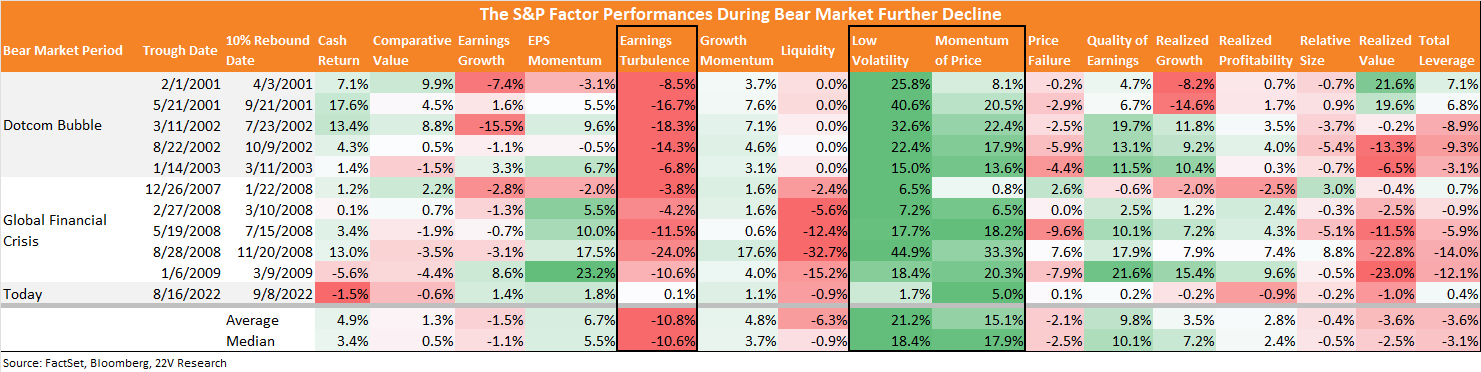
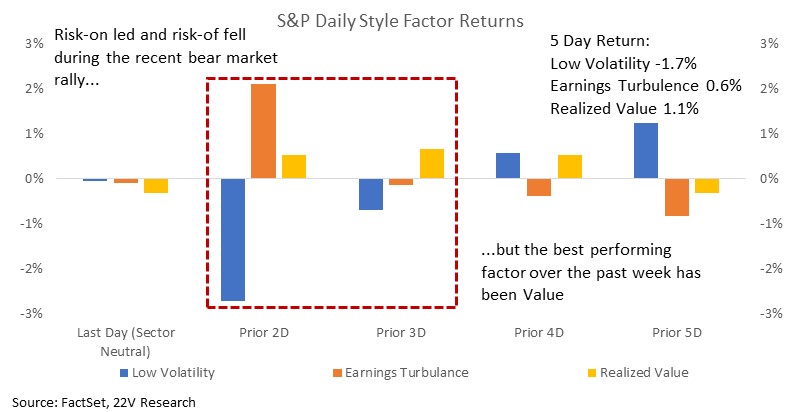
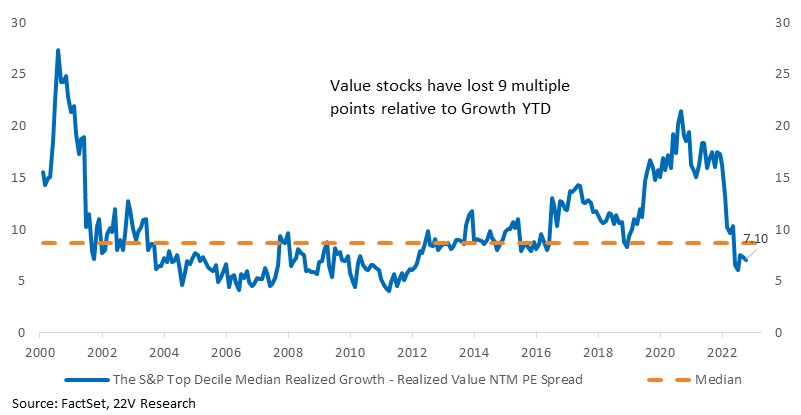
Market internals are following their typical pattern during the rebound. Earnings Turbulence names rallied while Low Vol stocks collapsed. The best performing factor over the past week, however, has been Realized Value. 22V Quant noted last week that 3Q internals were typical of a non-recessionary backdrop (HERE) and that recession risk has declined (HERE). Lower tail risk and the extreme decline in Value names relative to Growth (-9 PE points YTD) helps explain Value rebound. The direction of travel remains slower growth/lower inflation, and that favors Growth, Quality, and Profitability.
MARKET VIEWS: Eurozone retail sales fell again, German factory orders dropped, and the Eurozone PMIs indicate manufacturing and service sector contraction. And the OPEC production cuts aren’t helping energy costs. Both the US and Europe face a similar backdrop – they both need growth to slow to cool inflation, but not so fast that deep recession tail risk increases. Data in the US is muddled; data in the EU is worse. A recession in Europe would be an obvious headwind to equities in the US, but significant outperformance (+/-10%) of the S&P (or STOXX) is common during bear markets. Poor performance in Europe does not necessarily mean poor performance in the US.
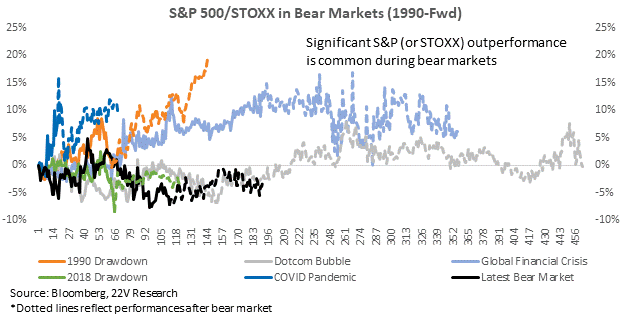
Yesterday, Bostic and Daly both dismissed the notion of rate cuts. Easing of financial conditions is dependent on slowing growth and loosening of labor markets. The degree to which the Fed can be comfortable with easier financial conditions remains dependent on data. The path toward a strong 4Q is through weakening payrolls, declining job openings, and slower wage growth – a broad-based weakening (not necessarily deep, but broad) of demand that reduces inflationary pressures. That is a difficult path and as the odds of the economy walking that path change, volatility will remain elevated. The VIX is implying 1.8%+ daily moves 1-month to 6-months out.
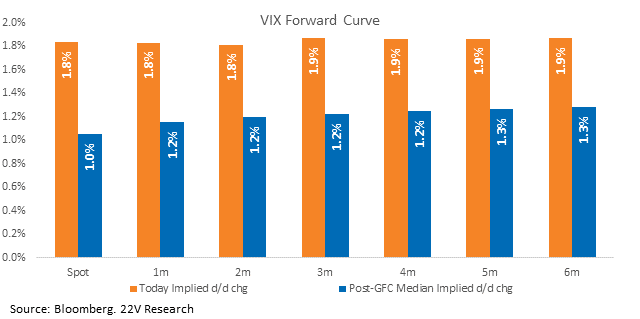
The Service ISM declined m/m but beat and remains at a high level. The prices component and new orders both moderated, but employment strengthened. We would’ve liked to see more weakness overall and more weakness in the employment component specifically. If the headline stays strong and the prices component can continue falling, that’s great, but that’s also not too likely, for reasons Gerard has focused on (latest HERE). Tail risk is limited because the reading wasn’t so strong as to suggest the Fed needs to ratchet up its efforts and it wasn’t so weak as to suggest we’re in a recession. It leaves us with the same muddled, narrative-driven backdrop that will come along with lots of vol. Focus turns to Payrolls Friday.
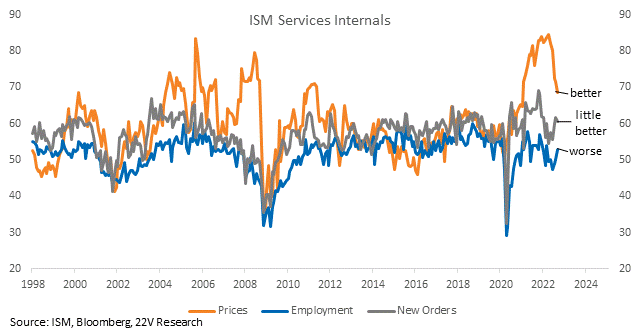
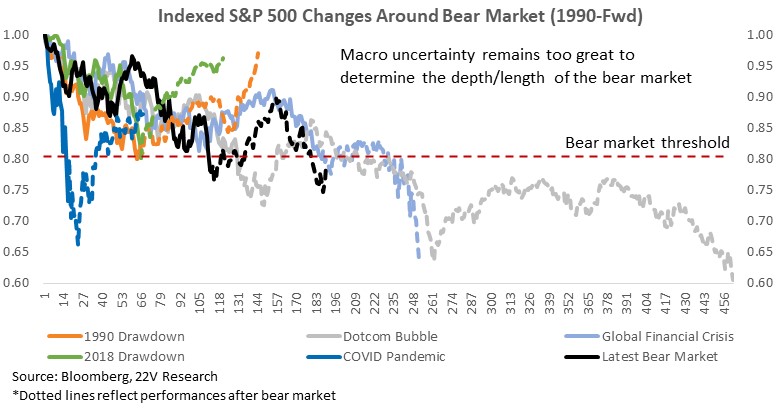
It took six months for the S&P to fall from its peak to the start of a bear market (-20% was reached in June). There have not been a lot of bear markets over the past ~30 years, but the ones we have seen follow two broad patterns. Short and sharp (1990, 2018, COVID), and drawn out (TMT, GFC). History is an unusually imperfect guide today as all those previous periods were ones of falling/low inflation, where the Fed could focus on setting policy to ensure financial stability. The most recent rally is a blip and the previous rally (mid-June to Mid-August) failed. It is still too early to call a bottom.
Bear market rallies largely look the same, regardless of magnitude. Risk factors (Earnings Turbulence) rally while risk off (Low Vol) reverse lower. The same pattern holds during the first 10% of rallies as during the next 10%, and both are similar to bear market bottoms. The point being, factor internals will be coincident with, not an indicator of, an eventual bottom.

Market internals followed their typical pattern during the rebound. Earnings Turbulence names rallied while Low Vol stocks collapsed. The best performing factor over the past week however has been Realized Value. 22V Quant noted last week that 3Q internals were typical of a non-recessionary backdrop (HERE) and that recession risk has declined (HERE). Lower tail risk helps explain why Value has been the best performing factor recently.
Macro uncertainty and tightening of financial conditions led to large shifts in the relative valuations of Growth vs. Value, Defensives vs. Cyclicals, Risk-off vs. Risk-on, etc. YTD, Value names have lost 9 NTM PE points relative to Growth. With correlations extreme (93rd %tile) and macro influence elevated (85th %tile), narrative shifts can led to rapid rebounds in beaten down groups. We would caution against reading too much into those shifts. The direction of travel remains slower growth/lower inflation, and that favors Growth, Quality, and Profitability.
Keep in mind that if this rally fails, risk-on trends will reverse.