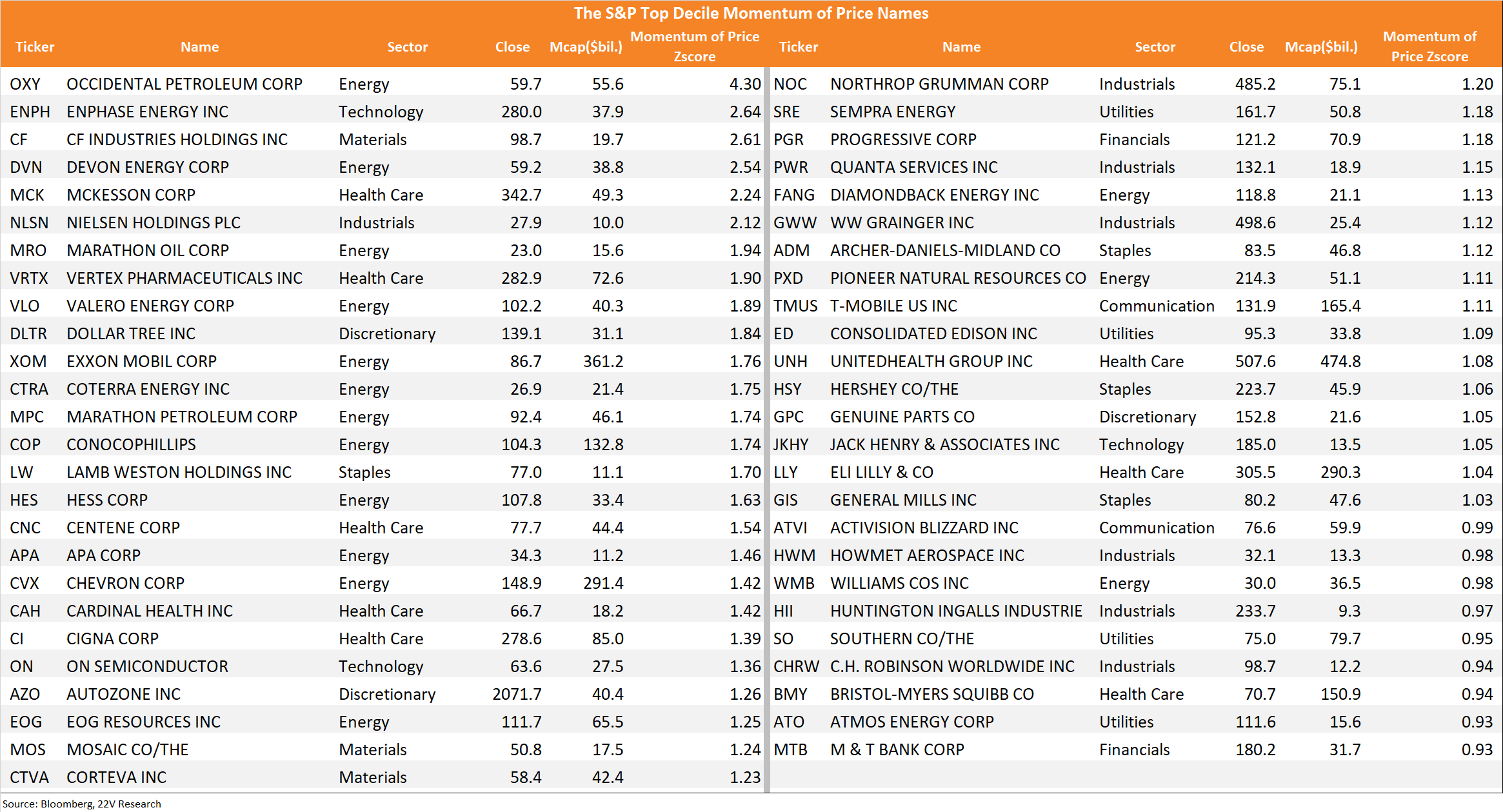
Momentum factor performance has diverged leading into and out of COVID with Growth Momentum gaining while Price Mo has stagnated. As financial conditions retightened and moved to new highs, and high-frequency growth indicators rolled over some, all the Momentum factors rebounded. The FOMC has made it clear their policy intention is to slow growth further, which is a strong tailwind for companies with strong Growth Momentum.
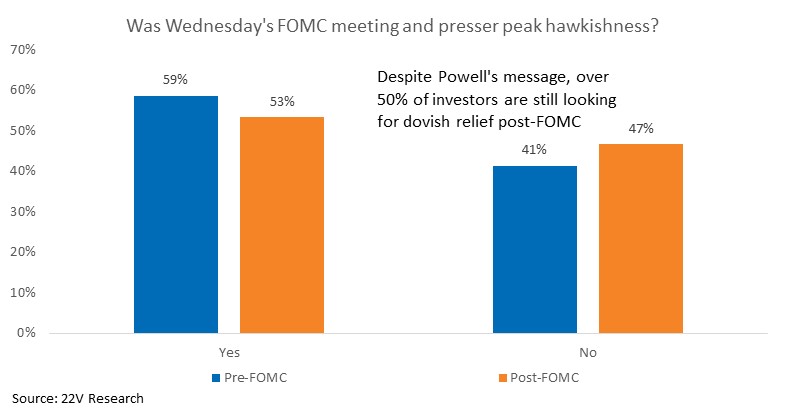
According to the Strategy team’s flash survey before (report HERE) and after (report HERE) the FOMC meeting, slightly more than half of investors believe the Wednesday FOMC meeting and presser was peak hawkishness. Whether peak Fed hawkishness has been reached is dependent on how data comes in over the next few months. That backdrop favors factors most negatively correlated with WEI and inflation expectations. The most negatively correlated factors are Growth, Risk-off, and Momentum factors, which is roughly in line with factors benefiting from tightening financial conditions.
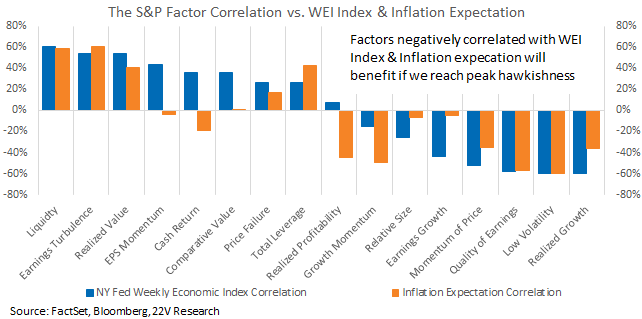
Factors that benefit from slowed demand growth and inflation expectation are roughly in line with factors benefiting from tightening financial conditions, which makes sense given the Fed tries to slow growth and lower inflation by tightening financial conditions. Financial conditions have tightened since mid-August and are likely biased tight/tighter near term. Fundamentally, as growth slows, investors seek out stocks that maintain growth potential and earnings.
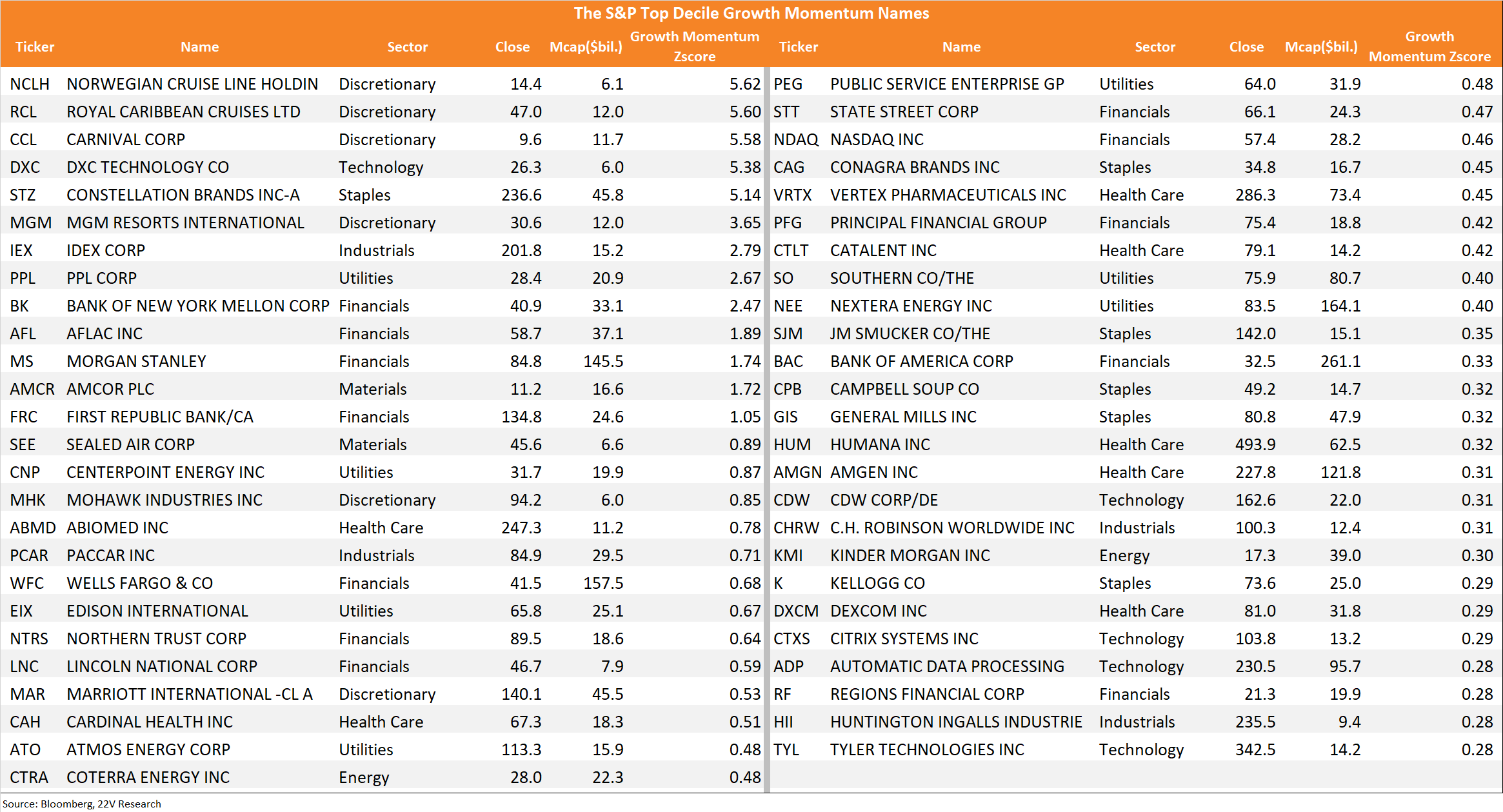
Utilities and Staples are both positively exposed to Growth Momentum and Momentum of Price. The high Price Momentum exposure of Energy is a support, but the sector remains HIGHLY macro-driven and dependent on oil price trends. Slowing growth is a risk to Energy names. At the end of the report, we list the S&P top decile Growth Momentum names and Momentum of Growth Basket, which are likely to benefit from the current backdrop and continue the rebound near term.
Momentum Factor Reversal in September: Momentum factor performance have diverged leading into and out of COVID with Growth Momentum gaining while Price Mo has stagnated. As financial conditions have retightened and moved to new highs, and high-frequency growth indicators have rolled over some, all the Momentum factors rebounded. The FOMC has made it clear their policy intention is to slow growth further, which is a strong tailwind for companies with strong Growth Momentum.
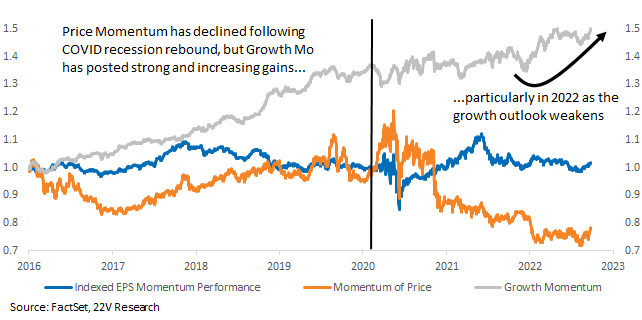
Momentum factors have been the best performing factor group over the past month, besting even risk-off as a group. Momentum is also up over the course of 3Q. Equity market declines, financial conditions tightening, together with the increased overlap between Value and Growth names, has led to both style factors posting declines over the past month. The style trade will remain difficult to play until the path of growth and inflation is clearer.
According to the Strategy teams flash survey before (report HERE) and after (report HERE) the FOMC meeting, slightly more than half of investors believe the Wednesday FOMC meeting and presser was peak hawkishness. Whether peak Fed hawkishness has been reached is dependent on how data comes in over the next few months.
To track growth, we are focusing on NY Fed Weekly Economic Index given it is a well-built, high frequency measure of demand (details HERE). Slowing demand would led to further declines in inflation expectation, bringing a tailwind to factors negatively correlated with the WEI, such as Growth, Low Volatility, Quality, and Momentum factors. Both Momentum of Price and Growth Momentum are negatively correlated with the WEI helping explained their recent gains. EPS Momentum is positively correlated with WEI though and may face headwinds from slowing demand. Fundamentally, slowing growth leads investors to seek stocks that can maintain growth potential and earnings, benefiting names with higher Growth Momentum.
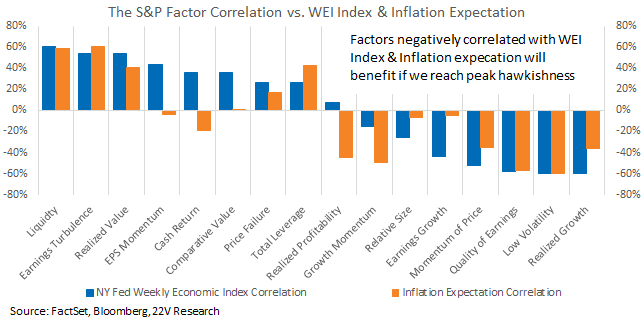
Factors that benefit from slowed demand growth and inflation expectation are roughly in line with factors benefiting from tightening financial conditions, which makes sense given the Fed tries to slow growth and lower inflation by tightening financial conditions. Financial conditions have tightened since mid-August and are likely biased tight/tighter near term.

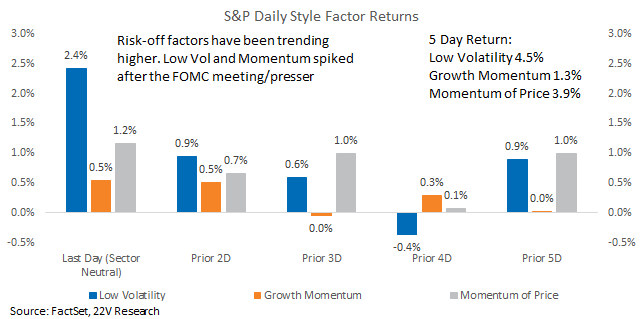
Both Growth Momentum and Momentum of Price are show some risk-off characteristics. Performance of Low Volatility vs. Momentum factors diverged prior to the FOMC meeting, while Low Volatility, Growth Momentum, and Momentum of Price have been leading factors since the FOMC meeting. A continued risk-off rotation should benefit Momentum.
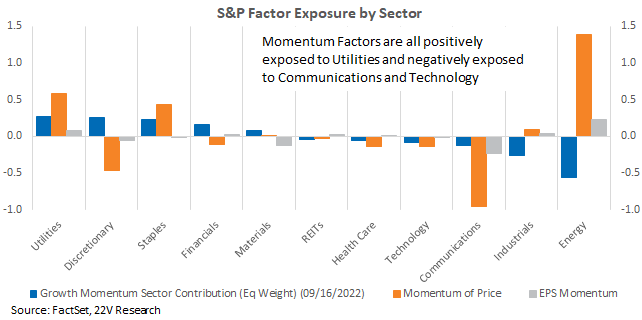
At the sector level, both Utilities and Staples are positively exposed to Growth Momentum and Momentum of Price factors. Discretionary and Energy have the largest exposure divergences. The high Price Momentum exposure of Energy is a support, but the sector remains HIGHLY macro driven and dependent on oil price trends. Slowing growth is a risk to Energy names. Discretionary has strong Growth Momentum, but negative Price Momentum. A rebound in Discretionary, which has been the worst performing sector over the past week, requires easing of financial conditions that would benefit higher Turbulence stocks (HERE).
Below are the S&P names falling in top decile Growth Momentum basket. These are names with stronger momentum on sales, cash flow and earnings, and are likely to gain as economic growth slows, inflation ease, and financial conditions tighten.
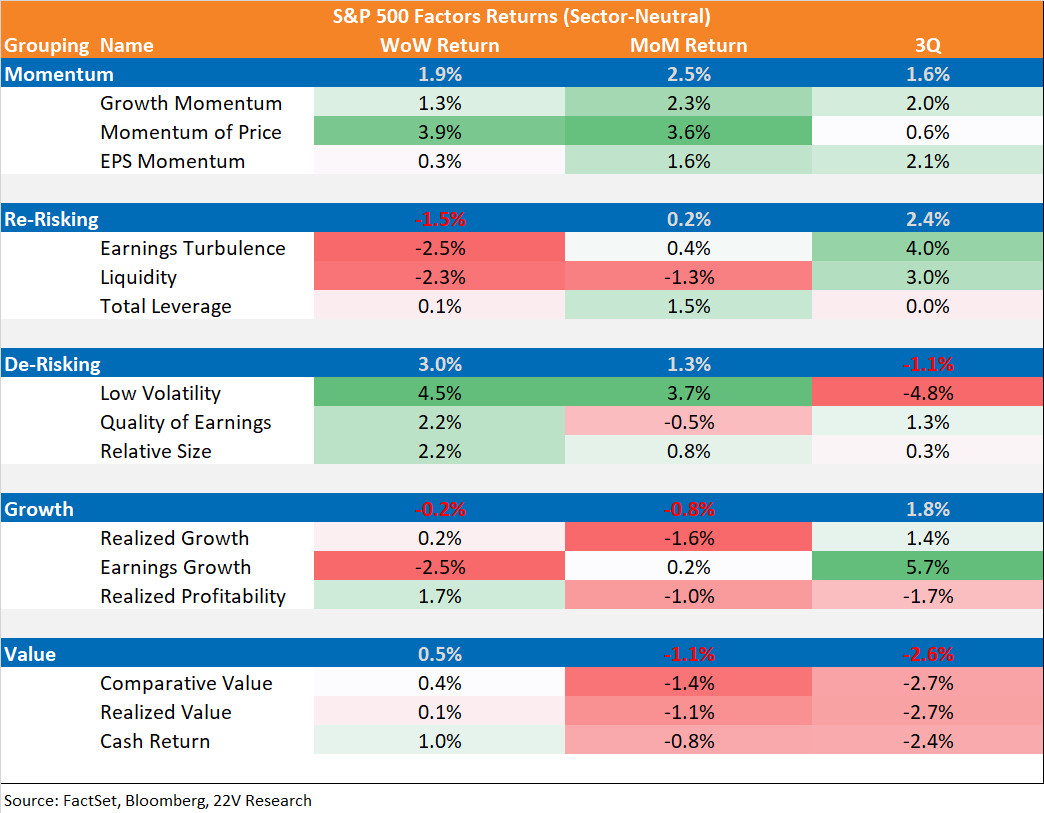
Below we list the S&P top decile Momentum of Price names which are also well positioned under the current backdrop near term.