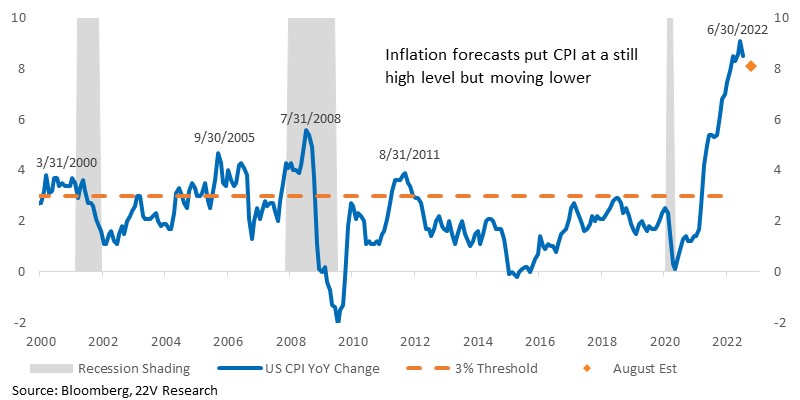
Reducing inflation has become the top priority for the Fed, which helps explain why CPI is the macro indicator investors are most focused on today (survey result HERE). Inflation expectations remain well anchored, in part due to the Fed’s commitment to slow growth (through tighter financial conditions) until pricing pressures ease. Those two macro forces, inflation, and financial conditions have driven factor returns trends this year.
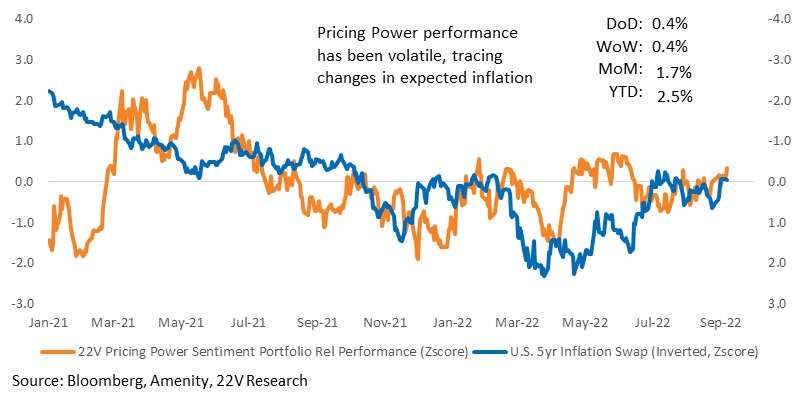
To help position for a backdrop of high inflation and rising rates, we created our high pricing power sentiment portfolio late last year. The stocks in this portfolio are selected using Amenity data to determine the companies with the strongest pricing power sentiment as of their most recent earnings release. So far, the returns to this portfolio have been volatile, and closely track shifts in inflation expectations. As inflation expectations increase, providing more opportunities for companies to raise prices, our portfolio tends to underperform. A renewed focus by the Fed on fighting inflation through increased recession risk should be a tailwind for this basket.

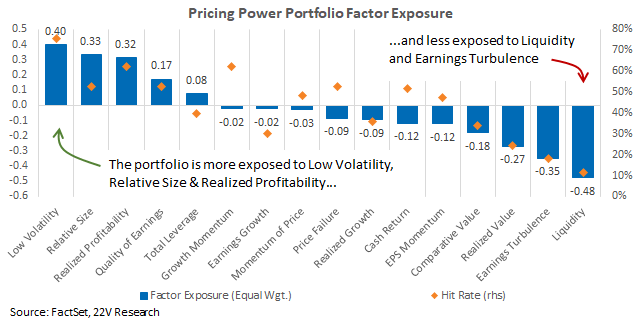
Factor exposure of the latest Pricing Power portfolio is well positioned for the current phase of tight financial conditions. Low Volatility and Relative Size exposures are both high, while the portfolio is under-exposed to Liquidity and Earnings Turbulence. While inflation remains too high for the Fed, financial conditions should remain tight, favoring risk-off factors like Low Vol.
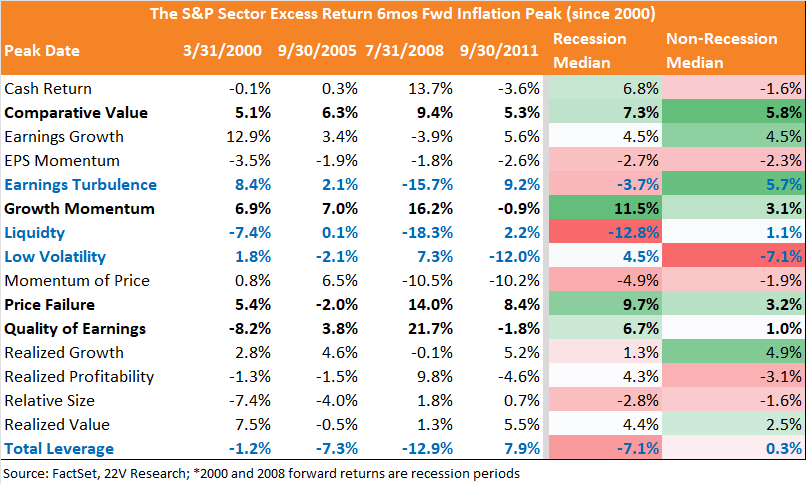
One risk to this portfolio is that Low Vol has done well in previous post-peak inflation backdrops that ended in recessions. If a recession does not occur though, Low Vol underperforms and risk-on factors tend to rebound (Earnings Turbulence, Leverage). Value, Momentum, Price Failure, and Quality have performed well in disinflationary backdrops regardless of recession risk.
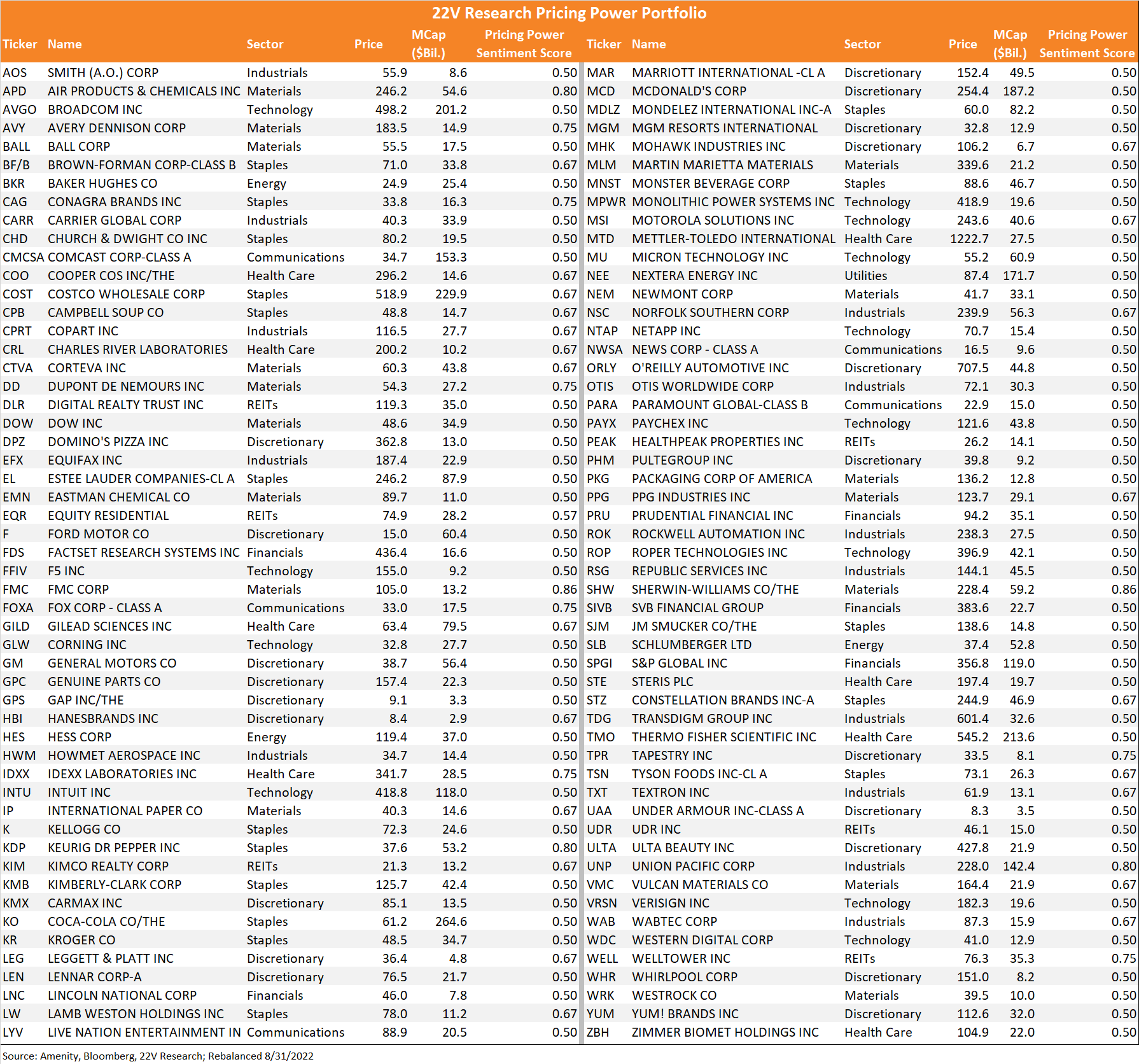
At the end of this report, we list the current constituents of the 22V Pricing Power Portfolio, more than half of which have been members throughout the year.
Pricing Power Backdrop: Inflation has remained stubbornly high this year, with headline readings increasing through June and core expected to increase modestly in August to 6.1%. Reducing inflation has become the top priority for the Fed, even if that increases recession risk, which helps explain why CPI is the macro indicator investors are most focused on today (survey result HERE). Headline CPI is expected to move lower again in August (new data released next week), and inflation expectations remain well anchored, in part due to the Fed’s commitment to slow growth (through tighter financial conditions) until pricing pressures ease. Those two macro forces, inflation, and financial conditions have driven factor returns trends this year.
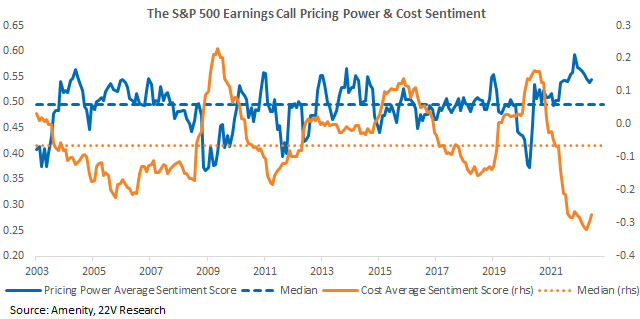
High inflation has led to increased concerns about cost pressure, which have dragged margin sentiment, measured using the Amenity NLP tool, sharply lower. Earnings and profitability remain high through 2Q reporting season though as index level pricing power allowed companies to pass along higher labor, input, etc. prices. Cost sentiment of the S&P companies remains depressed but has started to improve as inflation expectations have eased. Pricing power sentiment has improved some as well too, suggesting 3Q profitability will remain strong. Longer-term, pricing will come under pressure as financial conditions remain tight, hiring slows, and consumer spending growth eases.
To help position for a backdrop of high inflation and rising rates, we created our high pricing power sentiment portfolio late last year. The stocks in this portfolio are selected using Amenity data to determine the companies with the strongest pricing power sentiment as of their most recent earnings release. So far, the returns to this portfolio have been volatile, and closely track shifts in inflation expectations. As inflation expectations increase, providing more opportunities for companies to raise prices, our portfolio tends to underperform. A renewed focus by the Fed on fighting inflation through increased recession risk should be a tailwind for this basket.
Pricing Power Exposure Risks: In line with our negative supply chain sentiment portfolio (constituents HERE), the factor exposure of the latest Pricing Power portfolio is well positioned for the current phase of tight financial conditions. Low Volatility and Relative Size exposures are both high, while the portfolio is under-exposed to Liquidity and Earnings Turbulence. Financial condition tightening started with higher volatility and has moved into a tightening of credit (further comments on positioning for tightening phases HERE) here. While inflation remains too high for the Fed, financial conditions should remain tight, favoring risk-off factors like Low Vol.
There is an important risk to the pricing power portfolio to keep in mind. If the Fed manages to avoid triggering a recession, risk-off factors will be a drag on returns. Low Vol has done well in previous post-peak inflation backdrops that ended in recessions. If a recession does not occur though, Low Vol underperforms and risk-on factors tend to rebound (Earnings Turbulence, Leverage). Value, Momentum, Price Failure, and Quality have performed well in disinflationary backdrops regardless of recession risk. Quality has been a difficult trade this year, but a backdrop of tight financial conditions and disinflation support those names.
At the industry group level, our Pricing Power portfolio is diversified but tilted toward a mix of Cycliclals (Materials, Cap Goods) and Defensives (Food & Tobacco). Nearly half of the names scored high pricing power sentiment readings in both 1Q and 2Q and remain in the portfolio after the rebalancing.
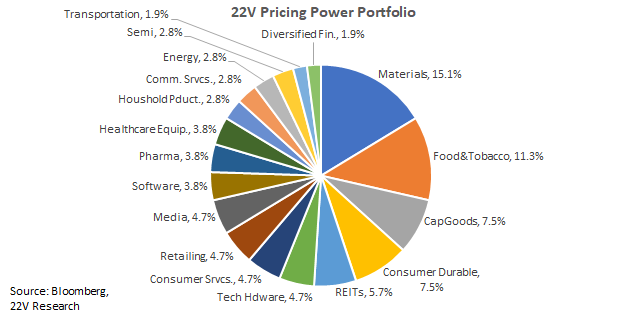
We rebalance the portfolio end of the earnings season each quarter. Below we list the latest names in the 22V Pricing Power portfolio.