SUMMARY: Coming into earnings season, 71% of investors thought earnings season would be a reason to fade the market and full year EPS growth expectations were weak. With more than 40% reported, just under 74% of companies are beatings analyst estimates, a little more than normal. Earnings growth is slowing and will slow even more this year, but the better-than-expected results are one of the supports for the risk rotation and the S&P’s nearly 12% rally from its June low. The return skew to beats/misses has become more normal as the number of reports has increased. The normalization of return skew suggests stock picking is becoming more important again. That should continue unless some macro shocks overwhelm the market again.
ECI today is a big data point – the first in a series of important points that could reintroduce upside risk to the Fed funds rate path or tighten financial conditions more (market gives up some gains). If we don’t get any surprises from ECI (there is a decent risk the ECI will be too high. Gerard has talked about this), then other factors will drive the market near term.
Some of the other factors that will drive the markets include Energy prices, inflation expectations, and labor market data. If inflation expectations move back toward June levels and commodity prices rebound, there is some risk of Fed officials sounding more hawkish. Especially if payroll data is relatively firm. If inflation expectations remain anchored, then the focus will be on how quickly and deeply the economic data slows. The slowing of economic growth/inflation will determine how low earnings will go.
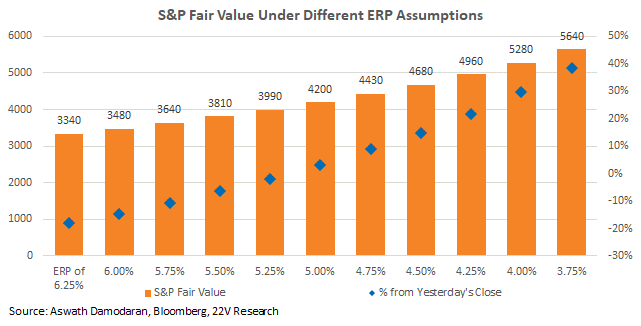
The market is not a decent risk reward relative to a mild recession scenario anymore: The mild recession being defined as a trough S&P EPS number of $198 followed by 9% EPS gains over the following two years. Under that scenario, the market had a positive risk reward in the 3600/3700 range. Implied cash return yields, relative to 10yr yields, would need to stay above their 90th %tile for a long time or earnings would need to crater for the market to remain unattractive. Today, and under the same mild recession scenario, it’s tough to see significant upside. Meaningful gains from here require an implied cash return ERP in the 4.5% range. 4.5% is basically where the implied ERP was when the Fed started tightening, so that seems like a stretch. There is a possibility a recession is avoided and trough EPS remain well above $198, which would push S&P fair value estimates higher. That would require confidence that a recession will be avoided. That is a tough call. FYI…we think it is POSSIBLE to avoid a recession, but macro uncertainty is way too high to make that call. Bottom line, chasing the market here is tougher. Expect consolidation.
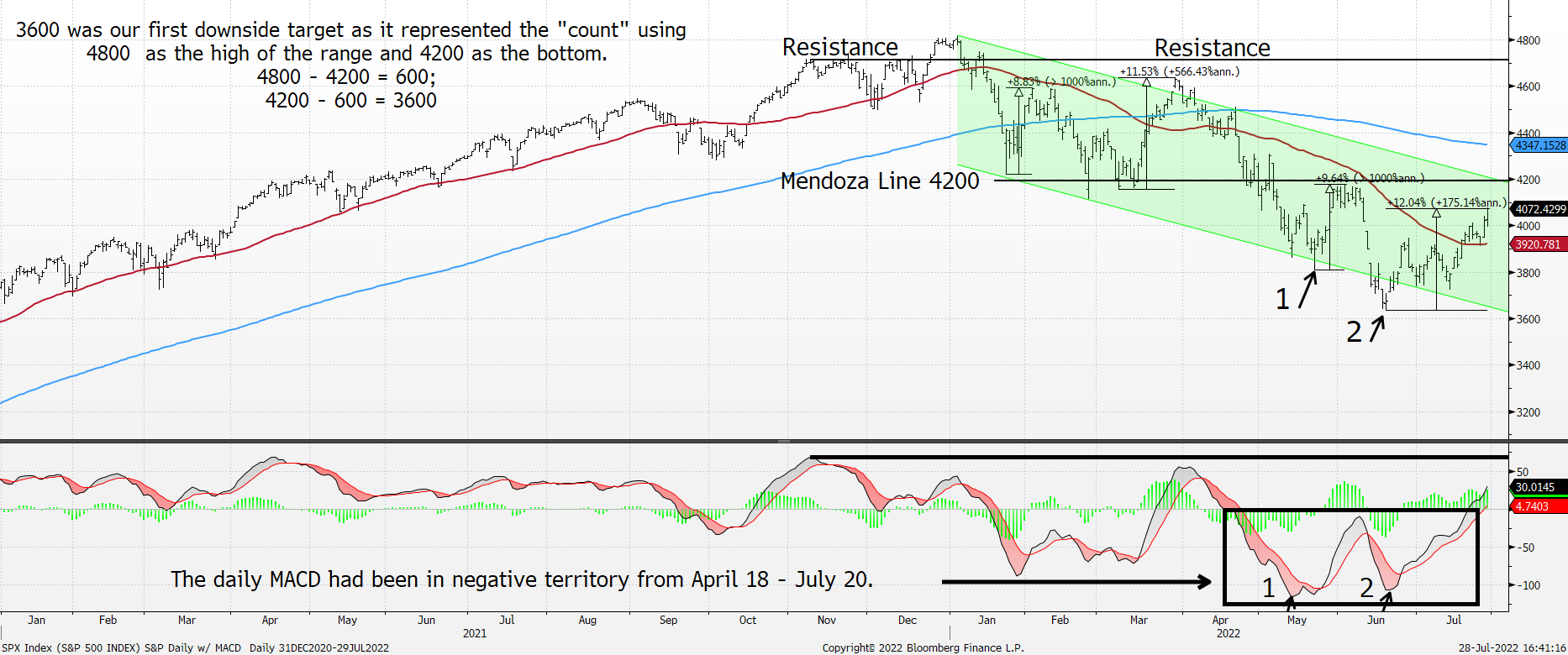
FYI…John Roque believes this rally can continue and will look to do some selling at the 4100 – 4200 level.
Full report below…
MARKET VIEWS: About -12% ago on the S&P we thought equities were mispriced relative to even a mild recession growth path. That is not the case anymore. A mild recession here is being defined as a trough S&P EPS number of $198 followed by 9% EPS gains over the following two years. In that scenario, the market had a positive risk reward in the 3600/3700 range. Implied cash return yields, relative to 10yr yields, would need to stay above their 90th %tile for an extended period for the market to be unattractive back then. Fast forward to today, and under the same mild recession scenario, it’s tough to get significant upside. It would require an implied cash return ERP in the 4.5% range. 4.5% is where the market was at when the Fed started tightening, so that seems like a stretch. At least under the scenario of $198 trough EPS. There is a possibility we avoid recession and earnings don’t fall nearly that much, but that requires confidence that a recession is avoided. That is a tougher call. FYI… a recession can be avoided, but macro uncertainty is way too high to make that call.

ECI today is a big data point – the first in a series of important points that could reintroduce upside risk to the Fed funds rate path. That’s not to say we’re predicting a surprising miss/beat. But the release could have important market implications. If the ECI is extremely strong (Atlanta Fed wage tracker suggests it will be, AHE suggests it might be relatively benign. Decent debate about this), investors will reverse some of the financial conditions easing that we have witnessed the last few days. If we don’t get any surprises from ECI, then other factors will drive the market near term.
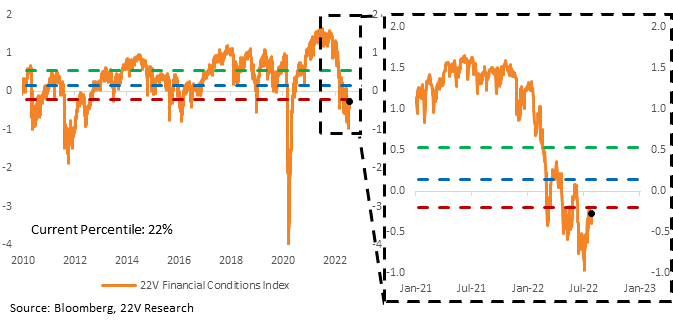
Some of the other factors that will drive the markets include Energy prices, inflation expectations, and labor market data. If inflation expectations move back up to June levels and commodity prices rebound, there is some risk of Fed officials sounding more hawkish. Especially if the payroll data is relatively firm. If inflation expectations remain anchored, then the focus will be on how quickly and deeply the economic data slows. The slowing of economic growth/inflation will determine how low earnings will go. Side note on sentiment, we’re approaching some overbought conditions on a short-term basis with 72% of the S&P trading above their 50dmavg. That being said, only 29% are trading above their 200dmavg.
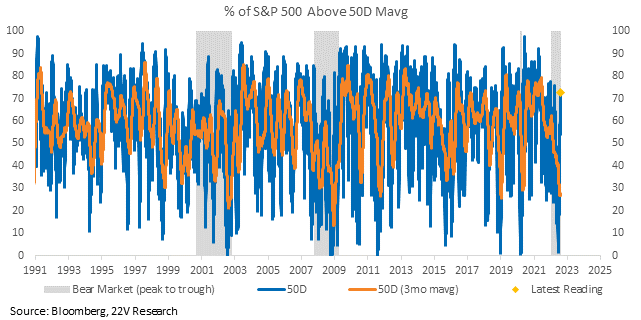
John Roque doesn’t think we’re overextended yet. Per John…
Earnings Update: Investors were prepared for downside surprises to earnings, and though there have been some high-profile misses, the breadth of earnings remains strong. Coming into earnings season, 71% of investors thought earnings season would be a reason to fade the market. With more than 40% of the index having reported, including many of the largest Financial/Tech names, just under 74% of companies are beatings analyst estimates, a little more than normal. Earnings growth is slowing, but the better-than-expected results are one of the supports for the risk rotation and the S&P’s nearly 10% rally from its June low. The bottom line is earnings results are clearing a low bar and reducing the risk of an imminent/deep decline in fundamentals.
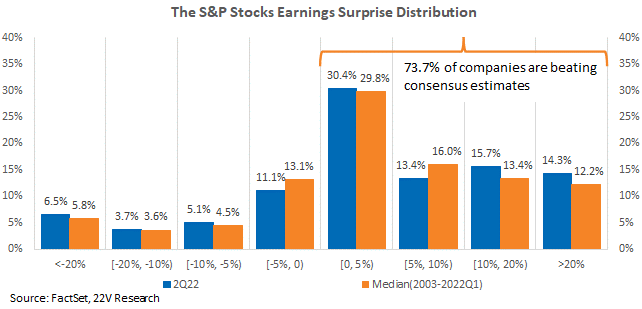
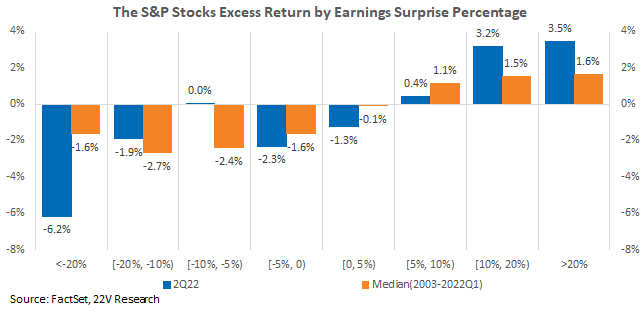
The return skew to beats/misses has become more normal as the number of reports has increased. Companies that beat estimates are seeing outsized rewards relative to the typical post-beat gain. Most companies missing estimates are falling more than normal though. There is an odd exception within companies that missed by EPS by -5% to -10%, but that group only has 11 companies in it so far.