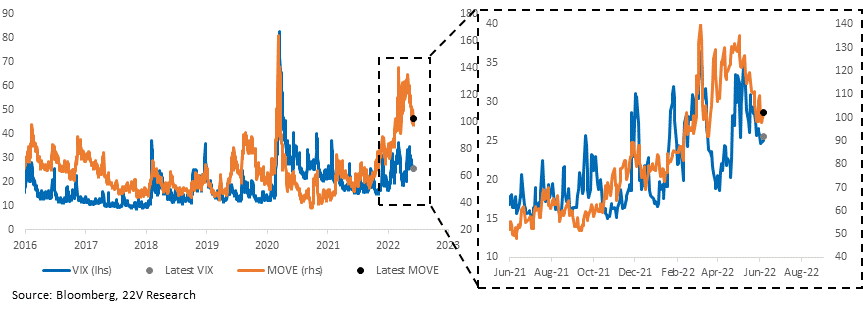
SUMMARY: The VIX curve remains elevated across durations but off its highs, and falling bond volatility over next couple of quarters should alleviate extreme equity volatility. Bond volatility has been elevated over the past two weeks on strong services sector news and tight labor markets. COVID headwinds in Shanghai and Beijing are easing and activity is reportedly normalizing rapidly. That’s a tailwind for commodities, and hotter growth in China risks triggering more global policy tightening. BUT resumption of normal activity in China also alleviates some supply-side inflationary pressure. There are more indications of supply-side relief: semi prices, fertilizer costs, and freight rates are meaningfully lower. But the question remains the same, is inflation slowing fast enough for the Fed? As we wrote yesterday, we suspect growth is still too hot (a short-term market headwind), but IS going to slow over the next 6-8 months. It has to respect supply-side constraints.
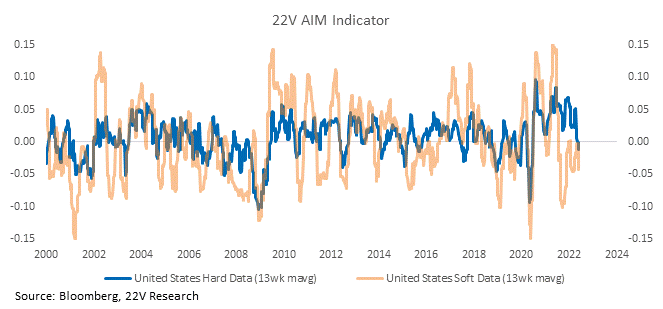
The breadth of economic data is declining, a necessary but insufficient condition SO FAR. Breadth doesn’t measure the level of growth. The real labor income proxy, adjusted for consensus CPI estimates, is still positive, implying consumers can continue to spend. If they will spend at the same rate as they have is a different question. So far, high frequency data suggests consumer activity is still strong. The Fed will continue to counteract this. There is an important timing issue at play today. Growth IS slowing but it is unclear if the current downtrend is fast enough to reduce inflation in a policy-friendly time frame. If inflation remains too strong, the Fed will be forced to remain hawkish longer. That increases recession risk as monetary policy is a blunt tool. The more the blunt tool of tighter financial conditions is used, the more unknown downside risk to economic growth exists.

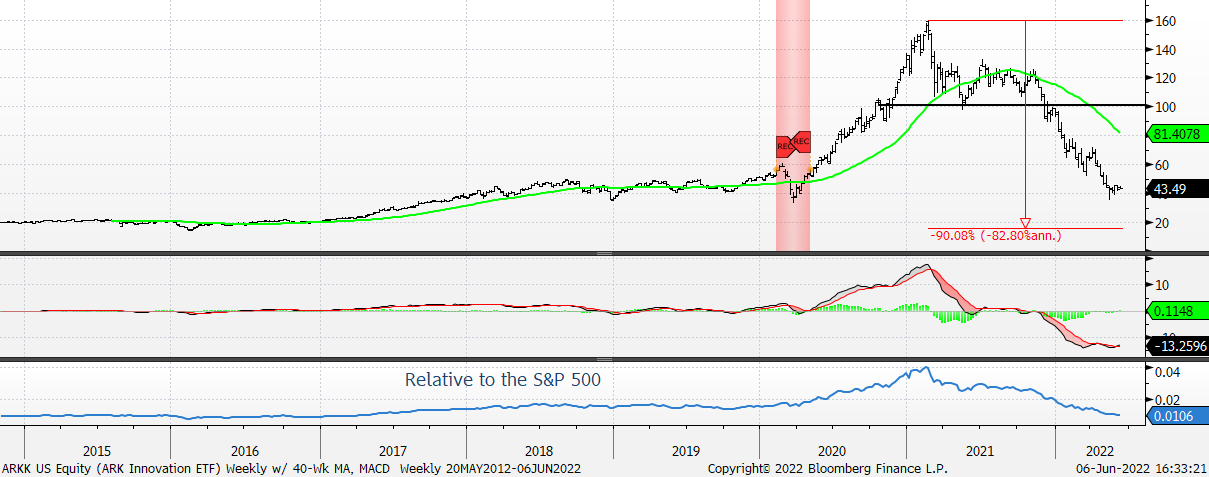
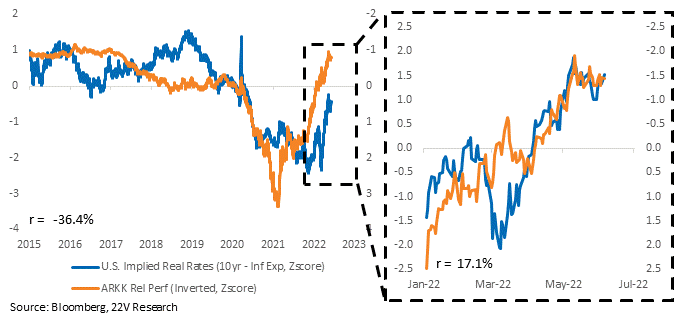
Rising real rates have been a strong investment theme in 2022, helping lift Value more than 20% YTD. If the economy stays too hot and the Fed needs to more aggressively raise rates, Value will remain bid relative to Growth. But as we highlighted yesterday, Value’s outperformance has been outsized relative to the backup in real yields, so don’t expect the Value surge to continue at its current pace. And Growth is slowing, which is a support for stable growers. Nuance will matter more – speculative Growth will come under more pressure than quality Growth. Spec Growth needs growth and cheap borrowing, two things the Fed is fighting. John Roque helped us structure a short ARKK trade (see the full report), which we recommend pairing with a long Quality ETF trade VFQY.
MARKET VIEWS: There were more positive headlines overnight but trading remains volatile. The VIX curve is still elevated across durations, though falling bond vol should alleviate extreme equity vol. COVID in Shanghai and Beijing is improving while activity is reportedly normalizing rapidly. That’s a tailwind to yields and hotter growth may trigger more tightening, but normalizing activity in China also alleviates some supply-side inflationary pressure. There are indications of supply-side relief: semi prices, fertilizer costs, and freight rates are meaningfully lower. But the question remains the same, is inflation slowing fast enough for the Fed? As we wrote yesterday, we suspect growth is still too hot.
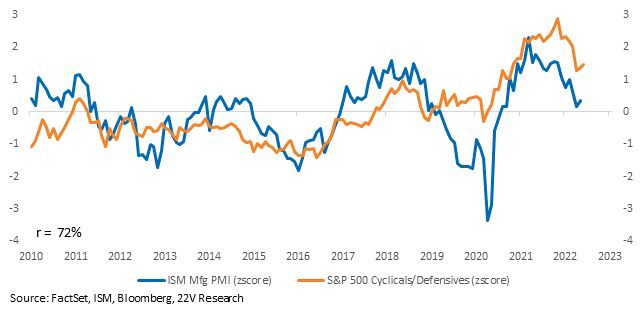
We have seen arguments that Cyclicals have priced in the drop in PMIs. That is false precision. The two move directionally together but the normalized scores of each series don’t suggest a tradable price level for Cyclicals relative to Defensives. If PMIs keep falling, that would be a headwind for Cyclicals. But there’s more to the story too, like Fed communication, which will lead PMIs and impact Cyclicals heavily.
As we discussed yesterday, growth is not slow enough. The breadth of economic data is declining, a necessary but insufficient condition. Breadth doesn’t measure the level of growth, which we suspect is still too high.
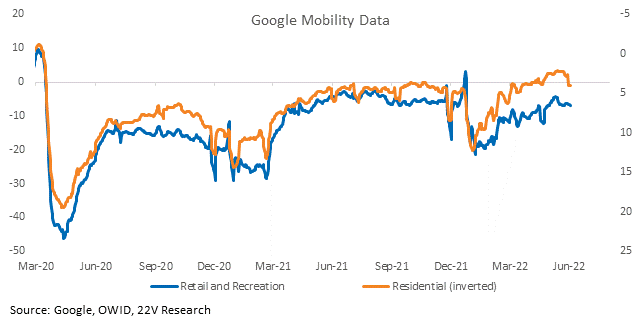
The real labor income proxy, adjusted for consensus CPI estimates, is still positive, implying consumers can continue to spend. And high frequency data suggests consumer activity is indeed still strong. There has been no meaningful decrease in Google’s retail and recreation mobility series while time at home is still low. That’s despite inflation and gas prices.
Quality vs Spec Growth ELS: Rising real rates has been a prevalent investment theme in 2022, helping lift Value 21% YTD. If the economy stays too hot and the Fed needs to be more aggressive raising rates, Value will remain bid relative to Growth. But as we highlighted yesterday, Value’s outperformance has been outsized, so we don’t expect a similarly broad and intense factor rotation. The internals will matter – speculative Growth will come under more pressure than quality Growth. Spec Growth needs growth and cheap borrowing, two things the Fed is going after. That keeps stocks like those in ARKK under pressure.
For a trade, we recommend short ARKK. Per John Roque, our experience and historical homework have combined to tell us that the popping of a bubble is usually not complete until the item in question is off 90%, or so, from its peak. With this in mind our “bubble popping downside target” for ARK Innovation ETF (ARKK) has been $16 (Feb 2021 peak of $159.7 minus 90% of $159.7 = $15.97). Creating a decent reward/risk scenario is easy given that we have a potential downside move of -63% from the most recent closing price. However, we don’t want to put up with too much unnecessary volatility given the propensity of investors to search out potential bounce candidates from the stocks that have been hit hardest and ARKK fits that to a tee. As a result, we’ll use a stop for ARKK of 10% (i.e., entry price + 10%) to protect us in case a sharp and painful bounce unfolds. We will sell any bounces that do not take us out of our trade and recognize that getting stopped out of our trade means that we will reassess it for possible re-entry.
We would go long a quality ETF like VFQY on the other side.