Retailer earnings have painted an increasingly clear picture of the risks to consumer-facing companies; rising costs and waning/shifting demand are weighing top-line growth and profit margins. The impact of declining pricing power and rising costs are broad based, and that is a growing risk for corporate profit margins in general over the next few quarters.
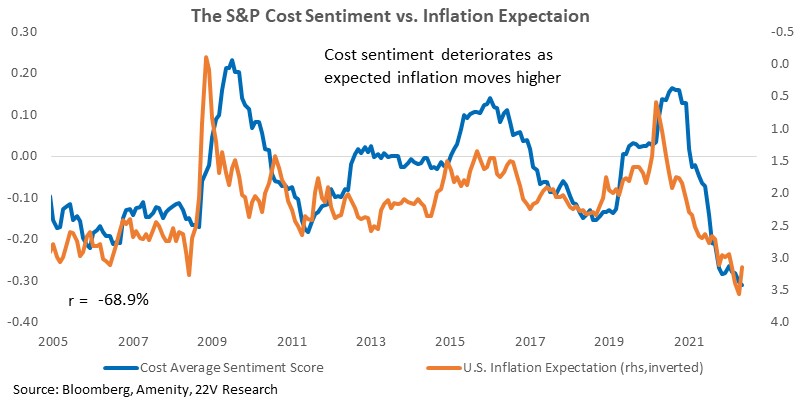
Cost sentiment and inflation expectations are negatively correlated; as cost sentiment decreases (costs rise) inflation expectations tend to move higher. The aggressive Fed pivot toward tightening policy in late-‘21 has helped ease inflation expectations, but they need to move MUCH lower before the Fed backs off.
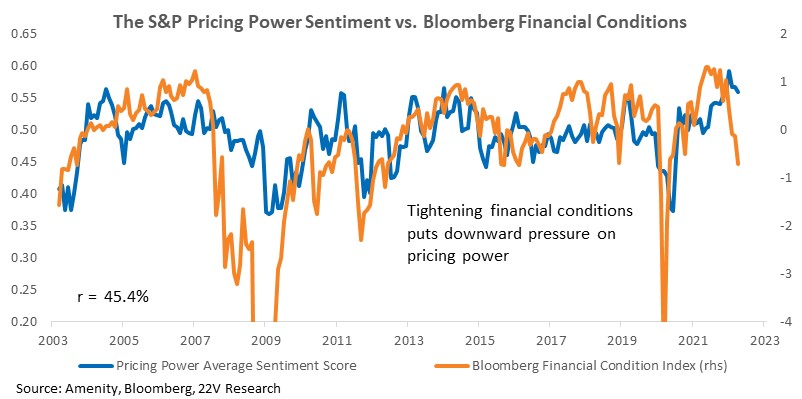
So, the Fed NEEDS pricing power to slow for inflation to trend lower. Raising rates tightens financial conditions, and financial conditions are well correlated with pricing power sentiment. How much financial conditions need to tighten to slow growth remains unclear, but conditions have tightened significantly over the past few quarters, and that process will bring slower growth + lower pricing power.

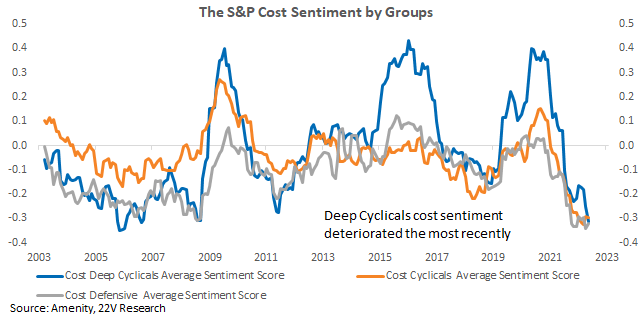
What Retailers have highlighted in recent earnings releases is the negative impact of intense cost pressures. Classifying sectors into Deep Cyclicals, Cyclicals, and Defensives shows cost sentiment of Deep Cyclicals has deteriorated the most as inflation has increased. Deteriorating cost sentiment indicates Deep Cyclicals will be at risk during 2Q earnings reporting season.
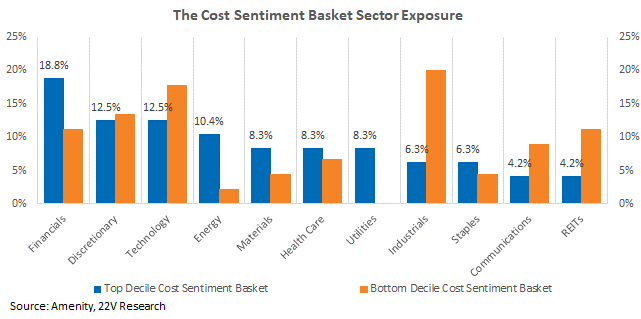
At the end of this report, we offer two lists. The first is a list of companies with the most negative cost sentiment (largest management concerns about costs) where margins are at risk. The second list is the names where management has the least concerns about costs. Financials account for the largest number of those stocks, but several Discretionary and Tech names fall into the grouping as well. These are names that may have suffered by association during the recent selloff and could benefit from an easing of the high correlations within some of the groups.
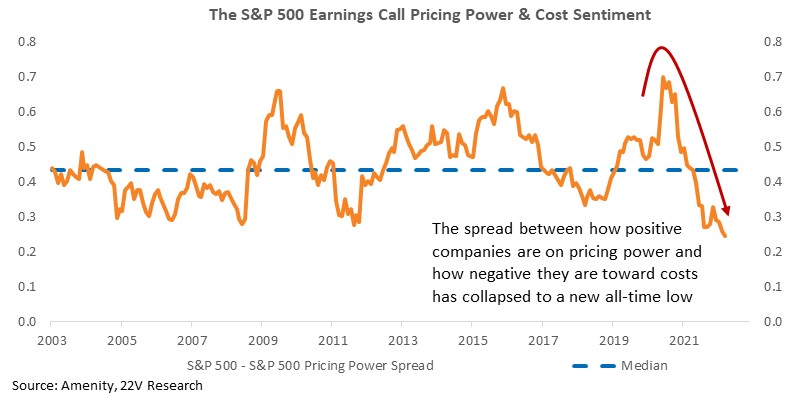
Pricing power Deteriorating While Cost Problems Grow: Inflation trends remain too strong, so the Fed needs slower growth to reach their core PCE target of ~2%. Slower growth and weaker inflation, particularly given today’s backdrop of tight labor markets, means corporate profit margins will be under pressure for at least the next several quarters. Using the Amenity natural language processing tool, we can measure management sentiment toward pricing, costs, and margins. Pricing power sentiment remains at a very high level but has moved lower over the past few quarters. At the same time, cost sentiment has fallen to a new all-time low (meaning cost issues are intensifying).
Historically, cost sentiment and inflation expectations are negatively correlated; as cost sentiment decreases (costs rise) inflation expectations tend to move higher. From late-2020 through early-2022, inflation expectations have moved from their post-GFC average of ~2%, up to a roughly 20yr high of 3.5%. An aggressive Fed pivot toward tightening policy, which started in late-21, and some easing of supply constraints, has helped ease inflation expectations, but they need to move MUCH lower before the Fed backs off, and that process will bring slower growth + lower pricing power.
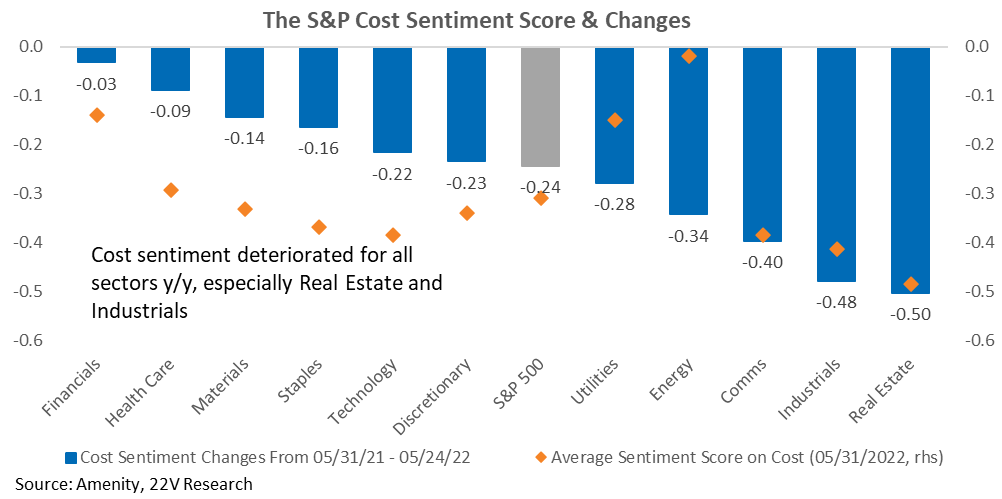
Cost pressures are impacting sentiment across all GICS sectors. Cost sentiment is below its typical level for all sectors today, the average level of cost sentiment is negative across all sectors, and the y/y change in cost sentiment is also negative across all sectors. On an absolute basis, costs are a headwind across the index, but Real Estate and Industrial companies have both the lowest cost sentiment scores and have seen the greatest deterioration over the past year. Tech and Comm Services have similar average levels of negative cost sentiment. Hough impacted by different types of costs, management sentiment indicates strong inflation is having the greatest negative impact on companies in those sectors.
Companies with high pricing power have more ability to pass rising costs on to consumers, which runs contrary to the Fed’s goal. But raising rates tightens financial conditions, and financial conditions are well correlated with pricing power sentiment. How much financial conditions need to tighten to slow growth remains unclear, but conditions have tightened significantly over the past few quarters, and that is putting downward pressure on pricing power.
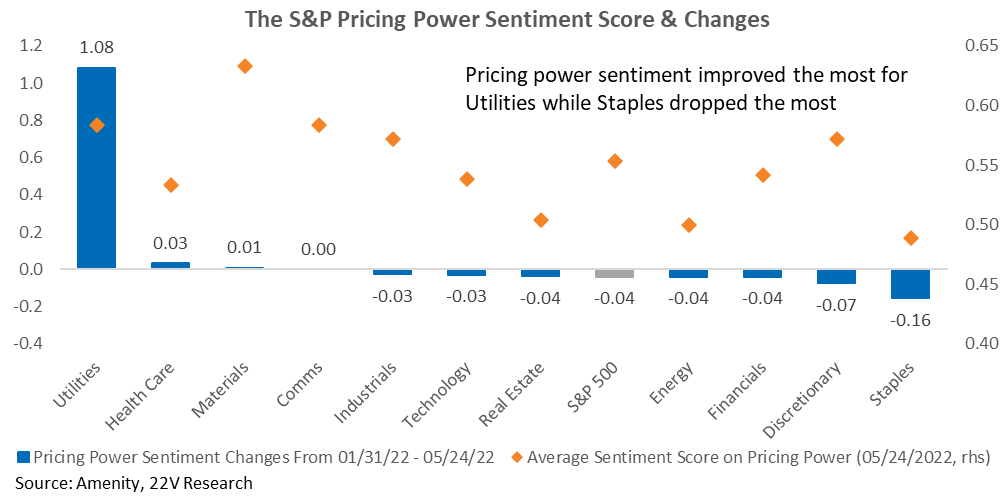
Consumer-facing sectors (Discretionary, Staples) have seen the largest declines in pricing power this yea, and Staples has the lowest average pricing power sentiment score of any sector. We discussed the deteriorated fundamentals and sentiment of the Consumer sectors on Monday (report here). Declining pricing power sentiment is consistent with weakness in margins for Discretionary companies, which has contributed to the significant underperformance of industry groups within the sector. Materials have the highest average level of pricing power.
But declining pricing power is only part of the story. What Retailers have highlighted in recent earnings releases is the negative impact of intense cost pressures. Classifying sectors into Deep Cyclicals (Energy, Materials, and Industrials), Cyclicals (Technology, Communications, Financials, and Discretionary), and Defensives (Staples, Health Care, Utilities, and Real Estate), shows that cost sentiment of deep cyclicals has deteriorated the most as inflation has increased. The level of cost sentiment is similar across market segments, but the deterioration of Deep Cyclical sentiment suggest those names will be at risk when 2Q earnings reporting season gets started.
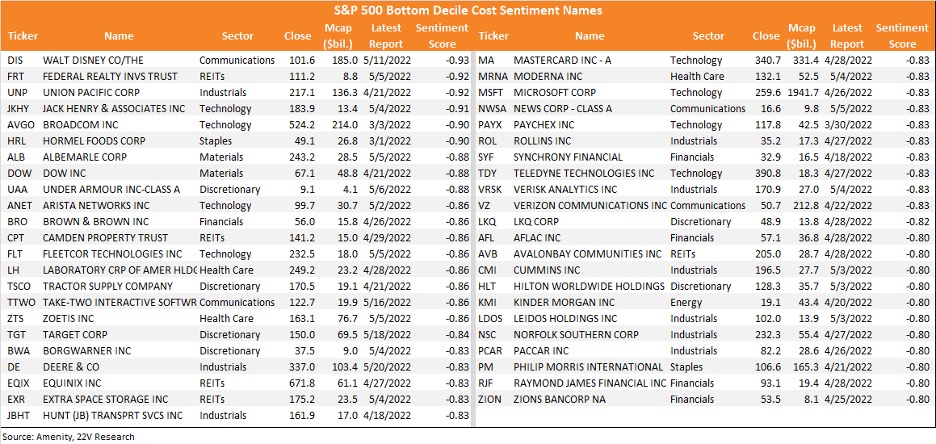
Cost Sentiment Blowup / Opportunity Screening: Below are the S&P companies that fall into the bottom decile (most negative) cost sentiment basket. Management at these companies expressed the most negative sentiment toward costs during their latest earnings calls. There is not a cost sentiment reading for all companies, but we can screen your names for pricing power, cost, and margin sentiment upon request.
The following list are the S&P names with the highest cost sentiment (least concerns). Today’s high inflation is having the least impact on managers at these companies.
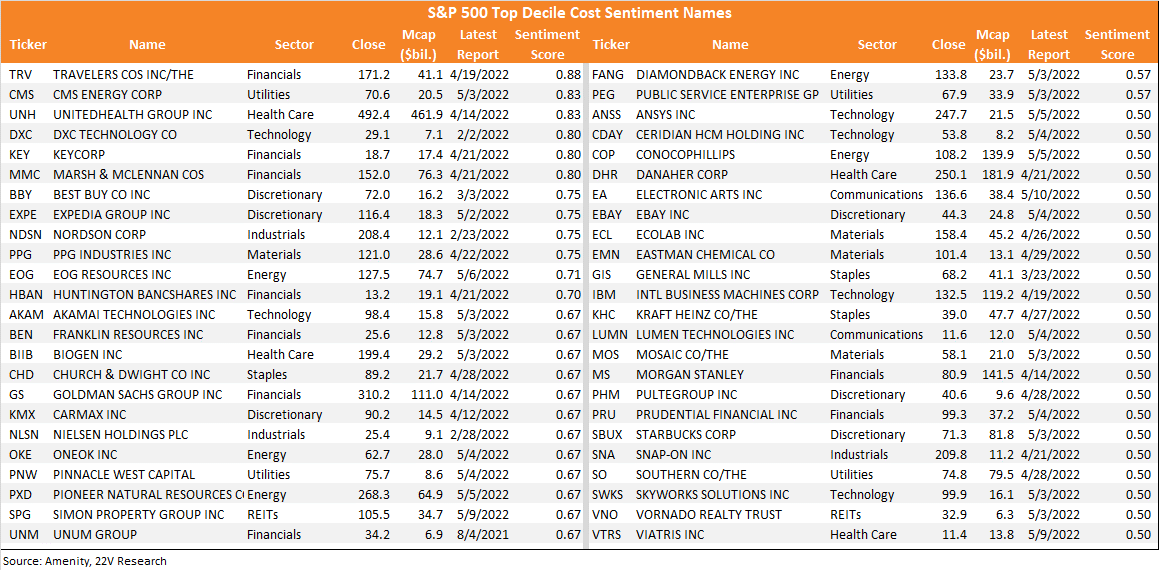
Financial account for the largest segment of the high cost sentiment basket, indicating the group is relatively insulated from the current high inflation backdrop. Several Discretionary and Tech names fall into the grouping as well. These are names that may have suffered by association during the recent selloff. There is no clear sign yet that the market has bottomed, but these are names that could benefit from an easing of the high correlations within some of the groups that have sold off hardest during the recent downturn.