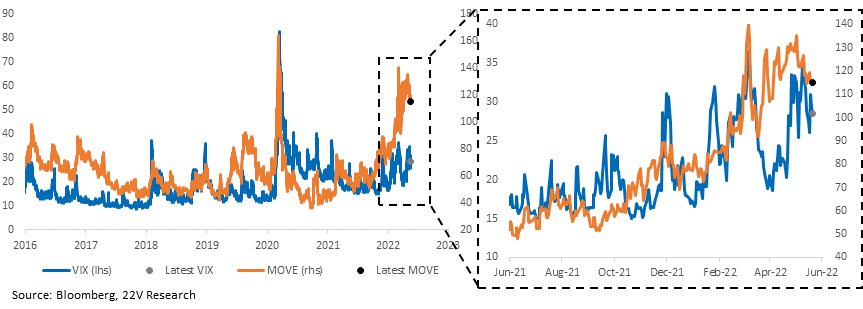
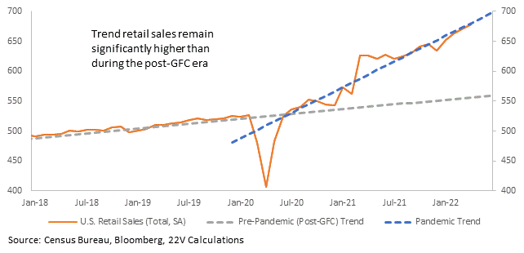
Summary: The short term super high volatility backdrop will be in place for a while. Important drivers of services inflation remain stubbornly firm (as the retail sales report indicated), which means financial conditions could have to tighten more. Growth needs to slow to respect supply side constraints. The entire world knows this. What we don’t know is if the current tightening of financial conditions is enough to move core inflation toward 3% by 1Q 2023. Investors believing that inflation can move toward 3%, WITHOUT financial conditions tightening more aggressively, would be an important positive. Again, we just don’t know if it is possible.
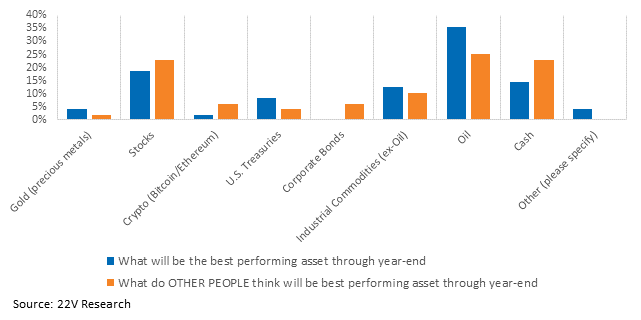
Oil prices remaining stubbornly firm is not helping (35% of investors we surveyed think oil will be the best performing asset class FROM HERE, through year-end. Second place was stocks at 19%) and there is a risk oil prices spike if China stimulates more. Most investors we talk to assume that without the China growth overhang, oil would be MUCH higher. The net net of the above, until we have a more obvious slowdown in economic data and leading indicators of inflation, stock vol will stay unusually high and a VIX curve indicating ~2% daily moves for 6 months makes it VERY difficult to buy dips.
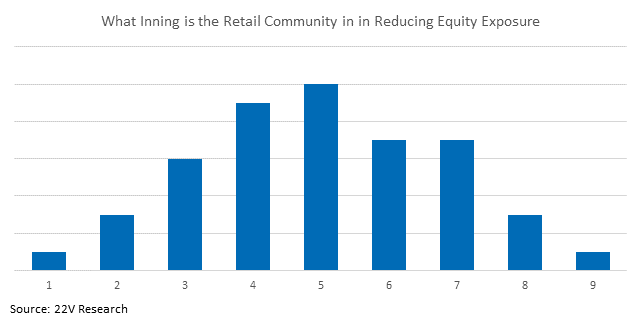
Flows: In our weekly survey of investors (here), we asked about retail fund flows. Keep in mind that data on retail fund flows is 1) terrible and 2) generally manipulated to tell a story. That is why we are asking investors about what they THINK will happen with retail flows. Investors think retail investors are about halfway through reducing equity exposure. Investors expect retail selling pressures to continue.
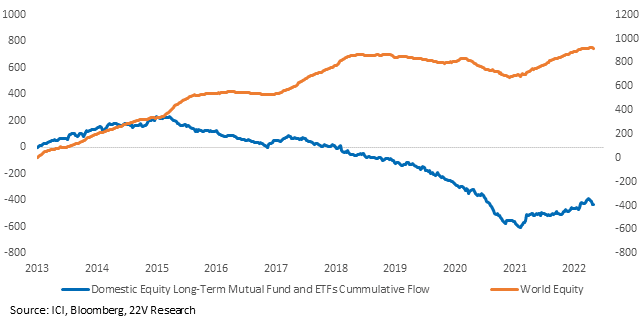
For what it is worth, domestic cumulative fund flows have been negative since 2018. They are much less negative since 2021, but still net negative. This runs counter to what we generally hear from clients. We get fund flows data from ICI (here). The cumulative number is the rolling aggregate of the weekly net flows.
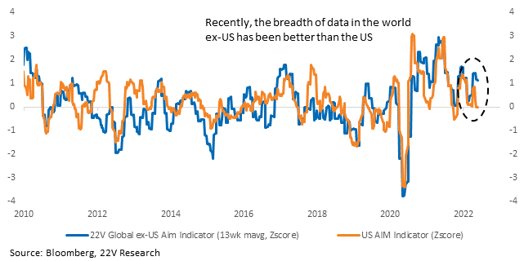
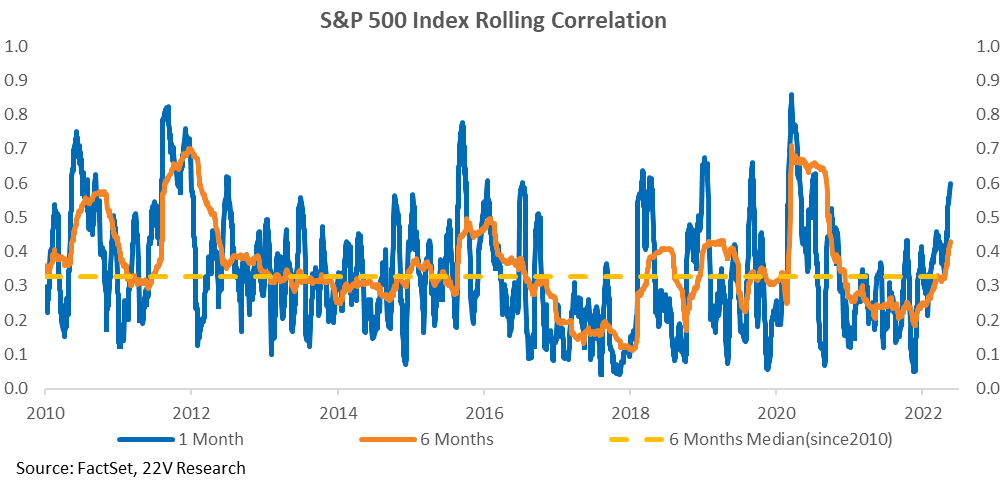
Glimmers Of Hope/Thinking About A Stock Picking Bottom (not necessarily a market turn higher): Some of the things we would need to see in terms of a bottom starting to develop. The bond market and inflation expectations are looking through the strong retail sales and better than expected CPI data and assuming some slowing in economic growth (both UST yields and inflation expectations have moved lower). If US data slows (the breadth of US data has rolled over some) and the forward inflation outlook starts to decline, bond volatility will move lower (has already started). That should lower stock volatility. It doesn’t mean stocks will move significantly higher, but correlations would likely move lower. Correlations are unusually high right now and lower correlations would improve the outlook for stock picking. It is tough to pick stocks when vol is expected to be ~2% every day for 6 months and correlations are high.
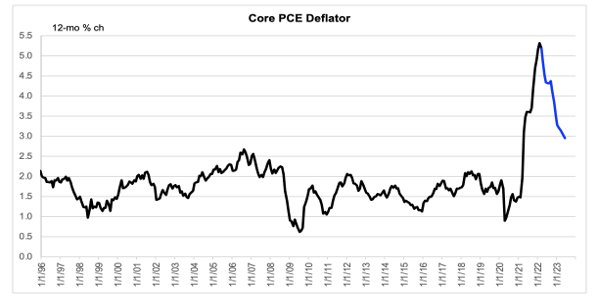
Our call: Recession risk is 2x to 3X above normal, but not a base case. If correct, that will create a buying opportunity in risk later this year. Labor demand needs to slow soon for that to be correct. Gerard’s middle-up PCE simulation has core inflation falling to roughly 3% by 1Q23. If the Fed insists on taking inflation to 2% near-term, a recession is very likely. Last week Fed speakers and former Fed members started to echo Gerard’s view that the Fed would be unwilling to go to 2% and cause SIGNFICANT labor market disruption. What they need to do is collapse the 1.9 job openings per unemployed person. They can do that be lowering aggregate demand. As the job openings per unemployed person falls, wage pressure will alleviate. If inflation can get below 3%, the Fed would then back off some.
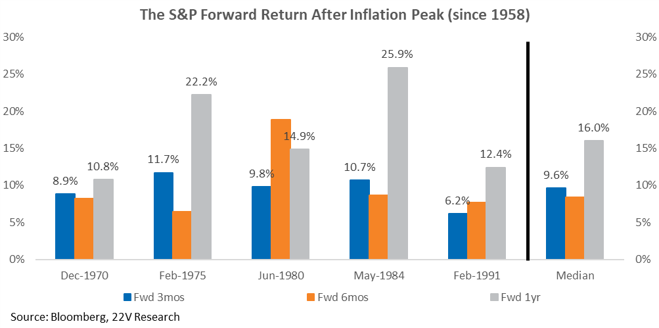
Inflation treding toward a sub-3% level with slowing labor demand create a more interesting outlook for forward market returns and a much less bad earnings outlooks (earnings are coming down, it’s a matter of how much). S&P forward returns 3, 6, and 12 months after inflation peaks since 1958 were all positive, with a median return 9.6% (3mo), 8.4% (6mo), and 16% (1yr) forward. If inflation is reduced without causing a recession, S&P returns should be positive, particularly if the financial condition tightening needed to slow growth is now behind us. Many things are different this time vs history, but those are the stats.
It is REALLY IMPORTANT that Low volatility and risk-on factors UNDERPERFORM as economic growth slows. That would indicate low recession risk. If Low Vol outperforms as growth slows and credit spreads keep widening, that means investors are pricing in a recession.
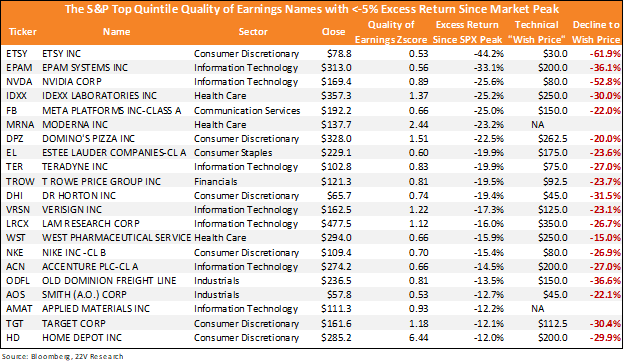
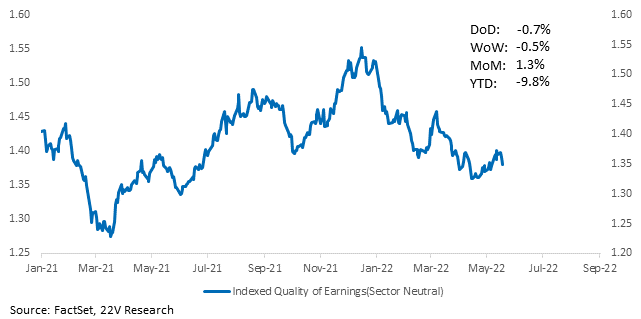
Potential Longer Term Long Ideas: Quality of Earnings has underperformed recently, falling -11% from its peak, but it should benefit from the current backdrop. Misses have consistently been unusually punished, relative to history, which is why we prefer lower risk (high quality) equities. A list of high-quality names that have underperformed the market by at least 5% is HERE (and truncated below). This is a quick “potentials list” for stocks that have underperformed but whose earnings should be at less risk than the overall market. John Roque’s technical “wish prices” are also included.
Full set of charts that support what we wrote about above are below…
Macro Backdrop: We need economic growth to slow. For now, the bond market and inflation expectations are looking through the strong retail sales and better than expected CPI data, and assuming some slowing in economic growth (both UST yields and inflation expectations have moved lower). As US data slows (the breadth of US data has rolled over some) and the forward inflation outlook starts to move lower, bond volatility will decline. That should lower stock volatility as well.
Inflation expectations are biased lower as the breadth of data deteriorates, which COULD help stabilize markets near-term while being negative for Deeper Cyclicals on a relative basis.
The trend in retail sales is still super strong relative to its post-GFC trend. This is a problem if it continues. It means financial conditions need to tighten more to slow growth.
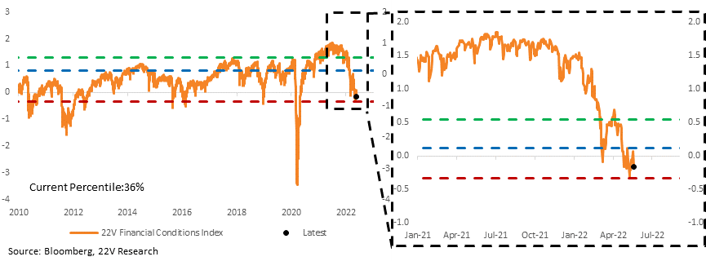
Financial conditions have tightened significantly, but it is not clear if they have tightened enough to drive inflation toward 3% by 1Q23.
Gerard’s middle-up PCE simulation has Inflation falling to roughly 3% on a core basis by 1Q23. If the Fed insists on taking inflation to 2% near-term, a recession is very likely. Last week, Gerard noted his view (or views similar to his) are beginning to make the rounds on the feds unwillingness to go to 2%. . This will be an important theme going forward for markets; recession risk is still elevated, but opportunistic disinflation makes a sharp slowdown relatively less likely, which would support the reversal of recent recessionary internal performance. Unless inflation stays well above 3%.
Markets don’t have to go up significantly if vol is reduced, but at the very least it will improve the outlook for stock picking. It is tough to pick stocks when vol is expected to be +/-2% every day for 6 months and correlations are high and rising.
If inflation is reduced without causing a recession, S&P returns should be positive, particularly if the financial conditions tightening needed to slow growth is now behind us. Bottom line, the market has priced in a lot of negativity.
State of the Retail Selloff: Investors think retail investors are about halfway through reducing equity exposure. Investors expect retail selling pressures to continue.
For what it is worth, domestic cumulative fund flows have dropped but have been negative since 2018. We get fund flows data from ICI (here). The cumulative number is the rolling aggregate of the weekly net flows.
Best Asset Class to Year-End: In our latest survey, a plurality of respondents (35%) expect oil to be the best performing asset, following by stocks (19%), cash (15%), and then industrial commodities (13%). Respondents think other people expect oil (25%), stocks (23%) and cash (also 23%) to perform best. In other words, most people expect oil to be the best performing but underestimate how many OTHER people believe the same thing. Our wording of the question may have introduced some ambiguity. The goal was to figure out what investors expect to be the best performing asset FROM HERE through year-end. We will be more precise going forward.
Long Term Long Ideas: Quality of Earnings has underperformed recently, falling -11% from its peak, but it should benefit from the current backdrop. Revenue and earnings guidance weakened substantially over the past few quarters and recent Retail earnings release misses suggest that will continue. Misses have consistently been unusually punished, relative to history, which is why we prefer lower risk (high quality) equities.
A list of high-quality names that have underperformed the market by at least 5% is HERE (and truncated below). This is a quick “potentials list” for stocks that have underperformed but whose earnings should be at less risk than the overall market. John Roque’s technical “wish prices” are also included.