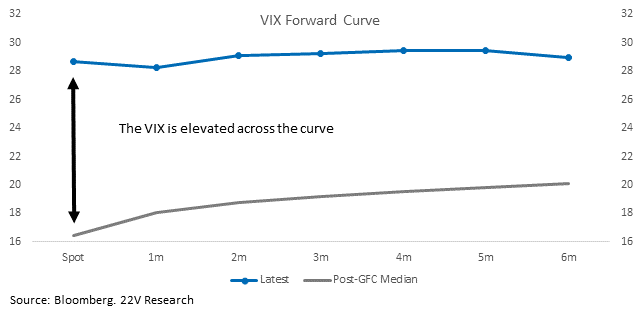
SUMMARY: Demand growth remaining well above trend (like the retail sales report indicated), would indicate the Fed needs to tighten financial conditions. That means bond and equity volatility will remain elevated, and financial conditions biased to tighten. Stock vol would stay unusually high and the VIX curve would stay elevated. A VIX curve indicating ~2% daily moves for 6 months makes it VERY difficult to buy dips.
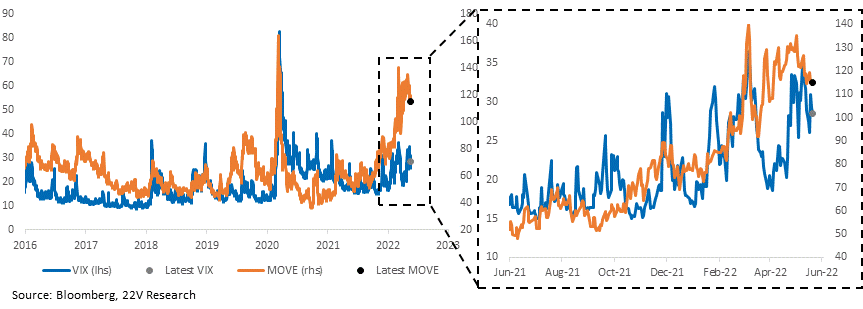
Some glimmers of hope are forming in indicators that would be associated with a bottom. Not that we are about to bottom. But some of the stuff we would need to see is developing. The bond market and inflation expectations are looking through the strong retail sales and better than expected CPI data and assuming some slowing in economic growth (both UST yields and inflation expectations have moved lower). As US data slows (the breadth of US data has rolled over some) and the forward inflation outlook starts to decline, bond volatility will move lower (has already started). That should lower stock volatility.
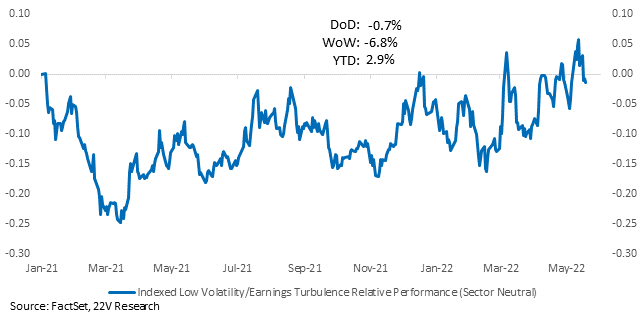
At the factor level, Low Volatility is down -6.8% WoW relative to Earnings Turbulence (a risk-on factor) despite the sharp decline in equities. Value is down -1.8% WoW relative to Growth. This could just be related to “safer” sectors that have performed relatively well, like Staples, finally coming under pressure. That is a fair point. BUT, better risk-on factors performance is something to expect if the worst of the financial conditions tightening is behind us. Economic growth needs to slow for investors to assume financial conditions won’t tighten more and real rates won’t gap higher.
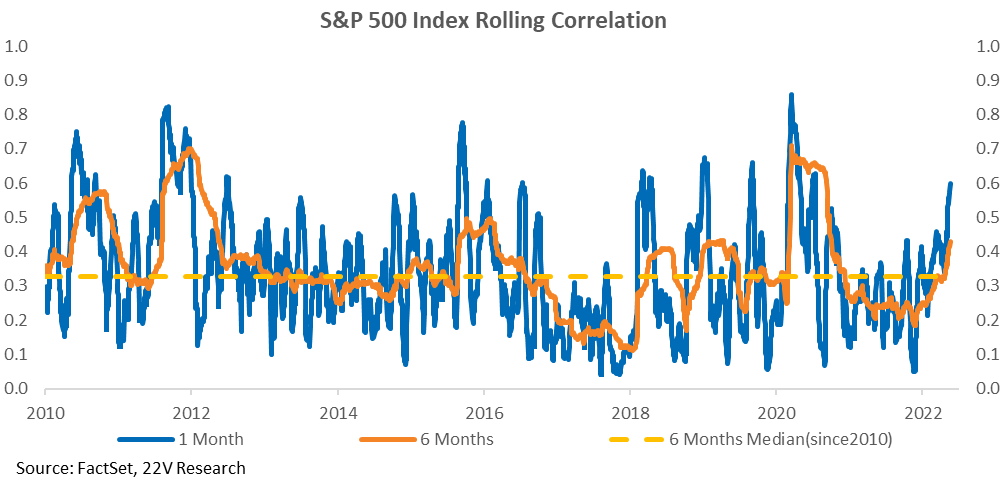
The bottom line: Markets are starting to discount a decline in economic growth, which should help reduce bond volatility and stock volatility if it continues. If data doesn’t support what markets are starting to discount, growth doesn’t slow enough and financial conditions need to tighten more (consumer and labor market data is very important), then Low Vol and Value will keep outperforming (real rates gap even higher) and equities will move lower. Slower economic growth and inflation that helps cap 10yr yields will eventually help stabilize risk assets. Assuming recession risk is not the base case. We have a year to figure out if a recession will happen and the Fed wants to avoid a recession. Markets don’t have to go up significantly if vol declines, but lower vol and lower correlations would improve the outlook for stock picking. It is tough to pick stocks when vol is expected to be ~2% every day for 6 months and correlations are high.

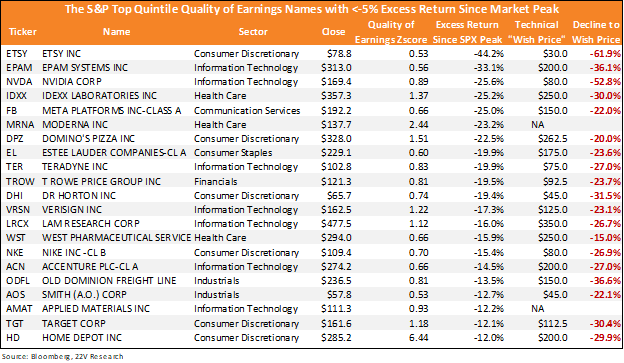
We also highlight some Earnings Quality stocks that might be interesting now (they have gone down more than the market but have less earnings risk in theory) and highlight a potential long FB trade using options.
Full report below…
MARKET VIEWS: Risk assets are higher overnight as China cut its long-term lending rate (a direct attempt to boost the property market) and according to Bloomberg calculations, China plans to add $5.3 trillion to the economy in 2022. Less than 2020 stimulus, but significant in a $17 trillion economy. The stimulus is in response to horrid data, but it does lower the odds of a much sharper global economic slowdown. With the VIX expected to be around 30 for the next 6 months, implying ~2% daily moves, it is really difficult for investors to buy equities now. Even after sharp drawdowns. It is critical that volatility shifts lower across the curve for a bottom to form. We covered the indicators we are watching to have confidence that a bottom MIGHT form in a video last night and will cover some of those briefly here…
We need economic growth to slow. First and foremost. To the extent demand growth remains well above trend (like the retail sales report indicated), that would indicate that the Fed needs to tighten financial conditions more and bond volatility will move up again. For now, the bond market and inflation expectations are looking through the strong retail sales and better than expected CPI data and assuming some slowing in economic growth (both UST yields and inflation expectations have moved lower). As the US data slows (the breadth of US data has rolled over some) and the forward inflation outlook starts to move lower, bond volatility will move lower. That should lower stock volatility as well.
Internals in the market will need to reflect the change in the economic outlook. Factors have been SUPER VOLATILE, but the low volatility factor is -6.8% WoW relative Earnings Turbulence (a risk-on factor) despite the sharp decline in equities. This could just be related to other “safer” sectors that have performed relatively well, like Staples, finally coming under pressure. That is a fair point. BUT, improvement in risk-on factors performance is something you would expect if the worst of the financial conditions tightening was behind us. If economic growth slows, the worst of the financial conditions tightening should be behind us.
Value is -1% WoW relative to Growth and the same logic used above applies to Value. If real rates don’t keep gapping higher from here (and they don’t need to if growth is going to slow), Value tailwinds would be reduced some. Value has been the go-to factor in down markets. It is a good thing for the overall market if Value stops outperforming.
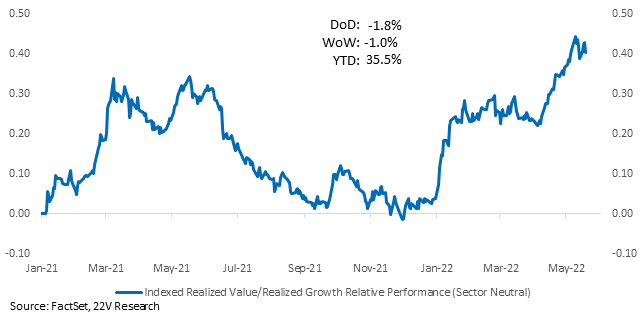
The bottom line, markets are starting to discount a decline in economic growth, which should help reduce bond volatility and stock volatility if it continues. If growth doesn’t slow enough and financial conditions need to tighten more to slow inflation (consumer and labor market data are very important), then Low Vol and Value will keep outperforming (real rates gap even higher) and equities will move lower. Slower economic growth and inflation that helps cap 10yr yields will eventually help stabilize risk assets. Assuming recession risk is not the base case. We have over a year to figure out if a recession will happen. Markets don’t have to go up significantly if vol is reduced, but at the very least it will improve the outlook for stock picking. It is tough to pick stocks when vol is expected to be +-2% every day for 6 months and correlations are high.
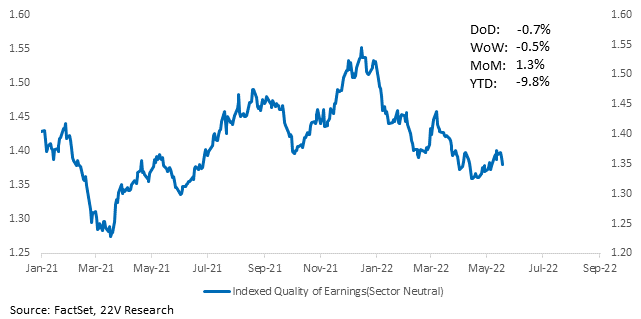
EARNINGS QUALITY: Quality of Earnings has underperformed recently, falling -11% from its peak, but it should benefit from the current backdrop. As we mentioned yesterday, revenue and earnings guidance weakened substantially over the past few quarters and recent retailers earnings misses suggest that will continue. Misses have consistently been unusually punished, relative to history, which is why we prefer lower risk (high quality) equities.
A list of high-quality names that have underperformed the market by at least 5% is HERE (and truncated below). This is a quick “potentials list” for stocks that have underperformed but whose earnings should be at less risk than the overall market. John Roque’s technical “wish prices” are also included.
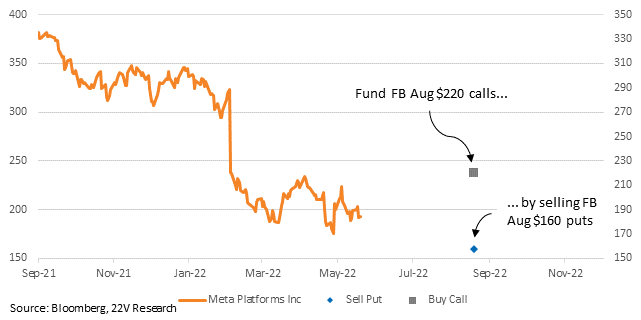
When selecting, it’s important to isolate the industry groups with low macro influence, which we detail more on HERE. Recent factor rotations have been dramatic, so we are recommending deep OTM options strategies. Picking a bottom is difficult, to say the least, but very high volatility creates opportunities for longer-dated trades. Trade example – FB is down -50% from its peak and in Media, which is a low macro-influence and correlation industry group. You can fund a ~16% OTM August call by selling a ~17% OTM June put. We defer to options experts for proper trade structure.