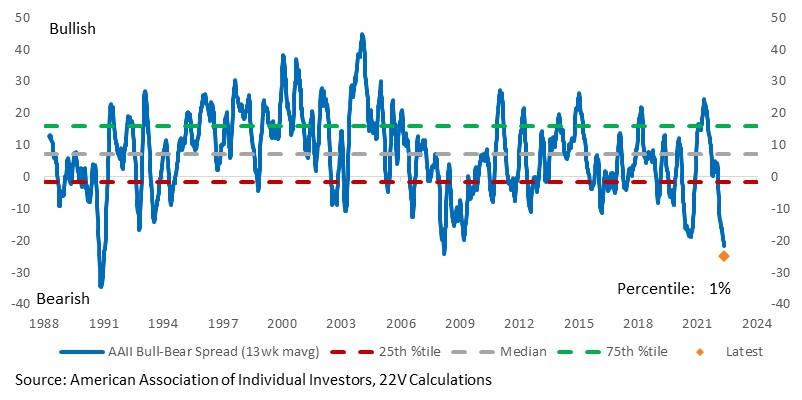
Market volatility has spiked and investor sentiment has collapsed into its 1th %tile ,as investors become more concerned a recession may be needed to slow high inflation. Short and medium term correlations have moved back toward late-2020 levels, and implied volatility indicates 2% daily moves from now until 3Q. That backdrop is making alpha generation through stock/factor selection more difficult.
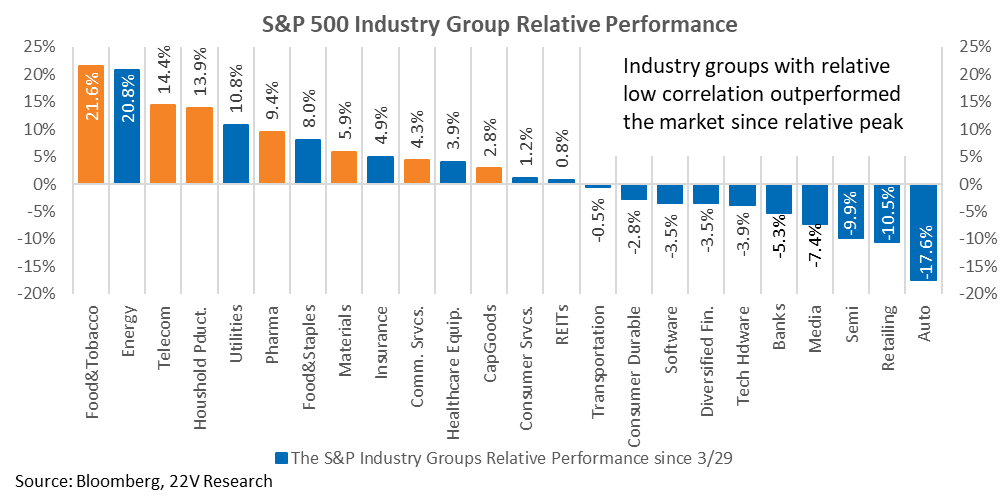
Industry groups with relatively low long and short-term correlations have tended to outperform since the recent market peak. If markets continue to move lower, industry groups levered to growth trends that also have higher long-term correlations and high macro influence are likely to continue to struggle. Banks, Autos, and Transports all fall into those risky groupings. Recently, Semis have become the MOST correlated industry group. Macro influence over the space is middle of the pack for the S&P though, creating an opportunity for elevated return dispersion later in the year.
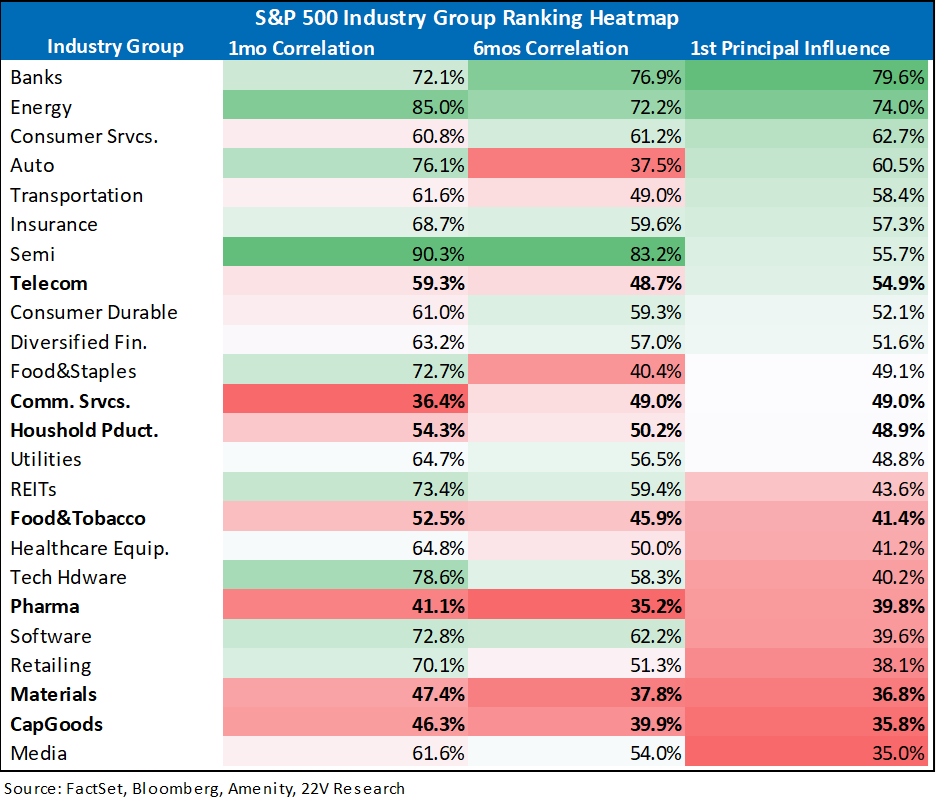
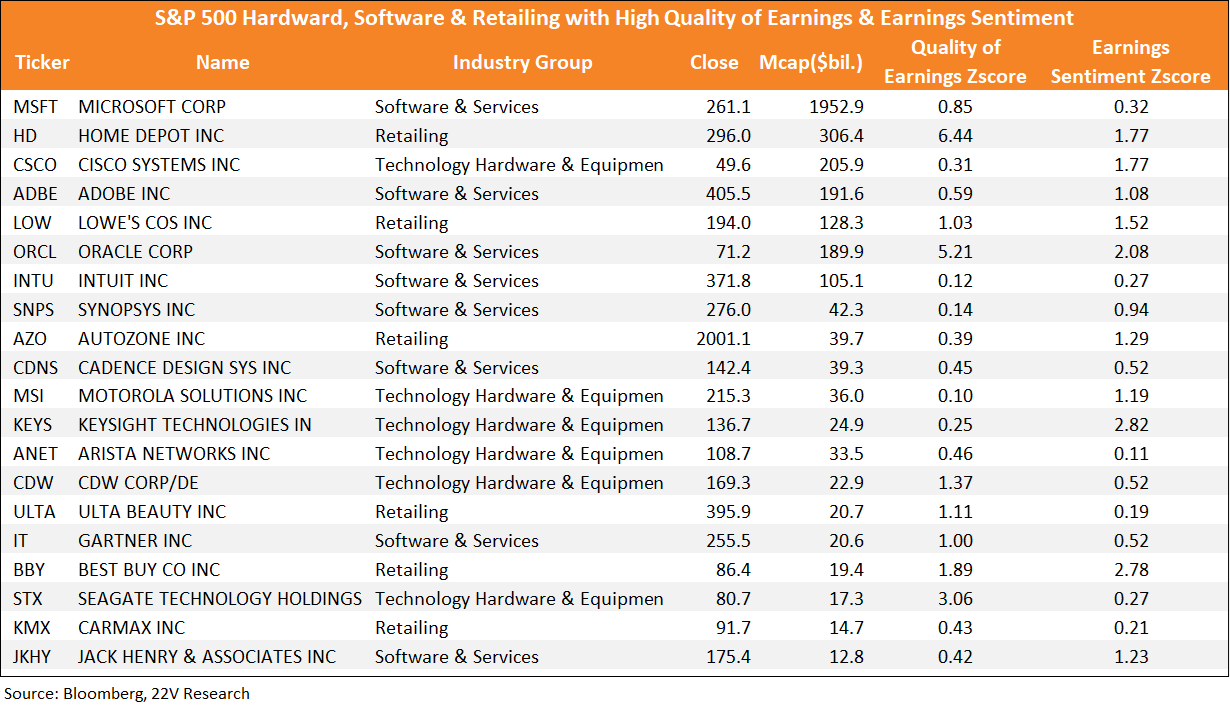
Factor screening is likely to work best within industries that 1) have had high correlations recently (moved by shocks) but 2) have low macro influence in general. Three such industries are 1) Software, 2) Tech Hardware, and 3) Retailing. At the end of this report we list stocks from those industries that have positive earnings sentiment and Quality of Earnings scores. We expect Quality to outperform as the investors and the Fed figure out if additional tightening, and higher recession risk, are needed to slow growth.
Autos and Food & Staples have relative low long-term correlations, but their short-term correlations has spiked as has their macro volatility. Stock returns within those groups have been elevated recently and are at risk if the macro backdrop shifts.
Mapping & Navigating the Correlation Spike: Market volatility has spiked as investors become more concerned that a recession may be needed to slow high inflation. Investors sentiment has collapsed, falling into its 1th %tile, dragging the S&P PE lower and its price -13% below its March peak.
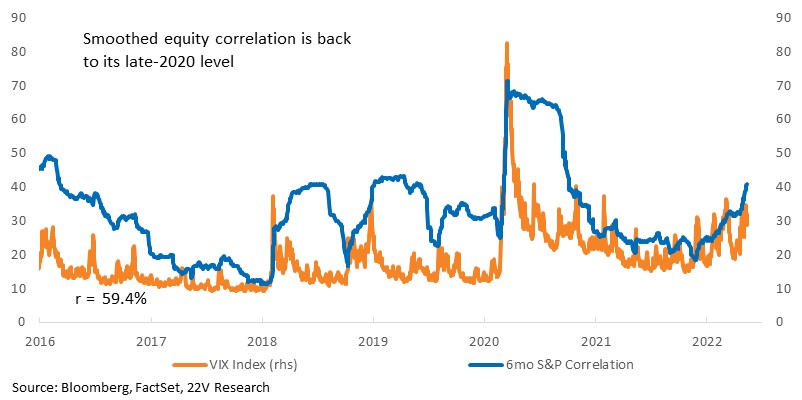
The market selloff has driven short and smoothed market correlations higher as volatility and poor sentiment have dragged down most stocks. 1 & 6mo S&P correlation (IPC) have rebounded to late-2020 levels. Implied volatility is in its +90th %tile from 1-4mos out, implying 2% daily moves from now through nearly the end of 3Q. High correlations and volatility, which are likely to remain in place until the outlook for growth is clearer, make generating alpha through stock selection more difficult.
Correlations and dispersion among the S&P industry groups are wide. Industries with lower correlations (left side of the chart) tend to offer better stock picking opportunities. Currently Pharma has the lowest long-term correlation while the 6 months dispersion is also among the highest of any S&P industry group. Materials and Cap Goods are also among industry groups with the lowest smoothed correlations.
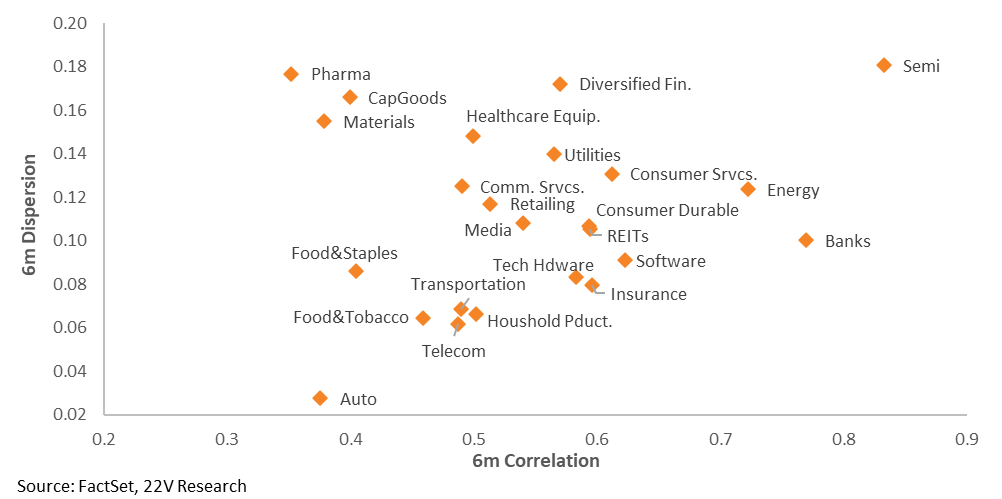
Autos and Food & Staples have relative low long-term correlations, but their short-term correlations has spiked as has their macro volatility. Stock returns within those groups have been elevated recently and are at risk if the macro backdrop shifts. Banks and Energy remain the most macro driven industry groups and have high correlations. Differentiation within those groups is small, making stock selection and factor screening less effective. Recently, Semis have become the MOST correlated industry group. Macro influence over the space is middle of the pack for the S&P though, creating an opportunity for elevated return dispersion later in the year.

Industry groups with relatively low long and short-term correlations have tended to outperform since the recent market peak. If markets continue to move lower, industry groups levered to growth trends that also have higher long-term correlations and high macro influence are likely to continue to struggle. Banks, Autos, and Transports all fall into those risky groupings.
How Do You Use The Above: Factor screening is likely to work best within industries that 1) have had high correlations recently (moved by shocks) but 2) have low macro influence in general. Three such industries are 1) Software, 2) Tech Hardware, and 3) Retailing. Below, we list stocks from those industries that have positive earnings sentiment and Quality of Earnings scores. This screen can be adapted to a more risk-on stance (replacing Quality with Turbulence for instance). We still expect Quality to outperform as the investors and the Fed figure out how if additional tightening, and higher recession risk, are needed to slow growth.