SUMMARY: Walmart’s earnings this morning are another example of goods deflation and consumers shifting preferences at the margin. That’s good for inflation, but the question remains the same: is disinflation going to happen fast enough for the Fed? Which leads to HD’s stronger than expected numbers. HD has pricing power, WMT does not. The Fed wants more WMTs, and that will put downward pressure on profitability. Pricing power continues to be a factor we are most focused on.
As Gerard has been writing, if the Fed embraces opportunistic disinflation – tolerating inflation below 3% – then avoiding a recession is more likely. If the Fed tries to drive inflation to 2% quickly, a recession is much more likely. This will be an important theme going forward for markets; opportunistic disinflation lowers relative recession odds and a reversal of recent recessionary internal performance. Which path wins is unlikely to be clear near term though, and upside surprises in consumer data are a risk.
Futures are higher today on better news out of China. That takes some of the downward pressure off global growth. In the medium-term, positive China growth headlines aren’t necessarily risk-on. Pro-growth developments increase concerns financial conditions will need to tighten further. The U.S. labor income proxy still points to healthy consumer spending and high-frequency service demand data has not been shaken. Incoming data may still be too hot for the Fed.

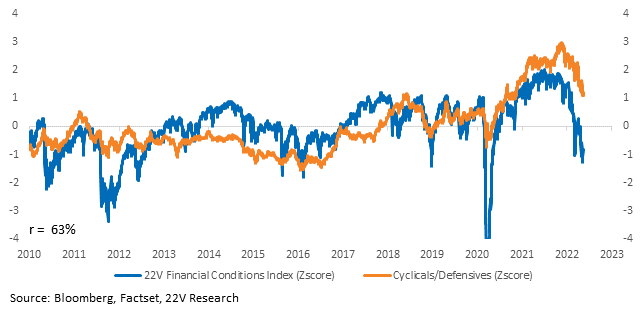
Internals will still be pressured by fears financial conditions need to tighten more. All else equal, tighter financial conditions are a headwind for Cyclicals. Stubbornly strong data is a tailwind to oil prices and 10yr yields, which is bad for markets. Higher real yields are a tailwind to Value vs Growth. And Low Vol and Quality factors continue to be hiding spots. That’s all predicated on sentiment shifts based on data, which implies markets and factors will remain volatile.
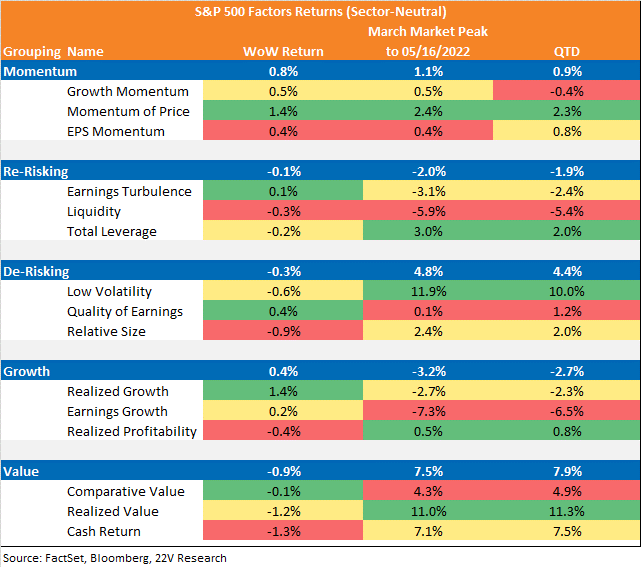
Over the past week, factor returns have been volatile, consistent with uncertainty over the direction of markets. Both risk-on AND off factor groupings have moved lower. In aggregate, Growth has outperformed Value over the past week as well, but the performance trend is still clearly in favor of Value. Internals remain highly volatile as investors shift their slowdown/recession versus bottoming/recovery odds. Momentum factors continue to move higher and remain a source of relative stability.
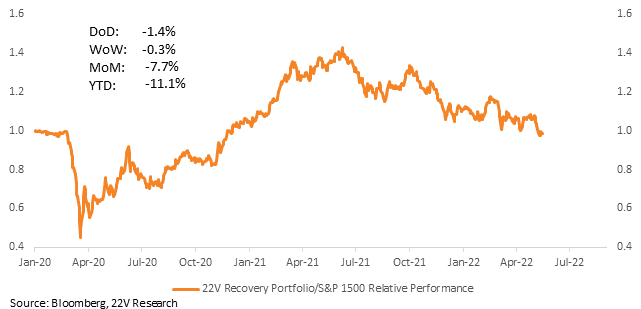
MARKET VIEWS: Internals yesterday were (again) consistent with a recessionary outcome. Healthcare and Utilities both outperformed. Risk-off Low Vol, Quality of Earnings, and Relative Size outperformed while risk-on factor fell. Our Recovery Portfolio, which is levered to the consumers, underperformed by -1.4%. This morning, Walmart missed earnings and guided lower, citing input cost pressure and demand shifting to groceries and away from discretionary goods. A consumer under pressure from rising costs and corporate profits being revised lower are another sign that recession risk has increased.
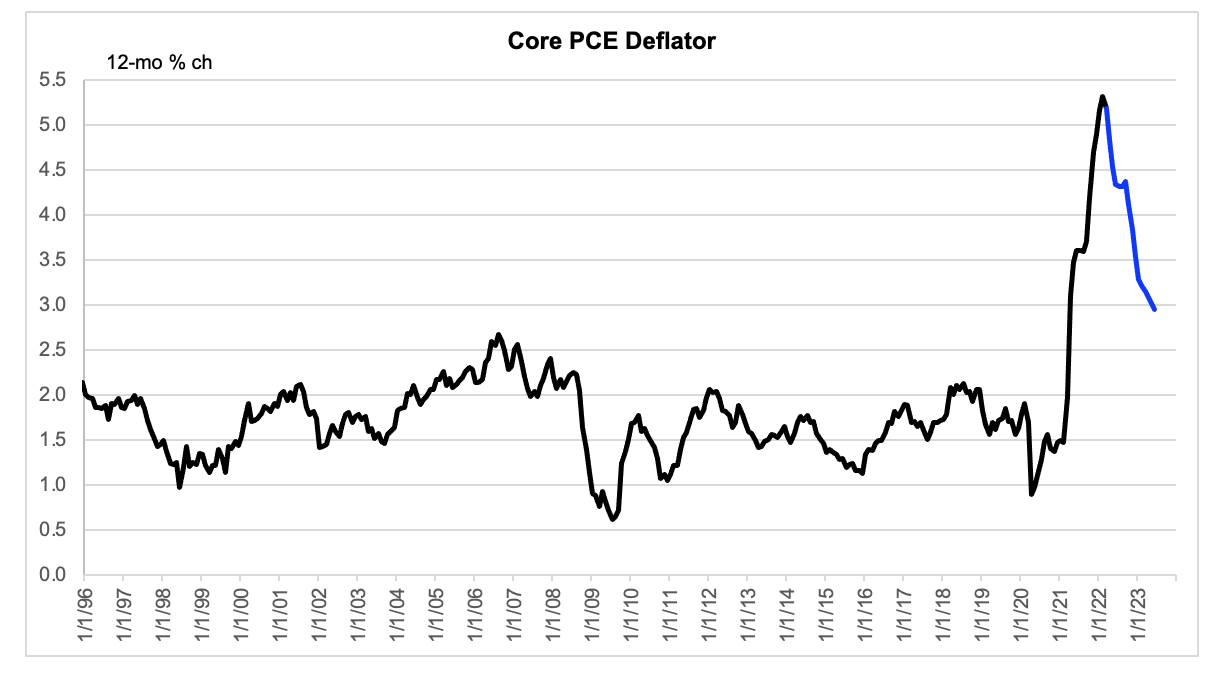
Walmart is also an example of growing goods deflation and consumers shifting preferences at the margin. That’s good for inflation, but the nig question remains the same: is disinflation going to happen fast enough for the Fed? As Gerard has been writing, if the Fed embraces opportunistic disinflation – tolerating inflation below 3% while claiming 2% is achievable – then yes, inflation will fall and avoiding a recession is more likely (see Gerard’s middle-up PCE simulation below). If the Fed insists on taking inflation to 2% near-term, a recession is very likely. This morning, Gerard noted his view (or views similar to his) are beginning to make the rounds. This will be an important theme going forward for markets; recession risk is still elevated, but opportunistic disinflation makes a sharp slowdown relatively less likely, which would support the reversal of recent recessionary internal performance.
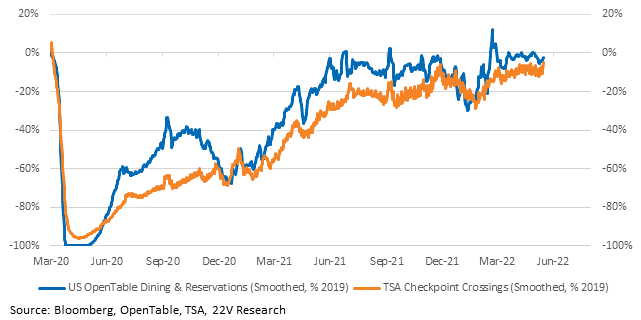
Futures are higher today on better news out of China. Shanghai announced no community spread, which is a pre-condition for easing lockdowns. And real estate investment restrictions were eased in some cities. That takes some of the downward pressure off global growth. In the medium-term, positive China growth headlines aren’t necessarily risk-on. Pro-growth developments bring concerns financial conditions will need to tighten further. The labor income proxy still points to healthy consumer spending and high-frequency service demand data has not been shaken. OpenTable data and TSA crossings are both still near COVID-era highs (relative to 2019 to avoid seasonality problems). Travel booking data is robust as well. Anecdotal evidence from Walmart is not definitive. Hot incoming data would keep alive the debate about how much recession risk the Fed feels it needs to tolerate.
Internals will still be pressured by fears financial conditions need to tighten more. All else equal, tighter financial conditions are a headwind for Cyclicals. Stubbornly strong data is a tailwind to oil prices and 10yr yields, which is bad for markets. Higher real yields are a tailwind to Value vs Growth. And Low Vol and Quality factors continue to be hiding spots. But sentiment shifts are still moving internals, which implies markets and factors will remain volatile.
Market internals were risk-off yesterday with Value outperforming Growth. Gains to Value over the past 6mos and several weeks have been very strong, consistent with a peak-inflation backdrop (regardless of the path of growth). For now, Value has been following the spike in implied real yields, which are biased higher over the next several quarters, assuming inflation comes under control.
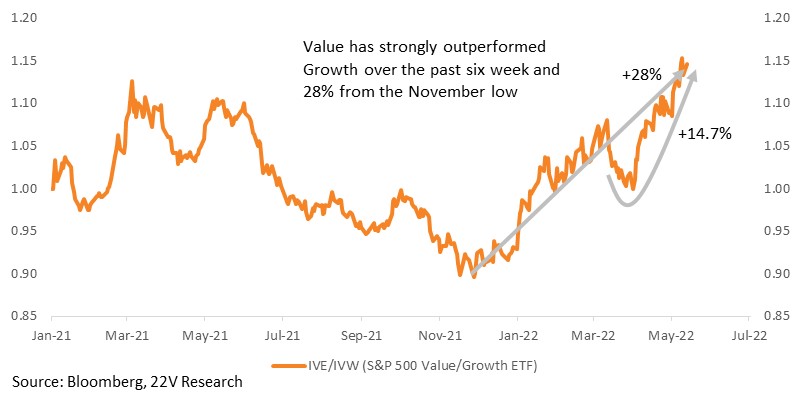
Over the past week, factor returns have been volatile, consistent with uncertainty over the direction of markets. Both risk-on AND off factor groupings have moved lower. Low Volatility, a risk-off factor that had a tremendous (99th %tile) gain from the market peak in late March, has declined over the past week, while another risk-off factor, Quality, has continued to move higher. At the same time, Earnings Turbulence, which fell sharply during the selloff, has stabilized. In aggregate, Growth has outperformed Value over the past week as well, but the performance trend is still clearly in favor of Value. The medium-term path of equities will depend on if the Fed needs to cause a near-term recession to slow inflation, and that is unlikely to be clear for several months. For now, market internals remain 1) skewed toward risk-ff, recession/higher real yield beneficiaries, and 2) volatile as investors shift their slowdown/recession versus bottoming/recovery odds. Momentum factors continue to move higher and remain a source of relative stability.