We looked at S&P sector and factor performances around inflation peaks and not surprisingly, returns between recession and non-recession periods were very different. For sectors, Defensives performed best into recessions and Cyclicals performed best for inflation peaks without near-term recessions. For factors, post-peak inflation recessionary periods favor Growth Momentum and Price Failure most, while Liquidity significantly underperforms all other factors. Non-recessionary post-inflation peaks have seen Comparative Value and Realized Growth outperform. As with sectors, the recession/non-recession paradigm seems to determine performance trends. Current sector returns are consistent with a market pricing in a recession. Materials have also outperformed, highlighting the uncertainty within markets. The S&P forward returns 3, 6, and 12 months post inflation peaks since 1958 were all positive. If inflation is reduced without causing a recession, S&P returns should be positive, particularly if the financial conditions tightening needed to slow growth is now behind us.
Changes in 10yr yields following inflation peaks have been mixed historically but were lower 1yr after the peak in inflation. Yields have been depressed due to an exceptionally low term premium and real fed funds rate. Those have reversed some, but the longer-term bias to yields remains higher rather than lower.
If inflation has peaked or not and if a recession will or will not begin soon remains unclear. But market internals since the recent market peak (3/29) have been more consistent with a recessionary outcome than a non-recessionary one. De-Risking and Value factors have surged while Growth and Re-Risking have faltered.
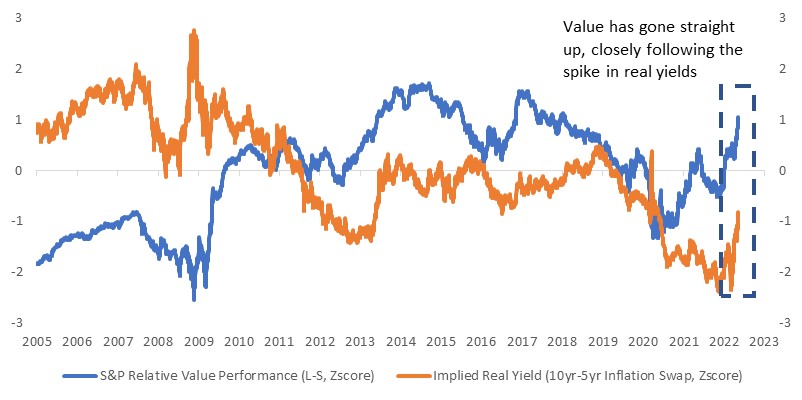
We have written this week about why we think Value is likely exhausted near term (here). Though value should perform well in a post-peak inflation backdrop, factor return volatility has been high this year and some give-back after the tremendous run in Value should be expected.
If the Fed can avoid a recession as they move to slow inflation, one factor that will be at persistent risk is Low Volatility. Low Vol has been the best performer since the market peak in late-March. In the full report, we list out the current S&P stocks with the highest low volatility scores. These are names that should struggle on a relative basis unless a near-term recession becomes likely.

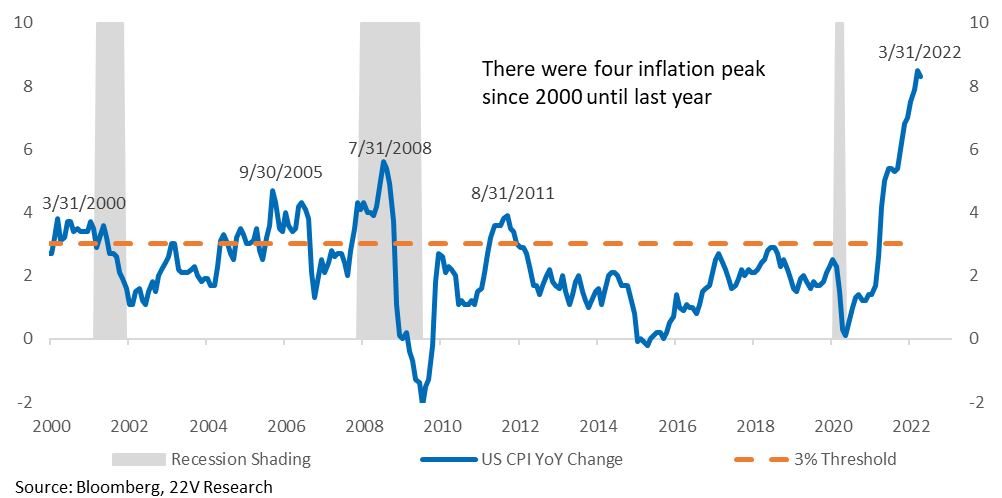
Inflation Positioning Recession Dependent: Economic activity has finally started to roll over and the Fed remains focused on fighting inflation. The combination has helped push inflation expectations, commodity prices, and bond yields lower. Supply chain influence from China remains limited. Headline and core CPI remain way too high, but both slipped lower in April to 8.3% and 6.2%, respectively. Looking at past periods, there were four headline inflation peaks since 2000, two that ended in recessions and two that did not.
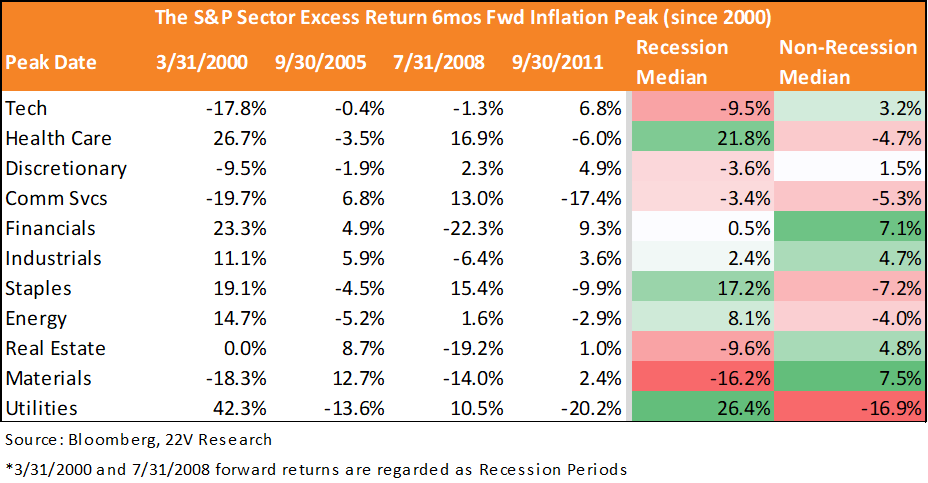
We looked at S&P sector and factor performances around inflation peaks and not surprisingly, returns between recession and non-recession periods were very different. Defensives performed the post-peak inflation periods that ended in recessions, led by Utilities and Health Care. For inflation peaks without near-term recessions, Materials and Financials outperformed at the expense of Utilities and Staples. Stapes and Utilities have been the best performing sectors this year behind Energy, the outperformance of which is heavily tied to oil price trends. In other words, sector returns are consistent with a market pricing in a recession. Materials have also outperformed, highlighting the uncertainty within markets.
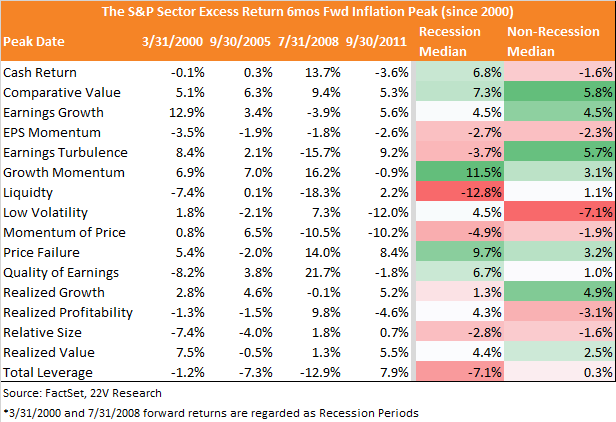
At the factor level, post-peak inflation recessionary periods favor Growth Momentum and Price Failure most, while Liquidity significantly underperforms all other factors. Non-recessionary post-inflation peaks have seen Comparative Value and Realized Growth outperform. As with sectors, the recession/non-recession paradigm seems to determine performance trends.
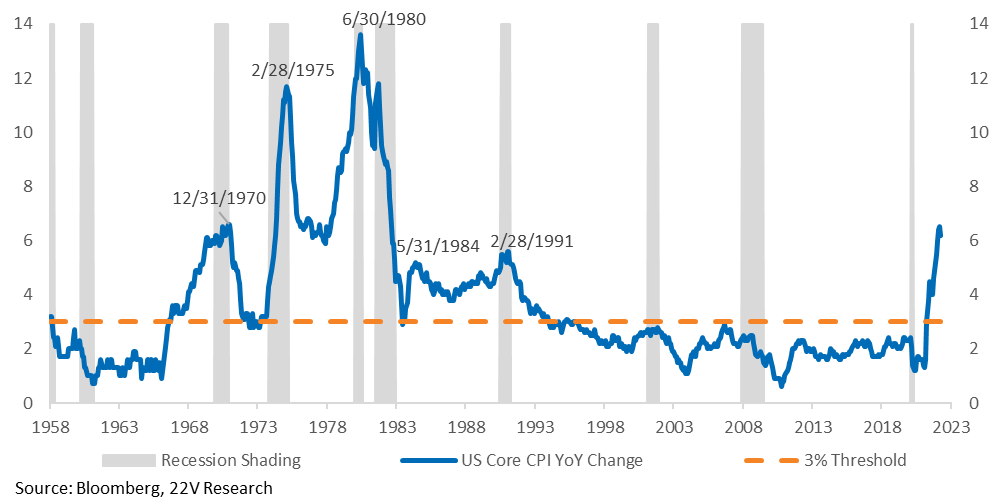
Index Level Inflation: Extending the analysis back to 1958 and focusing on core CPI changes, there were five inflation peaks. Most occurred near the end of recessions. Though the macro backdrop has shifted significantly from the 1970s, recessions are rare phenomenon, so we want to include them in our analysis.
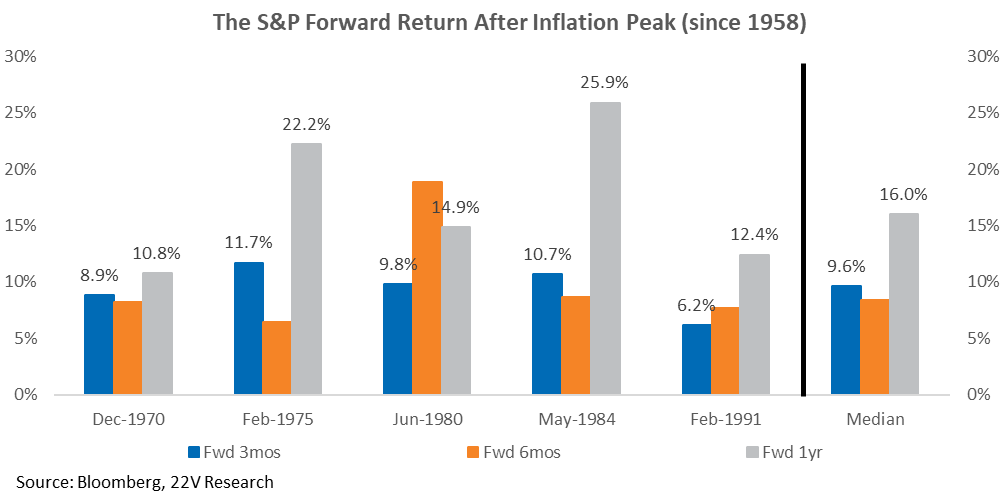
The S&P forward returns 3, 6, and 12 months post inflation peaks since 1958 were all positive, with a median return 9.6% (3mo), 8.4% (6mo), and 16 (1yr) forward. If inflation is reduced without causing a recession, S&P returns should be positive, particularly if the financial conditions tightening needed to slow growth is now behind us.
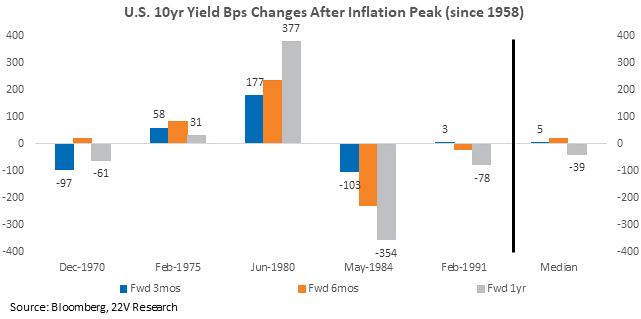
Changes in 10yr yields following inflation peaks have been mixed historically but were lower 1yr after the peak in inflation. Yields have been depressed due to an exceptionally low term premium and real fed funds rate. Those have reversed some, but the longer-term bias to yields remains higher rather than lower.
If inflation has peaked or not and if a recession will or will not begin soon remains unclear. But market internals since the recent market peak (3/29) have been more consistent with a recessionary outcome than a non-recessionary one. De-Risking and Value factors have surged while Growth and Re-Risking have faltered.
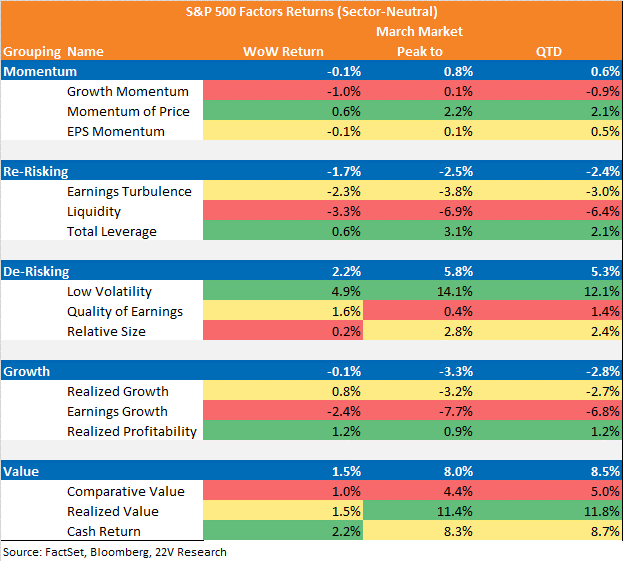
We have written this week about why we think Value is likely exhausted near term (here). Though value should perform well in a post-peak inflation backdrop, factor return volatility has been high this year and some give-back after the tremendous run in Value should be expected.
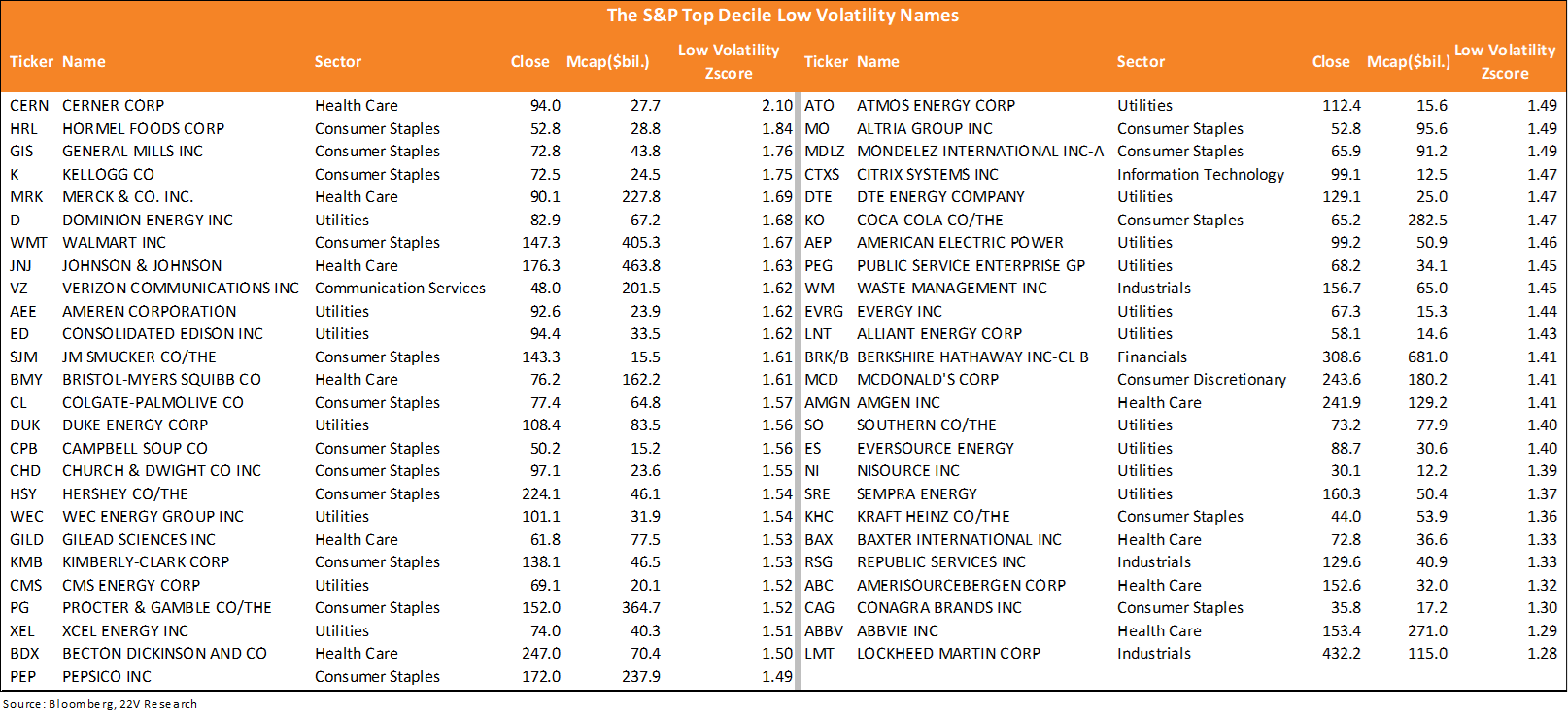
If the Fed can avoid a recession as they move to slow inflation, one factor that will be at persistent risk is Low Volatility. Low Vol has been the best performer since the market peak in late-March. In the table below, we list out the current S&P stocks with the highest low volatility scores. These are names that should struggle on a relative basis unless a near-term recession becomes likely.