SUMMARY: Investors are pricing in a better skew of economic outcomes – CDS spreads have tightened, implied bond and equity vol have dropped significantly, and we suspect some of the recent increases in oil prices are a demand phenomenon too. Sustained factory activity in China despite lockdowns and China likely to increase stimulus is likely helping. Economic tail risk is lower in the US as well with the Fed not shocking anyone to the hawkish side and economic data points still solid. Given that Fed officials are unlikely to meaningfully shift what is currently priced in for rate hikes, at least over the next few weeks, recession risk will remain low, which is important for equities, credit, bond volatility and S&P earnings estimates. Economic growth will slow, but it is unlikely to be a sharp decline THIS YEAR. Unless the Fed gets much more aggressive. Side note, this is important for investors to internalize that are waiting for companies to take 2022 earnings forecasts down. EPS estimates are headed lower, but probably not as dramatically as previously assumed. If economic data points start to roll over more quickly or the Fed gets more aggressive, EPS estimates are likely to head much lower.
The bottom line from the Summary of Economic Projections (SEP) though, as highlighted by Gerard, is that to reverse above trend inflation the Fed may need to push the unemployment rate up, particularly if it falls from here. Gerard’s central case is growth must slow meaningfully to force up the unemployment rate. Recession risk HAS risen given what Gerard is laying out, probably to well-above average for the 1-2ys ahead, but not above even. And again, we are talking 1 to 2 years out, not in 2022. Unless Bullard gets his way and the Fed goes 50bp at each meeting (seems unlikely). Strong labor market data and CPI prints would increase the odds of more hikes this year, but until those data points roll in, expect bond volatility to cool and rates to be range bound. A headwind for Banks for now.
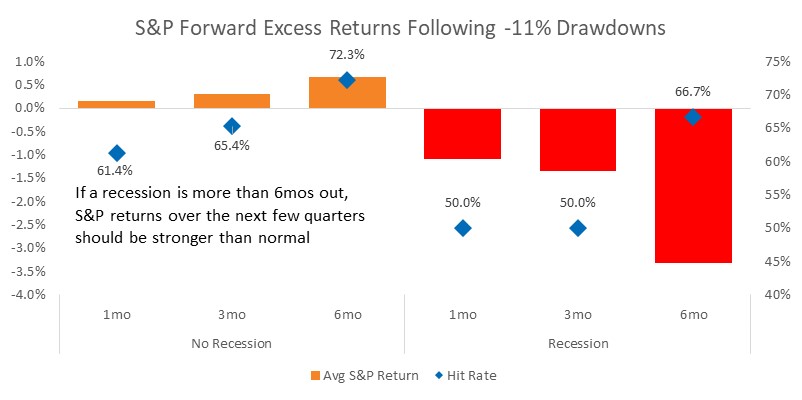
Near-term, recession risk remains low, which means an equity recovery is likely before a recession. The market has already suffered the -11% drawdown typical ahead of recessions. Assuming a recession does not start in the next two quarters, given the selloff, market returns should be strong then normal.

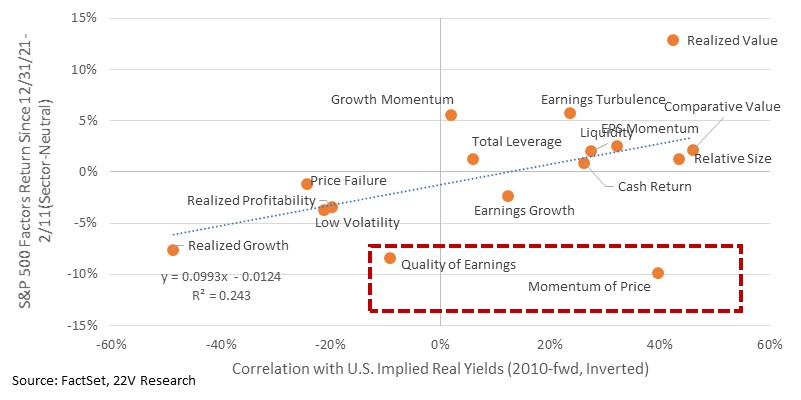
Since the war started, market internals have closely aligned with what we would expect to see during periods of financial condition tightening. If the tightening that has already happened is enough to slow inflation at a pace the Fed is comfortable with, or if further tightening will be needed is uncertain. In the near-term though, the strong tailwinds to the low vol/quality trade have eased. If financial conditions stabilize while growth slows (growth slowing is MUCH different then recession being a base case for 2022), the pre-war backdrop of rising real yields looks increasingly attractive. Over the course of 2022, Growth should perform better than Value, and downward pressure on earnings favors higher Quality names. Near term, if investors start discounting an orderly growth slowdown, Cyclicals would enjoy another rally relative to Defensives.
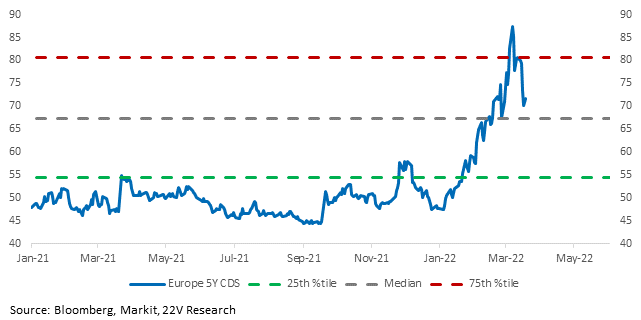
MARKET VIEWS: Europe credit spreads have tightened despite little progress being made towards Russia-Ukraine peace and oil prices increasing the last few days (though still down w/w). U.S. HY and IG CDS spreads have tightened. Implied bond and equity vol have both dropped significantly. Investors are pricing in a better skew of economic outcomes. We suspect some of the increases in oil prices are a demand phenomenon, not just a supply shock. Sustained factory activity in China despite lockdowns and China moving toward increased stimulus is likely helping. Economic tail risk is lower in the US as well with the Fed not shocking anyone to the hawkish side and economic data points still solid. Fyi, see more about our latest supply chain and COVID thoughts here.
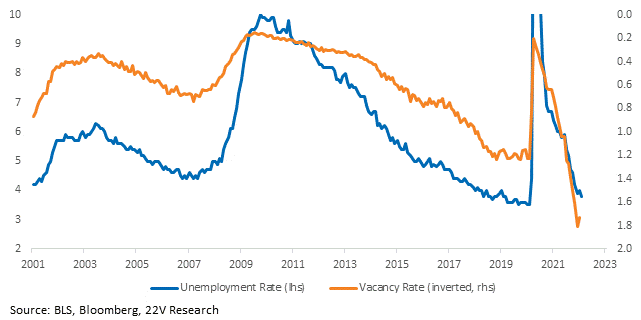
The bottom line from the SEP, as highlighted by Gerard, is that to reverse above trend inflation the Fed may need to push the unemployment rate up, particularly if it falls from here. The forecast included a significant downward revision to growth, which is a step toward reality, but not a higher unemployment rate. Powell skated over the logic of lower inflation without any rise in the unemployment rate. In the Q&A, Powell responded that underlying inflation pressures are currently elevated because the ratio of vacancies to unemployed in the labor market is 1.7. But if that ratio were to fall back to 1, then inflation pressures would be much lower. But why would the vacancy rate fall if the unemployment rate is falling? It is highly unlikely to do so and later this year Powell will have some explaining to do.
Gerard’s central case is growth must slow meaningfully, enough to force up the unemployment rate. Recession risk HAS risen, probably to well-above average for the 1-2ys ahead, but not above even. The Sahm Recession Indicator is a great tool to monitor because its explicitly a recession indicator based on employment. The below table maps the probabilities of a recession based on the value of the indicator. The current reading is negative, indicating low recession risk near-term…
… which means we’ll probably get an equity recovery before a recession. The market has already suffered the -11% drawdown typical ahead of recessions. Assuming a recession does not start in the next two quarters, given the selloff, market returns should be strong then normal.
Since the war started, market internals have closely aligned with what we would expect to see during periods of financial condition tightening. Conditions have tightened a good deal over the past few weeks, and macro data is likely to weaken over the coming months as the impact of higher oil/commodity prices work their way through the economy, and sanctions related frictions lead to supply chain issues and higher costs. If the tightening already seen will be enough to slow inflation at a pace the Fed is comfortable with, or if further tightening will be needed is uncertain. In the near-term though, the strong tailwinds to the low vol/quality trade have eased.
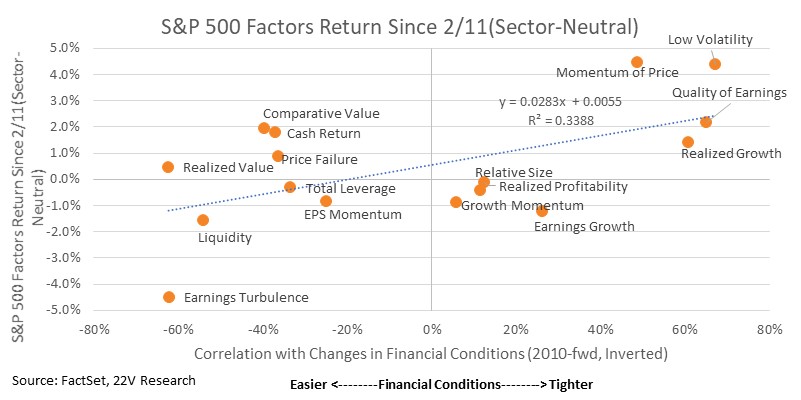
If financial conditions stabilize while growth slows, the pre-war backdrop of rising real yields looks increasingly attractive. Until the war, rising yields and stable inflation has supported a Value rotation. Over the course of 2022, Growth should perform better than Value, and increasingly downward pressure on earnings favors higher Quality names. Near term though, if investors start discounting an orderly growth slowdown, Quality will be less attractive and Value could enjoy another rally.