Summary: More important than specific factor rotations (more on factors below) is industry groups sensitivity to macro shocks. Currently Banks and Energy have the highest IPC, a proxy for macro influence, of any S&P industry groups. Banks, regardless of their factor exposure, tend to follow interest rate trends and changes in the Treasury curve. Energy names track shifts in oil prices. Macro influence will remain high for those industries and the rule of thumb should be in a “peaceful” resolution or non-escalation scenario (gasoline and oil prices don’t spike higher from here), rates are likely going higher (favors Banks) and oil prices lower (Energy underperforms), and in the non-peaceful scenario, demand destruction gets fully priced in and rates go lower. That is bad for Banks. Eventually it would be bad for Energy as well when the actual demand destruction happens. Telecom, Auto and consumer services are also highly macro sensitivity right now. Pharma and other Defensive factors are the least. Retailing has surprising low macro influence (pricing likely a specific problem).
Value got off to a strong start this year (lasted through early Feb) as investors focused on strong economic activity and rising real rates. Even as Fed rhetoric became more aggressively about tightening financial conditions, the increase in implied real yields supported a Value rotation. The war has led to a disorderly tightening of financial conditions (through vol and lower asset prices, not rate hikes), and market internals reflect that regime shift. Even before the war, high inflation and strong growth were creating conditions that require the Fed to significantly tighten financial conditions to slow growth. A resolution to the current conflict should bring a short reprieve from the rapid de-risking of the past few weeks, but the need for tighter financial conditions and slower growth will remain.
Bottom line, the backdrop for Value is much less interesting now, but we also shouldn’t expect a surge in Growth. Yes, Growth should outperform, but thinking in terms of Volatility and Quality of Earnings is more important today
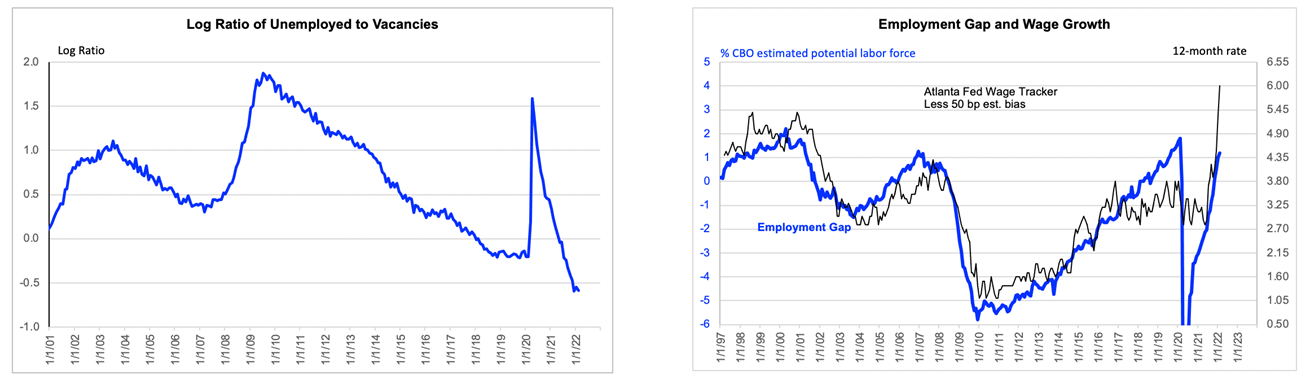
This part of Summary helps explain why financial conditions are likely to tighten in the peaceful scenario and real yields are headed higher (focus on being long companies that benefit from higher real yields…in the report below). As Gerard noted, the average hourly earnings figures in last Friday’s employment report were quite a bit weaker than expected and tended to dial down the alarm around accelerating wage growth. However, last Thursday’s Atlanta Fed wage tracker was very strong, with main wage inflation rate rising from 5.8% in January to 6.5% in February…the wage tracker tilts the perception back in a more hawkish direction and suggests we are setting up for another strong ECI in Q1. More broadly, the evidence that the labor market has pushed beyond full employment is becoming compelling, and the economy is set to continue growing at an above-trend pace.
On Rents… As of February, the 1-, 3-, 6- and 12-month changes in the overall rent series produced by BEA for use in the deflator will be on their highs for this episode. Moreover, a plot of the term structure of those rates would slope monotonically downward, a clear acceleration pattern.
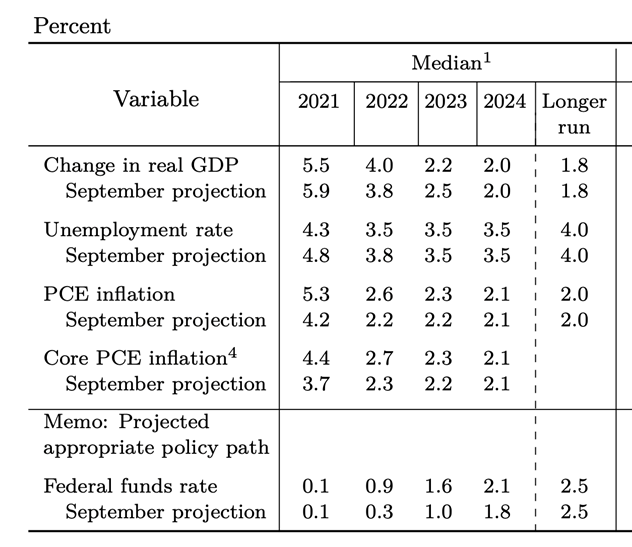
Which sets up this into the FOMC meeting Wednesday… The Fed is going to have to update their main economic projections this week in a way that will probably seem hawkish. Otherwise, it the numbers from the previous SEP are realized, inflation/growth would run too hot. The Fed is likely to be more explicit in slowing demand growth and that is the most important thing to focus on. How many rate hikes will be needed is a function of how quickly the Fed achieves their goal. That means equity investors should focus on the Fed’s goals (slower economic growth through tighter financial conditions) and those goals favor Earnings Growth, Momentum of Price, and Growth Momentum, which are factors that work when both real yields go up and financial conditions tighten. Given that Momentum tends to perform well in both higher real yield and tightening financial condition backdrops, it makes for an interesting addition to stock screens.
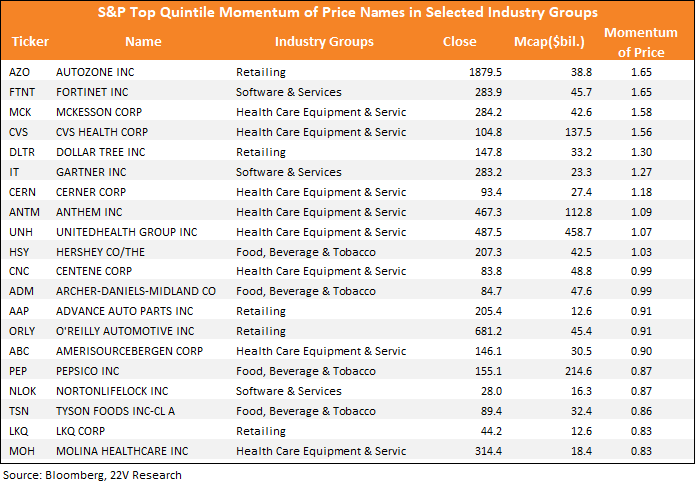
At the end of this report, we highlight high momentum names within S&P industry groups that should benefit most from factor screening. If you are interested in other factors or want to screen a custom basket for macro influence and correlation to tightening financial conditions/rising real yields, please let us know.
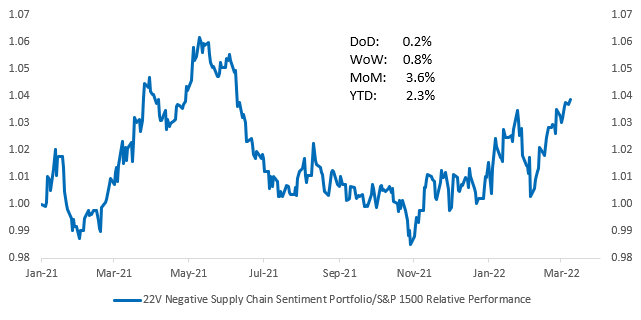
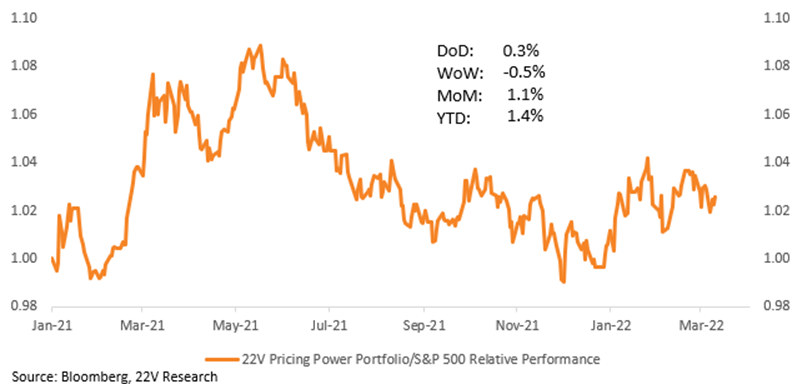
Themes Over Markets: We remain focused on themes vs factors and market calls as well. The extremely high cash return yield in stocks and continued strong cash returns makes the S&P a difficult short (here, here), longer term, unless a recession becomes more obvious. The themes we remain most focused on today are stocks that benefit from improving supply chains (the basket has done well YTD) and stocks with pricing power. See details in the report below.
Full Weekly Report Below…
Macro Backdrop: If yields start doing some of the heavy lifting in tightening financial conditions, that will favor companies that benefit from higher real yields. A portfolio of stocks that tends to outperform when real yields increase has done extremely well YTD, but consolidated over the past few weeks.
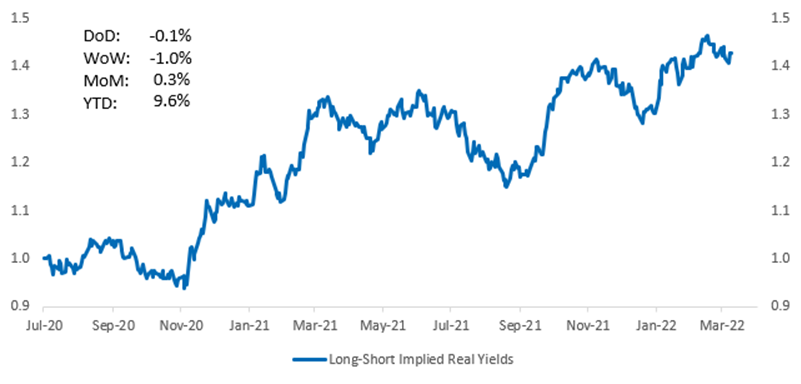
There are differences in factors that benefit from tighter financial conditions and higher real yields. Earnings Turbulence, Low Liquidity, Value, Earnings Momentum tend to do well as real yields increase. That is the opposite of what happens as financial conditions tighten. The tightening of financial conditions will be more enduring, so those trends won’t last. Size, Earnings growth, Momentum of Price and Growth Momentum work when both real yields go up and financial conditions tighten,
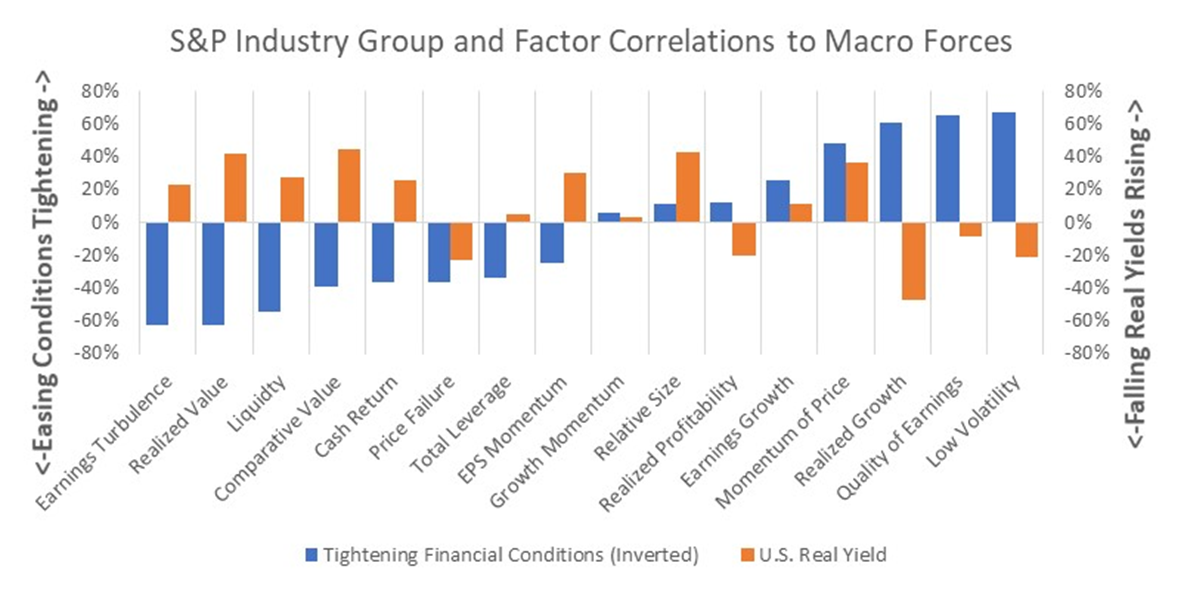
More important than specific factor rotations are industry sensitivities to macro shocks. Currently, Banks and Energy have the highest IPC, a proxy for macro influence, of any S&P industry groups. Banks, regardless of their factor exposure, tend to follow interest rate trends and changes in the Treasury curve. Energy names track shifts in oil prices. The macro influence will remain high for those sectors and the rule of thumb on the macro backdrop now should be in a “peaceful” resolution, rates are likely going higher (favors Banks) and oil prices lower (Energy underperforms) and in the non-peaceful scenario, demand destruction gets fully priced in and rates are going lower. That is bad for Banks. Eventually it would be bad for Energy as well when the actual demand destruction happens.
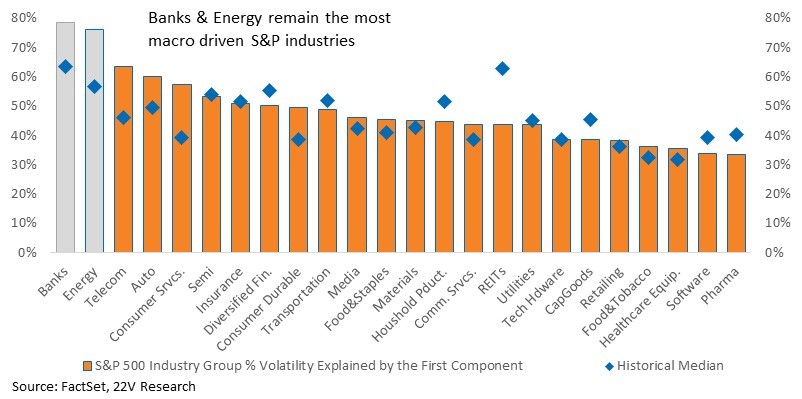
Value Less Attractive: Value got off to a strong start this year (lasted through early Feb) as investors focused on strong economic activity and rising real rates. Even as Fed rhetoric became more aggressively about tightening financial conditions, the increase in implied real yields supported a Value rotation. The war has led to a disorderly tightening of financial conditions (through vol and lower asset prices, not rate hikes), and market internals reflect that regime shift. Even before the war, high inflation, and strong growth were creating the conditions that would require the Fed to significantly tighten financial conditions to slow growth. A resolution to the current conflict should bring a short reprieve from the rapid de-risking of the past few weeks, but the need for tighter financial conditions and slower growth remains.
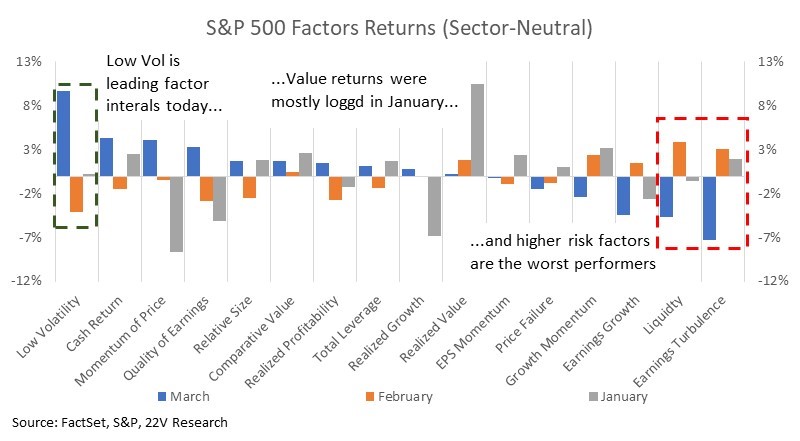
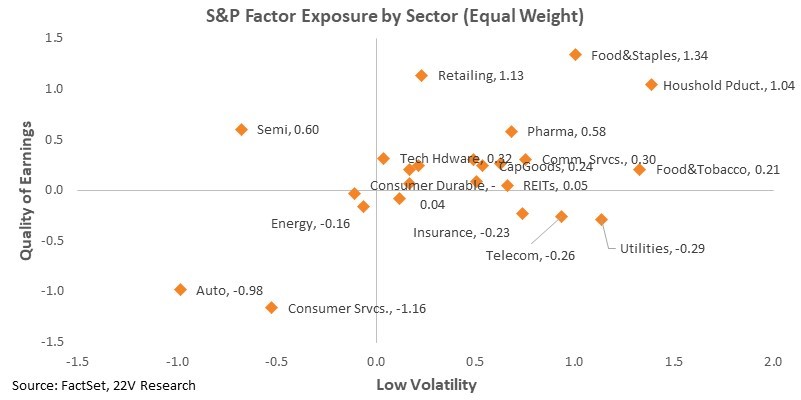
Bottom line, the backdrop for Value is much less interesting now, but we also shouldn’t expect a surge in Growth. Yes, Growth should outperform some, but thinking in terms of Volatility and Quality of Earnings is more important today. Sectors and Industry groups with Low vol and high quality of earnings are industry groups to focus on, longer term, as financial conditions tighten. Interesting that Retailing shows up in Low Vol and high Quality of Earnings. Something to think about if oil prices move lower.
Themes: Value relative to Growth is tricky and gauging risk-on vs risk-off sentiment as it relates to the war outcome is incredibly hard. That is why we remain focused on our thematic portfolios. The portfolio of companies that benefit from improving supply chains continues to outperform significantly.
Focus on pricing power…we can send the list. The Fed wants to directly pushback against company pricing power, so companies that can withstand that pressure from the Fed will benefit the most.
Financial Conditions Will Tighten: From Gerard, “Rent inflation is not the most important issue in the monetary policy backdrop. The most important issue is that the labor market is shooting beyond full employment at a time of generally high inflation pressures. Rents are just an interesting and important irritant. We do not know the correct beta linking the trend in the private Observed Rent figures, such as those produced by Yardi, Zillow, etc. But the basic arithmetic set-up there strongly implies that we should extrapolate the first and perhaps even second derivative in the (lagging) government rent data. As of February, the 1-, 3-, 6- and 12-month changes in the overall rent series produced by BEA for use in the deflator will be on their highs for this episode. Moreover, a plot of the term structure of those rates would slope monotonically downward, a clear acceleration pattern.”
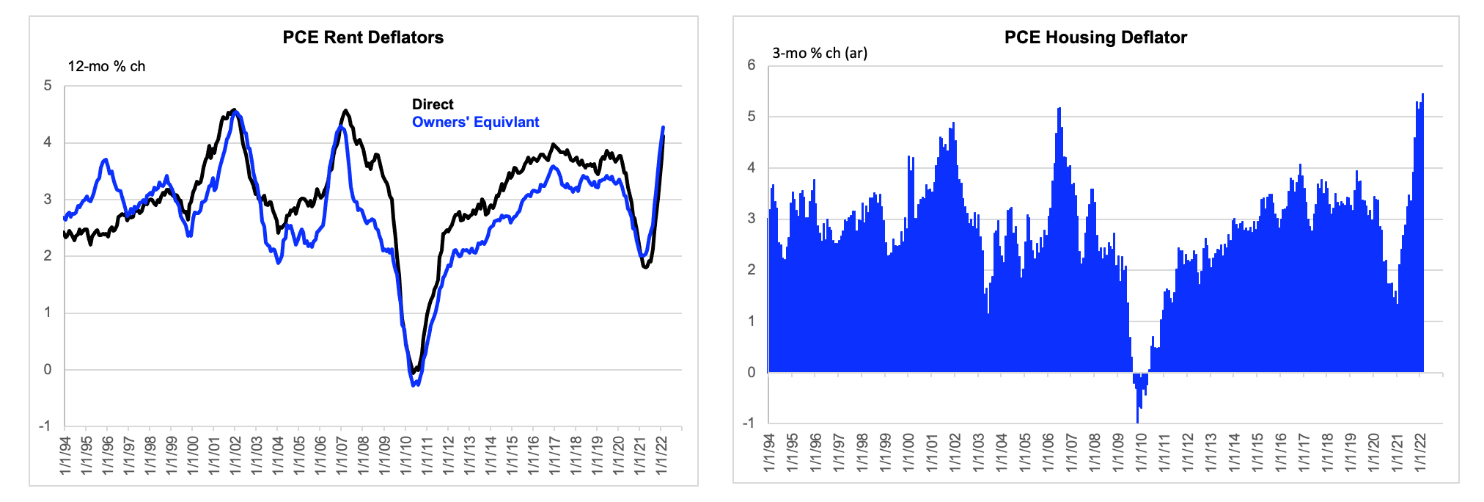
“The Average Hourly Earnings figures in last Friday’s employment report for February came in quite a bit weaker than expected and tended to dial down the alarm around accelerating wage growth. This was especially the case given that there was no evidence in the employment report itself suggesting that the wage figures were distorted by sectoral mix shift, which had been an issue earlier on in the Covid episode. However, yesterday afternoon’s Wage Tracker from the Atlanta Fed was very strong, with the main wage inflation rate there quickening from 5.8% in January to 6.5% in February. This does not resolve the debate about what wages are actually doing. There is always some ambiguity there. But the Wage Tracker tilts the perception back in a more hawkish direction and suggests we are setting up for another strong ECI in Q1. More broadly, the evidence that the labor market has pushed beyond full employment is becoming quite compelling, and the economy is seemingly set to continue growing at an above-trend pace.”
“The Fed is going to have to update their main economic projections in a way that will probably seem hawkish. For core PCE inflation to print at 2.7% on a four-quarter basis at year end, sequential inflation beyond February would have to run at less than 1.7% annualized. So, that estimate needs to be revised up. What is more interesting to me is the unemployment rate guess. Allowing demand growth to rip at 4% real to get the unemployment rate down to 3 ½% is not a case of fighting inflation. The Fed is more hawkish than that forecast implies. But it may not be politic to change it. What we do know is that those numbers if realized would allow too much heat. I do not know if the consensus has internalized what the Fed is trying to achieve here. Most of the focus seems to be on the instruments, as if they are ends themselves.”
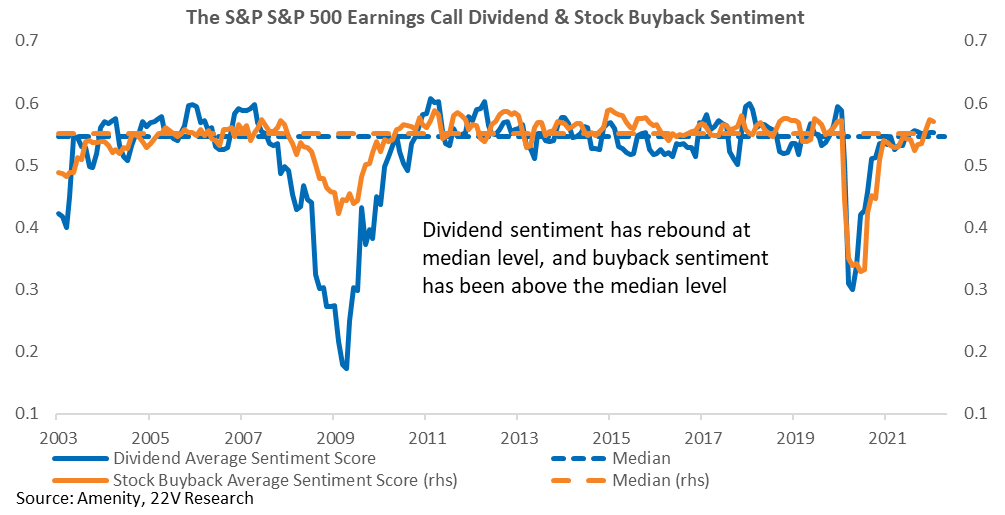
Cash Returns High: If a commodity price super spike is avoided (seems likely as oil/gas continue to flow), we reiterate our call that the S&P is a tough short now. How much it can rally is a different question, but implied cash return yields are unusually high and buybacks or cash returns remain firm. Total share repurchases increased to an all-time high in 2021 even as all other forms of spending moved higher. AMZN’s announcement to buy back $10B of its stock is the latest example.
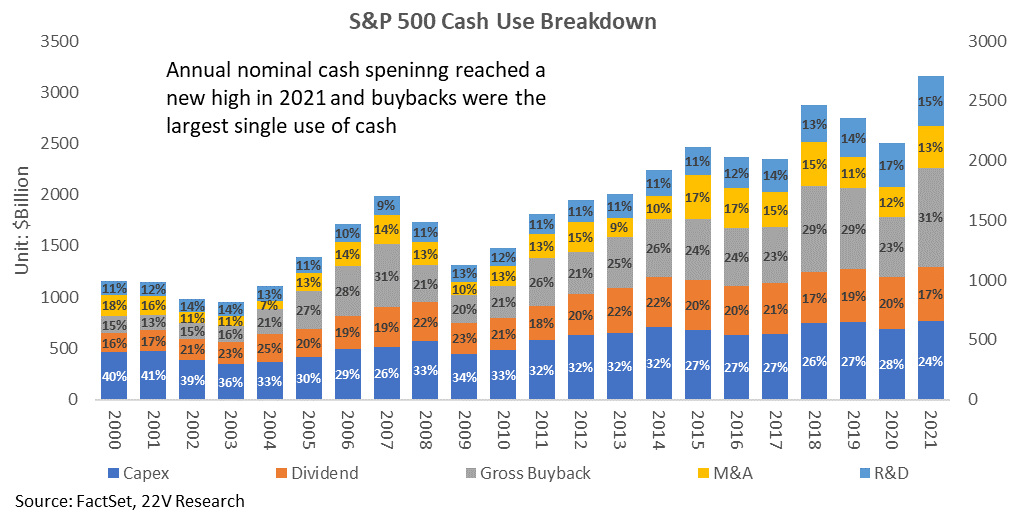
With profitability likely to come under pressure as the Fed fights inflation, we expect to see buybacks accelerate in 2022 (inorganic source of earnings growth). But they should remain firm. Buyback Sentiment analysis moved back above its long-term median at the end of 4Q reporting (consistent with the AMZN news). High cash return yield helps keep put a floor under the S&P.
Below is a list of stocks with high Momentum rankings from industry groups with lower macro influence that are positively correlated to tightening financial conditions. Again we, anticipate conditions will continue to tighten over the course of the year, benefitting these names. If you are interested in other factors or want to screen a custom basket for macro influence and correlation to tightening financial conditions/rising real yields please let us know.