SUMMARY: Markets appeared to have been reassured this morning by the West’s modest and proportionate responses to the Ukraine “invasion.” Equity futures were up significantly. They have come well off the highs on news Kyiv is applying a state of emergency. Kim Wallace will have more to add on this during his webinar on Ukraine with Chris Skaluba of the Atlantic Council tomorrow at 10 AM ET. The first one was short, informative, and useful and everyone should check out tomorrow’s (register HERE).
We don’t have much to add concerning geopolitics. What is interesting is the resilience in 10yr/2yr yields, and inflation swaps. Credit spreads have been tame over the past week as well. That suggests 1) the economic backdrop is firm (see post Omicron reopening trends and the housing data below), and 2) if geopolitical risk subsides, expect another sharp move higher in yields. It appears real rates still need to move higher to offset the firm economic growth backdrop (inflation expectations are a proxy for growth and have remained stubbornly high). Look for a reversal higher in Cyclicals and risk-on factors in general if geopolitical risk subsides. Markets are significantly oversold.
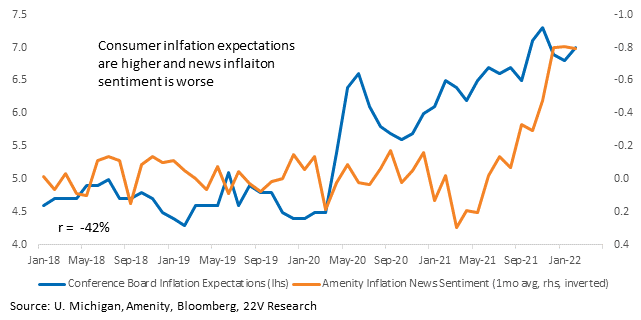
FYI…inflation sentiment is still very negative as measured by the conference board’s consumer confidence readings and the Amenity natural language processing tool. The Fed still has political reasons to keep tightening financial conditions.
As Gerard noted yesterday, the Case-Shiller and FHFA home price indices confirm the pricing strength implied by the Zillow home valuation index. The data does not suggest home price appreciation is slowing. But concern over a housing bubble would be misplaced. Per Gerard, the ratio of home prices to rents is benign, the flow of home construction is not elevated and the housing market is tight from a stock perspective, and as we discussed last week, affordability is still within the upper end of its historical range thanks to low mortgage rates (still). Mortgage rates are backing up thanks to rising risk-free rates and widening mortgage spreads. Affordability would hit its long-term median if rates reached 4.5%, +135 bps from current levels. The macro implication is not a bubble but the real economy heating up past the Fed’s tolerance.
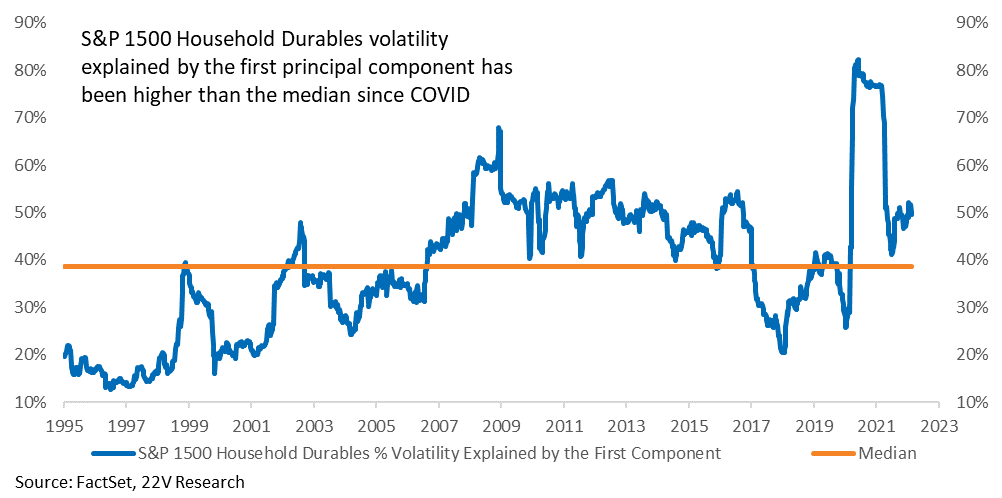
S&P 1500 Household Durables volatility (builders are in this group) explained by the first principal component is above its median level, indicating the group is trading off of macro factors. That brings us right back to “it’s about mortgage rates.” And mortgage rates will continue to trend higher as the Fed commits to raising risk free rates and tightening financial conditions. Homebuilders relative performance has come off the boil, falling -15% from its December high, despite persistently strong housing data. The breadth of hard housing data is in its 96th percentile. But expectations of higher mortgage rates, which will bring down affordability, will remain a headwind to the group.

Full report below…
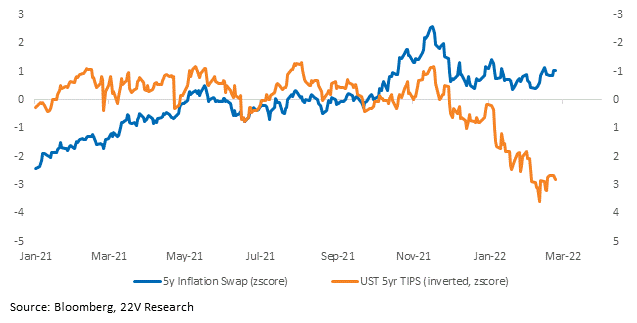
MARKET VIEWS: We don’t have much to add concerning geopolitics. What we do find interesting is the resilience in 10yr yields, 2yr yields and inflation swaps. Credit spreads have been tame over the past week as well. That suggests 1) the economic backdrop is firm (see post Omicron reopening trends and the housing data we highlight below), and 2) If geopolitical risk subsides, expect another sharp move higher in yields. As the chart below highlights, it appears real rates still need to move higher to offset the firm economic growth backdrop (inflation expectations are a proxy for the growth outlook).
Inflation is still of paramount concern among consumers and the news. Conference Board inflation expectations rose again last month and inflation new sentiment, measured using Amenity’s natural language processor, is still languishing at its lows. There are three ECB speakers this morning and San Fran Fed president Mary Daly speaks today at 3:30 (last she spoke, she emphasized tightening financial conditions, but was a bit more on the dovish side). Rate hike expectations are rising again. The Fed is not going to combat this; it’s more likely to reset expectations for financial conditions in March to fight the below.
As Gerard noted yesterday, the Case-Shiller and FHFA home price indices confirm the pricing strength implied by the Zillow home valuation index. The data does not suggest home price appreciation is beginning to slow. But concern over a housing bubble would be misplaced. Per Gerard, the ratio of home prices to rents is benign, the flow of home construction is not elevated and the housing market is tight from a stock perspective, and as we discussed last week, affordability is still within the upper end of its historical range thanks to low mortgage rates (still). Mortgage rates are backing up thanks to rising risk-free rates and widening mortgage spreads. Affordability would hit its long-term median if rates reached 4.5%, +135 bps from current levels. The macro implication is not a bubble but the real economy heating up past the Fed’s tolerance.
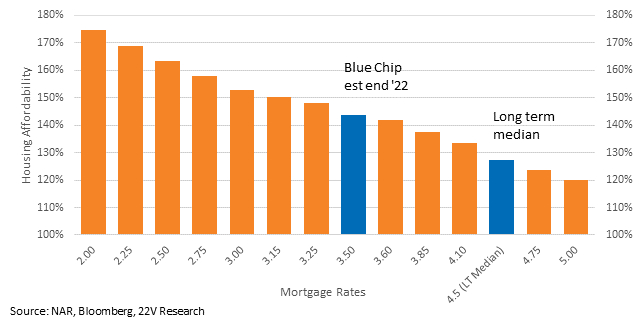
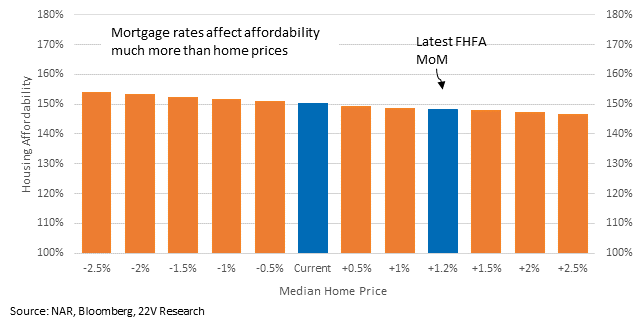
Mortgage rates affect affordability much more than home prices. The bottom simulation is charted on the same axis as the above to emphasize the difference. The December FHFA House Price Index rose +1.2%, a 96th percentile MoM increase. But even after a 1.2% increase in median home prices (~$4,300), affordability is at 148%. It’s all about mortgage rates.
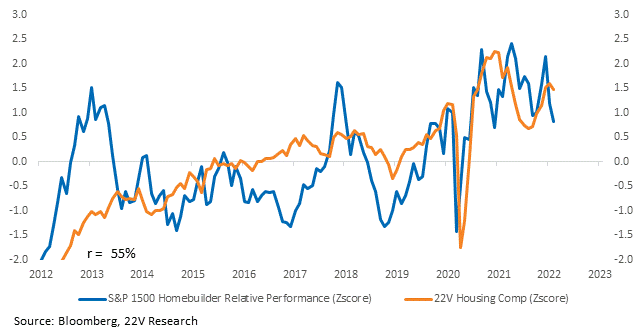
Homebuilders relative performance has come off the boil, falling -15% from its December high, despite persistently strong housing data. The breadth of hard housing data is in its 96th percentile. But expectations of higher mortgage rates, which will bring down affordability, is a headwind to the group.
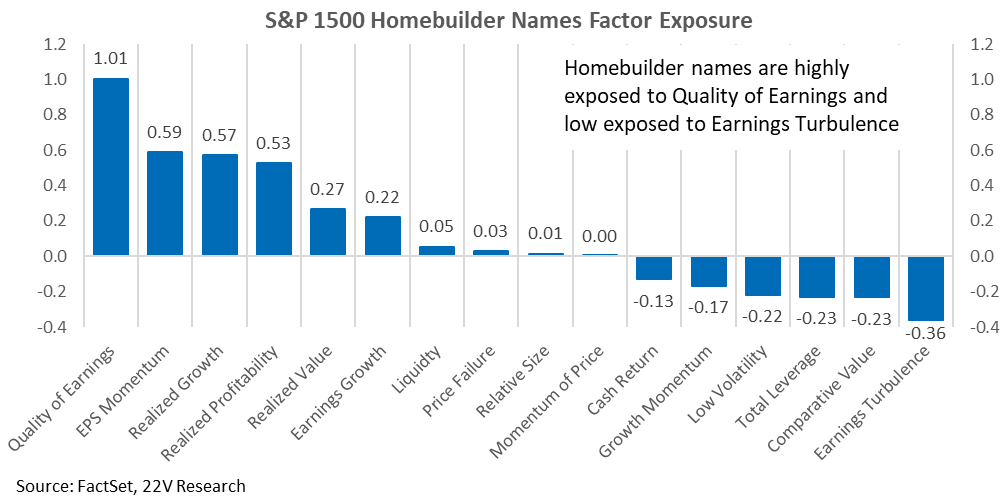
The S&P 1500 Homebuilder factor exposure isn’t bad for a backdrop of tightening financial conditions. Homebuilders have high Quality of Earnings exposure and low Earnings Turbulence exposure. BUT…
… it’s a macro driven group. S&P 1500 Household Durables volatility explained by the first principal component is above tis median level, indicating the group is trading off macro factors. That brings us right back to “it’s about mortgage rates.” And mortgage rates will continue to trend higher as the Fed commits to raising risk free rates and tightening financial conditions.
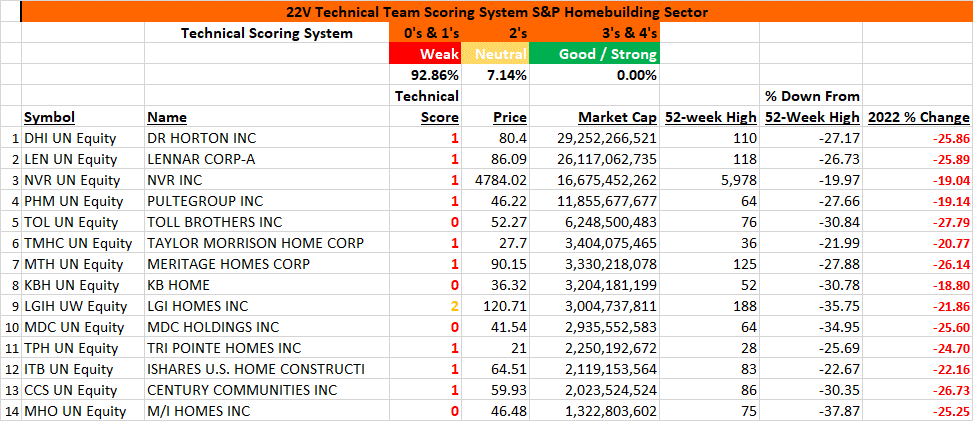
John Roque, 22V’s technical analyst, scored the Homebuilding sector for us. All but one (LGIH) have weak scores. Per John,
The “system” uses a scoring range of 0 – 4:
0’s & 1’s = poor, weak, bearish
2’s = neutral
3’s & 4’s = good, strong, bullish