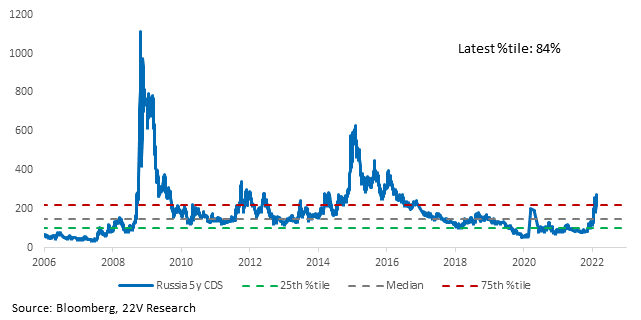
SUMMARY: How aggressive the Fed will ultimately be in tightening financial conditions is taking a back seat to Russia and Ukraine risk. The Russian Ruble is flat today, but Russian CDS spread have moved significantly higher. We will keep an eye on those market indicators over the coming days as a signal of improvement or not on the Russia-Ukraine situation.
Energy has been the best performing sector YTD and it has been driven almost entirely by oil prices (not unusual), independent of its poor factor exposure to rising rates and tightening financial conditions (unusual). But if the Fed gives the “speech” or gives a more aggressive signal that they want economic growth to slow and markets price in economic growth slowing more aggressively (our call), expect oil prices to face some headwinds. We are overweight Energy, but don’t want to have our head in the sand on some of the short-term headwinds Energy / oil prices could face.
Mortgage rates are on their way up. But if rates back up to 4.5%, affordability would be at its long-term median of 125%. Low affordability is not a reason to expect the housing market to slow significantly. At least not yet. 90-day auto loan delinquencies are slightly above their typical level and CC delinquencies are at their 25th percentile. Mortgage delinquencies remained exceptionally low at the end of 4Q.
Consumers are increasing their credit card balances, but relative to history and in aggregate, consumers had low credit card balances at the end of last year. The increase in balances did not contribute to a decrease in “Current” or an increase in “Severely Delinquent.” Inflation is high, food and rent prices are absorbing a larger proportion of spending, but consumer revolving debt loads remain low. The post-COVID retail sales trend will fall, but it remains strong and indicative of healthy demand. That is good a good sign for growth and profitability/earnings, but that leaves the Fed farther from achieving its goal of slowing demand to quell inflation.
The bottom line from the above, the Fed will continue to tighten financial conditions and slow growth, but the odds of an economic accident from a private sector leverage unwind are low. That is a positive for the longer-term risk-taking outlook. As we have noted a few times, we need to get through the initial fed tightening program, without an accident or secular stagnation setting in, for equity risk premiums to reflect an economic and inflation regime that is much different than the post GFC period. And of course, all of the above assumes a significant conflict between Russia and Ukraine is avoided.
MARKET VIEWS: How aggressive the Fed will ultimate be in tightening financial conditions is taking a back seat to increasing Russia and Ukraine risk. The Russian Ruble is flat today, but Russian CDS spread have moved significantly higher. We will keep an eye on those market indicators over the coming days as a signal of improvement or not on the Russia-Ukraine situation.
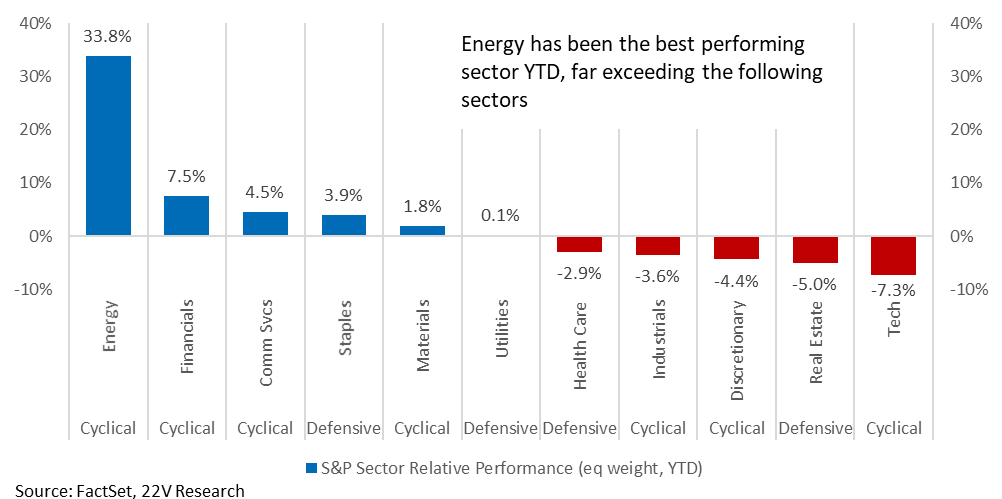
Energy has been the best performing sector this year, exceeding the S&P YTD return by 33.8% and as we pointed out in our Quant note today, oil price changes have been highly correlated with Energy stocks, which is normal. What is unusual is that rising rates and tighter financial conditions has had a significant impact on other industry groups and factors, but less so on Energy performance. So, it’s just oil. Here is the problem. If the Fed gives the “speech” or gives a more aggressive signal that they want economic growth to slow (we went over this more yesterday) and markets price in economic growth slowing more aggressively, expect oil prices to face some headwinds. We are overweight Energy, but don’t want to have our head in the sand on some of the short-term headwinds Energy / oil prices could face if the Fed is successful in slowing growth.
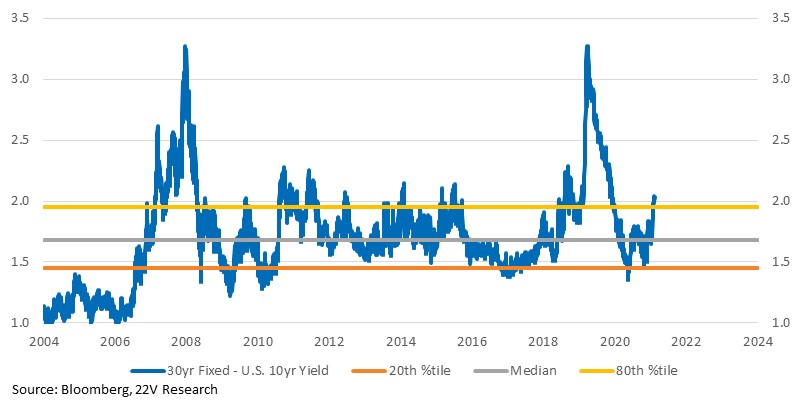
HOUSING: 30yr mortgage commitment rates have backed up to 3.55% from 3.11% at the start of the year. Published rates tracked by Bankrate have climbed even higher, reaching 4.0%, driven by 1) rising risk-free rates and 2) mortgage spreads widening above the high end of their typical range. Overall financial conditions are not tightening, but mortgage rates have gone up.
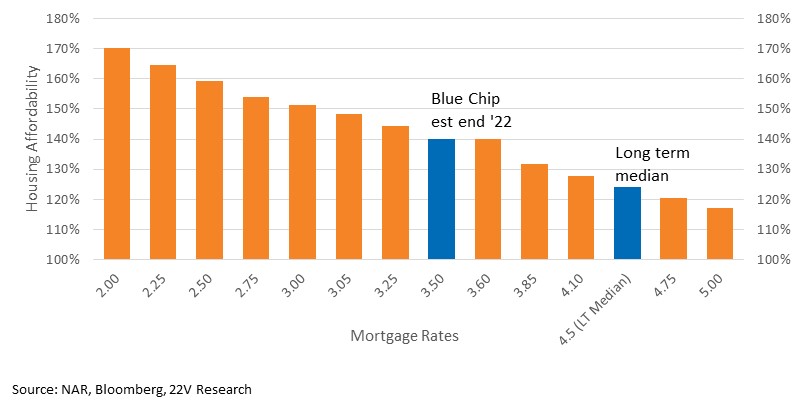
At the start of the year, the Blue Chip consensus forecast for end of 2022 mortgage rates was 3.5%. Today it looks like a return to the long-term median of 4.5% could take place during the first half.
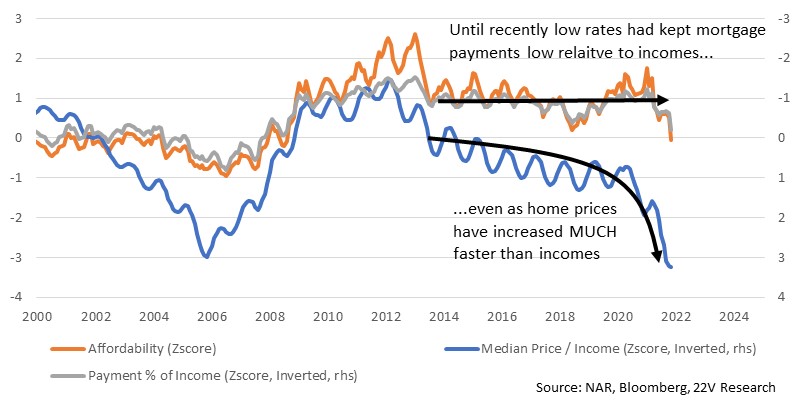
Since the start of the COVID-induced housing boom, national home prices have climbed ~28%. Incomes also rose, helping mitigate the decline in affordability. However, low mortgage rates were the main reason affordability remained high even as prices shot higher. Mortgage payments as a percentage of income have increased, but are still not elevated historically.
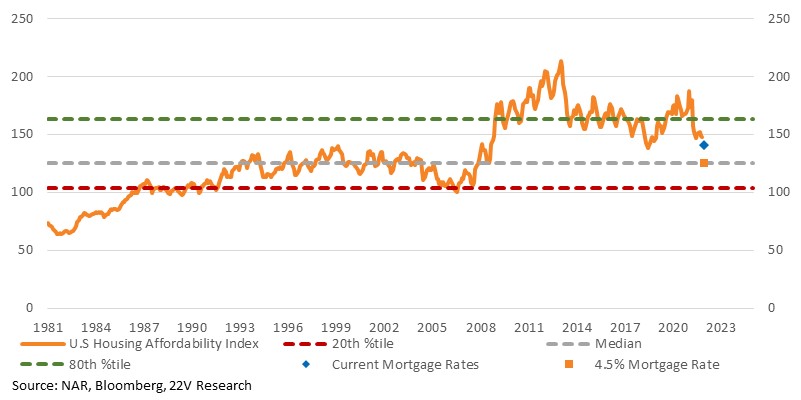
Today, affordability has fallen to 141%, which is still within the upper end of its historical range. As a reminder, affordability = the percentage of the typical house a median-income family can afford, assuming a 20% down payment and prevailing mortgage rates. So today, the median family can afford 141% of the median home. If rates back up to 4.5%, affordability would be at its long-term median of 125%. Bottom line, low affordability is not a reason to expect the housing market to slow significantly. At least not yet.
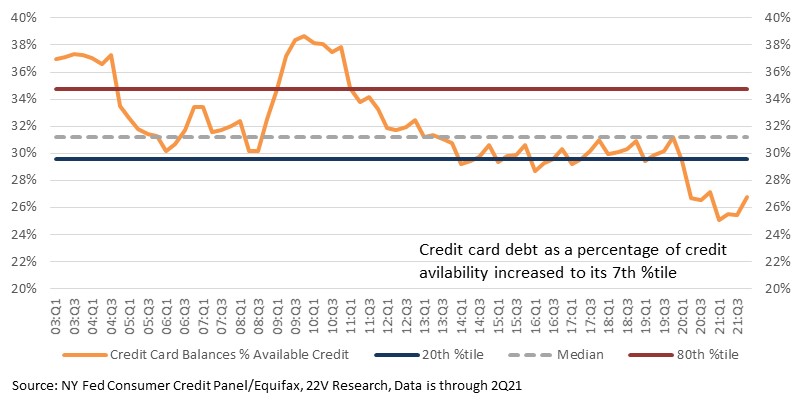
Here is one tracker that could shift quickly. Credit card balance utilization at the end of 4Q21 was just under 27% and increased from 25.5% last quarter. So, consumers are increasing their credit card balances, but keep in mind that the 3Q21 reading was the lowest in the history of the series (starts 1Q 2003), and the 4Q reading is in the bottom 7th percentile of readings. Relative to history and in aggregate, consumers had low credit card balances at the end of last year. Side note, consumer spending has been very strong WITHOUT consumers increasing credit card balances, if they increase credit card balances now, that would add to the economic growth impulse.
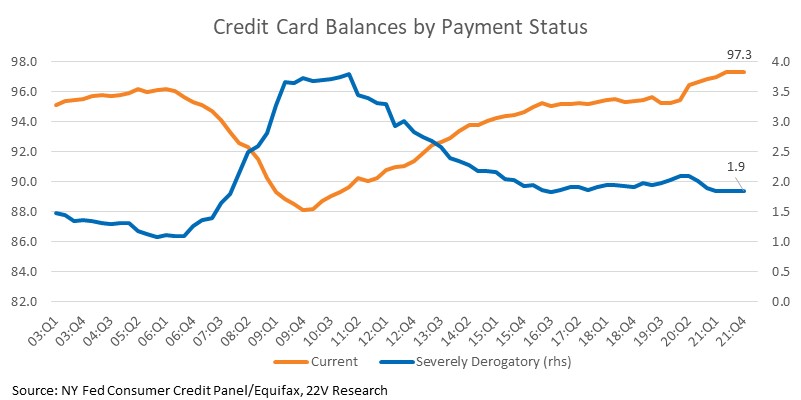
Regarding payment status, the increase in balances did not contribute to a decrease in “Current” or an increase in “Severely Delinquent.” Inflation is high, food and rent prices are absorbing a larger proportion of spending, but consumer revolving debt loads remain low. Steady payments suggest the cost of maintaining that debt is manageable as well.
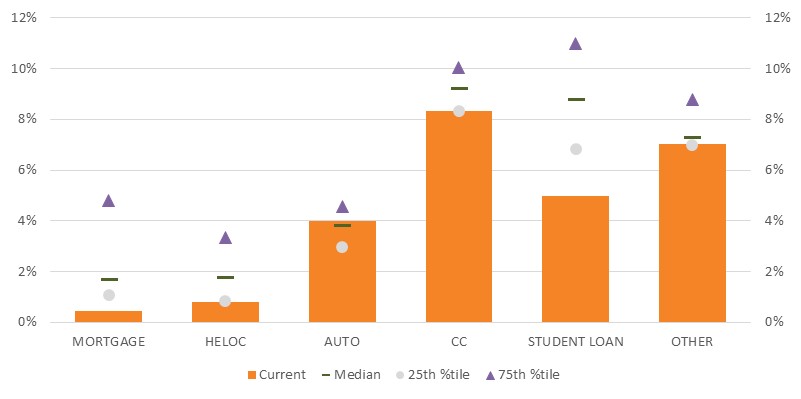
90-day auto loan delinquencies are slightly above their typical level and CC delinquencies are at their 25th percentile. Mortgage delinquencies remained exceptionally low at the end of 4Q.
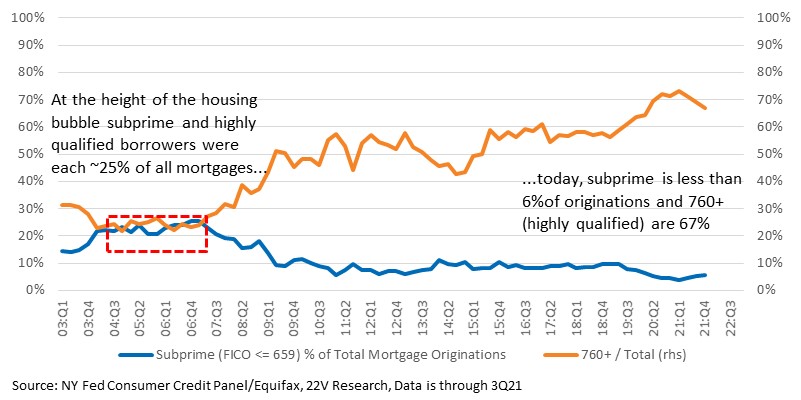
This data is through the end of 4Q, so it is lagging. Mortgage origination credit quality may have deteriorated in 1Q, but that is unlikely to lead to a sudden raft of defaults near-term. The risk of a severe increase in housing delinquencies seems low. The percentage of mortgages going to highly qualified buyers reached an all-time high in 2Q21 and remained unusually high at the end of 4Q. Subprime borrowers also make up a smaller percentage of total mortgages than normal.
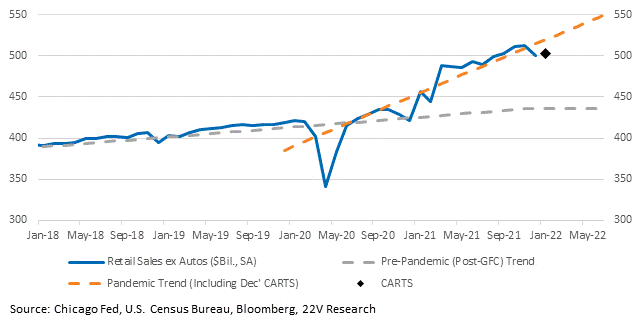
The Chicago Fed’s advance retail trade summary (CARTS), which has been a better estimator of retail sales than consensus (it nailed last month’s large miss), is calling for a +0.4% MoM increase in retail sales ex autos for January. Consensus is calling for a +1% MoM increase. The post-COVID retail sales trend will fall, but it remains strong and indicative of healthy demand. That is good a good sign for growth and profitability/earnings, but that leaves the Fed farther from achieving its goal of slowing demand to quell inflation.

The bottom line from the above, the Fed will continue to tighten financial conditions and slow growth, but the odds of an economic accident from a private sector leverage unwind are low. That is a positive for the longer-term risk-taking outlook. And of course, assumes a significant conflict between Russia and Ukraine is avoided.
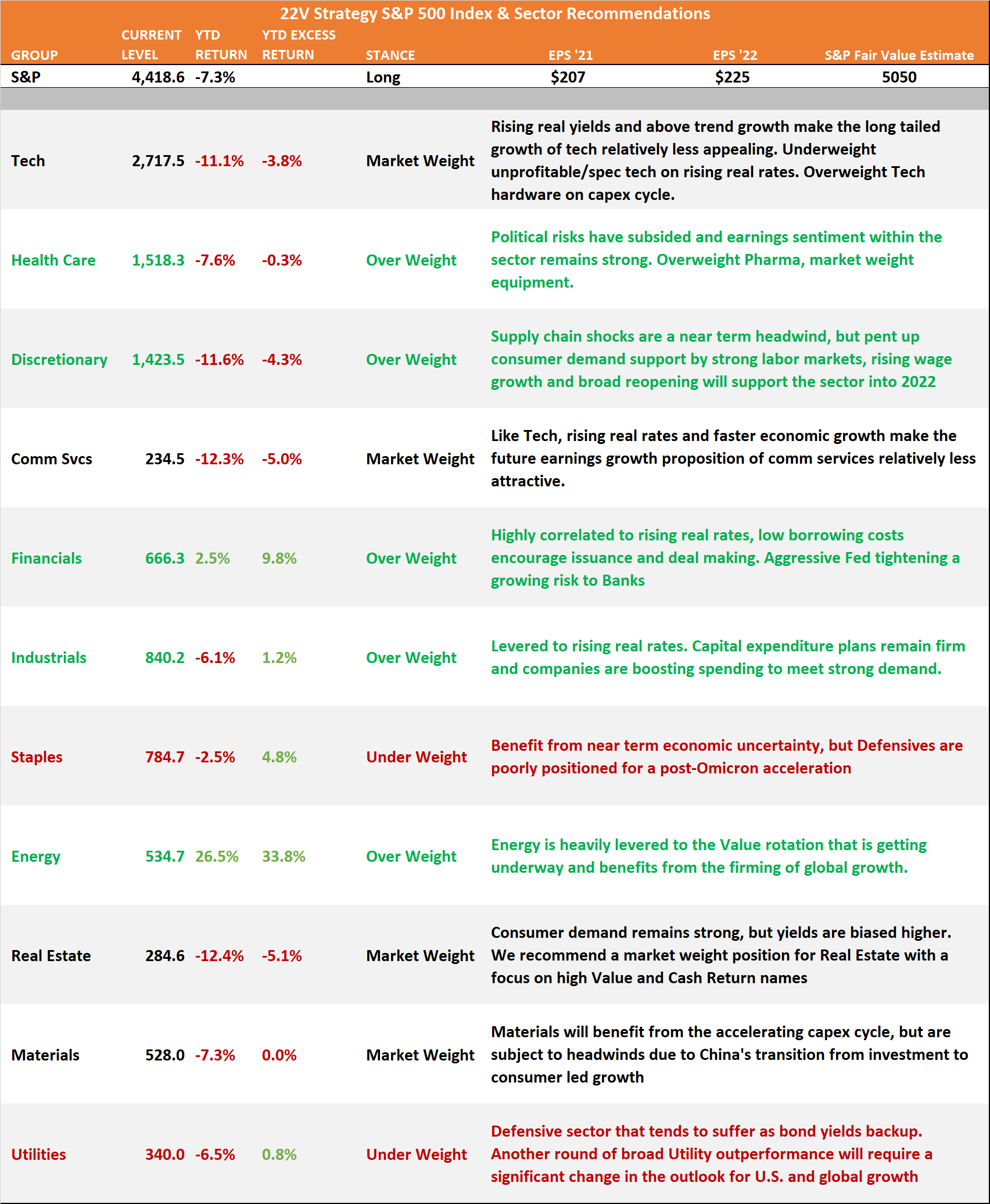
Sector Comments: For most of the past few weeks, investors started to discount a specific policy narrative. Fed officials had clearly shifted into inflation fighting mode, but a combination of growth slowing organically and inflation easing would allow the FOMC to stick to a slow and steady rate hike path. Financial conditions would tighten gradually and modestly, growth would remain strong, volatility would ease, and risk assets would continue to climb higher. Thursday’s CPI report was a setback for the “immaculate tightening” story with core-CPI. Persistently easy financial conditions are increasingly incompatible with the Fed’s goal of slowing inflation toward 2%. Following the CPI report, rate hike expectations increased (80-90% odds of a 50bp hike at the March FOMC meeting). Financials was the best performing sector as implied yields moved sharply higher. Utilities were the worst performing sector, consistent with the still strong economic backdrop and rising yields. Cyclicals in general are still well aligned to the current backdrop, but as investors internalize a slower growth outlook, the Cyclical vs Defensive paradigm is probably not the best framework for thinking about markets. Rising real rate/yield beneficiaries, companies with pricing power, and industries/names levered to non-U.S. growth should perform best. Most of those are Cyclicals, but that classification is incidental.