Short Summary: We have recommended being tactically long Cyclicals and that might have another month or so to go, but the risk to the short-term Cyclical and risk-on factor bounce is elevated given the recent Payroll and CPI reports. For the next 4-6 months, Cyclicals will struggle as the immaculate tightening theory (tightening financial conditions with no impact on economic growth) dies, which will happen when the Fed resets expectations and financial conditions tighten meaningfully. The Fed can reset expectations by just giving the “speech” that makes their intent to slow economic growth to trend (1.8%) or below clear. It doesn’t have to be more hikes that resets expectations.
Inflation expectations will move lower and credit spreads will widen out when the economic slowdown is priced in. At that point, rotating back into Cyclicals, longer term, will make more sense (maybe 4Q?). Until then, stay long themes that have worked: stocks that benefit from higher real yields/rates, pricing power, supply chains easing, and EM.
S&P fair value is much higher assuming we are 1) in a high, but not too high inflation regime and 2) secular stagnation is behind us. That is our call, but it will take time to be proven out. We have to get through the first round of tightening without an economic accident.
All of our comments assume we don’t end up in a significant geopolitical conflict.
The Above but With More Meat: Two themes that we talked about in last Sunday’s weekly largely held this past week (at least until the Russia news hit Friday): positive alpha in beats and Cyclicals and risk-on factors outperforming despite a surge in Fed rate hike expectations. Financial conditions have barely tightened because the increase in rate hike expectations coicnides with an improvement in economic growth prospects post Omicron and the realization that economic growth remains well above trend. We look at the GS financial conditions index, the Chicago Fed financial conditions index, the Blomberg financial conditions index, and our own financial conditions index. They all show the same thing, which is VERY little tightening of financial conditions. Don’t cherry pick the recent move in mtg spreads or a small move in CDS spreads to try to paint a picture that financial conditions have tightened significantly. Both have moved up but are very easy historically and broader financial conditions have not budged.
In January, the story was weaker economic growth AND increasing rate hikes, which led to significant underperformance in risk-on factors and outperformance of Quality and Defensive metrics.
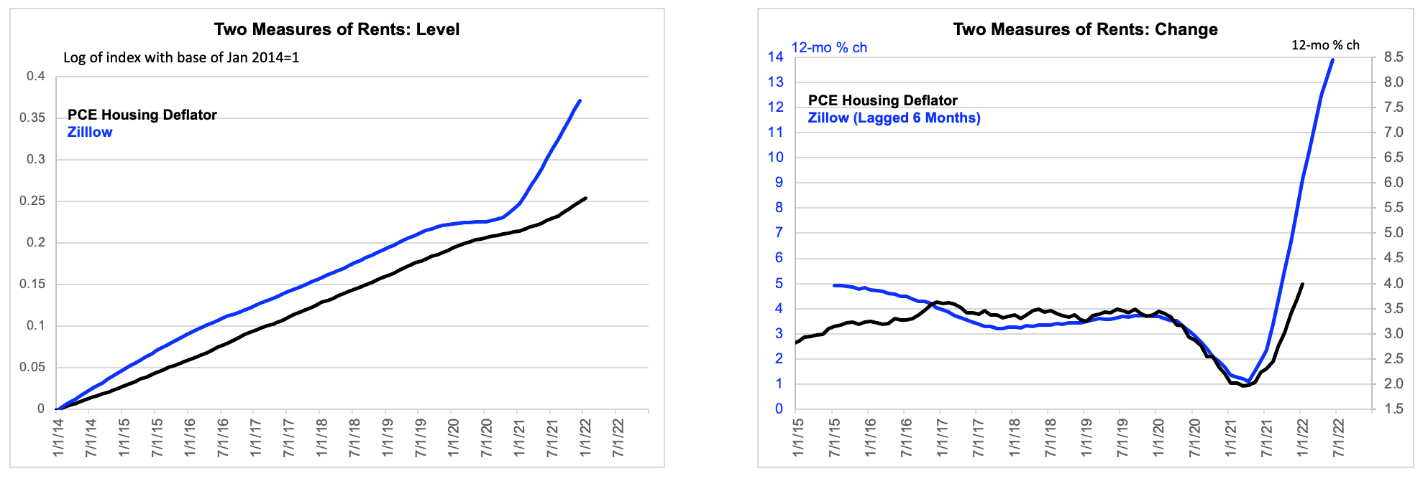
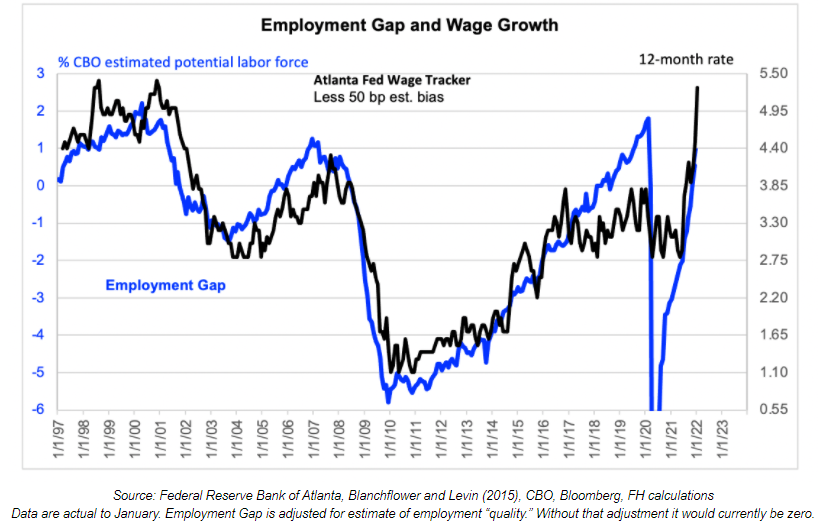
We remain long Cyclical and risk-on factors near-term (~1 month), but recent data has weakened the case. First, the employment report showed the employment gap continues to close rapidly and the Atlanta Fed’s wage growth tracker confirmed the labor market tightening. Per Gerard, “Quickening wages would seem to be a double-edged sword. They are directly inflationary… and they confirm that the labor market has tightened… The Q1 ECI is still a couple months out, but this is not a good omen for an indicator that has recently moved the Fed.” Wages suggest continued upward pressure on core inflation. The rents component of the CPI didn’t even really contribute to the CPI beat, yet Zillow data suggests rent inflation is coming (important details on this below).
The current easy level of financial conditions takes into account the current estimates of Fed rate hikes. That implies the Fed will have to reset expectations. We are more concerned now that some core Fed officials (Powell, Brainard, Williams) will give the “reset expectations” speech, which could be soon (within a month) and would be bad for Cyclicals. The Fed could do this by increasing the fed funds rate much quicker than is priced OR by giving the “speech” that makes it clear (Fed speak clear) that they intend to significantly slow economic growth toward the Fed’s estimate of trend (1.8%). When they do that, the “Immaculate Tightening” (tightening with no real impact on economic growth. basically, what is being priced now) theory will die and Cyclicals will suffer.
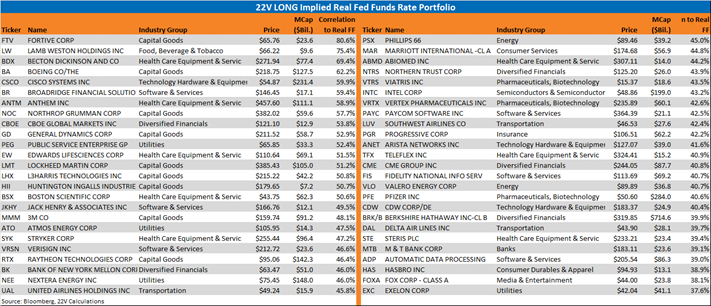
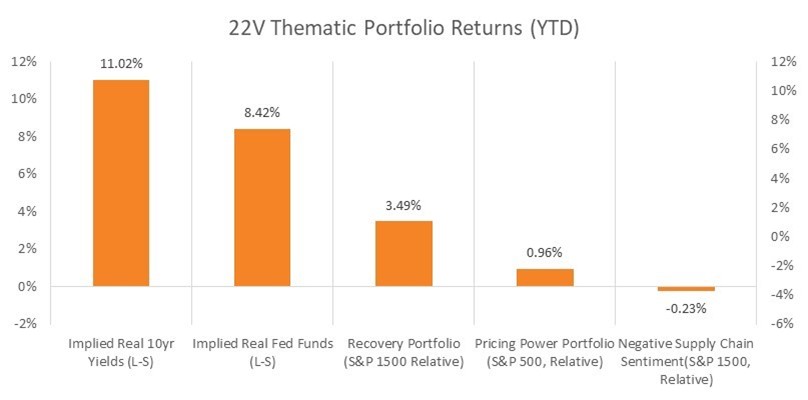
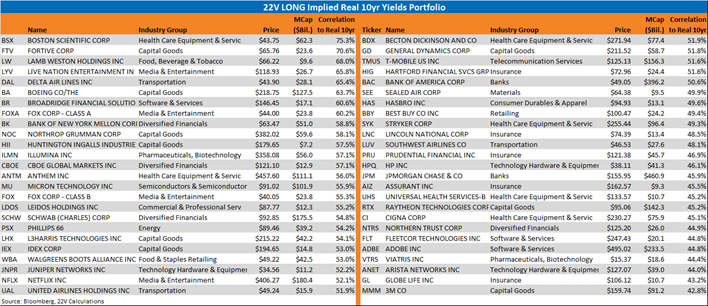
Rising real yields will be a durable theme. Most of our thematic portfolios have performed well this year, but those designed to take advantage of rising real rates/yields are significantly outperforming (names in those baskets are at the end of the report). We continue to focus on the thematic portfolios as the overall market and Value vs Growth call is VERY hard right now. Constituents of all our thematic portfolios can be found HERE.
Once inflation expectations have declined significantly and financial conditions have tightened, it will be much more interesting to rotate back into Cyclicals and risk-on factors longer-term. That will hopefully be later this year (maybe 4Q?).
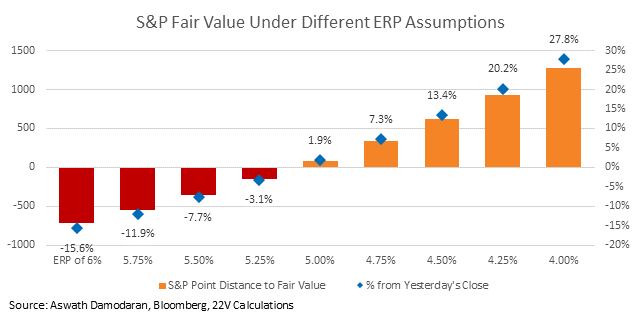
Fair value for the S&P, based on Aswath Damodaran’s model of present value of future cash returns for the index, sequentially drops as the 10yr yield increases. With a 4% 10yr yield there is still upside to fair value IF the equity risk premium falls to ~4.5%. The ERP would be below its post-GFC median but close to its longer-term median. The equity risk premium matters a lot more than 10yr yields. If the Fed “smashes something,” to borrow from Gerard, then the ERP will increase and fair value estimates will decline (markets have downside risk). Once the Fed accomplishes its goal of slowing inflation, assuming a recession is not required to do so, equity risk premiums should decline and stocks will find significant support. Being outright short the market given current ERP is tough, but we can’t be high conviction long until we get through the Fed’s attempt to slow growth without an economic wreck.
Charts With Text: We have witnessed an aggressive shift higher in rate hike expectations and financial conditions have not tightened meaningfully. Financial conditions indices remained relatively flat last week despite the move wider in CDS spreads and move lower in markets. Financial conditions take into account the expected path of Fed tightening. If financial conditions are not tightening, despite the aggressive increase in rate hike expectations, more has to be done to quell inflation.
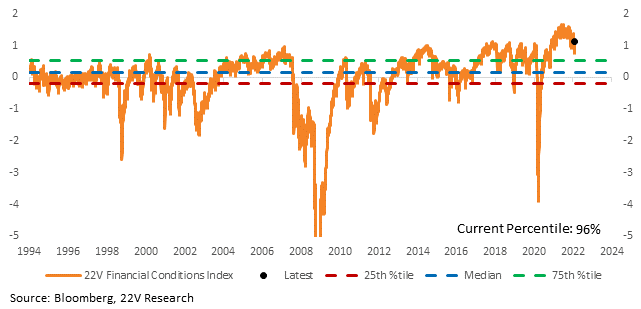
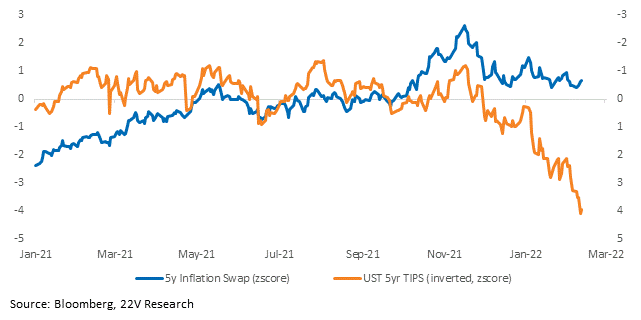
Consistent with the above point, real yields moved significantly higher last week, yet inflation expectations (using the 5yr inflation swap), which is a view on demand growth in the future, increased slightly. The sharp rise in real rates is not impacting the forward demand outlook much at all, which is consistent with financial conditions remaining easy.
The CPI came in hotter than expected and it beat across the board, yet rents have not really contributed yet. As Gerard noted in his report, “I believe that the first derivative in rent is likely to be persistent and suspect that the second derivative is likely to do so as well. That is, if rent is quickening, do not expect it to slow meaningfully soon — and probably expect it to continue quickening.” Zillow data suggest a sharp increase in the Housing PCE Deflator.
We also got the Atlanta Fed’s wage growth tracker last week and sticky CPI readings. Wage growth was strong and is associated with rising “Sticky” CPI. The wage growth tracker suggests a sharp closing of the employment gap and as Gerard highlighted, “Quickening wages would seem to be a double-edged sword. They are directly inflationary… and they confirm that the labor market has tightened… The Q1 ECI is still a couple months out, but this is not a good omen for an indicator that has recently moved the Fed.”
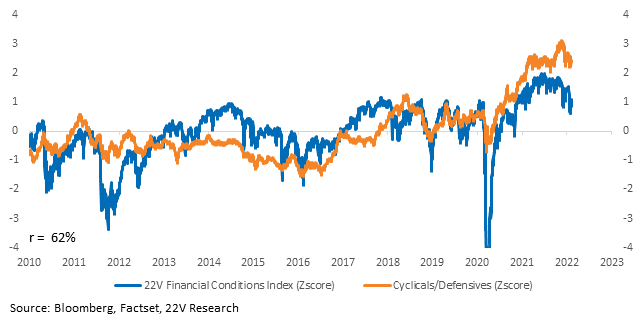
We continue like Cyclicals relative to Defensive near term as Omicron’s impact on economic data fades and demand growth rebounds. At the same time, there is no reason to expect financial conditions to tighten significantly until there is a resetting of expectations by the Fed. The Fed reset could be coming soon given the CPI/Payroll reports. So, the Cyclical vs Defensive call is trickier short-term. Without a surprise, financial conditions could ease further.
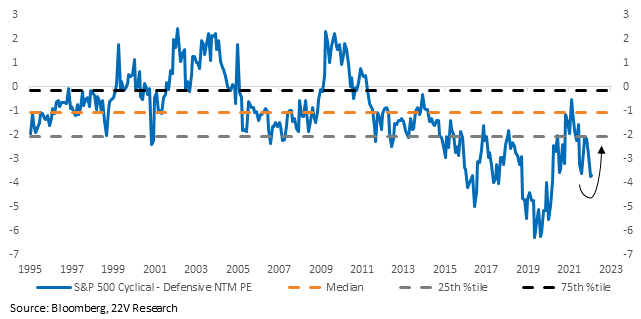
Keep in mind that Cyclical PEs have moved significantly lower relative to Defensives. With markets pricing in no real economic impact from the Fed rate hike path, Cyclical look attractive fundamentally as long as the story of gradual rate hikes and no real economic impact holds (but this is low odds longer-term, unfortunately)
Micro Themes: The tight housing and labor markets and the trends in the economy suggest more aggressive actions from the Fed will be needed to tighten financial conditions. That means rising real yields will be a durable theme. Other micro-themes are also important: Pricing Power should become more important as inflation eases and Negative Supply Chain Sentiment should improve as Omicron fades and COVID restrictions are lifted. Most of our thematic portfolios have performed well this year, but those designed to take advantage of rising real rates/yields are significantly outperforming (names in those baskets are at the end of the report). We continue to focus on the thematic portfolios as the overall market and Value vs Growth call is VERY hard right now. Constituents of ALL our portfolios can be found HERE.
Fair Value: Fair value for the S&P, based on Aswath Damodaran’s model of present value of future cash returns for the index, sequentially drops as the 10yr yield increases. There is still upside through a 4% 10yr yield under a 4.5% equity risk premium, which is below is below the post-GFC median but closer to the longer-term median.
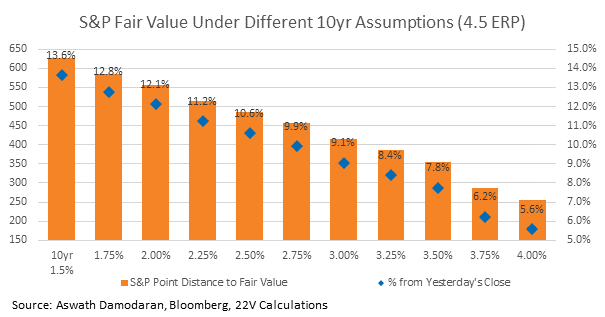
The equity risk premium matters a lot more. If the Fed “smashes something,” to borrow from Gerard again, then the ERP will increase and fair value estimates will decline in turn. The ERP gyrated between 4.5%-6% during the post-GFC, pre-COVID era. We think 4.5% is reasonable longer-term once the Fed achieves its goal, but 6% is not without rather recent precedent.
Portfolios: As noted in a Quant report last week, the earnings Quality/Turbulence trade is well correlated to shifts in financial conditions. We expect to see financial conditions tighten over the coming months as the Fed signals more aggressive tightening or investors internalize the FOMC’s existing commitment to fighting inflation. If that proves accurate, higher Quality of Earnings names should be a useful selection tool across Cyclical/Defensives.
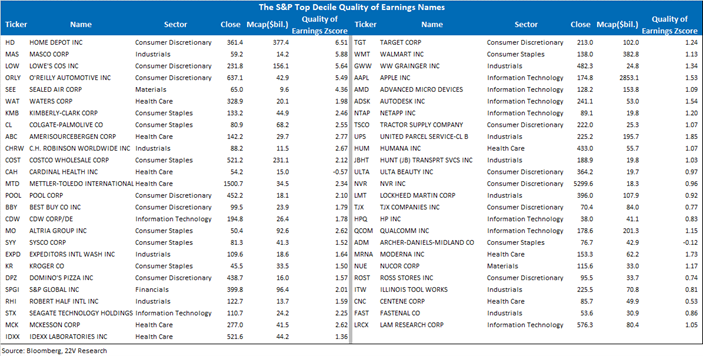
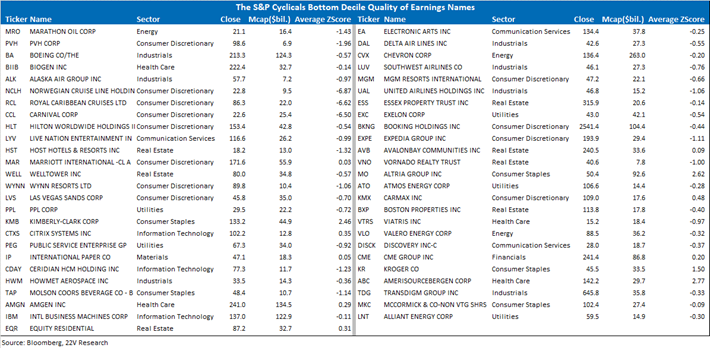
If financial conditions ease again however, higher Earnings Turbulence names should benefit. Those names are in the table below. Please let us know if you would like a full list or an EQ vs ET analysis of a specific portfolio.
Long implied real yields…
Long implied real fed funds rate…