
Our entire repository of COVID charts is HERE.
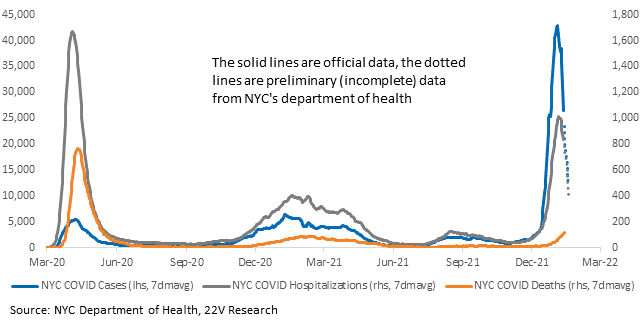
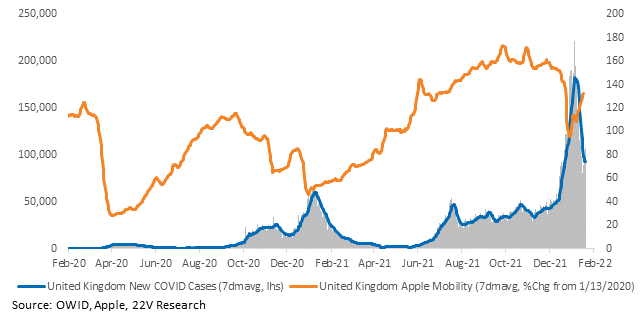
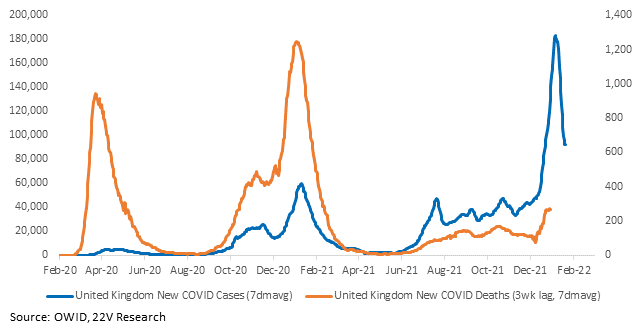
Data from NYC and the UK is reassuring. Case growth and hospitalizations have peaked in NYC. Deaths have stayed low despite record case growth, which is an encouraging sign for a recovery in activity. Empire manufacturing data showed Omicron’ disruption, but also indicates expectations for future activity were not similarly disrupted. Case growth in the UK is rapidly decelerating and mobility is recovering. Patients on ventilators diverged from hospitalizations and deaths have stayed low.
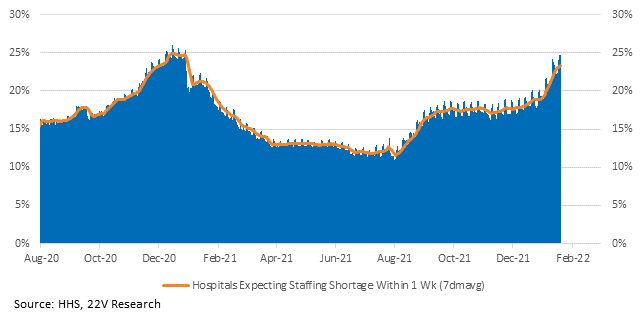
We’ve known that Omicron is less severe. Less strain on the healthcare system helps the outlook for activity, but the specter of restrictions will remain as long as staffing shortages are making headlines. Not only is the country-aggregate of hospitals reporting imminent, critical staffing shortages near its pandemic high, but almost every state’s responses are above their 60th percentile (timeframe only in the pandemic). In other words, hospital staffing shortages are ubiquitous.

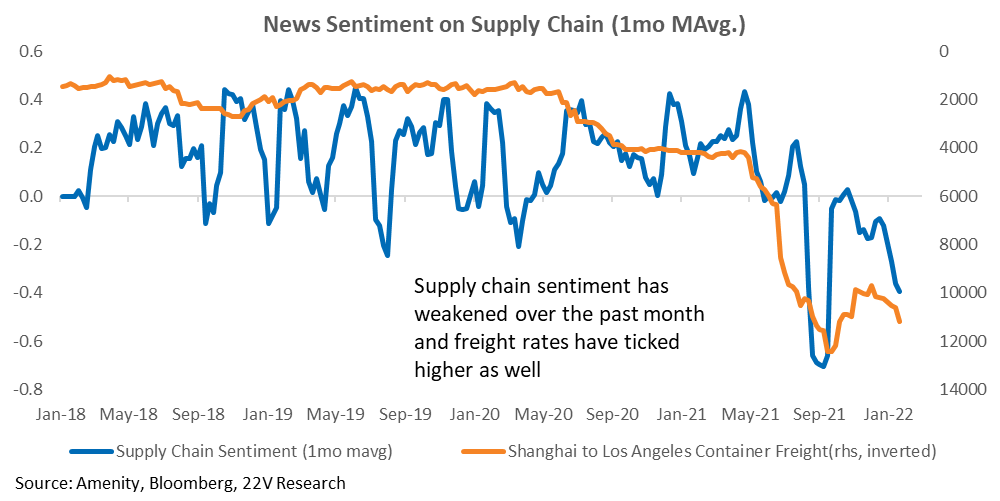
The primary risk Omicron poses is widespread disruptions to supply chains that delay goods deflation at an inopportune time. We hosted a webinar with Victor Shih, an expert on China’s banking policies, fiscal policies, and politics. Replay HERE. Victor explained the challenges to supply chains that China’s “dynamic zero-COVID” policy poses. Chinese cities must bear the fiscal price of lockdowns, so the worst instances are when COVID hits a manufacturing center that is fiscally weak, like Xi’an. There wasn’t a blanket shutdown of production but there were widespread problems for 2-3 weeks. Right now, Omicron is spreading in Hunan province, another fiscally weak manufacturing hub. We are going to have a 3-4 week period in which a lot of production and exports will be affected. Guangdong, which is also experiencing a COVID wave, won’t be as affected because it is fiscally stronger. We would add that supply chain sentiment, calculated using the Amenity natural language processing tool, deteriorated again this week. Freight rates have ticked higher as well.
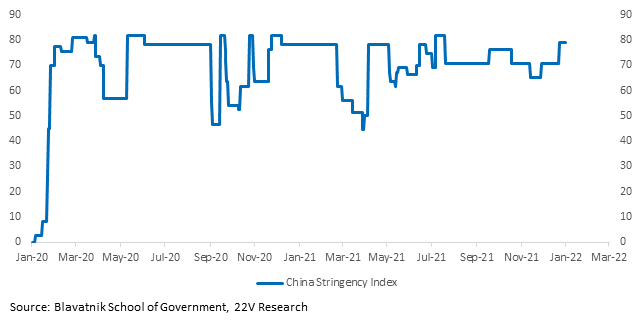
Per Victor, the Chinese government is still determined to stop the spread. But it is still spreading from city to city and province to province. And neighborhood, district, or city level lockdowns are imposed as soon as cases are detected. The lockdowns are economically meaningful. And reinfection risk is real. Rolling lockdowns will hit GDP in 1H22, maybe 2H22. Restrictions, a measured through Oxford’s stringency indices, are back to the highs.
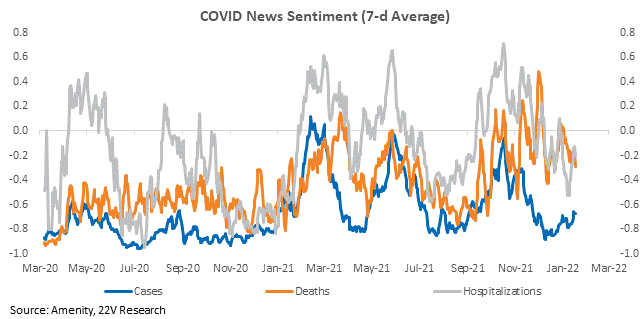
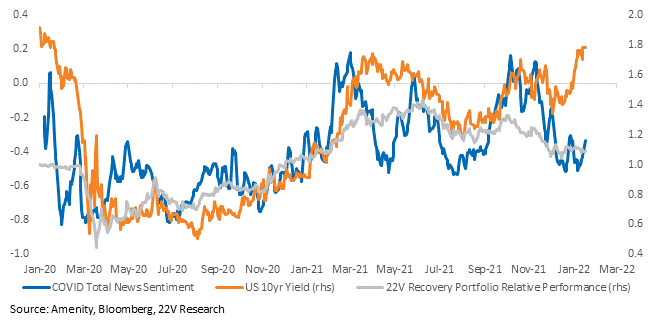
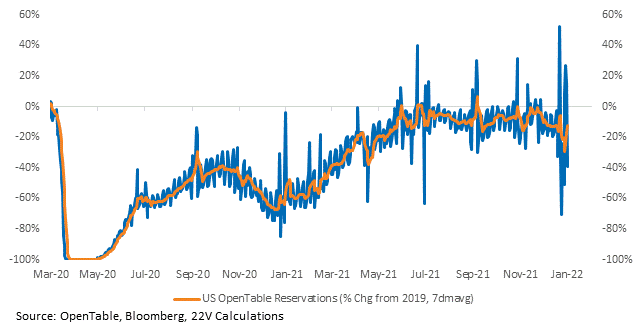
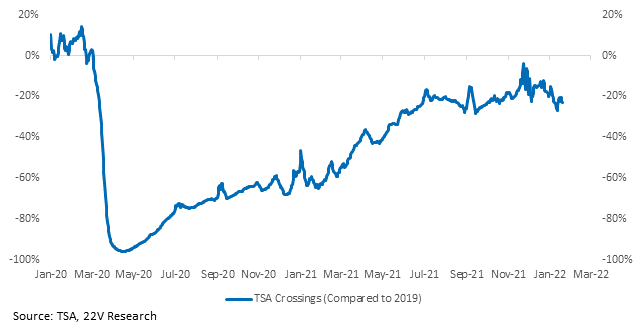
COVID sentiment is volatile; death sentiment is falling while hospitalization and case sentiment are improving. Total sentiment is better but still significantly worse than pre-Omicron. Languishing sentiment is a headwind to our Recovery Portfolio, which has not broken out since the Omicron wave began in November. Investors need more confidence in demand for COVID-sensitive industries like travel and dining (charts 3 and 4), in restrictions, and in supply chains.
Charts for every state and country we have data for are HERE.

