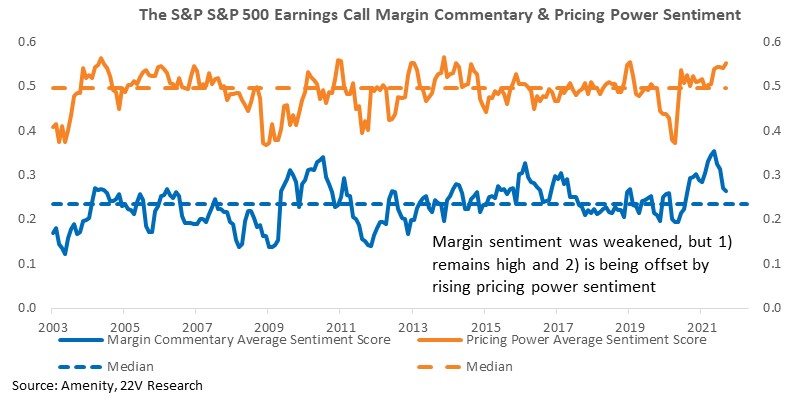
SUMMARY: Supply chain bottlenecks are far from cleared and investors should expect negative headline shocks over the coming weeks, but there are also signs of incremental improvements like easing of the LA port ship backup. Large retailers (see WMT yesterday, LOW today) have successfully navigated supply disruptions with strong pricing power helping maintain profitability. Analysis using the Amenity natural language processing (NLP) tool shows management sentiment toward expected margins has deteriorated but the level of sentiment remains in the top half of its range, and offsetting those concerns is strong and rising pricing power sentiment.

Today is heavy with Fed speakers; Williams at 9:10 ET, Bowman and Mester at 11, Waller and Daly at 1, Evans at 4 and Bostic at 4. After the strong CPI report and upward trends in some inflation measure the Fed cares about (wages, expectations) expect speakers to further emphasis the “balanced approach” to policy that Powell stressed at the last press conference. Treasury volatility should remain elevated.
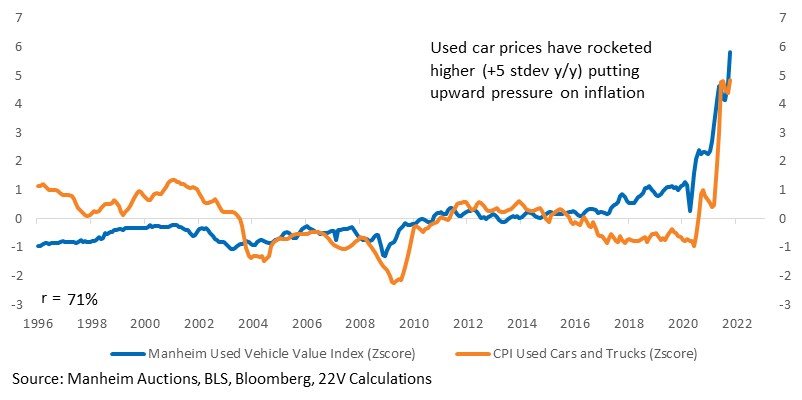
Inflation, the macro concept, is more heavily tied to micro trends today than normal. As Gerard noted yesterday in a note on inflationary forces, “During the past 12 months, inclusive of my estimate for October, core PCE inflation has run 60 bps ahead of the pace excluding motor vehicles.” With Auto production rising the stratospheric rise in auto prices should ease. As Gerard also noted “If auto prices were to retrace half their 25% rise since the Covid shock over the coming twelve months, the inflationary pulse mentioned above would turn into a deflationary pulse of half a percentage point.” Those micro trends are a welcome headwind for inflation.
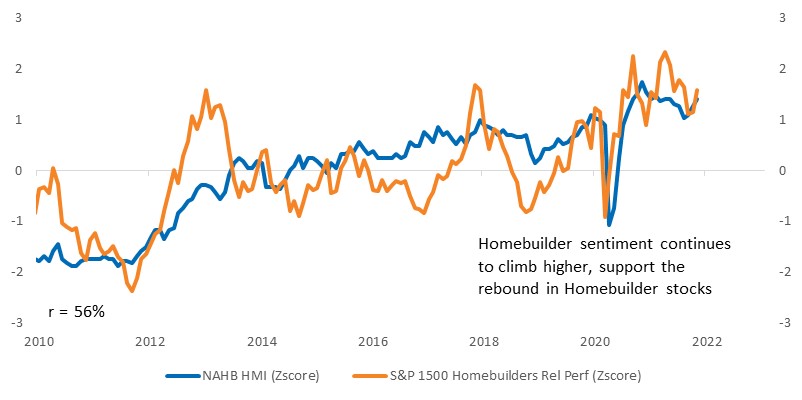
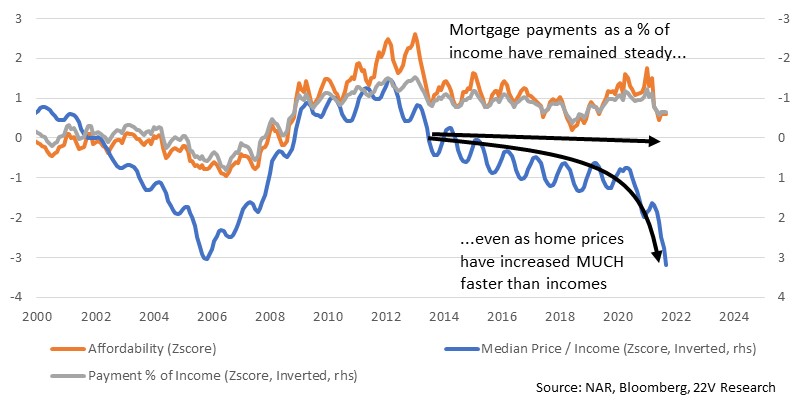
Home builder sentiment rose again yesterday, and Homebuilders have been outperforming. The housing market, an important support for the consumer, remains strong. Low mortgage rates are a large part of the reason affordability has remained high over the past two years even as the national average home price has increased nearly 28%. 30yr fixed mortgage rates are still sitting right near 3%, which is the 2nd percentile of their historical range (1975-fwd).
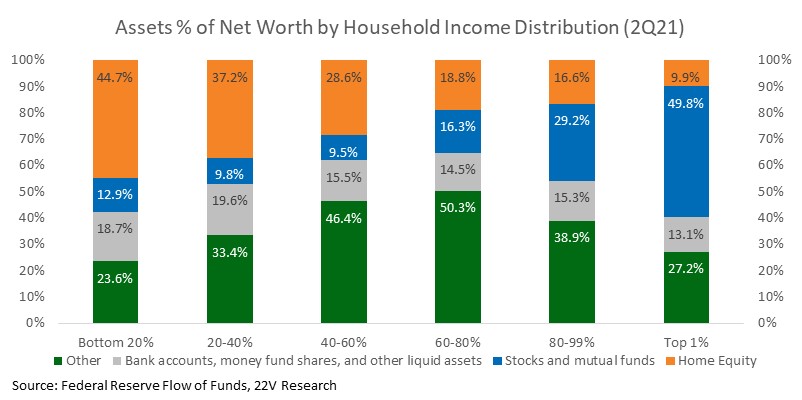
October Retail sales were much stronger than expected yesterday (1.4% vs. est 0.7%) leading to head scratching about the divergence between actual spending (strong) and sentiment (weak and falling). Negative supply chain and inflation news sentiment is weighing on consumer sentiment while the strong jobs market is supporting actual spending. Another concept to keep in mind is the run up in home prices. Home equity is the single largest and levered asset of most families in the bottom 40% of the U.S. income distribution. That asset has appreciated massively over the past few years.
MARKET VIEWS: Supply chain bottlenecks are far from cleared and investors should expect negative headline shocks over the coming weeks, but there are also signs of incremental improvements like easing of the LA port ship backup. LOW beat estimates and guided higher, reaffirming our outlook on consumer strength and margins. Large retailers (see WMT yesterday) have successfully navigated supply disruptions with strong pricing power helping maintain profitability. Analysis using the Amenity natural language processing (NLP) tool shows management sentiment toward expected margins has deteriorated but the level of sentiment remains in the top half of its range, and offsetting those concerns is strong and rising pricing power sentiment.
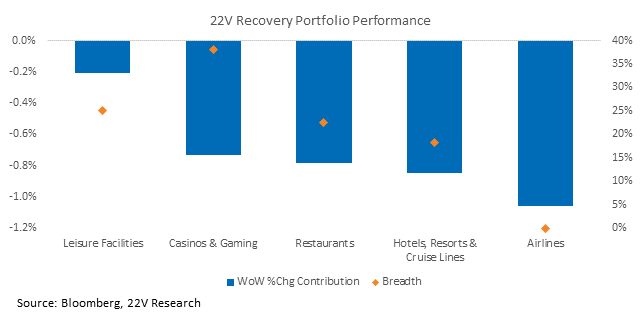
COVID case growth is rising throughout Europe and Germany is reportedly considering lockdowns for the 14 million unvaccinated. European equities are still near all-time highs, bolstered by strong earnings and resilient U.S. retail spending, but COVID is impacting internals. Stoxx 600 travel and leisure stocks are down -1.2% on the day. Our recovery portfolio continues to underperform; travel-related stocks have been the largest drag over the last week. As we discussed yesterday, the COVID impact on markets and on yields is declining as treatments and vaccinations reduce left-tail risk, but COVID case growth is a headwind for certain industries.
As Gerard noted yesterday in a detailed note on inflation dynamics, “During the past 12 months, inclusive of my estimate for October, core PCE inflation has run 60 bps ahead of the pace excluding motor vehicles.” With Auto production ramping up the stratospheric rise in auto prices should ease. As Gerard also noted “If auto prices were to retrace half their 25% rise since the Covid shock over the coming twelve months, the inflationary pulse mentioned above would turn into a deflationary pulse of half a percentage point.” Inflation, the macro concept, is more heavily tied to micro trends today than usual. Those micro trends are a welcome headwind for inflation.
HOUSING SUPPORT: As we detailed in late-October, housing remains a strong economic support. NAHB HMI came in at 83 (est 80, 80 last) and future single-family sales rose to 84 (highest since Dec). Homebuilders have rallied recently despite the backup in bond yields and weak consumer confidence readings (headline and “good time to buy a house” questions).
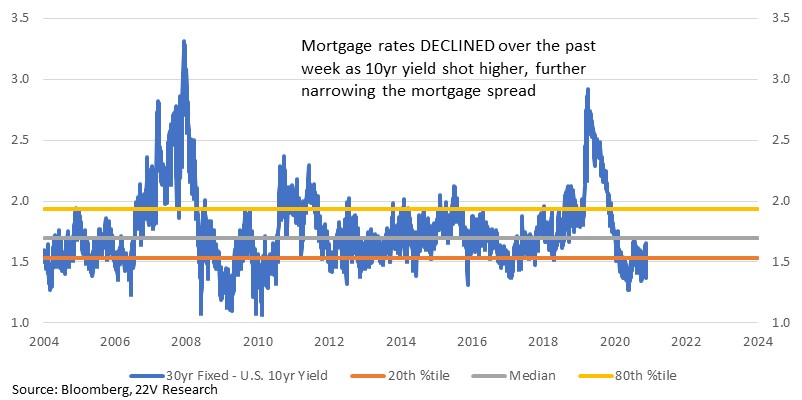
Mortgage rates have moved lower on an absolute basis over the past week. The result was further compression of the mortgage spread, which remains exceptionally low. As the WSJ reported, Fannie and Freddie are set to increase the limits on mortgages they buy with “a baseline level of about $650,000 in most jurisdictions and to just under $1 million in high-cost markets.” Housing finance is adjusting to support for the rise in home prices.
Low mortgage rates are a large part of the reason affordability has remained high over the past two years even as the national average home price has increased nearly 28%. 30yr fixed mortgage rates are still sitting right near 3%, which is the 2nd percentile of their historical range (1975-fwd).
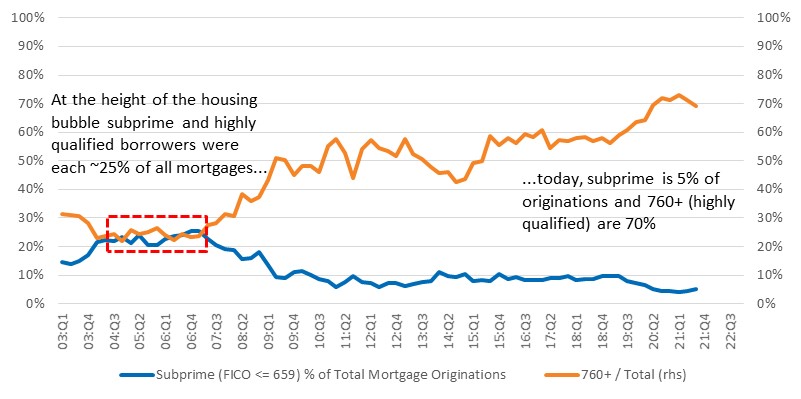
The last time the Home Price to Income ratio was this high was in 2006. Things did not go so well after that. But there are CLEAR differences between now and housing crisis. In 2006/7, about a quarter of mortgages went to highly qualified borrowers and another quarter were subprime borrowers. Today, subprime borrowers make up just 5% of mortgages while consumers with FICO score above 760 make up 70% of new mortgages.
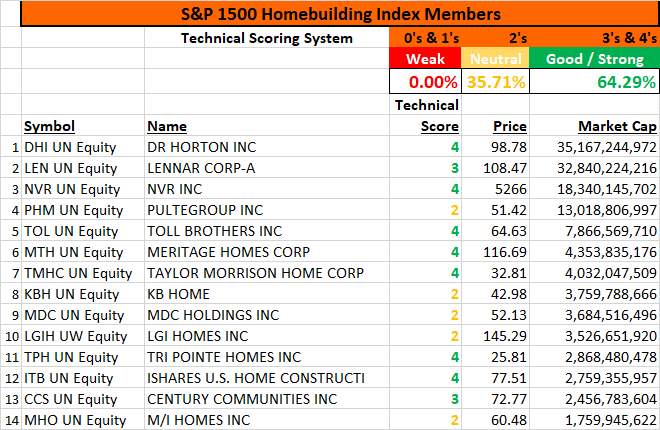
Homebuilders remain one of our favorite industry groups and are a prime example of the micro trends theme (macro is fading as a market driver, but macro forces are important for micro trends). Below are John Roque’s rankings for the S&P 1500 Homebuilders.
One last point on the housing market. October Retail sales were much stronger than expected yesterday (1.4% vs. est 0.7%) leading to head scratching about the divergence between actual spending (strong) and sentiment (weak and falling). We have covered how supply chain and inflation news sentiment is likely weighing on the consumer outlook while the strong jobs market is supporting actual spending. Another concept to keep in mind is the run up in home prices. Home equity is the single largest asset of most families in the bottom 40% of the U.S. income distribution. That asset has appreciated massively over the past few years.