President Biden today will hold the second White House meeting on global value chains in many months. The topic, much like inflation but more tangible, isn’t receding as a drag on the economy. Daily headlines bear this out. We looked up at one point to see “Apple Poised to Slash iPhone Production Goals Due to Chip Crunch”. Tesla’s ability to maintain needed chip inventory is an interesting story to millions; everything about iPhone interests hundreds of millions.
The president’s attention is well-placed considering economic and political ramifications. The president’s supply chains executive order of last spring leaves no doubt he and his economic advisors get the personal, economic, and psychological impacts of hobbled supply chains. As a reminder, it acknowledges three main points: (1) supply chain deficiencies were also exposed by the virus; (2) that addressing myriad related problems will take effort and time; and (3) that even a successful federal effort requires partnering with US businesses and other countries. On this last point, United States Trade Representative Katherine Tai last week discussed the administration’s China strategy specifically and the importance of global value chains to trade.
US-China relations are paramount in several dimensions, including supply chains. News that the leaders of the two largest economies will meet virtually is good news but the fly in the global trade ointment right now is the global supply system which most of us took for granted until the world stopped working. Also, if the supply/demand dislocation continues to express itself in eye-popping, margin-crushing transportation costs, the unhelpful linkage between supply chains and inflation will remain a sticky challenge to Biden’s economic agenda.
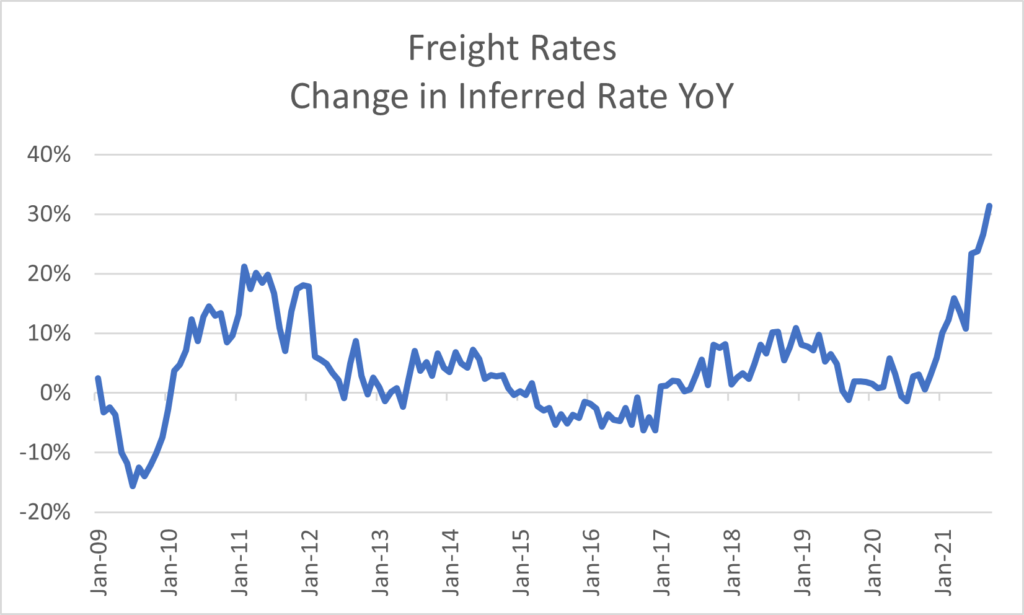
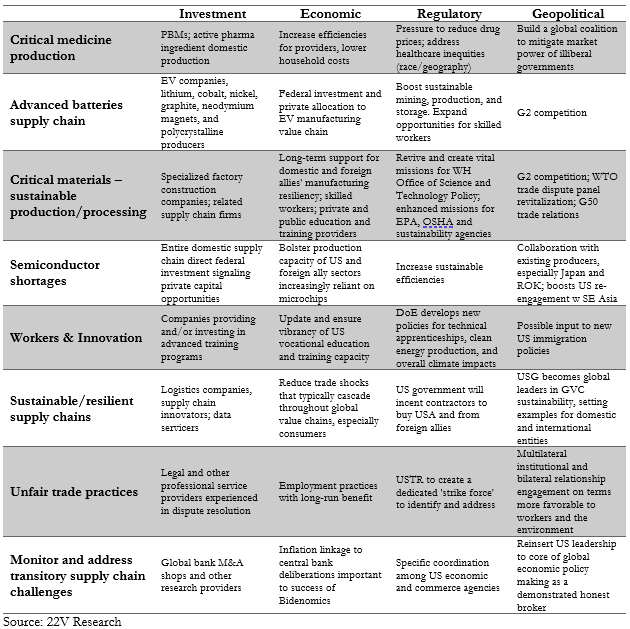
We include below our previously published summary table of the administration’s report to demonstrate its breadth. The next one is due near the end of February. President Biden’s focus on making trade work for workers is evident, along with a heavy dose of public/private innovation investment. We also refer you to the report released October 8 by 22V Research strategist Dennis Debusschere showing sentiment is slowly improving to demonstrate now is a good time for the government to do whatever it can to improve the situation.
In the near term that might not be much. The port of Long Beach/Los Angeles, which is one of the most congested US ports, openly welcomes federal investment. However, neither the city’s mayor nor the executive director of the port’s Board has yet called for Washington’s help. The president last August appointed a “port envoy”, John Porcari, indicating a more intrusive federal involvement is unlikely.
White House Domestic Supply Chain Task Force Implications
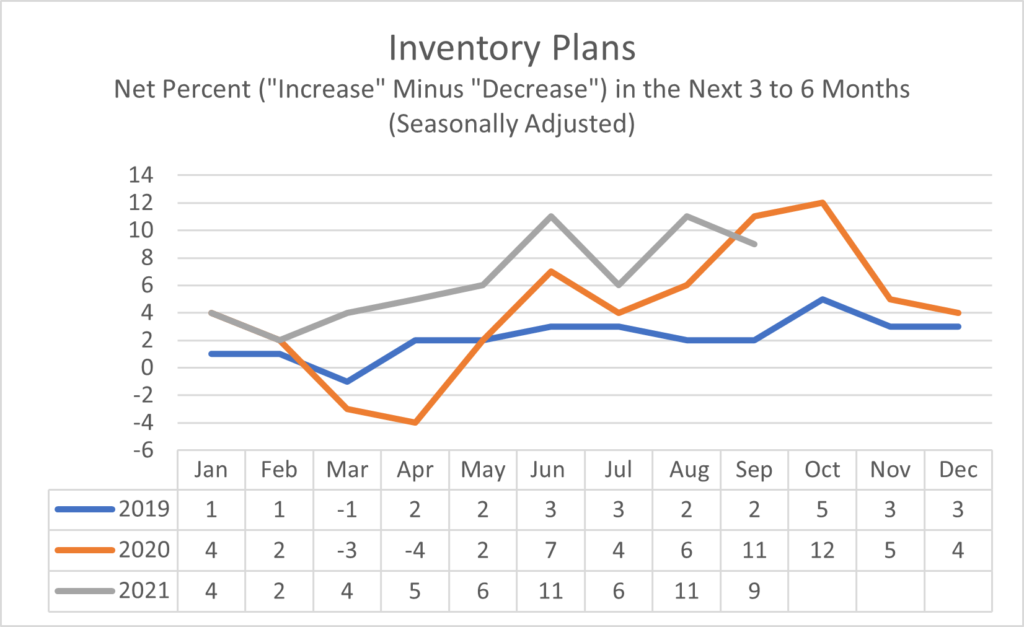
The National Federation of Independent Business (NFIB) reports monthly on economic trends, sentiment and experiences of its small business members and lobbies on their behalf. In the latest survey, members attest that after a few months of inventories building they are coming off again. Compared to the two previous years, that seasonal fallout seems a bit early.
Six months ago, the Atlanta Fed research division reported supply chain dislocations were of increasing worry, and that chokeholds in the system could lead to inflationary spirals. Based on statements yesterday from Bank president Raphael Bostic, policymakers by now realize that no matter one’s view or hope on the duration of elevated inflation, the supply chain mess would seem to be a contributing factor.
In the parlance of scorecard politics, Biden needs a win. His executive order review is relevant and holds potential for broadening the appeal of his economic policy agenda. Encouraging US companies and entrepreneurs to focus on domestic resources and opportunities is a worthy and, we believe, welcome pivot from decades of US businesses being enticed to seek lowest upfront cost options which encouraged US direct investment abroad as a mantra rather than a studied decision.
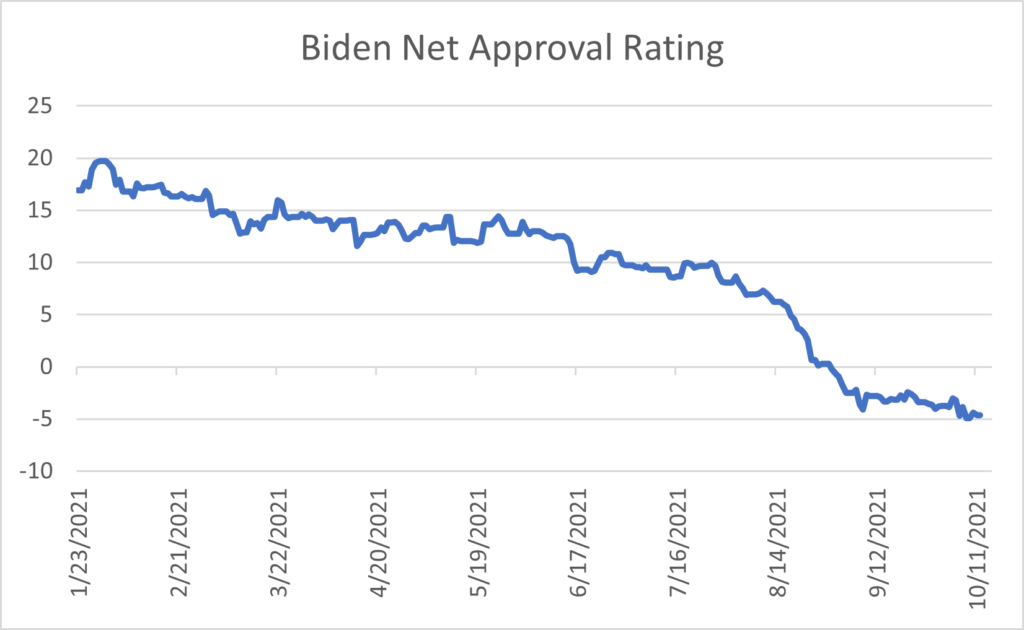
Economic policy is less relevant to most voters and other Americans than the pocketbook results they feel or fear every day. For the past six quarters, the pandemic and its economic shock occupied most economists and business analysts. Globally de-linked value chains now are proving to be a stickier challenge than most of us were prepared to absorb as a persistent, if not a growing, drag on economics. There is a political price for all the adverse perceptions that are accumulating, and they are best reflected in the spike in Biden’s net disapproval rating.