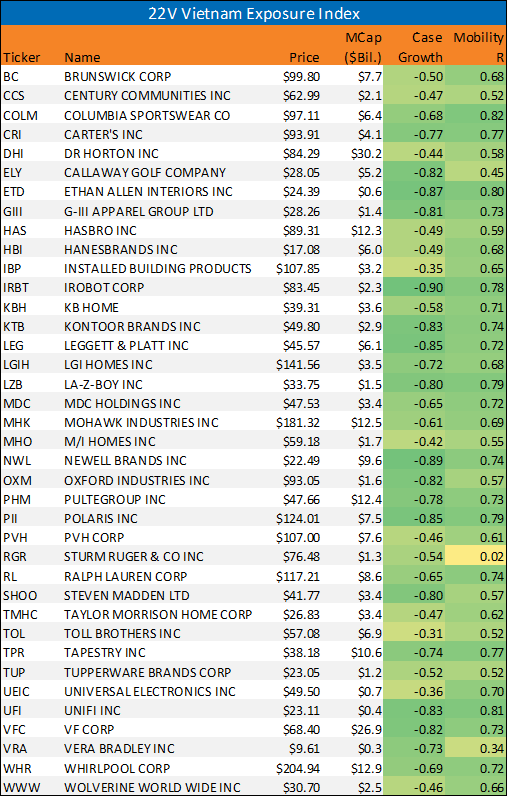
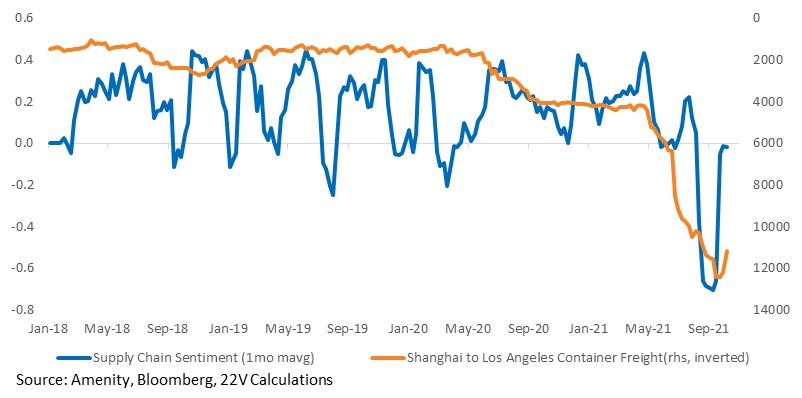
SUMMARY: An interesting shift appears to be taking shape on the supply chain and energy narrative. As the FT pointed out overnight, the cost of shipping goods from China to the US has dropped materially over the past few days. The natural language processing tool we use picked up on the improvement in supply chains; supply chain sentiment has gotten significantly less bad over the last few weeks. Also, China coal futures moved significantly lower overnight as China’s efforts to boost supply is having an impact on coal futures. UK natural gas prices have moved lower recently as well. These are at the margin changes for now, but to the extent that supply chains start to clear up, our Vietnam levered basket will outperform (names at the end of the report). Additionally, some easing of supply constraints will help steepen yield curves. That of course assumes US demand remains, which we have relatively high conviction that it will.
Stagflation as it is broadly understood is not a major MACRO concern in the U.S. today. Stagflation has three components: 1) persistently high inflation, 2) high unemployment and 3) trendless demand. Inflation has increased markedly in 2021, helped higher by bottlenecks and supply constraints caused by the unprecedented and repeated rounds of COVID lockdowns. However, longer term inflation expectations indicate a steady decline over the next several years, U.S. and global growth forecasts remain above their post-GFC trend levels through 2023, the employment backdrop is firm etc.,
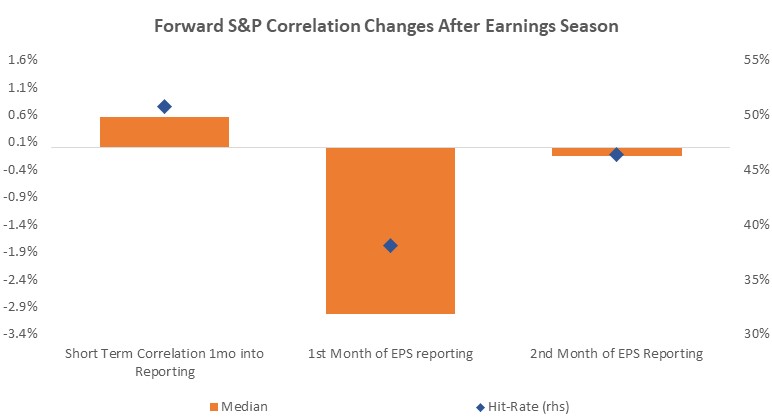
With correlations low and likely to remain that way, the stagflationary MICRO trend will remain important for stock picking. As we noted in the Market in Numbers a few days ago, the start of earnings reporting season typically puts downward pressure on correlations. With debt ceiling behind us and some at the margin improvement in supply indicators, correlations will likely drop significantly during earnings season, which means the winners and losers from the stagflation backdrop will see significant dispersion.
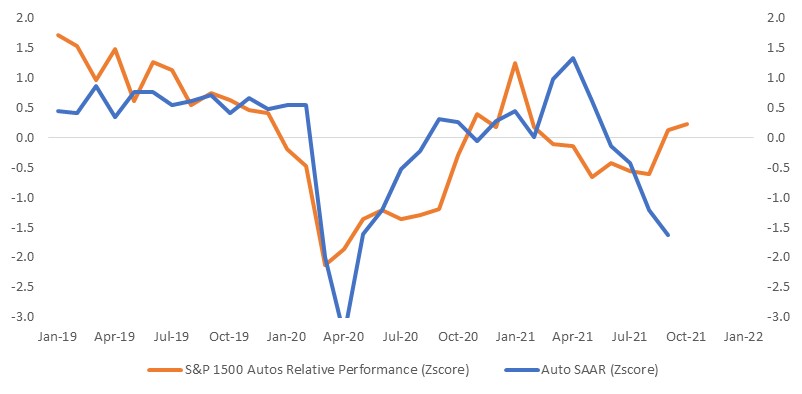
FYI: Chip shortages have led to articles showing lots full of cars awaiting chips, new car prices have skyrocketed and new auto sales have plunged. But auto manufacturers, who are getting higher prices for new and sales of off lease cars, are up 16.7% since the summer versus a market gain of 4%.
MARKET VIEWS: As investors await the payroll data (more on that below), an interesting shift appears to be taking shape on the supply chain and energy narrative. As the FT pointed out overnight, the cost of shipping goods from China to the US has dropped fairly dramatically over the last few days. The decline is apparently normal as pre-Christmas inventory builds peak in early Oct apparently. To the extent that supply chains start to clear up our Vietnam levered basket will outperform (names at the end of the report). Additionally, some easing of supply constraints will help steepen yield curves. That of course assumes US demand remains, which we have relatively high conviction that it will. The positive flow of savings, improving labor outlook and positive capex trends suggest above trend GDP growth. Our economist, Gerard MacDonnell, has done a good job of laying the case for less “boomey, but still above trend GDP growth.
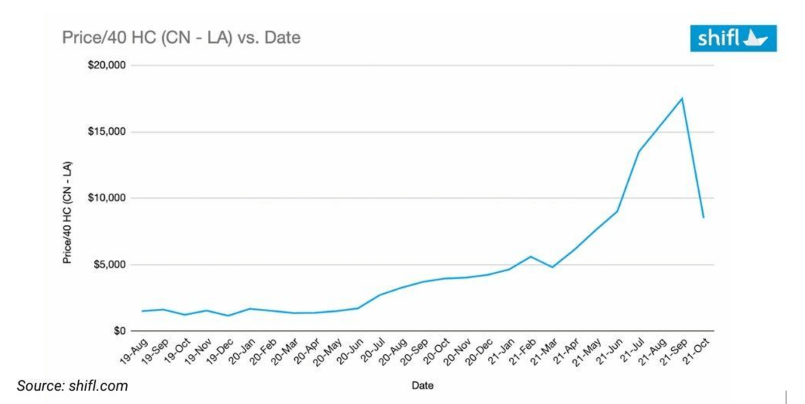
The natural language processing tool we use picked up on the improvement in supply chains. Supply chain sentiment (in this case the sentiment is related specifically to supply chain news related to companies) has gotten significantly less bad over the last few weeks. Shanghai to Los Angeles container rates have started to turn lower as well.

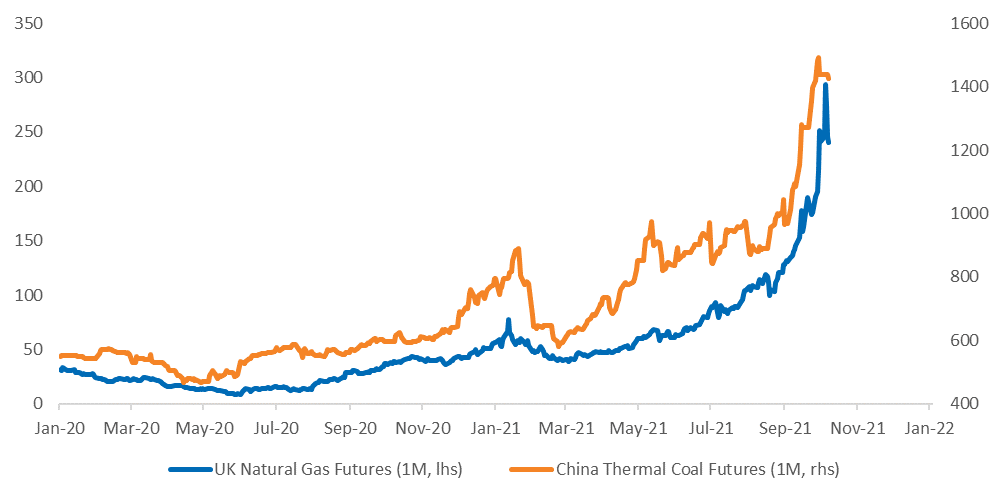
Natural resource supply issues remain, but at least prices have stopped gapping up. China coal futures reversed significantly lower overnight as China’s efforts to boost supply is finally having an impact on coal futures prices. UK natural gas prices have moved lower recently as well, but are still very high relative to a few months ago. Net net, both container rates and futures prices show some change, AT THE MARGIN, for the supply outlook. If that continues, expect some of the supply chain impacted laggards to outperform.
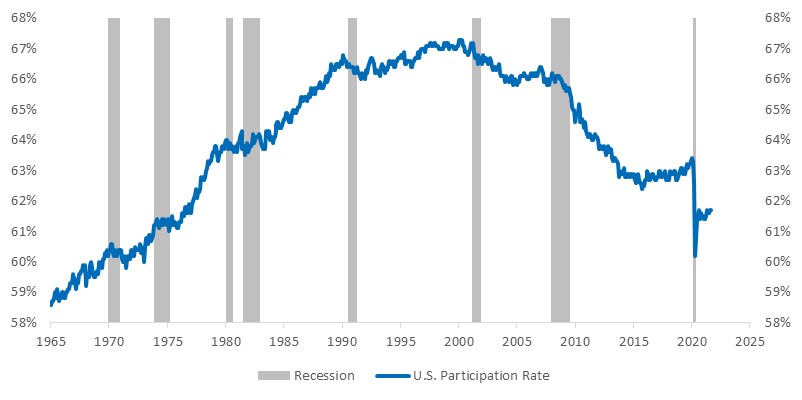
PAYROLL: Payrolls are out later today and the headline will attract news headlines, but the participation is likely more important. A strong payroll number with higher participation is positive longer term (it would suggest labor supply constraint will not be a headwind. REAL growth estimates get pushed higher). Pretty much any number that comes along with a lower participation rate will keep labor supply concerns elevated (it would mean upward pressure to wage growth or an assumption that urate will fall quickly and fed must tighten faster than expected).
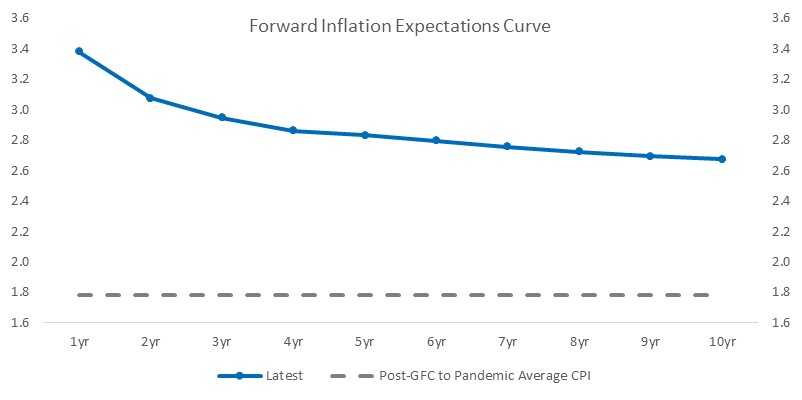
STAGFLATION IS A MICRO TREND – NOT A BROAD MACRO TREND: Stagflation as it is broadly understood is not a major macro concern in the U.S. today. Stagflation has three components: 1) persistently high inflation, 2) high unemployment and 3) trendless demand. Inflation has increased markedly in 2021, helped higher by bottlenecks and supply constraints caused by the unprecedented and repeated rounds of COVID lockdowns. However, longer term inflation expectations indicate a steady decline over the next several years.
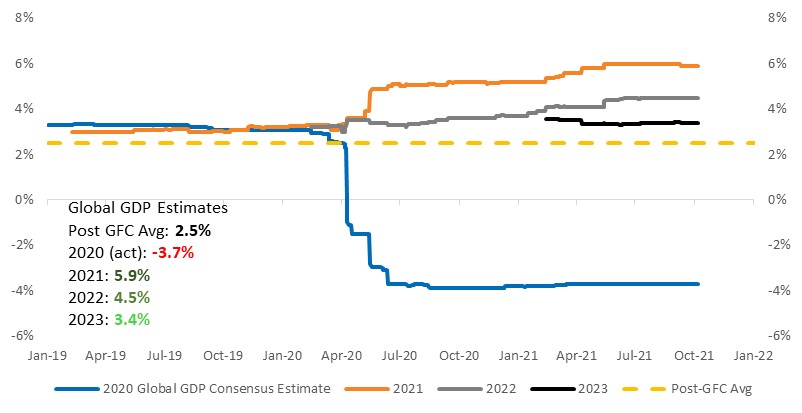
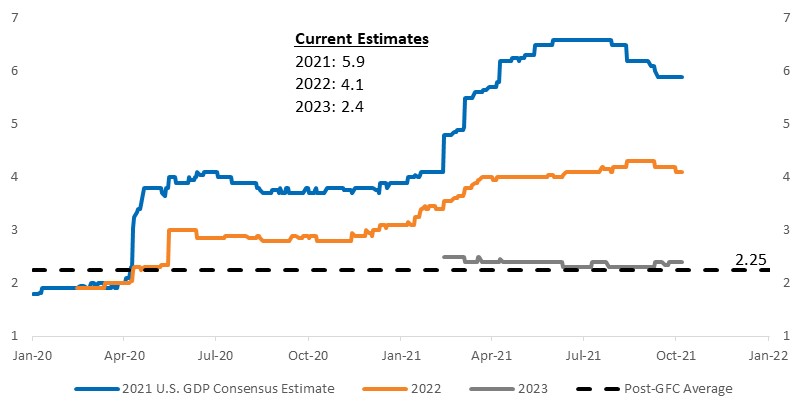
Although 2021 GDP estimates have come down, U.S. and global growth forecasts remain above their post-GFC trend levels through 2023. That is not consistent with a stagflationarly backdrop.
There are aspects of stagflation that are very important micro trends. Inflation within certain industries is high and supply constraints are limiting some goods sales. At a high level that biases us towards services companies over goods sellers, particularly as the latest COVID wave fades. However, the impact of these micro forces are not always obvious. Auto manufactures are one example. Chip shortages have led to articles showing lots full of cars awaiting chips, new car prices have skyrocketed and new auto sales have plunged. But auto manufacturers, who are getting higher prices for new and sales of off lease cars, are up 16.7% since the summer versus a market gain of 4%.
Dispersion of returns at the industry and stock level should be higher going forward than they have been during most of the COVID era. Smoothed S&P IPC has been below its post-GFC median for most of 2021, helping explain the increase in return dispersion at the stock and industry level. It has increased some recently on debt ceiling, Evergrande and to a much lesser extent energy concerns, but on a smoothed basis is still very low. With correlations low and likely to remain that way, the stagflationary MICRO trend will remain much more important for stock picking.
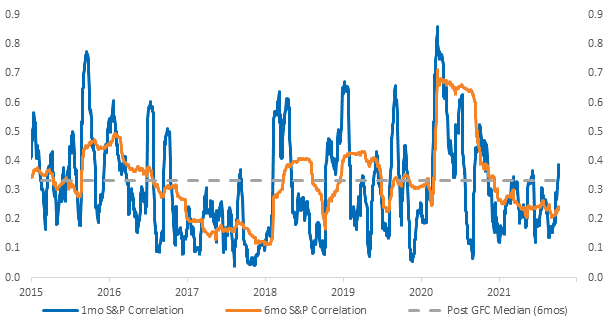
Now that the immediate risk of a U.S. default has passed, correlations will move lower. As new noted in the Market in Numbers a few days ago, the start of earnings reporting season next week will also put downward pressure on correlation. Correlations will likely drop significantly during earnings season, which likely means the winners and losers from the stagflation backdrop will see significant dispersion.
Here is the Vietnam exposure index. There are caveats to our methodology: it is a short history, many of the stocks have moved around for reasons well beyond supply chain issues, some might not have ANY Vietnam exposure at all. That being said, it is a broad list of stocks and we think it should be used as place to look for ideas.