The first three quarters of 2021 are past and the market is coming off both a worse-than-normal 3Q and the first quarterly market decline since 1Q20. Investors are now turning their attention to 4Q, which has historically been the best period for equities.
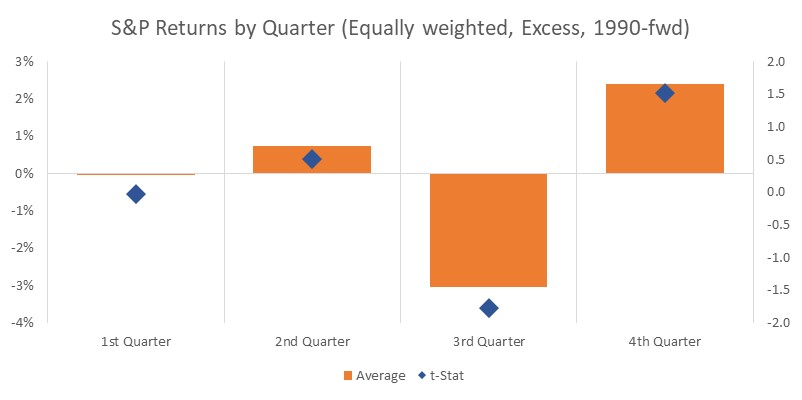
Fourth quarter returns tend to be unusually strong, a pattern that remains consistent across multiple time periods and across cap and equally weighted indices, but there are some caveats to keep in mind. First, though fourth quarter returns tend to be stronger than normal, October does not contribute much. Historically, October returns are roughly in line with the average monthly change in the S&P. Second, earnings reporting season gets underway next week and the deluge of fundamental data investors will be sifting through is a far greater determinant or returns than the calendar.

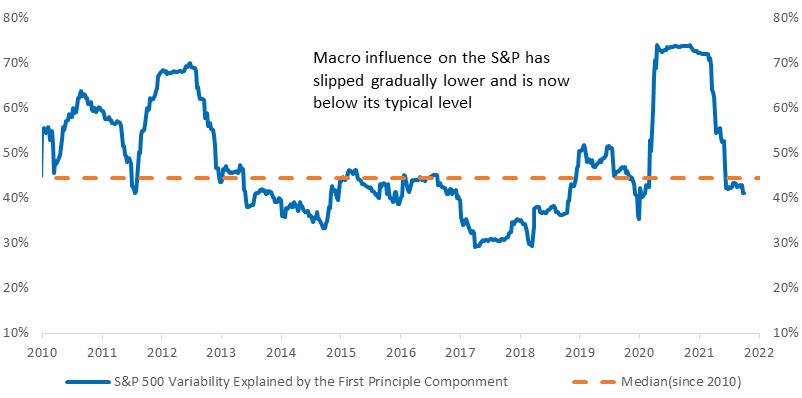
Third, equity investors also face an uncertain macro backdrop. Ongoing U.S. debt ceiling negotiations represent a low probability, high risk threat to global growth. If the U.S. defaults, any positive influence from the fourth quarter will be swamped by macro mayhem. It is important to keep in mind that the macro influence over equities has been falling. According to PCA the S&P volatility explained by the first principal component, which we think of as a proxy for macro conditions, has fallen below its median post-GFC level. But the first PC still explains ~40% of S&P variability. Even in a lower correlation market, macro forces still exert influence, particularly if they come in the form of a shock.
Market level correlations have been trending higher from an unusually low level recently. Macro shocks (Evergrande, China policy shifts more generally, U.S. debt ceiling negotiations) have helped fuel market narratives (stagflation, peak EPS/growth, taper tantrum 2, etc.) that have weighed on risk assets, at least at the headline level. Market internals have remained firm though with Cyclicals, Reopening and Value names all outperforming over the past month. Correlations tend to move higher into the start of earnings season and then fall as company reports create near term return dispersion.
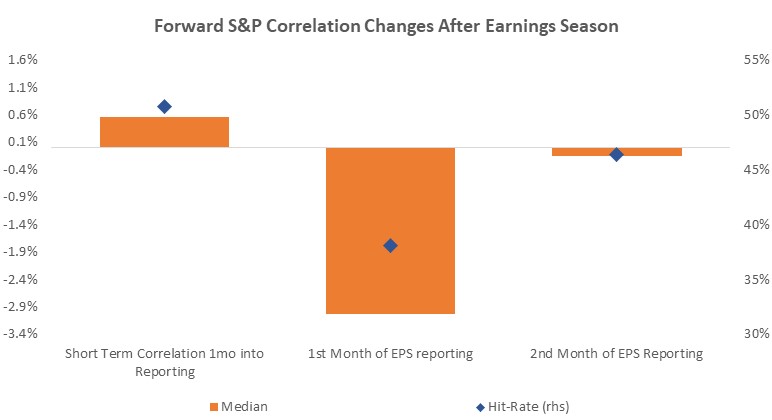
Relatively low correlations that should decline further combined with the macro influence on markets creates a backdrop that favors stock/industry level thematic trades over market level positioning. Our Recovery portfolio is well positioned, provided the U.S. avoids defaulting (as Kim Wallace and the 22V Policy team expect). Still above trend growth and strong labor market demand are supports for consumer spending; receding COVID headwinds and goods focused supply chain disruptions favor services focused names.
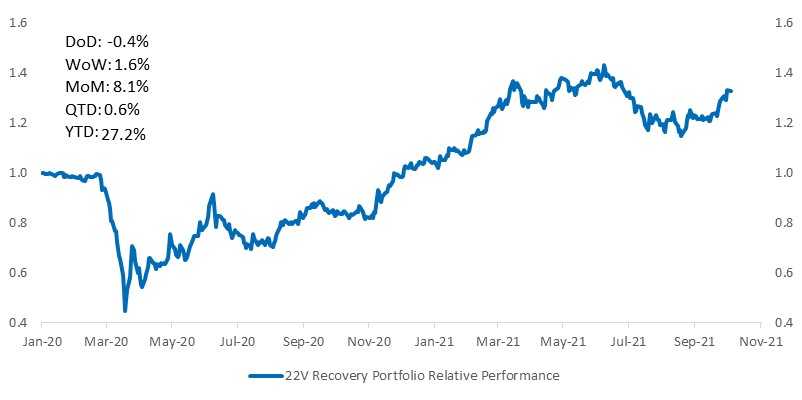
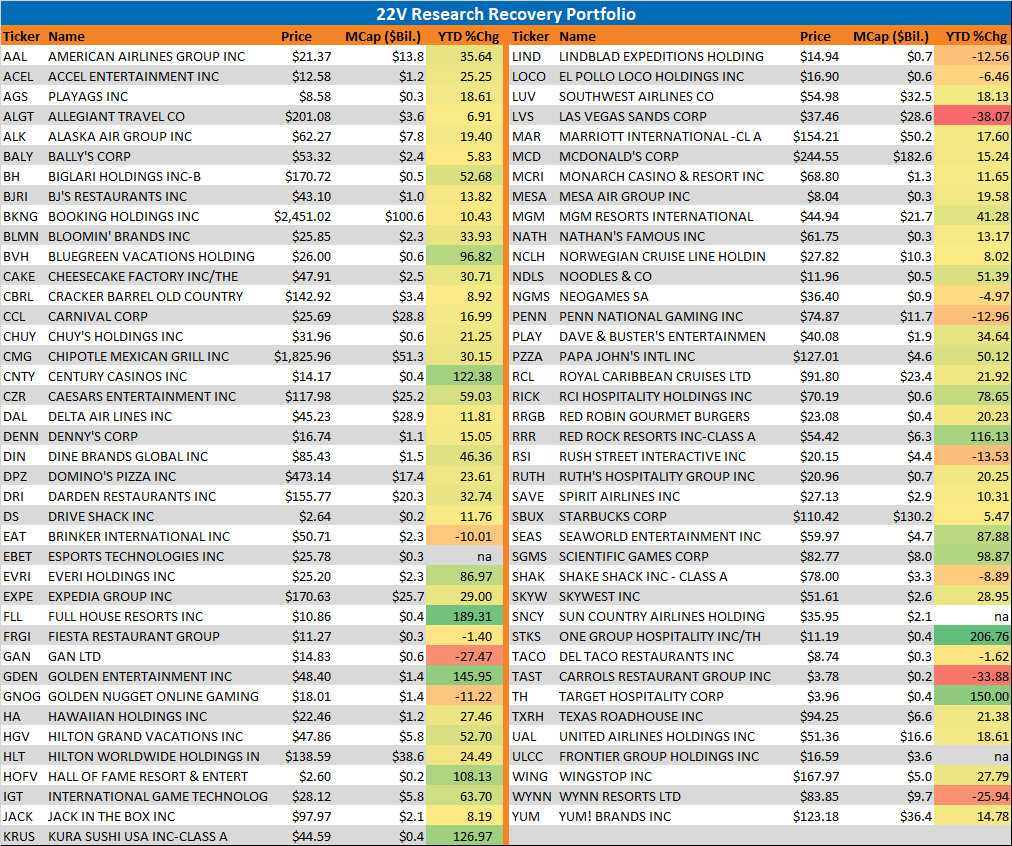
Below are the full constituents of the Recovery portfolio.