WEBINAR: 22V is hosting its 22-minute weekly webinar at 10:30 AM ET. We will cover the Fed, market reactions to the Fed, and highlight tactical shorts. Registration link HERE.
SUMMARY: Apple is expected to do $90 billion in sales next quarter with gross margins in the 42.5% to 43.5% range. Their cash generation is massive, and it is tough to be short super high quality/cash generating machines in this backdrop. At least on a relative basis. If we are correct that other areas of financial conditions are going to start contributing to slowing economic growth (to date, stocks and volatility have done most of the heavy lifting in tightening financial conditions), short rates are headed much higher and credit spreads will widen more aggressively (started to happen, but still have a long way to go).
That will leave high earnings volatility and highly levered stocks vulnerable. Bottom line, we expect large cap and higher quality tech to start to diverge from ARKK and unprofitable tech forward. Some differentiation should be expected as short rates increase.
Business sentiment of Recovery stocks has moved sharply higher, consistent with strong retail sales and the card spending data mentioned by AXP, Mastercard, and Visa. Strong spending helps explain the move higher in 10yr yields today as it offsets worries about a 1Q inventory led collapse following the GDP release yesterday. Omicron clearly caused a slowdown in travel during December, but that demand appears to have been delayed rather than destroyed. That would typically be good news for recovery stocks, but as noted in a Quant report, the factor profile of the portfolio (high Earnings Turbulence, higher Volatility) tends to suffer as financial conditions tighten. Focus on the recovery stocks with better factor profiles (listed in the full report below).

With the Fed actively trying to tighten financial conditions to reduce price pressures at the same time labor markets remain strong, corporate margins are increasingly at risk. In that backdrop, firms with strong pricing power should outperform. Our pricing power portfolio has rallied in January, and we would look at the names in that portfolio (included) as a source of relative long ideas. More generally, we encourage portfolio managers to tilt more exposure to companies that can maintain pricing. Pricing power is tough to screen for quantitatively (we use sentiment analysis), so this is an area where understanding fundamentals can make a significant difference).
Full report below…
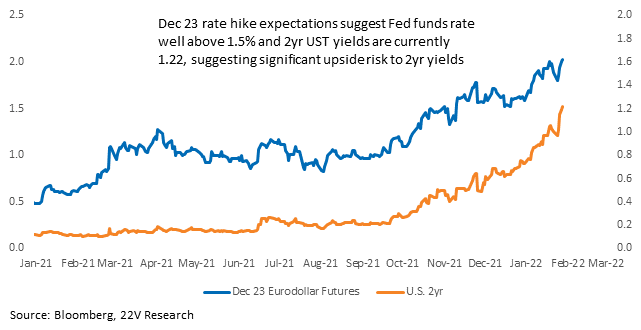
MARKET VIEWS: Mega cap tech companies that have reported so far have posted strong earnings results and solid forecasts. Apple is expected to do $90 billion in sales next quarter with gross margins in the 42.5% to 43.5% range. The cash generation is massive, and it is tough to be short a super high quality/cash generating machine in this backdrop. At least on a relative basis. If we are correct that other areas of financial conditions are going to start contributing to slowing economic growth (to date, stocks and volatility have done most of the heavy lifting in tightening financial conditions), short rates are headed much higher and credit spreads will widen more aggressively (started to happen, but still have a long way to go). The Fed funds rate two years from now suggest MUCH higher 2yr yields.
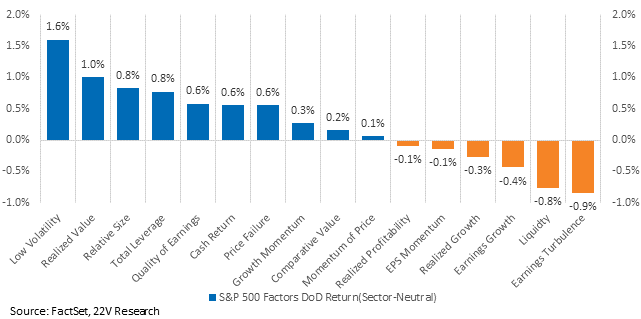
That will leave high earnings volatility and highly levered stocks vulnerable. Plus, those most sensitive to changes in credit conditions. Bottom line, we expect large cap and higher quality tech to start to diverge from ARKK and unprofitable tech going forward. Some differentiation should be expected as short rates increase. That is basically what happened yesterday with low volatility, size, quality and cash return outperforming. Low liquidity and Earnings risk suffered again.
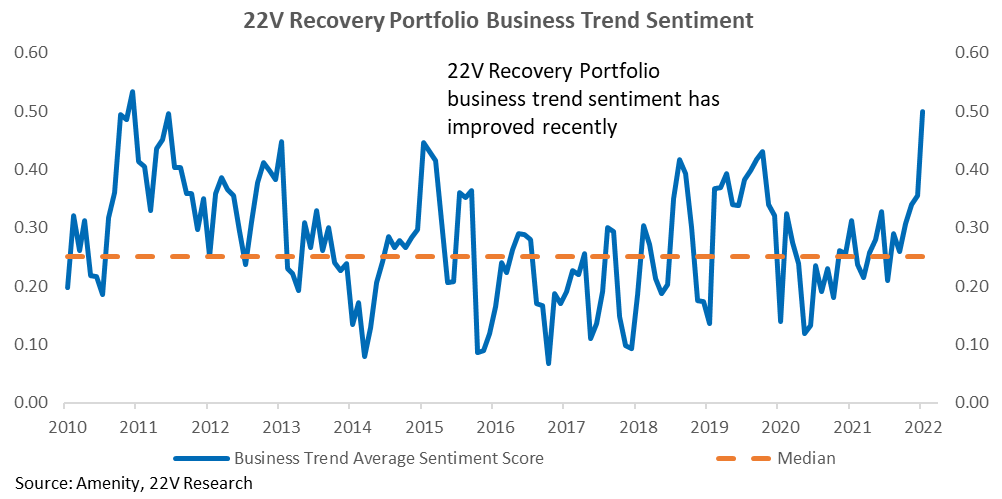
During 4Q reported management sentiment of Recovery Portfolio companies toward Business Trends has moved sharply higher. We measured from earnings call transcripts using the Amenity natural language processing tool and the latest readings are consistent with strong retail sales and the card spending data mentioned by AXP, Mastercard, and Visa. Omicron clearly caused a slowdown in travel during December, but that demand was delayed not destroyed.
But, as we covered in a Quant report earlier this week, the tightening of financial conditions that have been driving market internals, are also working against a rebound in Recovery stocks. COVID news sentiment has improved as case growth and hospitalization in the U.S. and Europe fade, and lockdowns in China are removed. But stocks with factor profiles poorly suited to a backdrop of tightening financial conditions (high Earnings Turbulence low Low Vol), which includes many Discretionary and unprofitable companies, face ongoing headwinds from the Fed’s increasingly aggressive “inflation containment” policy position.
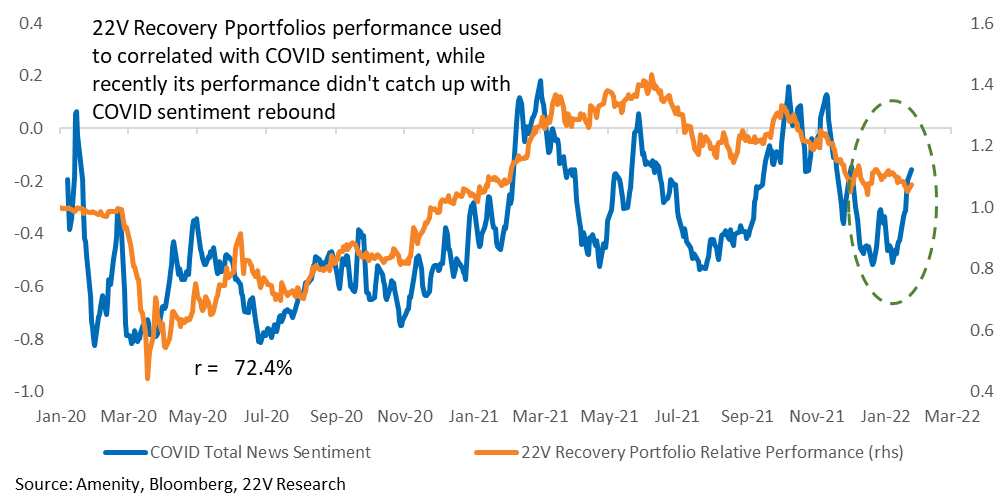
To narrow in on names that 1) benefit from easy COVID headwinds, and 2) are well positioned for tightening financial conditions, we filtered the Recovery portfolio for names with attractive financial condition tightening factor profiles. The 8 names listed below are the subset of Recovery names that meet those criteria.
As Gerard has noted a number of times, the relationship driving margins is corporate pricing power relative to wage growth, not CPI versus PPI. While inflation was rising and companies could easily pass along increased input prices, margins remained strong. Today, with the fed actively trying to tighten financial conditions to reduce price pressures at the same time labor markets remain strong, corporate margins are increasingly at risk. In that backdrop, firms with strong pricing power should outperform.
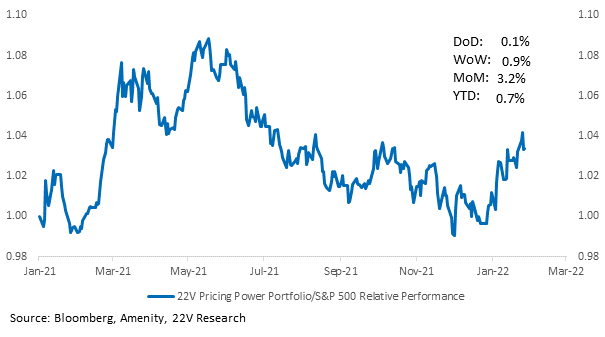
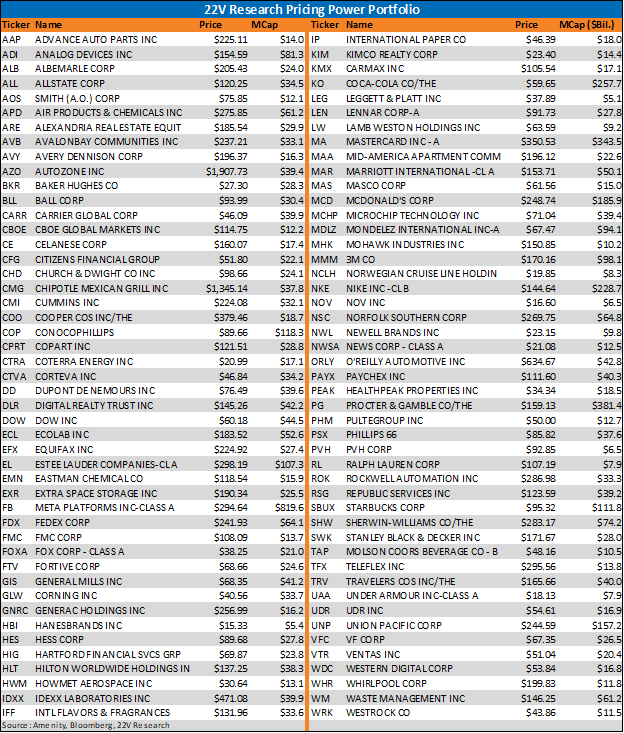
Below are the constituents of our Pricing Power Portfolio, selected using the Amenity natural language processing tool. We use Amenity to “listen” (machine read) all S&P 1500 earnings calls, measuring management sentiment toward a wide rage of topics. Below is the list of stocks that had the strongest pricing power sentiment as of the end of 3Q S&P reporting season. These are the companies that expressed the strongest net sentiment toward issues surrounding pricing power. We will be updating this portfolio as earnings season progresses.