
The world will hear and see much about events surrounding January 6, 2020, for the remainder of this week and likely for most of the year. From a macro risk perspective, our sense is the ugly scenes threaten democratic principles enough to add US politics as a factor contributing to our call last week that Washington’s risk profile is elevated with a tilt toward worsening.
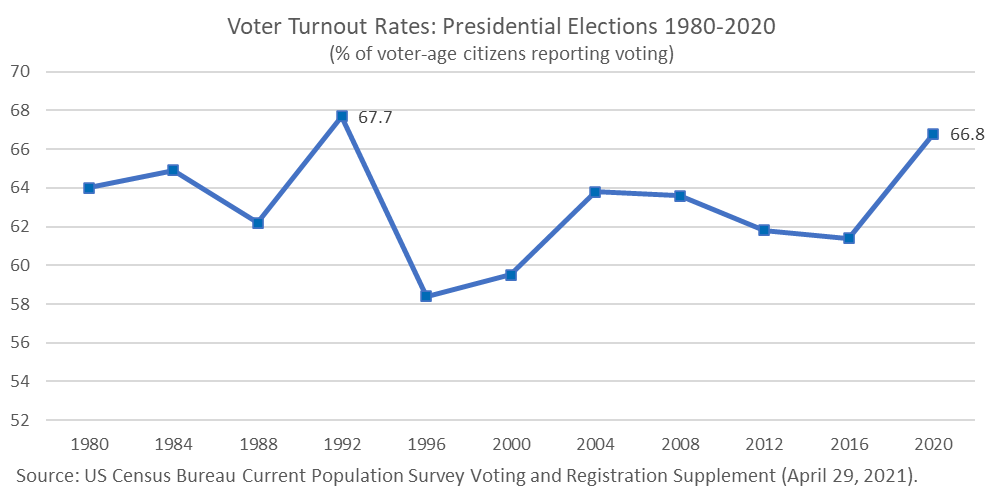
Senate Democrats’ plans next week to debate changes to legislative rules are less a contributor to our outlook than the false and real emotions evoked. This includes likely GOP retribution, whether this year or next. Yuval Levin penned a perceptive New York Times op-ed recently calling for both parties to focus less on generally unproven or mathematically rare pre-voting fraud and spend more thoughtful time on protecting legitimate votes once cast. Turnout rates since former President Reagan’s first campaign show limited, if any, widespread constraint on the ability to cast ballots among registered voters. Changes recently adopted by 19 state legislatures could challenge Levin’s thesis.
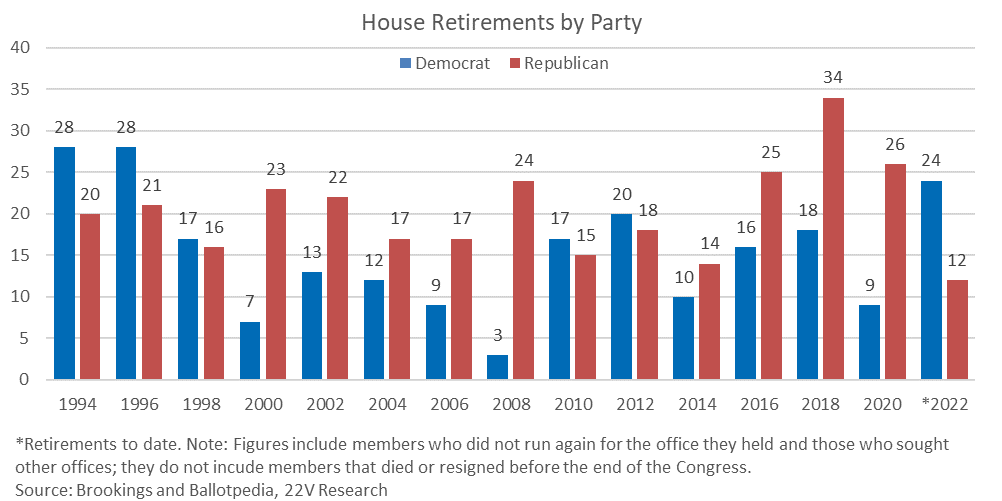
This note intentionally scratches a small patch of the 2022 midterm election surface. We look forward to adding our thoughts regularly this year to your intake of what November 8 might mean to politics, policy, and America’s international standing. Retirements from Congress occur for various reasons. The fact that the largest number of Democrats in 26 years is stepping away from the House of Representatives, along with midterm electoral history, portend the current majority there likely flips to Republican next year.
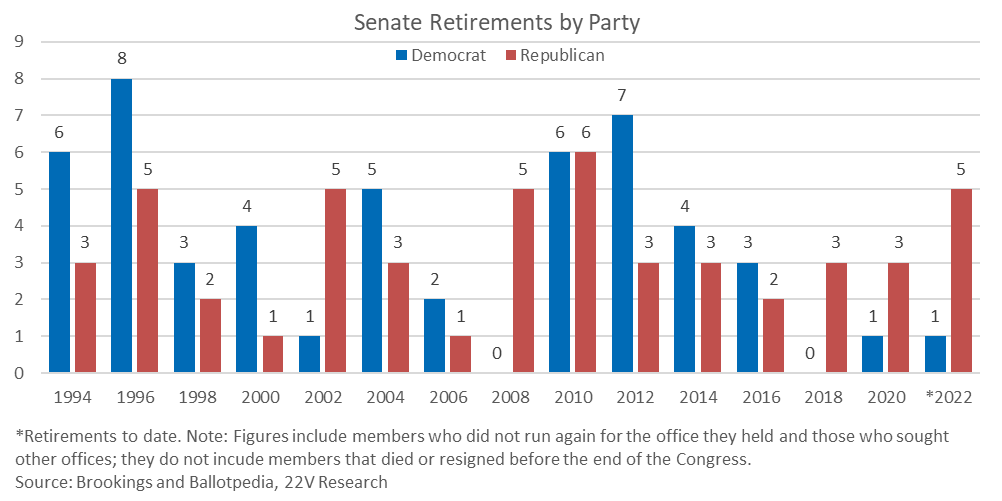
Similarly, Republican Senate retirees this year are the highest in 12 years. This probably indicates party comfort that most of those seats can be retained and will help build a 2023 majority in the Second Chamber. The implications of such an outcome cannot be judged clearly outside the context of hindsight about how economic, social, political, and financial conditions affected the midterms.
The Department of Justice last summer issued guidance on voting methods and post-election audits invited by an unstructured recount in Arizona. Levin’s balanced piece offers voters, politicians, and investors an opportunity to contemplate election integrity in a manner that minimizes partisanship. He commends sections but not all the Freedom to Vote Act backed by a political spectrum of US voters. But that isn’t the picture the world gets this week in Congress as the Senate attempts consider it. Geopolitical and macroeconomic policy we believe pose underpriced market risks in the near term while threats to democracy that the bill is meant to address are a longer-run concern.
Confidence in US systems is a component of dollar strength. When that trust wanes policymakers are pressed to inject confidence. Taking a five-year view, the Federal Reserve’s March 2020 intervention and expectations of what a Trump presidency implied for markets demonstrate our point about policy often being a factor in dollar confidence. Looking back 50 years one would see the Nixon and Carter administration pullbacks (again for well-known reasons). Effective geopolitical and macroeconomic policy management this year is setting up as a dollar influencer. Looking ahead from our vantage point in early January, it is hard to predict a positive trendline for the dollar based on expectations of Washington’s contentious year.


