
Our entire repository of COVID charts is HERE.
China locked down a city of 13 million people after finding a COVID cluster. Zero-COVID is still in effect; there have been 200 reported cases from December 9-22 in said cluster. Omicron sentiment appears to be turning as more studies support early estimates of lower severity (more on that below). The primary risk, as long as those estimates are roughly accurate, is now whether an Omicron outbreak in Asia disrupts supply chains.

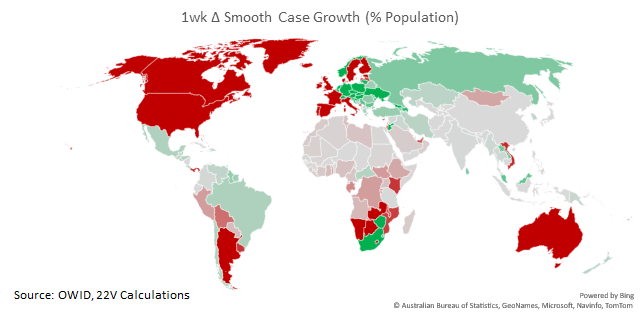
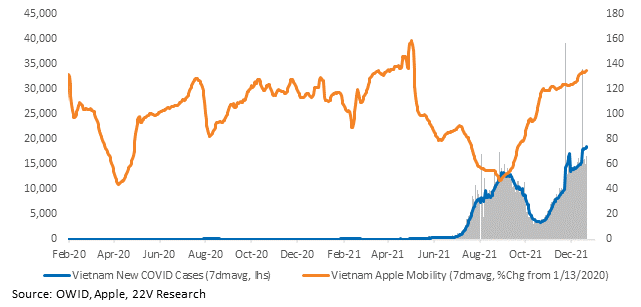
Case growth in Asia ex-China is, for now, tame. Vietnam has the worst growth rate (and a record high 7dmavg). Vietnam’s health minister reported the new cases are not Omicron.
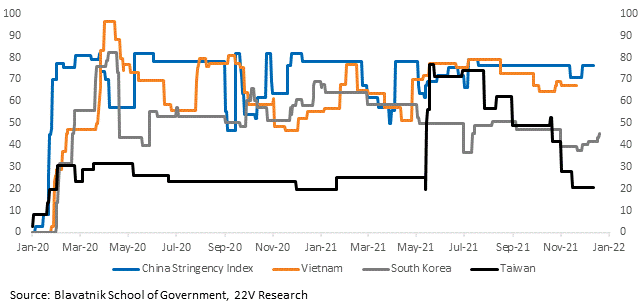
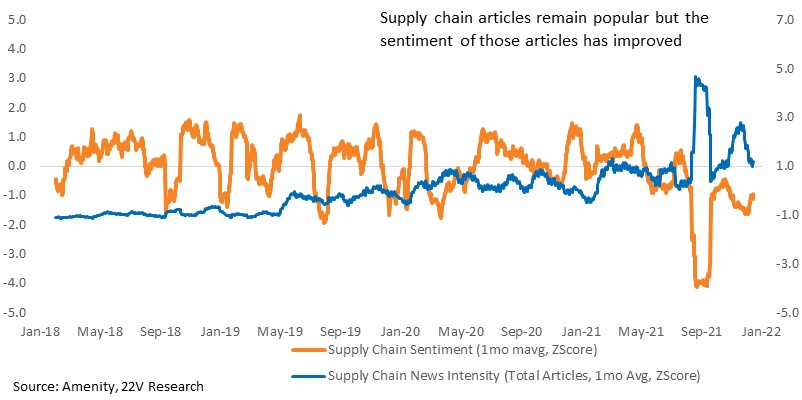
How countries respond to Omicron will have an important impact on supply chain issues near term, but there is not yet enough data to determine which way that will break. We are monitoring Oxford’s stringency indices to track the level of restrictions. China and Vietnam are both have elevated COVID restrictions while South Korean and Taiwan do not. As we mentioned in a quant report yesterday, supply chain news intensity remains high, but the negativity of articles has eased some. Investors still need to worry about bottle necks and negative news reports, but there should be fewer negative shocks.
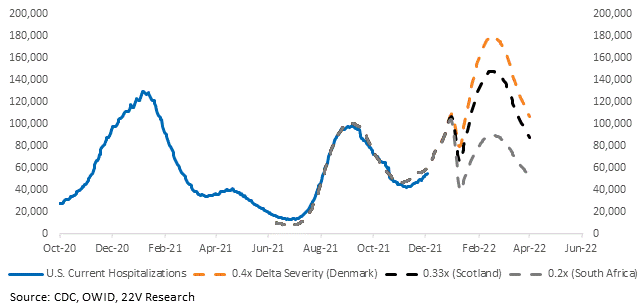
Three studies of Omicron severity have been released recently: South Africa, Scotland, and Denmark. The three together indicate Omicron hospital admission rates are between 60% and 80% less. It’s unknown whether this is because Omicron is less dangerous or prior immunity and vaccinations are having an effect (or a combination thereof), but it doesn’t matter. The below chart is not meant to imply false precision. Rather, the net result is that the wide range of hospitalization outcomes is narrowing as the worst case scenarios are taken off the table, even under pessimistic assumptions about transmissibility and length of stay.
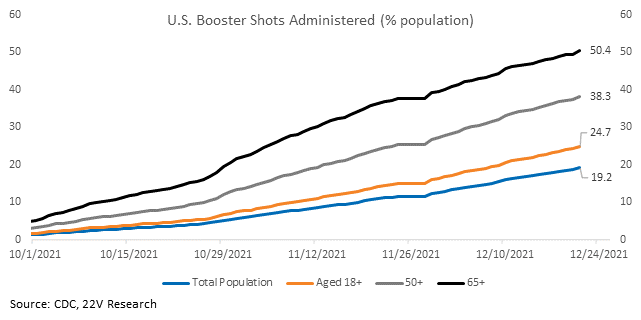
Adding to good news about severity, the U.S. expects to get 4 million courses of Covid treatments by end-January, including Pfizer and Merck pills. The FDA granted Paxlovid, Pfizer’s pill, emergency use authorization yesterday and granted molnupiravir, Merck’s antiviral, emergency use authorization today. Even if vaccines are less effective, new at-home therapeutics can help keep people out of the hospital. And concerning vaccine efficacy, a UK study found adding a booster dose helps dramatically, blocking an estimated 55% to 80% of symptomatic cases. The booster campaign in the US is progressing. Although the total percentage of the population boosted is low (only 19%), 50% of those 65+ are boosted, which should help reduce hospitalizations to some extent.
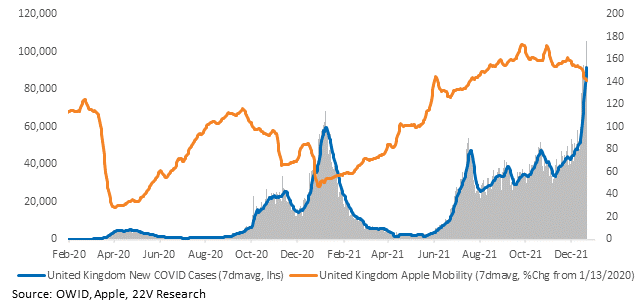
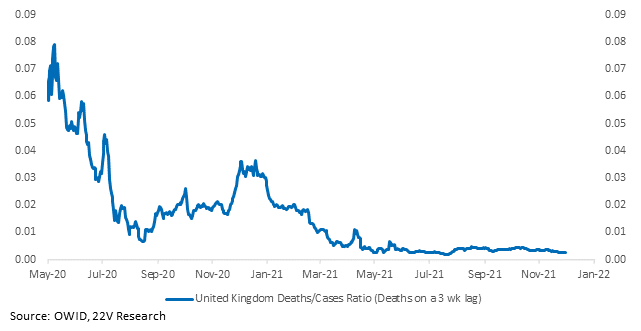
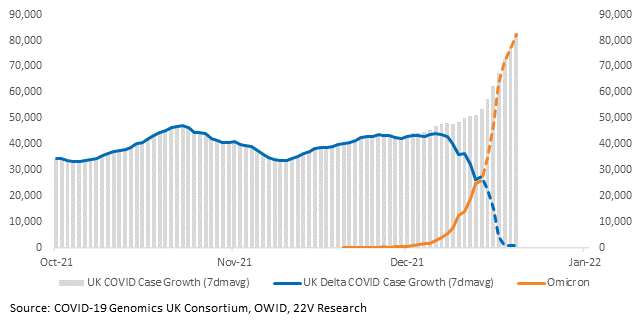
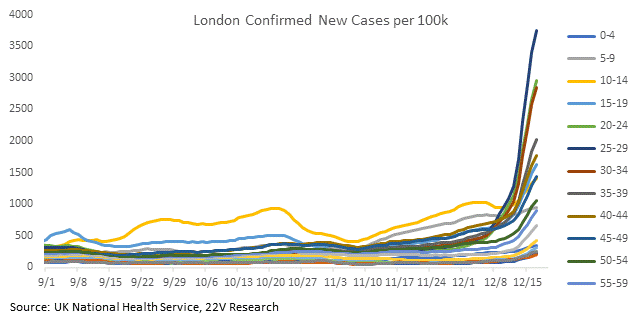
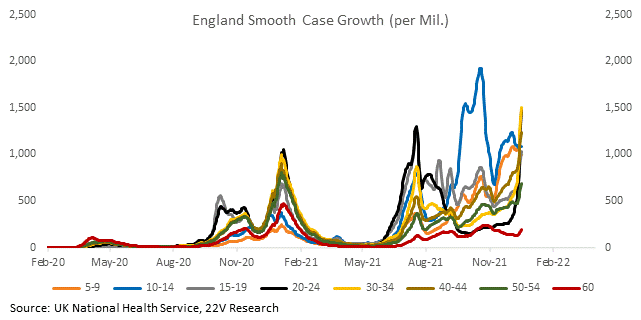
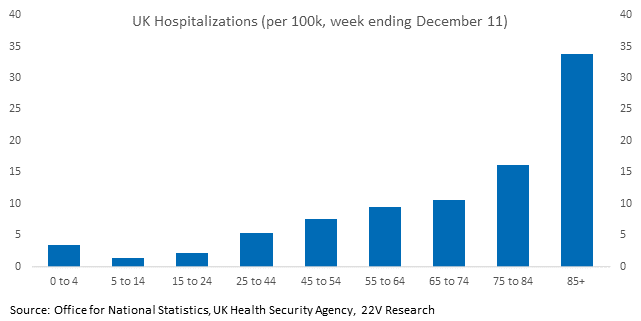
Case growth in the UK continues to increase. The ratio of deaths to cases is now as of 12/1, which does not reflect the severity of Omicron. Omicron is likely almost all the case growth in the UK (based on a polynomial regression of Omicron incidence data). Case growth rates have jumped up age demographics, but are still low, for now, for 60+. That’s significant as hospitalizations, as of December 11, were concentrated in those 60+ nonetheless.
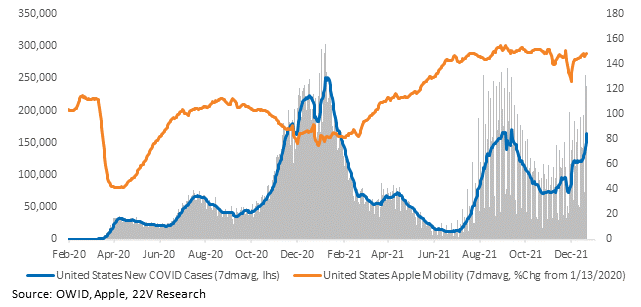
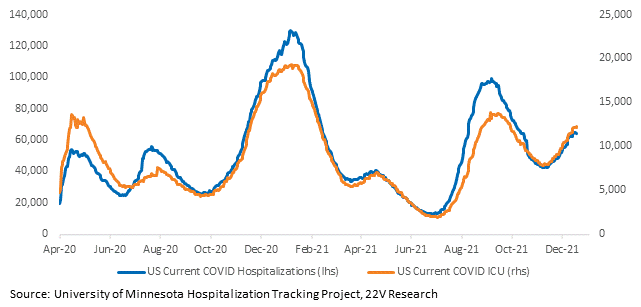
Case growth in the U.S. is accelerating and hospitalizations and ICU admissions are increasing. But mobility is still very high.
Charts for every state and country we have data for are HERE.

