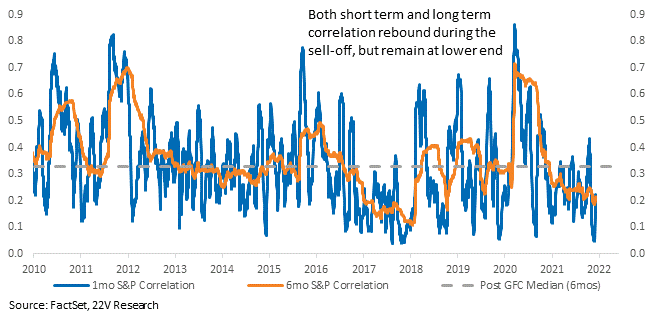
SUMMARY: Omicron and general macro volatility continued to push global risk assets lower this week. The S&P is down -1.3% and more than half of major global indices have fallen w/w and 85% m/m. Market correlation has responded to the selloff/volatility spike, but not as much as might be expected. Heading into the Omicron/inflation/supply chain induced volatility, equities were trading on a more idiosyncratic basis than at any since the pandemic started.
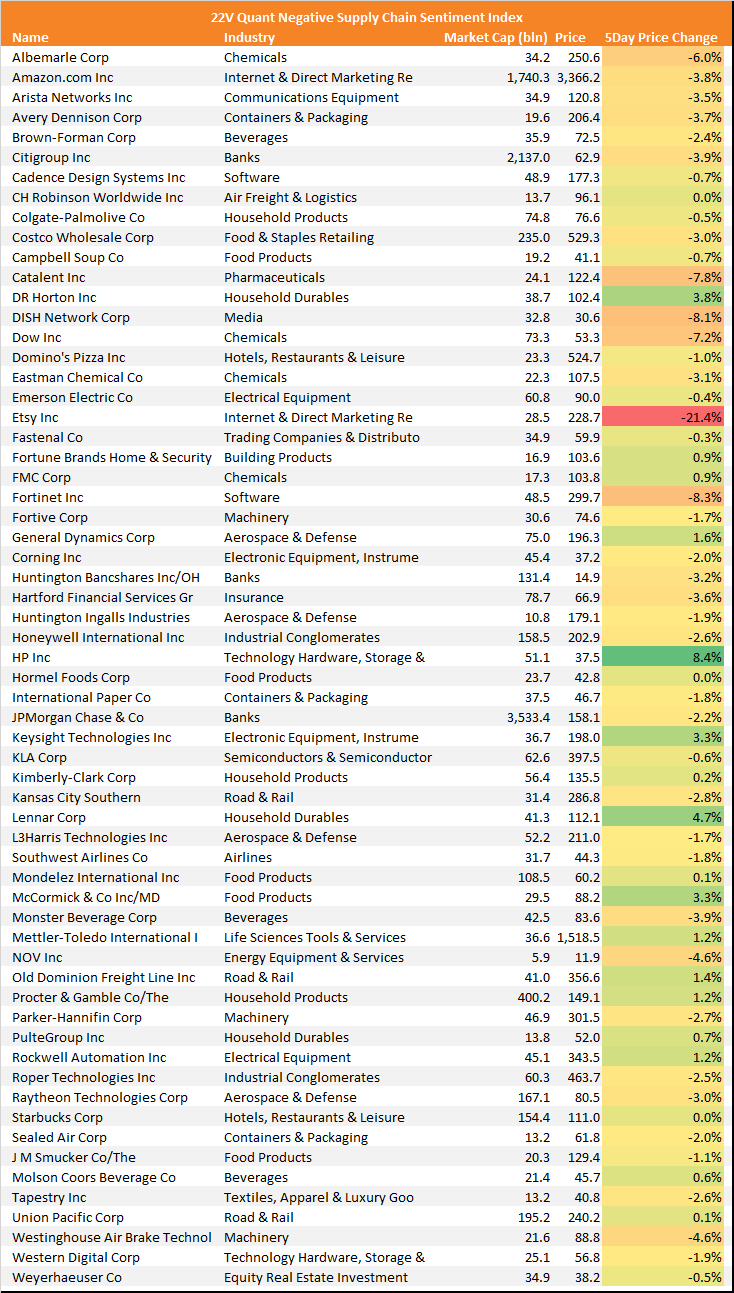
Supply chain-levered countries have seen their equity indices rebound over the past week despite negative headlines and increasing concerns about Omicron-related shutdowns. That performance is consistent with the relative outperformance of stocks with the most negative supply chain sentiment coming out to of 3Q earnings reporting season. We use the Amenity natural language processing tool to track management sentiment to a wide variety of factors. Doing so allows us to construct objective baskets levered to specific fundamental themes and to select stocks from across capitalizations and industry groups. Most of the stocks are down on an absolute basis over the past week, but as a group they have been outperforming over the past few days. A complete list of those names can be found at the end of this report.
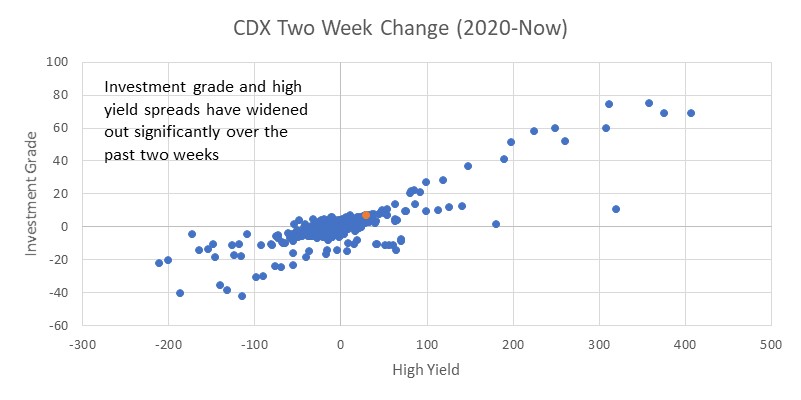
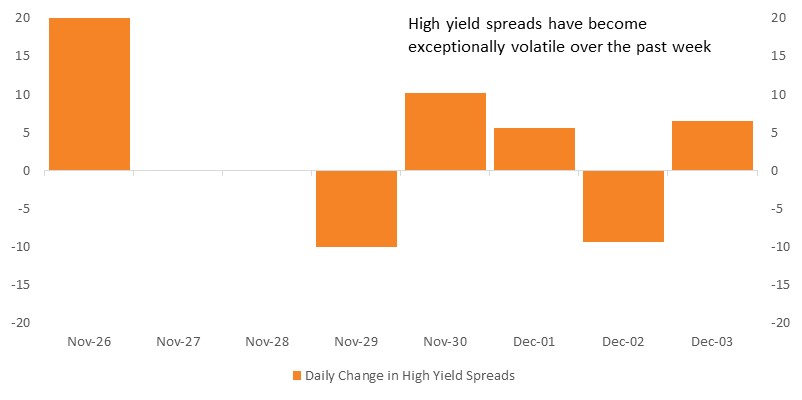
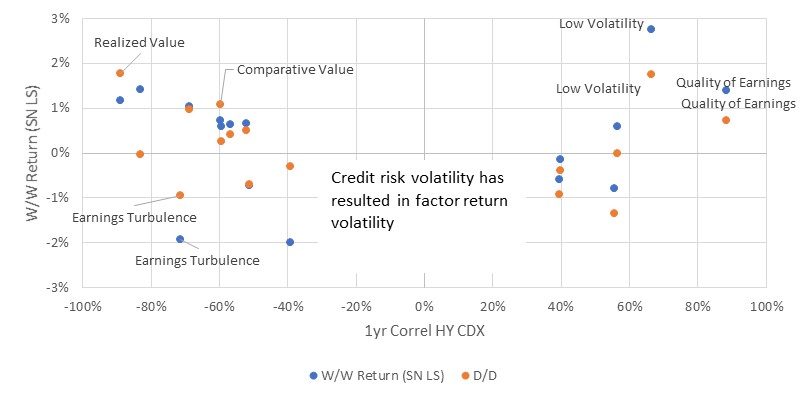
YIELDS & FACTOR UNCERTAINTY: Corporate yield spreads/CDX have moved significantly higher over the past two weeks, contributing to the risk-off index and factor moves. But day-to-day CDX has been unusually volatile. The result has been an odd distribution of factor returns relative to HY CDX correlations. One day factors are risk-on, the next they are risk-off. Week-over-week and day-over-day, factor returns have been clustered together, but provide no clear signal on the expected direction of credit conditions. Omicron is a known unknown and its ultimate impact cannot be determined today, which is being reflected in market internals. With correlations low and uncertainty high, thematic investments still make more sense than factor positioning.

MACRO VOLATILE & INTERNAL DIVERGENCES: Omicron and general macro volatility continued to push global risk assets lower this week. The S&P is down -1.3% and more than half of major global indices have fallen w/w and 85% m/m. The selloff has been broad based, but Tech has performed better over the past week. Even after the declines, more than 60% of the NASDAQ is up YTD with an average gain of over 31%. Small caps have suffered the sharpest drawdowns, but more than half the R2K is still positive on the year with an average gain of nearly 52%.

Market correlation has responded to the selloff/volatility spike, but not as much as might be expected. Heading into the Omicron/inflation/supply chain induced volatility, equities were trading on a more idiosyncratic basis than at any since the pandemic started. Smoothed correlations had fallen back to their 2018 level. The backdrop remains conducive to stock/industry selection rather than directional market positioning.
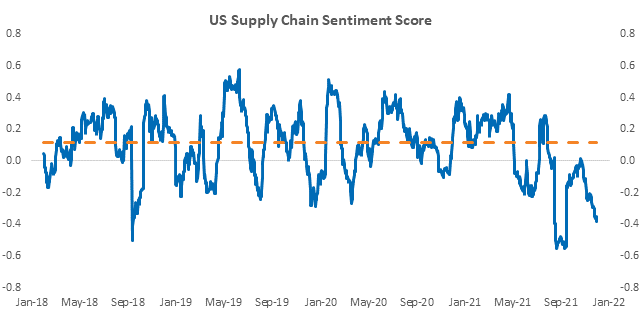
SUPPLY CHAIN SCREENING UPDATE: Global logistics company Flexport held a webinar on the state of supply chains on Wednesday (replay here) and pointed out that “Imports are not up over the last 6 months but delays are getting longer.” U.S supply chain sentiment has deteriorated as well.
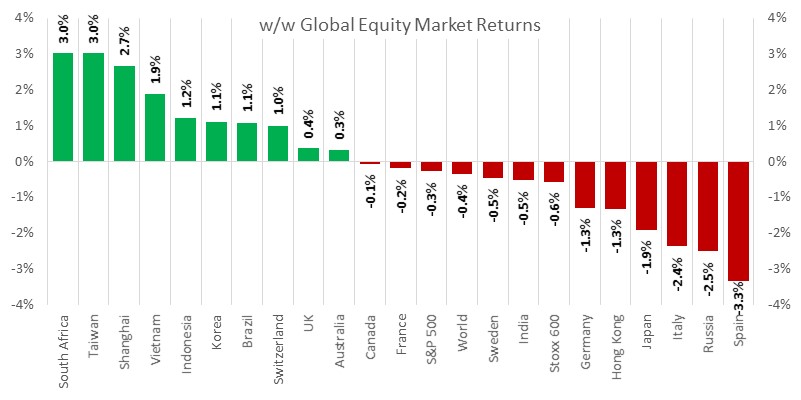
Supply chain-levered countries have seen their equity indices rebound over the past week despite negative headlines and increasing concerns about Omicron-related shutdowns.
That performance is consistent with the relative outperformance of stocks with the most negative supply chain sentiment coming out to of 3Q earnings reporting season. We use the Amenity natural language processing tool to track management sentiment to a wide variety of factors. Doing so allows us to construct objective baskets levered to specific fundamental themes and to select stocks from across capitalizations and industry groups. Most of the stocks are down on an absolute basis over the past week, but as a group they have been outperforming over the past few days. A complete list of those names can be found at the end of this report.
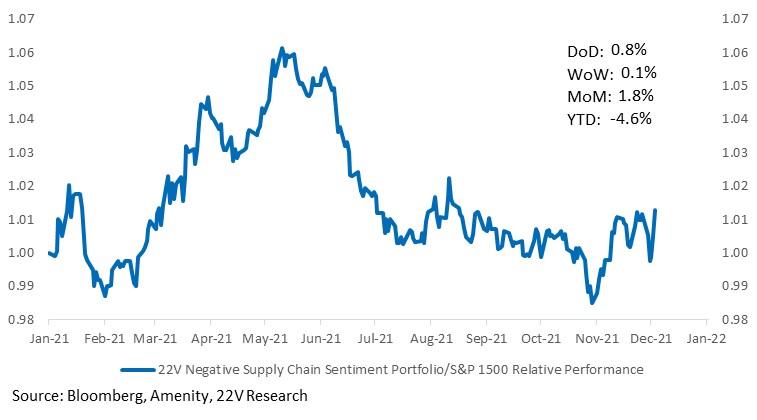
YIELDS & FACTOR UNCERTAINTY: Though there has been an improvement in supply chain-levered equity performance, markets are still lower and corporate yield spreads/CDX wider. That has contributed to the risk-off factor moves over the past few weeks.
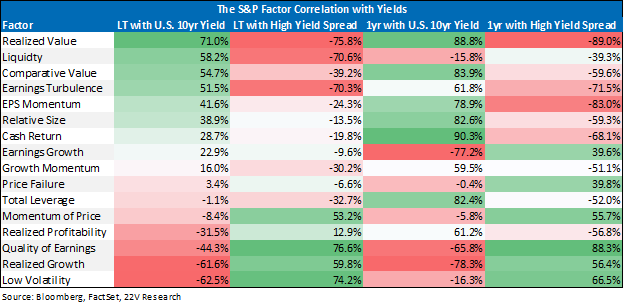
Generally speaking, risk-on factors have a positive correlation with Treasury yields and a negative correlation with yield spreads, especially high yield spreads. The opposite is true for risk-off factors like low volatility and quality of earnings; they tend to perform better when spreads are widening out. Those relationships have held steady over the past year even as inflation, fed policy and the volatility backdrop have undergone significant shifts.
Earlier this week the strategy team hosted a webinar (replay here) on the market turmoil that discussed the potential for an easing of the widening out of yields. So far, no clear trend has emerged and spreads/CDX has been exceptionally volatile. If spreads and volatility does ease, investors should be prepared for a rapid re-risking move.
Near term, The result of high yield/spread vol has been an odd distribution of factor returns relative to HY CDX correlations. One day factors are risk-on, the next they are risk-off. Week over week and day over day, factor returns have been clustered together, but provide no clear signal on the expected direction of credit conditions. Omicron is a known unknown and its ultimate impact cannot be determined today, which is being reflected in market internals. With correlations low and uncertainty high, thematic investments still make more sense than factor positioning.
A complete list of our negative supply chain sentiment stocks can be found below.