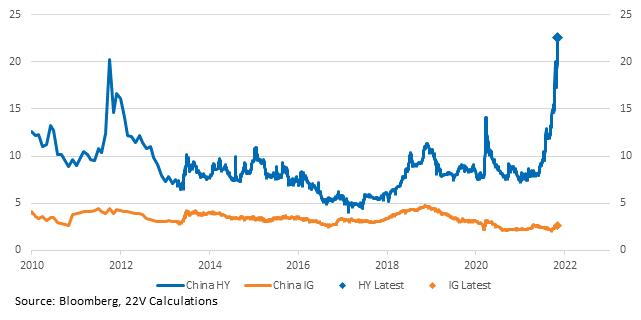
SUMMARY: China’s high yield rates are moving wider beyond just real estate. Anecdotally, there are more articles questioning the competence of China’s current policy decisions (see here and here) and unintended consequences of bureaucrats struggling to understand how to please Beijing. 10yr yields are biased higher over time, but the China overhang is a continued anchor on 10yr yields. Brainard’s odds of become Fed chair have increased, likely impacting yields as well. If the barrage of bad China news gets intense enough, expect a response from Beijing. China high yield has moved wider again but investment grade remains tight. The bad news is China high yield rates, beyond real estate, are moving wider.
Bad news from China is being offset by strong European data (ZEW improved) and an Ifo survey showing easing supply constraints (details below). That is consistent with improvement in supply chain sentiment we have been pointing out over the last month. All things equal, supply chains easing should alleviate some short-term pressure on inflation.
The rest of the report is long on charts and short on text. We cover micro trends becoming more useful to focus on vs large macro trends (see Airlines diverging from other reopening stocks), internals of the NFIB on Capex (improved again) and hiring plans consistent with strong demand growth and the New York Fed consumer survey showing record levels of household earnings, income and spending growth and why sentiment is not bullish RELATIVE to hard data.
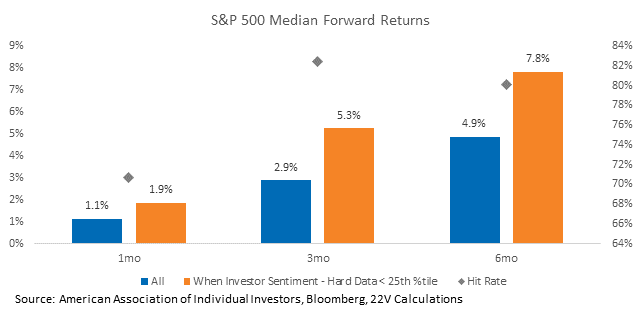
The AAII bull bear ratio is in its 25th %tile relative to hard data. When that has happened in the past, S&P forward returns have been stronger than normal on a 1/3/6 month basis. Look at sentiment relative to broad economic trends. Not in isolation.
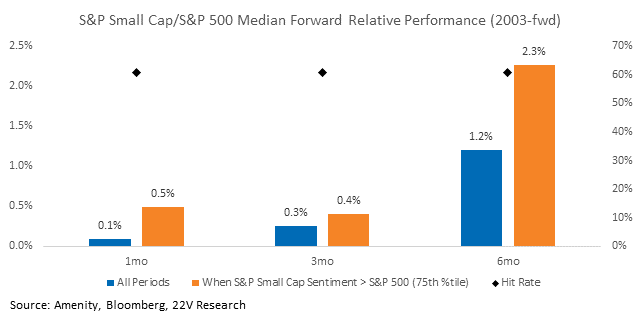
We also follow up on our small cap note from yesterday. Small cap earnings sentiment is in its 75th %tile relative to large cap. When that has been the case in the past, small caps have significantly outperformed large caps on a 1/3/6 month basis.
The short version…developed world growth is strong. China is a risk. That keeps real rates pinned and biases the S&P higher.
MARKET VIEWS: It was a relatively quiet night, but global yields are lower again as China fears continue to intensify. China’s high yield rates are moving wider and it is beyond just real estate now. Anecdotally, we are seeing more articles questioning the competence of China’s current policy decisions (see here and here) and unintended consequences of bureaucrats struggling to understand how to please Beijing. We are biased higher on 10yr yields over time, but the China overhang is a continued anchor on 10yr yields. If the barrage of bad China news gets intense enough, expect a response from Beijing. China HY has moved wider again and the good news is that IG remains tight…
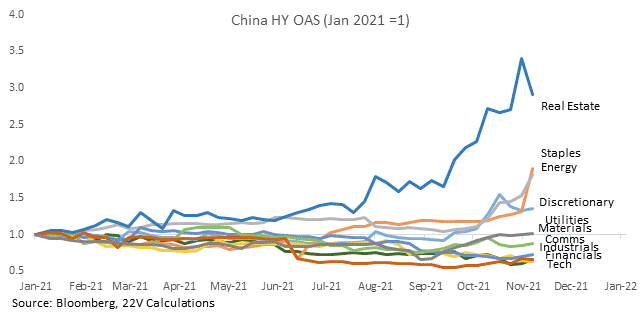
…but other areas of China HY are moving wider now.
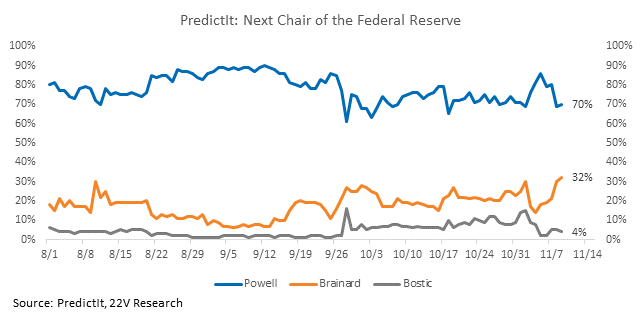
The odds of Brainard becoming Fed chair have increased. Brainard is widely considered to be more dovish than Powell, which is also likely impacting bond yields.
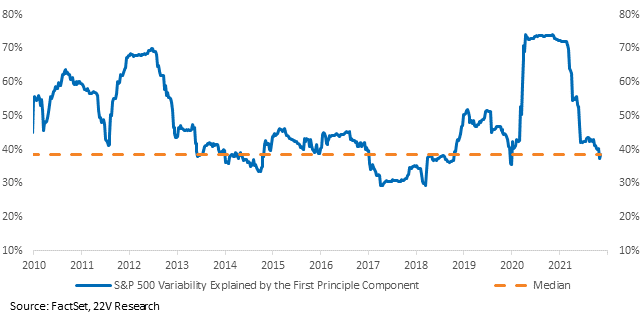
The offset to China news is some improved European data. The German ZEW came in better than expected (first increase since May 21, but current situation was weaker) and the German Ifo published a survey on the retail sector that was interesting. The number of companies reporting problems replenishing stocks fell from 74% in the prior survey to 60%. That is consistent with the improvement in supply chain sentiment we have highlighted over the last month. The bottom line from all of the above, many macro factors are having an influence on S&P volatility, which explains the decline in S&P variability explained by the first principle component. In short, micro themes over one big macro theme = more differentiation.
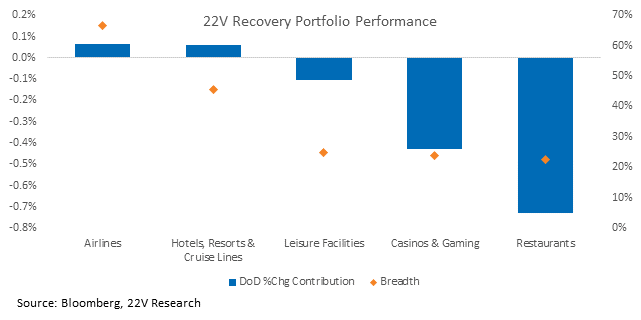
Consistent with the above point…within the Recovery basket Airlines have surged relative to other recovery stocks. Other factors, not just COVID are driving the performance.
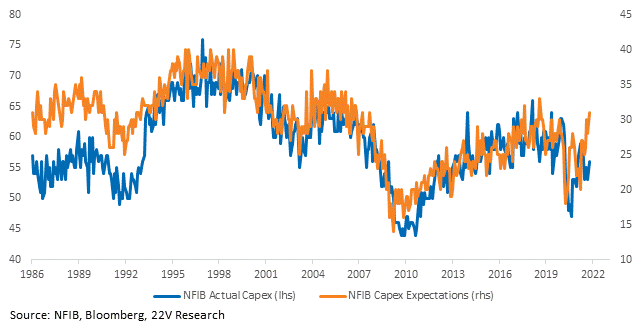
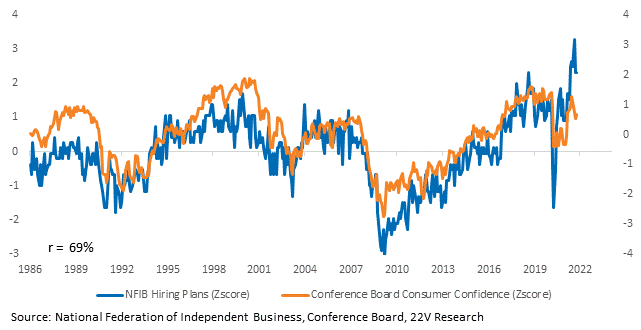
STRONG US DEMAND: The NFIB came out and was slightly weaker than expected and the business outlook was negative. Like most consumer surveys, business owners are worried about supply and inflation. Our call remains that while demand is firm and supply chains improve, confidence readings on the outlook will improve. Other areas of the NFIB continue to be strong and point to above trend demand growth. NFIB Capex plans accelerated again this month. Capex will be a driver of growth next year unless the Fed short circuits the supply response.

Hiring plans remain firm. While the labor market is strong, expect consumer confidence readings, which have stabilized, to move higher.
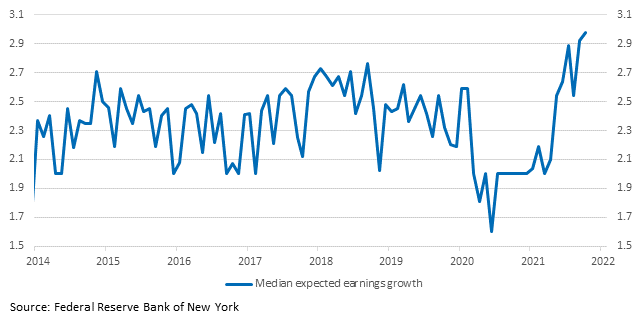
The New York Fed consumer survey came out yesterday and although the short term inflation expectations readings (1 and 3 years) remained at unusually high levels, inflation concerns are not impacting spending and income expectations. Median earnings growth moved to a new record high…
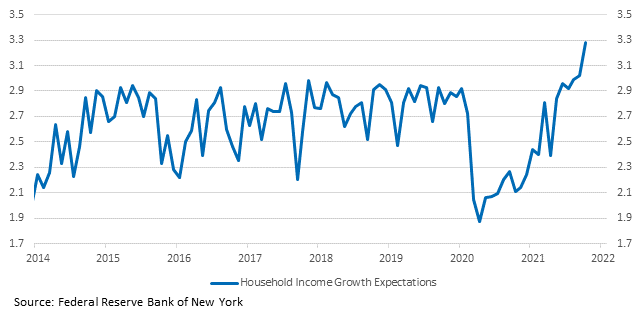
Household income growth continues to accelerate to the upside. This reading fits with the unprecedented household wealth accumulation and positive flow of savings we have harped on.
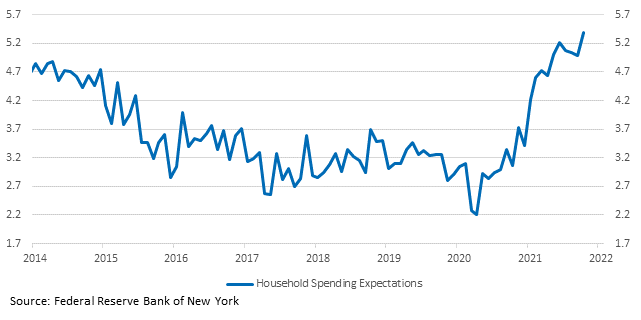
Household spending expectations moved to a new high as well. Inflation is not causing demand destruction.
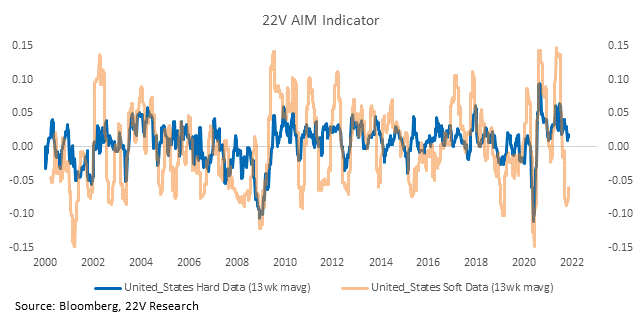
The hard data continues to be much stronger than the more volatile survey measures of the economy. The breadth of hard data is around its 75th %tile historically and the soft data is unusually weak. The soft data will improve as inflation comps get easier next year and demand stays strong.
Investors keep harping on how bullish sentiment is. It has improved some (latest tick higher). On a smoothed basis, sentiment is still unusually weak relative to hard economic data. FYI, sentiment readings on their own are less useful. We run sentiment relative to economic trends. Sentiment is in the 25th %tile relative to hard economic data.
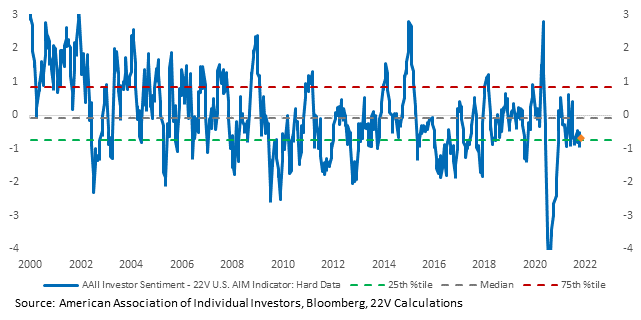
When sentiment is in the 25th %tile relative to hard data, S&P forward returns are much stronger than normal non a 1/3/6 month basis.
Follow up on small caps. Yesterday we noted that small cap earnings sentiment had accelerated relative to large cap earnings sentiment. To put some numbers around it, small cap earnings sentiment is in the 75th %tile relative to large cap earnings sentiment.
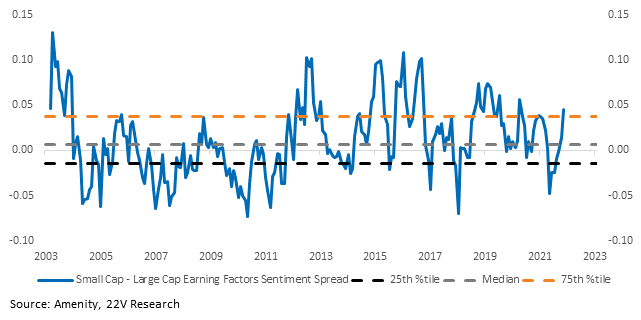
Small cap forward performance is usually better than normal when the spread is this wide. So the improvement in small cap earnings sentiment is relevant.
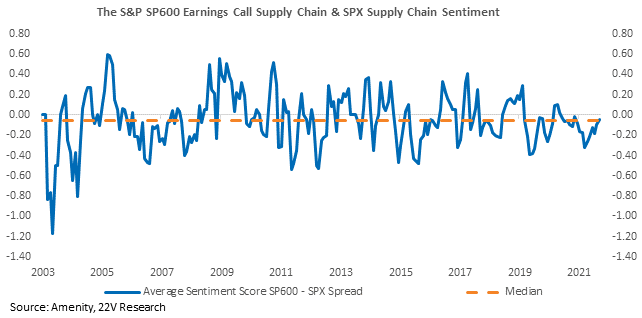
Looking at earnings calls internals, small cap supply chain sentiment has improved relative to large cap. We are not sure why, but our best guess is large caps have more direct exposure to supply chain issues.
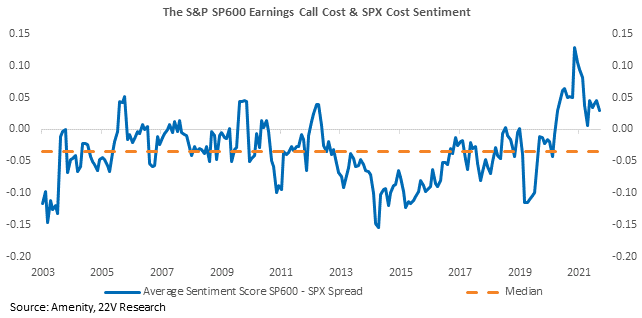
And small cap earnings call cost sentiment is unusually high relative to large cap….