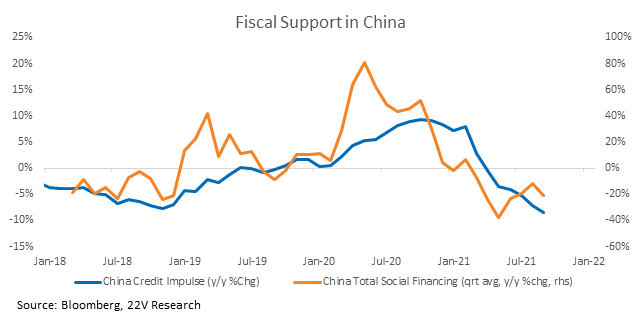
SUMMARY: UST yields are finding some relief after the sharp turn lower last week, but China economic uncertainty and easing supply constraints (lower inflation risk/uncertainty) will remain an overhang. There was positive news about the power crunch over the weekend. China’s credit impulse needs to turn before global yields start to move higher.
U.S. and rest of world growth is firm, but China uncertainty is an offset. The net of the backdrop is lower correlations unless something breaks one way or the other (more stimulus in China = sharp increase in rates and Value, or a breakdown in Chinese economic growth = Value gets crushed).
Small caps should benefit from the combination of strong U.S. demand and easy financial conditions. The Fed is transitioning from stimulative to flexible policy and is comfortable with risk assets reflecting that shift, but that does NOT mean monetary policy is restrictive or will be restrictive any time soon. 10yr yields have been pinned by China risks and other uncertainties but are unlikely to move materially lower from here. 10yr yields should be a neutral influence on small caps for now, but over time 10yr yields are biased higher, providing some support.
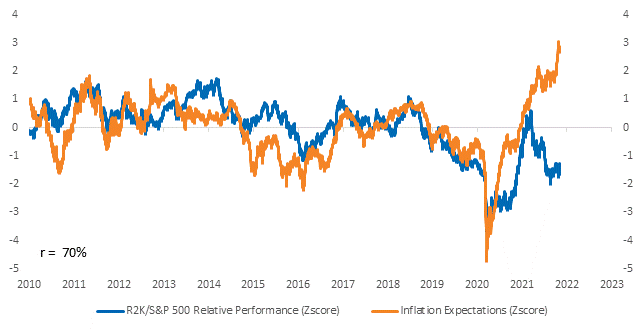
Small caps have a lot of room to catch up to inflation expectations though. Part of the reason for the gap is supply side concerns have driven inflation uncertainty and pressure. Supply constraints lead to fear of demand-destroying inflation, which is a significant headwind to small caps. As supply chain pressures ease and demand remains firm, we expect small caps to make up some of their relative underperformance to inflation expectations.
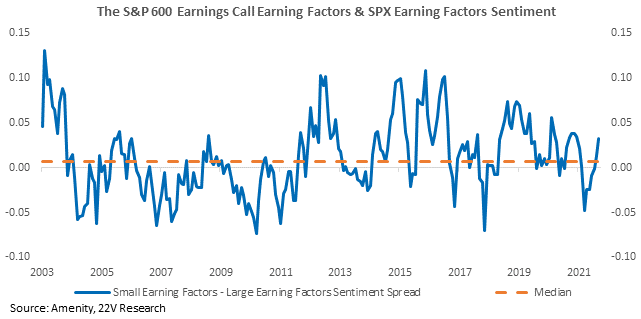
Amenity’s natural language processor ‘reads’ earnings transcripts and calculates sentiment scores based on positive and negative mentions. The spread between small and large cap earnings sentiment has increased. In other words, earnings prospects mentioned by the management of the small cap companies has been more attractive than large cap ones.
MARKET VIEWS: China export data was much stronger than expected, but the import data was weaker than expected and Evergrande missed a bond coupon for some investors. UST yields are finding some relief after the sharp turn lower last week, but China economic uncertainty and easing supply constraints (less inflation risk) will remain an overhang. In some positive developments, China’s state grid says power supply is back to normal, which means factories will remain open. Fuel shortages for both China and India have eased. China’s credit impulse needs to turn before global yields start to move higher.
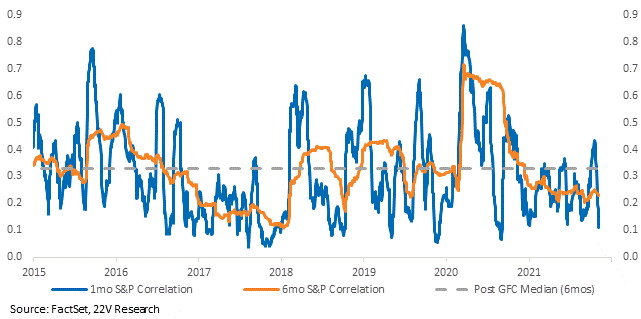
The U.S. consumer backdrop remains unusually strong and other parts of the world continue benefit from government stimulus. Australian business are exiting the pandemic with significant excess cash given policy measures and reports indicate that Japan plans to spend more than ¥30T ($265B) on a set of measures to ease the fallout on the economy, including cash handouts for children aged 18 or younger. U.S. and rest of world growth is firm, but China uncertainty is an offset. The net of the backdrop is lower intra-market correlations unless something breaks one way or the other (more stimulus in China = sharp increase in rates and Value, or a breakdown in Chinese economic growth = Value gets crushed). Short term correlation readings have recently collapsed, helped lower by earnings season, to a new 2021 low.

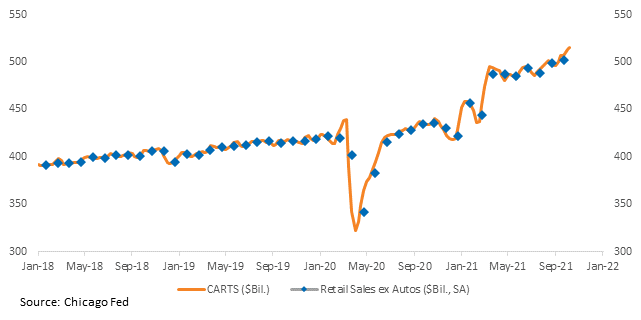
There were a number of articles over the weekend pointing to the effect of robust U.S. consumer demand on supply chains. The bottom line is that consumer goods spending is much stronger than normal and has not mean reverted like many expected. A sharp mean reversion is unlikely to happen this year; the Chicago Fed’s first CARTS estimate of retail sales indicates continued above-trend retail sales. The CARTS estimate for retail sales is +2.3% MoM. Consensus, which has consistently been below CARTS and actual retail sales this year, has it at +0.8%. CARTS has been more accurate than consensus.
FINANCIAL CONDITIONS EASY: Financial conditions are still easy. The Fed is transitioning from stimulative to flexible policy and is comfortable with risk assets reflecting that shift, but that does NOT mean monetary policy is restrictive or will be restrictive any time soon. The Fed emphasized data will become increasing important, but central bank policy is not going to be an issue for markets for now.
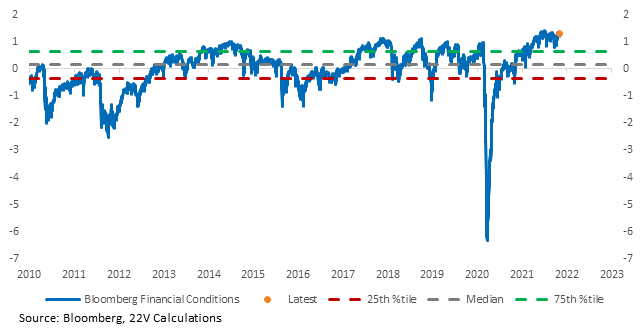
SMALL CAP SUPPORTS: Small caps should benefit from the combination of strong U.S. demand and easy financial conditions. 10yr yields have been pinned by China risks and other uncertainties but are unlikely to move materially lower from here. 10yr yields should be a neutral influence on small caps for now, but over time 10yr yields should increase, providing some support.
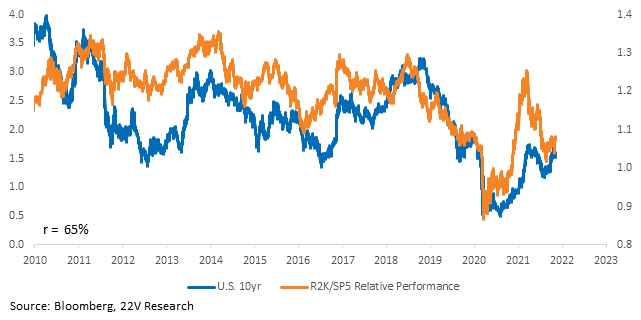
Small caps have a lot of room to catch up to inflation expectations though. Part of the reason for the gap is that supply side concerns have driven inflation uncertainty and pressure. Supply constraints lead to fear of demand destroying inflation, which is a significant headwind for small caps. As supply chain pressures ease and demand remains firm, we expect small caps to catch up some of the relative performance to inflation expectations.
Amenity’s natural language processor ‘reads’ earnings transcripts and calculates sentiment scores based on positive and negative mentions. The spread between small and large cap earnings sentiment has increased. In other words, earnings prospects mentioned by the management of the small cap companies has been more attractive than large cap ones.
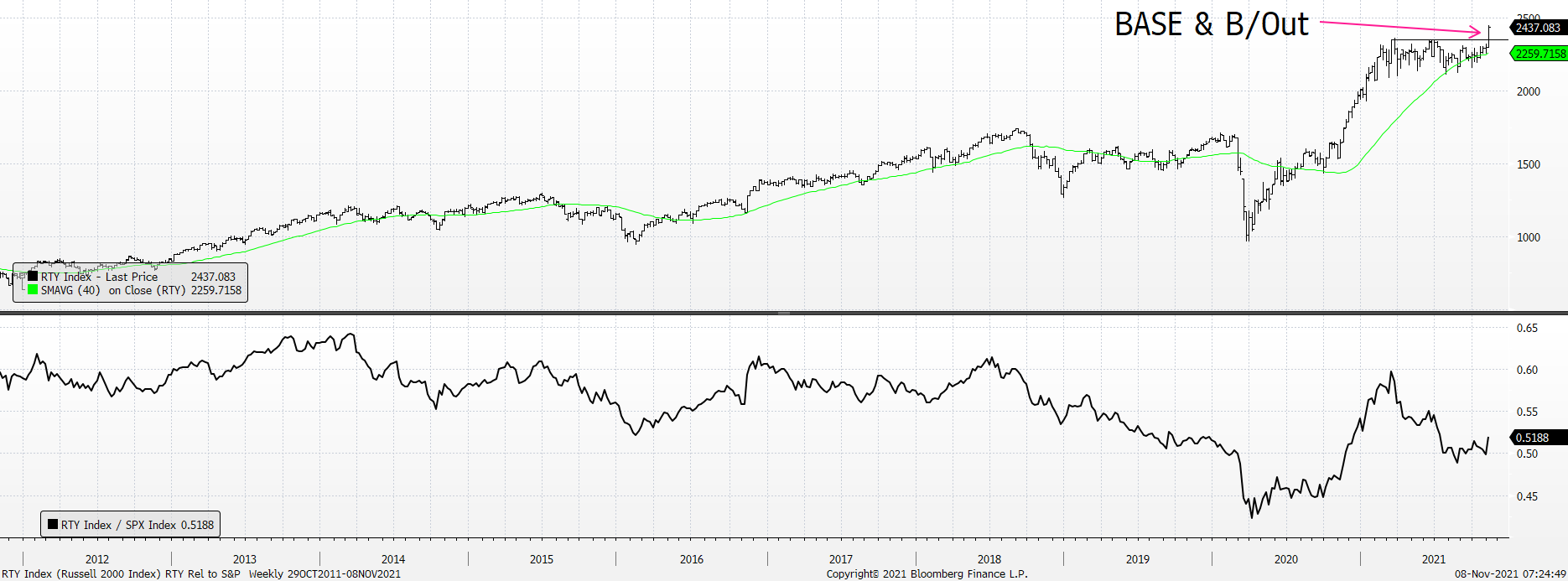
Per John Roque, 22V’s technical analyst, “AMC Entertainment (AMC) and Avis Budget (CAR) are now the second and third biggest stocks, respectively, in the Russell 2000. As a result, there might be quite a bit of ahistorical action going on that has resulted in the current breakout above resistance for the Russell 2000. But there is no doubt that the index has broken out of an 8-month BASE. Unless the breakout fails – and it’s too hard to figure that right here – we’re going with the breakout.”