
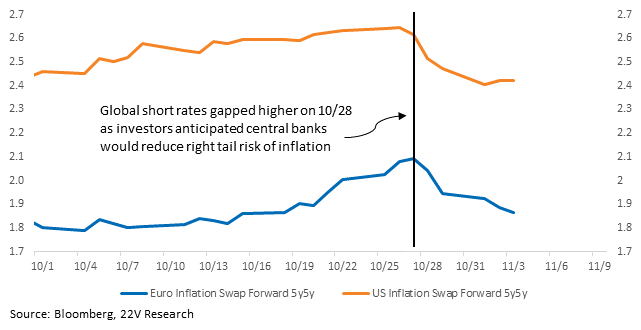
SUMMARY: Today we focus on near-term 10yr yield headwinds and their implications for factors and sectors. Several factors are likely weighing on 10yr yields. 1) Short rates around the globe have increased as investors realize global central banks are interested (or will be forced to be interested) in reducing right tail risk on inflation. That has helped reduce global inflation expectations over the past week and is impacting long rates. 2) China data continues to concern investors. Premier Li Keqiang said overnight China’s economy faces fresh downward pressure and Iron ore prices are significantly lower as steel output declines. Plus, COVID related shutdown risk remains and China high yield rates are moving higher again. China high yield increases are still confined to real estate, but it is tough to expect higher global 10yr yields if risky debt in China is moving wider. 3) Add in commodity prices moving lower broadly (nat gas, thermal coal etc.,) as supply has increased some. Together, you have near-term 10yr yield headwinds.
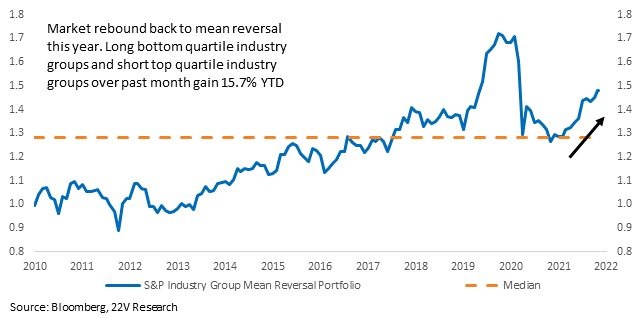
We continue to expect above trend economic growth for the next 6-8 months and that favors Cyclicals relative to Defensives (especially if commodity prices consolidate). But given the lack of near-term upside catalyst for 10yr yields and significant underperformance of Defensives, some mean reversion of U.S. Utilities, Staples, and Healthcare should be expected. Defensives were the worst performing Industry groups last month and the S&P has displayed mean reverting characteristics for years. Our mean reversion industry group portfolio (long bottom 6 industry groups from the previous month and short the top 6) is up 16% YTD. The worst 6 industry groups in October we all defensives. Pharma seems interesting on the long side with drug pricing headlines likely behind us.
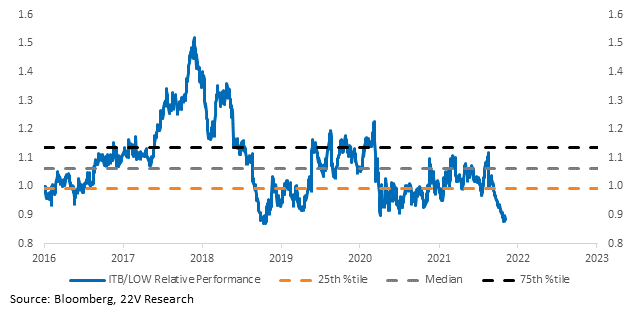
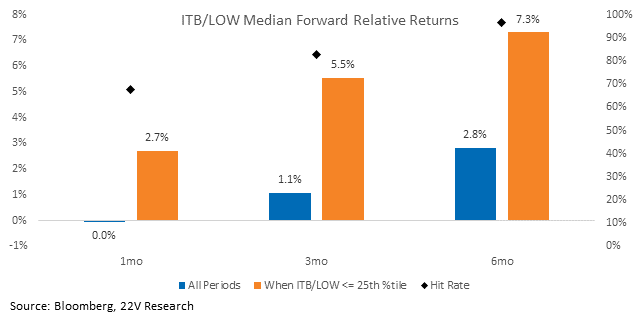
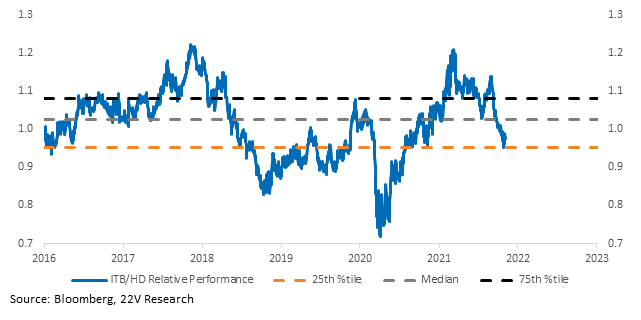
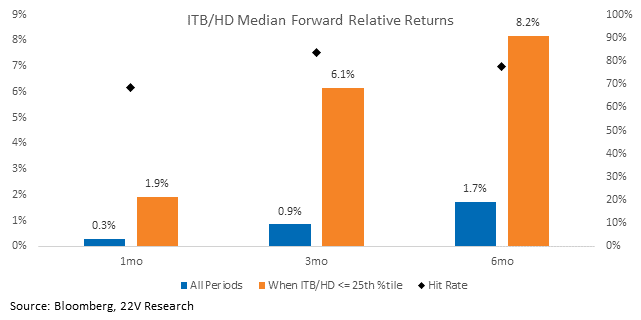
If 10yr yields are pinned, Homebuilders should outperform. We have outlined the positive backdrop for housing and we find it interesting that ITB’s (Homebuilder ETF) relative performance to LOW is in the 5th percentile historically. When that has been the case in the past, ITB has had much stronger than normal returns relative to LOW. Same goes for ITB relative to HD, which is in the 25th percentile performance spread historically.
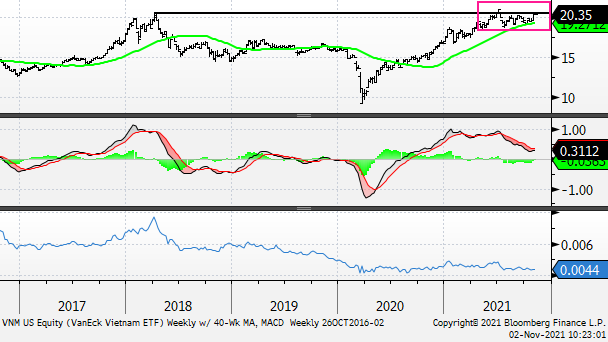
22V technical analyst John Roque notes that the Vietnam ETF (VNM) is poised to break out after a 3 ½ year base. That seems to fit with our view that supply chain pressures are likely to ease (Nike announced last night all its Vietnam production is back online). We highlight a list of supply chain exposed Consumer Durable & Apparel stocks that should benefit from 1) improved supply chain outlooks and 2) consolidation in commodity prices.
Full report below…
MARKET VIEWS: We still have the Fed and Payroll ahead of us, so drawing too much of a conclusion from 10yr yields this week is tough, but the continued grind lower in 10yr (from 1.70 to 1.52 since 10/21) shouldn’t be ignored. A couple of factors are likely weighing on 10yr yields. First is the sharp increase in short rates around the globe, which has been a function of investors realizing global central banks will reduce the right tail risk of inflation. That has helped reduce inflation expectations over the past week. Inflation expectations are still high, pointing to firm economic growth, but have come in some.
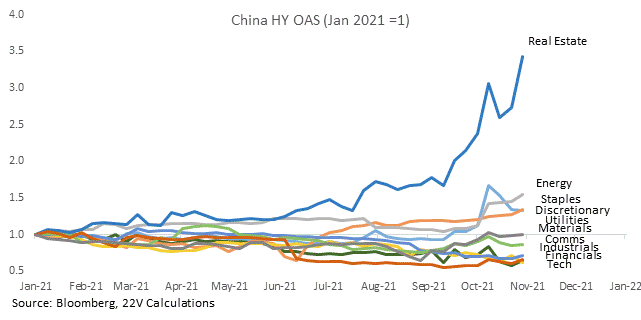
At the same time, China data continues to concern investors. Despite a better than expected Caixin services PMI (53.8 vs est 53.1 and 53.4 last month), Premier Li Keqiang said China’s economy faces fresh downward pressure and Iron ore prices are significantly lower as China steel output has declined. Plus COVID shutdowns remain a risk in this most recent China wave. Additionally, the China HY index keeps moving wider and although it is still confined to real estate, as long as China HY rates are gapping wider, it is tough to expect global developed 10yr yields to move much higher.
Side note, thermal coal prices are lower, but that is not a bad thing as it increases the odds China’s factories stay online this winter. UK nat gas prices are lower as well. Broadly speaking, a commodity supply response seems to be happening. Assuming demand stays firm, that is a positive for consumption in the developed world. We continue to believe in above trend economic growth for the next 6-8 months and that favors Cyclical’s relative to Defensives, but given the lack of near term upside catalyst for 10yr yields and significant underperformance of Defensives, expect some mean reversion higher in Utilities, Staples and Healthcare near term. Defensives were the worst performing Industry groups last month.
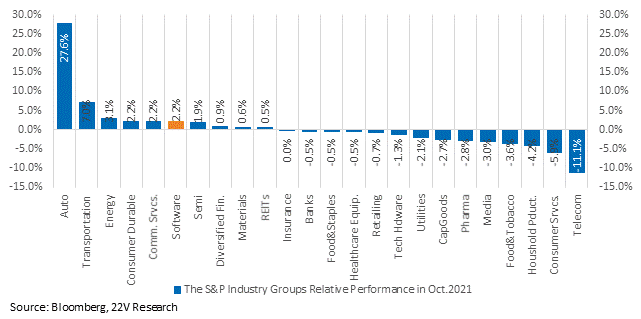
The underperformance of Defensives last month is important. The S&P has displayed mean reverting characteristics, outside of the immediate post pandemic period, for many years. Our mean reversion industry group portfolio, which is simply being long bottom 6 industry groups and short the top 6 industry groups from the previous month, is up 16% YTD. The 6 laggards in October were Telecom, Consumer services, household products, food & tobacco, media and pharma. Assuming 10yr yields stay pinned, which seems reasonable, expect those 6 groups relative performance to come back some.
LONG HOMEBUILDERS: 10yr yields remaining pinned should support Homebuilders relative performance. Looking at the spread between homebuilders (using the ITB ETF) and HD and LOW, it is interesting that how sharply ITB has underperformed LOW (below the 5th percentile historically). Typically when ITB is this weak relative to LOW, the forward returns for ITB, relative to LOW are much stronger than normal. The hit rates are high as well. Side note…we start at 2016 forward as that is when the volatility in all things housing related started to decrease. If we go back to 2010, we are still below the 25th percentile of ITB/LOW relative performance and the forward returns to ITB are still much stronger than normal.

When we run the same analysis for ITB relative to HD. ITB is just at the 25%tile. So ITB has performed better relative to HD than LOW, but still at the low end of the range. Forward returns for ITB vs HD when relative returns hit the 25%tile in the second chart.
LONG SUPPLY CHAIN EXPOSED RETAIL: Assuming supply chains are clearing up (seems to be happening) and commodity prices are capped near term, expect some of the names that have been most levered to South East Asian supply problems to improve. In an attempt to focus on Vietnam in particular, we ran the correlation of the constituents of the S&P 1500 Consumer Durables & Apparel with Vietnam’s case growth and mobility data. We filtered the list of stocks for those with r>.5 for mobility and r<-.5 for case growth, removed duplicates, and produced a portfolio (constituents at the end of the report).
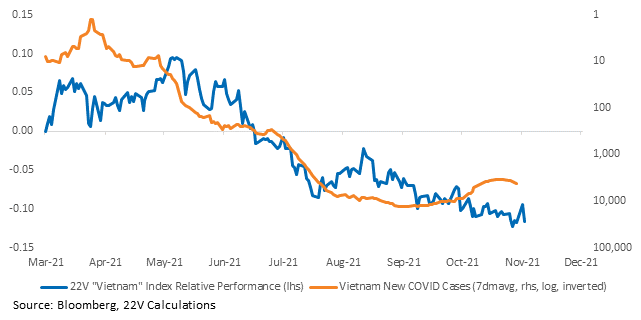
Interestingly, 22V technical analyst John Roque notes that the Vietnam ETF (VNM) is close to breaking out. That likely would not be the case if supply was a consistent problem.
Vietnam ETF (VNM) shows a 6-month BASE within a 3 ½ Year Bigger BASE
Constituents in our Vietnam index are below. There are caveats to our methodology: it is a short history, many of the stocks have moved around for reasons well beyond supply chain issues, some might not have ANY Vietnam exposure at all. That being said, it is a broad list of stocks and we think it should be used as place to look for ideas.

