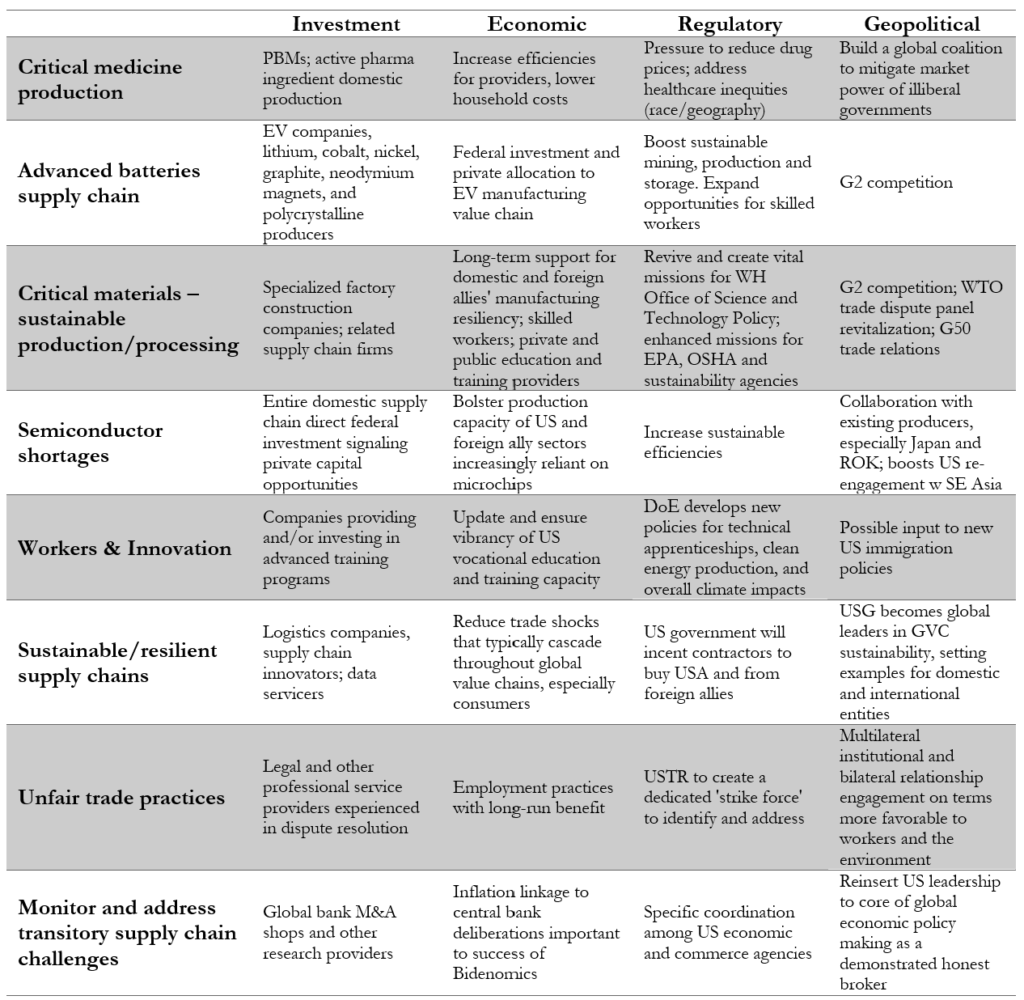
Supply Chains Are Irreplaceable, Dynamic, Somewhat Resilient, and Benefit from Policy Support Merchandise trade is rebounding after the 2018 US imposition of tariffs and the 2020 global lockdown. But the pandemic caused severe on-going dislocations to the supply system relied on by nearly everyone in most countries. Governments and businesses face a stark challenge to continue repairing or working around existing global value chain (GVC) complications. As these and other stakeholders explore the benefits and limits of reshoring or closer shoring, it is evident that the more immediate task is to foster supply system resiliency to meet supply/demand expectations.
The novel coronavirus laid waste to a global value system with frailties previously ignored or thought sufficiently self-healing. Never had supply chain workers, often considered the least crucial cog in the wheel, been shown to be the most vital factor in global trade. Manufacturing capacity had been presumed impervious to disruption but a paucity of raw materials, people to develop them into finished or semi-finished goods, and affordable, dependable transportation became an overnight impediment to global and local commerce.
In the two or three months that a distant, mysterious disease morphed into a highly transmissible pandemic, public and private decision makers were caught unaware. Swift actions by the Federal Reserve and other central banks pressured elected officials and businesses to respond after considerable public liquidity underpinned private finance. The immensity of the economic and social shock spawned questions about the proper role of centralized governments beyond cumbersome trade agreements in generally free trading countries to ensure reliable availability of the stuff people use most everywhere.
In late February 2021, President Biden signed Executive Order 14017 instructing his executive staff to work with agency heads to assess, strengthen and secure US supply chains. In early June, his national economic and national security advisors submitted a 100-day supply chain review report detailing vulnerabilities and suggesting policies that would fulfill the president’s objective. It focuses on four key products: semiconductor manufacturing and advanced packaging, large capacity batteries, critical minerals and materials, and pharmaceuticals and advanced pharmaceutical ingredients.
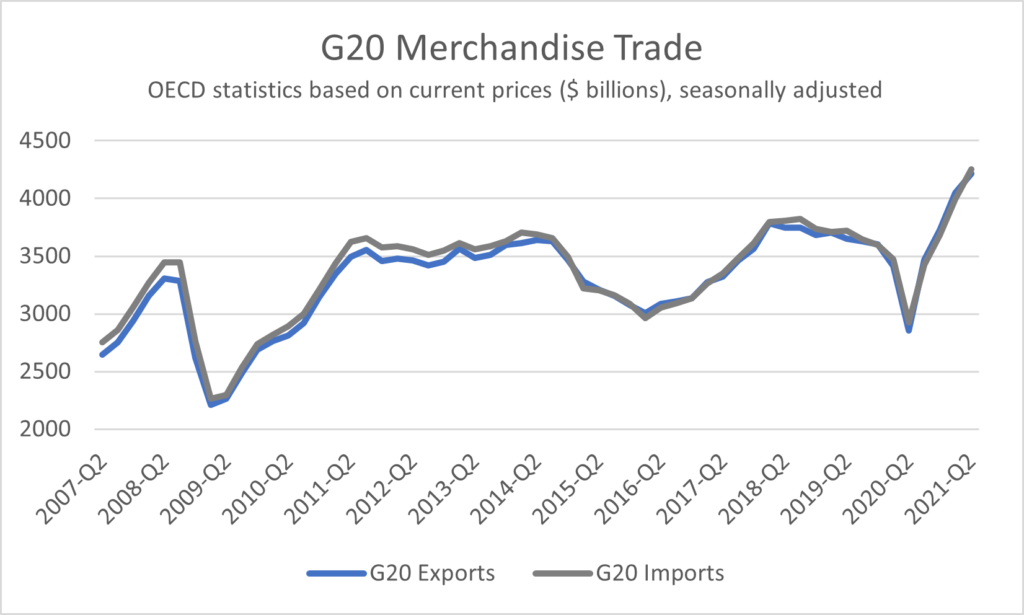
The report title suggests that a revitalization of American manufacturing will help foster broad-based growth. We believe even a cursory review of the report and ancillary documents makes clear this US national and economic security manifesto contains clear, actionable industrial policy signals aimed at domestic and international interests (households, governments, businesses, investors, and workers). Below is a table we constructed from the report highlighting some of the potential implications of the administration’s GVC work. Biden’s task force repeated throughout the report that while much can be accomplished by the executive branch, legislation is needed and requested.
We will risk hyperbole in writing that the June report is a call to arms – civilian and military – to address undeniable, quantifiable policy and market failures. Certainly, it points out the vulnerabilities allowed to go decades unaddressed as short-term profits and policy outweighed longer run public and private investment priorities. This condition gave rise to a policy process which resulted in government recommendations bristling with inducements to invest in innovation. The bulk of the resulting benefits would not be captured by the government even if those proposals were to improve economic and national security and general welfare.
Workers are at the heart of the plan, both in terms of shared prosperity and as their holistic health is considered. We doubt the plight of essential workers will soon again be overlooked. The training and tools afforded workers to broaden US manufacturing capacity are highlighted to promote and protect American workers’ advanced technological skills base.
Everything related to policy making bears any number of risks (as is often overlooked in the sometimes-emotional discussion of Afghanistan). What is also sometimes clear are the costs of inaction – the report details many risks emanating from an underdeveloped suite of GVC policies. Indeed, an August 11 a Gallup poll this year asked respondents about their experiences with supply chain disruption. Overall, 83% said “significant” price increases occurred; six of ten said they were unable to get products due to shortages, and that products they could get were “significantly” delayed.
We doubt an all-or-nothing approach to GVC health will prove a winning formula for any stakeholder. A successful policy should reflect the dynamism of preferences and choice, sources and availability, sovereign and private relationships, and economics of manufacturing capacity. Recognizing that shocks are inevitable, governments and businesses will feel development and implementation pressures to match GVC evolutionary forces. Our guess is that Congress will be presented a package of proposals shortly after a promised one-year report comes February 24, 2022, interestingly close to the usual State of the Union address. Both dominant congressional parties have plenty of impetus to join a supply chain revitalization effort months before midterm elections.
We have given plenty of attention to the fiscal policy side of Bidenomics, with much more to come as Congress returns after the upcoming holidays. GVC policy improvements are a regulatory component of the president’s economic policy as well. Unmistakably, the domestic and international supply chain policies we believe Washington will at least consider next year fall into industrial policy. We call it strategic growth policy but labels aside, we will return to the topic as it seems plausible if not likely that Congress, some businesses, and investors will take up signals evident in the Biden administration’s GVC 100-day report.
White House Domestic Supply Chain Task Force Implications