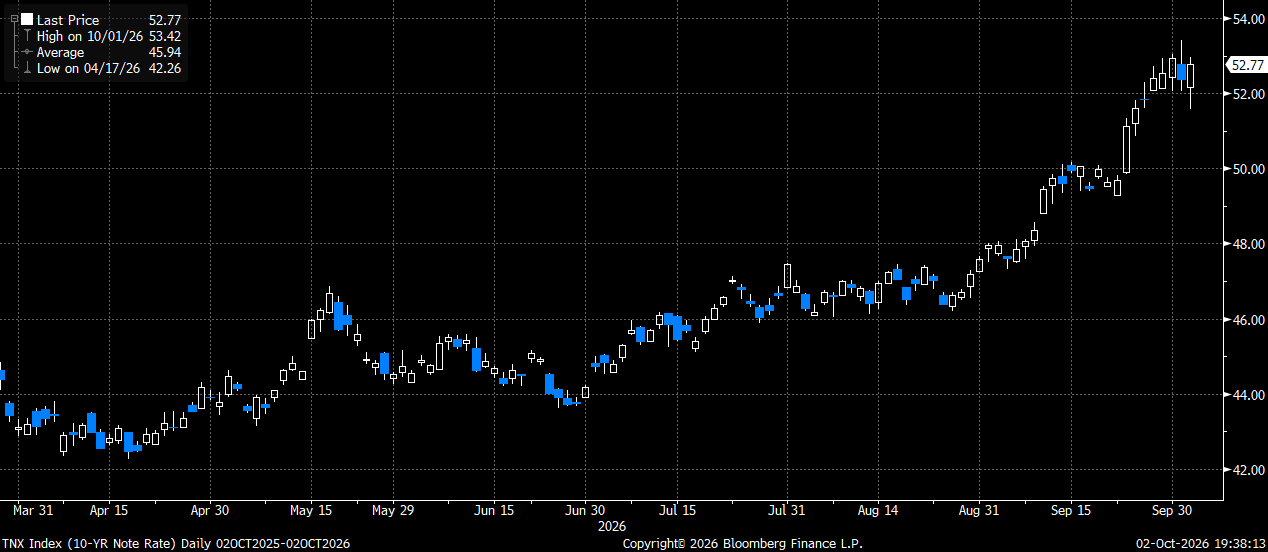
While the equity markets basically ended flat last week, the action continued to be in the bond market. The 10-year yield ended the week at ~ 5.28% (up from 5.18%) and closed at another new relative high. Of particular concern for bond bulls was the rather poor action on Friday, where yields reversed the move lower that we saw on Thursday, even after the dovish September jobs report was released and oil was down on the day. The ability for the major indices to continue to work higher, even as yields continue to spike, remains the story for stocks (for now).
10-year yields closed the week near 5.28% and at a new relative weekly closing high
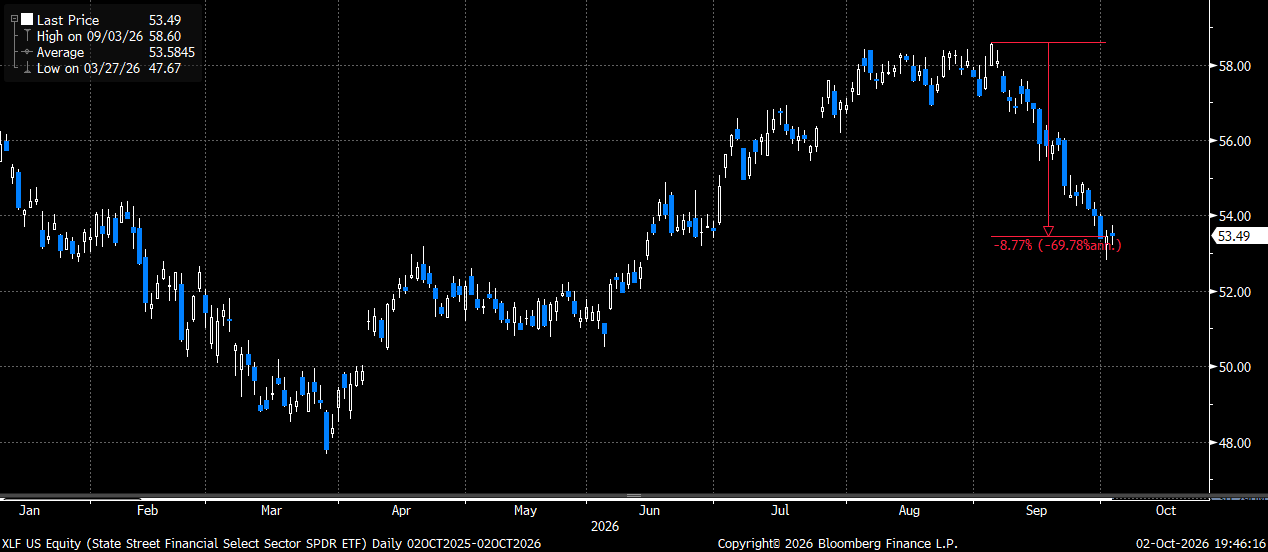
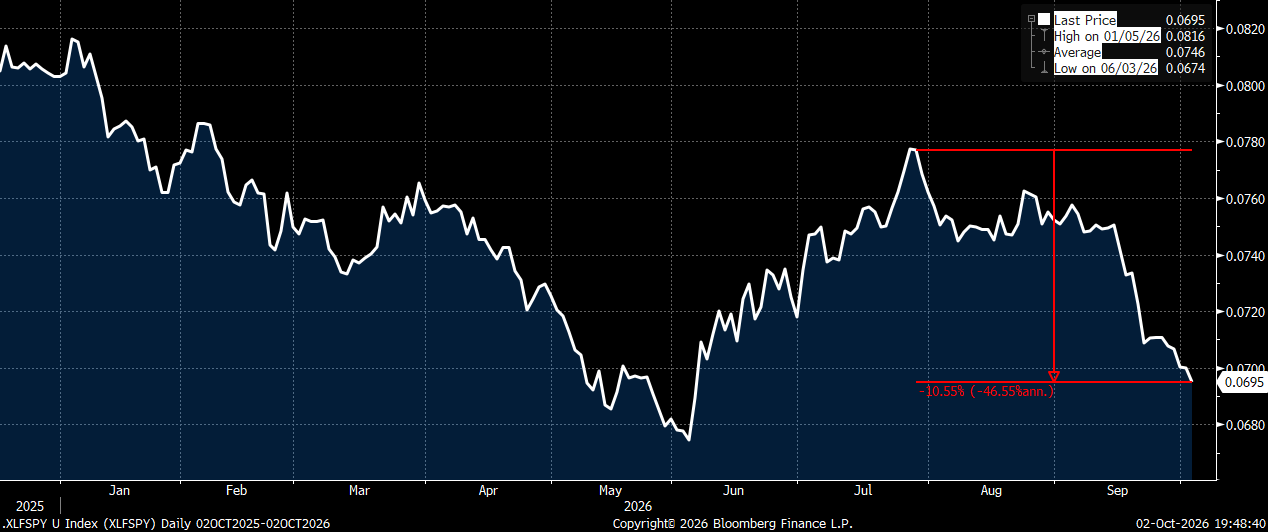
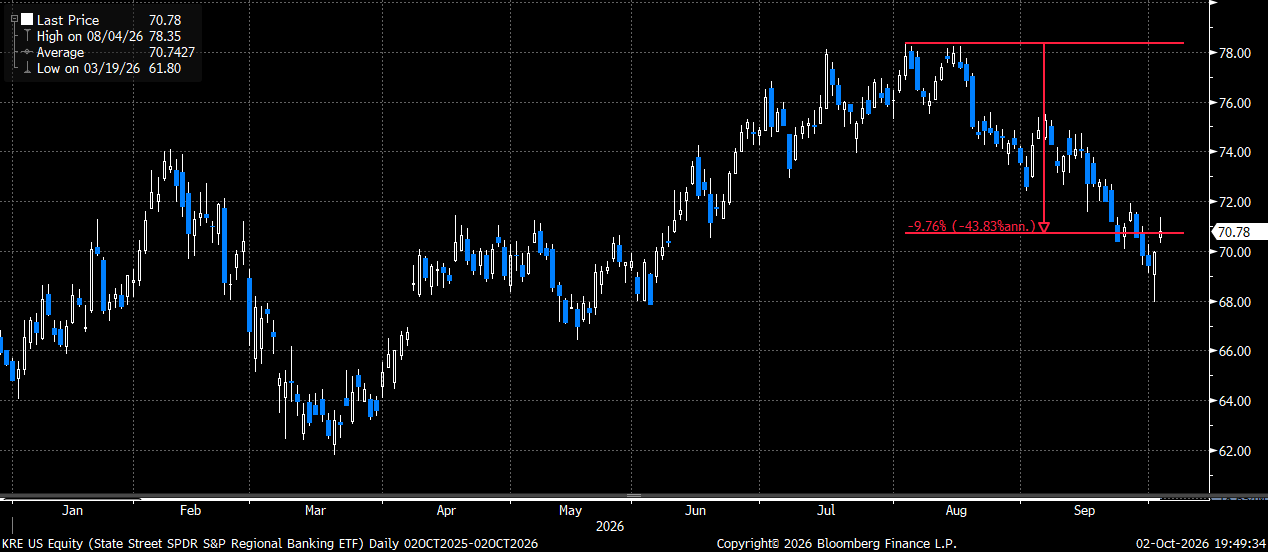
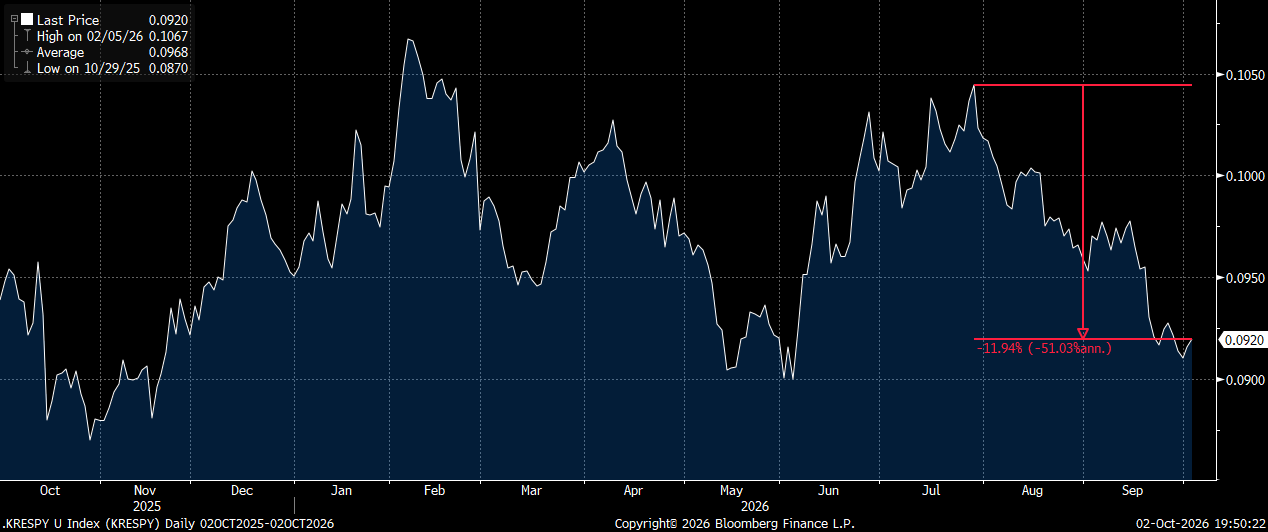
While the major indices have held up remarkably well in the face of much higher yields, one sector that has been hit extremely hard has been the financials. The main financials ETF (XLF) is down about 8.8% from the recent highs and has underperformed the market (SPY) by ~ 10.6% from the July relative highs. The regional banks (KRE) haven’t fared better, as they have declined by nearly 10% from the early August highs and have underperformed the market by nearly 12% from their July relative highs.
XLF is down nearly 9% from the recent highs
The XLF/SPY relative spread is down ~ 10.6% from the July highs
The regional bank ETF (KRE) has declined by 9.8% from the August highs
While the KRE/SPY relative spread has declined by almost 12% since the end of July
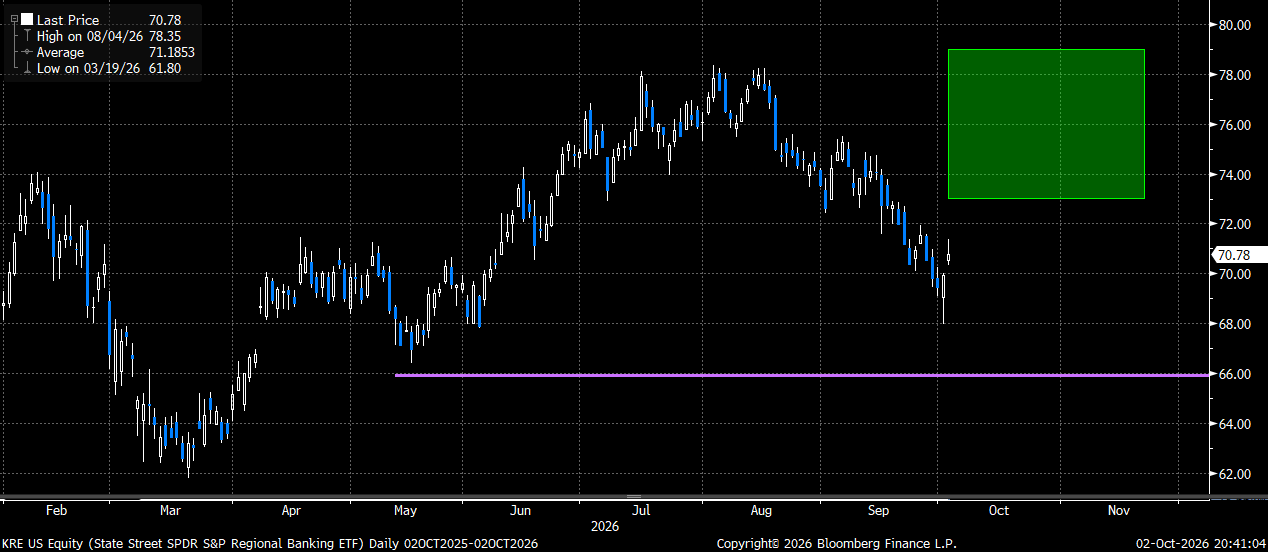
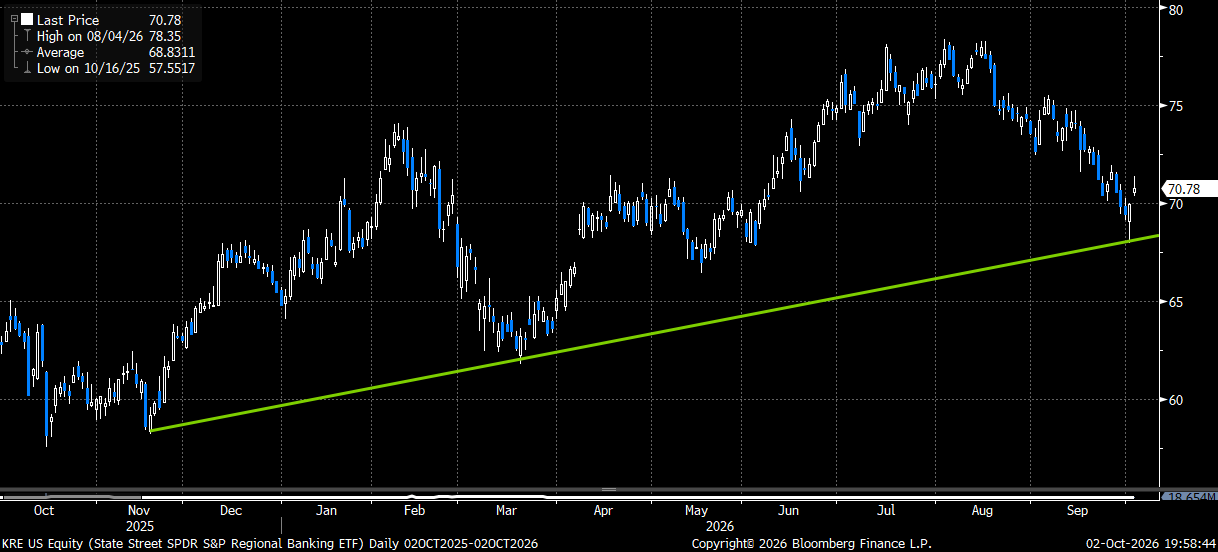
Focusing on the regional banks, I believe the decline from the highs, on both an absolute and relative basis, has created a setup where we could see the sector rally from here when they report earnings over the next month. Here are some reasons why I believe the KRE could rebound from here. First, the recent pullback for the sector has taken KRE right to the November 2025 uptrend support level. We saw a similar sharp decline in Feb-March for the sector, only to see a subsequent 14%+ rally over the following month or so. Second, not only has KRE pulled back to what appears to be a support area, but the KRE/SPY relative spread also pulled back to just above the June lows. Back in June, we saw the relative spread spike higher as KRE rallied another 15% from the June lows to the July highs.
KRE has pulled back right to the November 2025 uptrend support
On a fundamental basis, 22V bank analyst Bill Hebel remains very positive on the group. In his note from a few weeks ago (here) he highlighted the nearly universally positive sentiment from the banks that presented at the Barclays conference. In addition, since the time he published the note on 9/18, the curve has also steepened somewhat:
- Conference Update – For the regional banks, the conference was almost (ex-HBAN) universally positive with banks either reiterating guidance or guiding to the high end of the recent ranges given out at 2Q earnings. All 11 companies described the consumer and commercial environment as ‘good,’ ‘strong,’ or ‘constructive’ — GDP growth expected ~2–2.5%, unemployment holding in the low 4s, no systemic delinquency deterioration. C&I demand described as very strong across all 11 companies — the clearest unanimous positive; middle market, corporates, specialty verticals all active. Fee income was a consistent bright spot: capital markets, wealth management, and payments the most frequently cited growth drivers across all 11 companies. All 11 companies targeted or delivered positive operating leverage in 2026; tone universally disciplined.
- Curve dynamics – at the time of the report, the 3M/5YR spread which we noted as the most relevant curve to look at when assessing underlying bank fundamentals was 72bps at the time of the report (closed today at ~95bps) and the 2/10 spread which had been 55bps a few months ago dropped to 26bps at the time of the report and has now re-steepened back to 44bps.
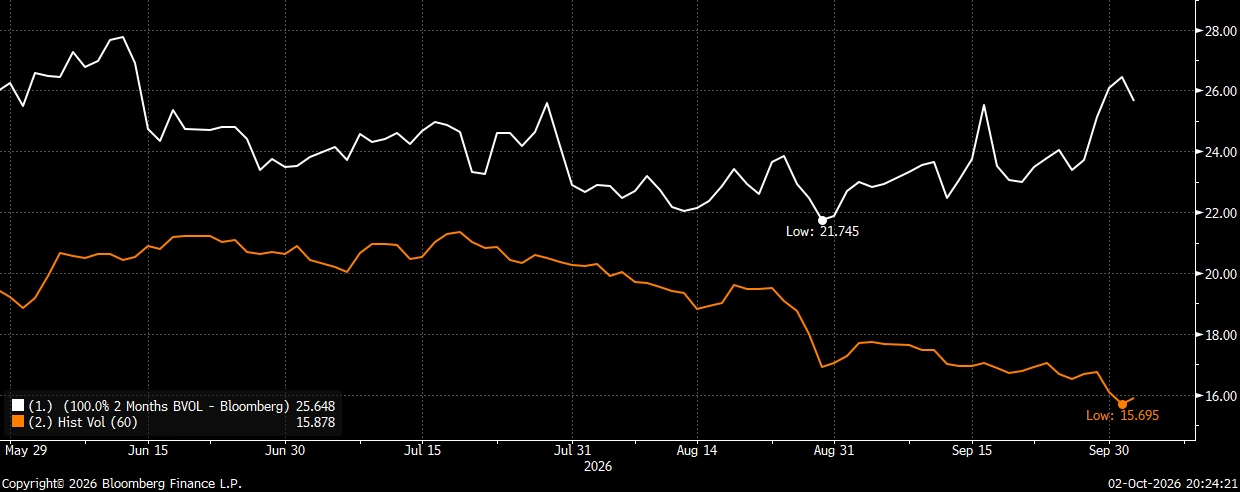
With a pullback to support, and fundamentals still sounding positive, I believe this is when you should be looking to tactically add upside exposure in the sector. This is especially true for a sector that has now had multiple moves higher (most in a short period of time) after falling out of favor. What stands out to me regarding KRE implied volatility is we have seen 2-month November volatility move higher, even as 2-month realized volatility has continued to move lower. This dynamic means you want to be a net seller of volatility in the context of adding upside exposure ahead of earnings season. Since the sector has had a sharp decline already, I favor selling a downside put to help fund an upside call spread purchase to help offset the elevated volatility.
KRE 2-month implied volatility has been climbing while 60-day realized volatility is at the lows
Here is a November KRE trade I would consider at this time:
Sell KRE Nov 20th 66 put
Buy KRE Nov 20th 73/79 call spread
Costs ~ $0.50 (KRE 70.78 Fri close ref)
Trade Details:
- Selling the 7% downside put, following the recent 10% decline, to buy the upside call spread that starts ~ 3% above current levels
- Generally bullish commentary from the companies, and a yield curve starting to steepen, could lead to a nice rebound when the regionals start reporting in late October
- Prefer to sell a downside put to buy the upside call spread given the volatility dynamics (implied vol is up and trades “rich” to where 60-day realized vol)
- Call spread is capped to the upside above the former highs
- Structure can be an add-on to an existing long position in the regionals, or as an entry point trade into the sector following pullback
- Please reach out to me or the 22V sales team for updated pricing and execution capabilities
Selling the put below the May lows to own an upside call spread that is capped above the former highs